
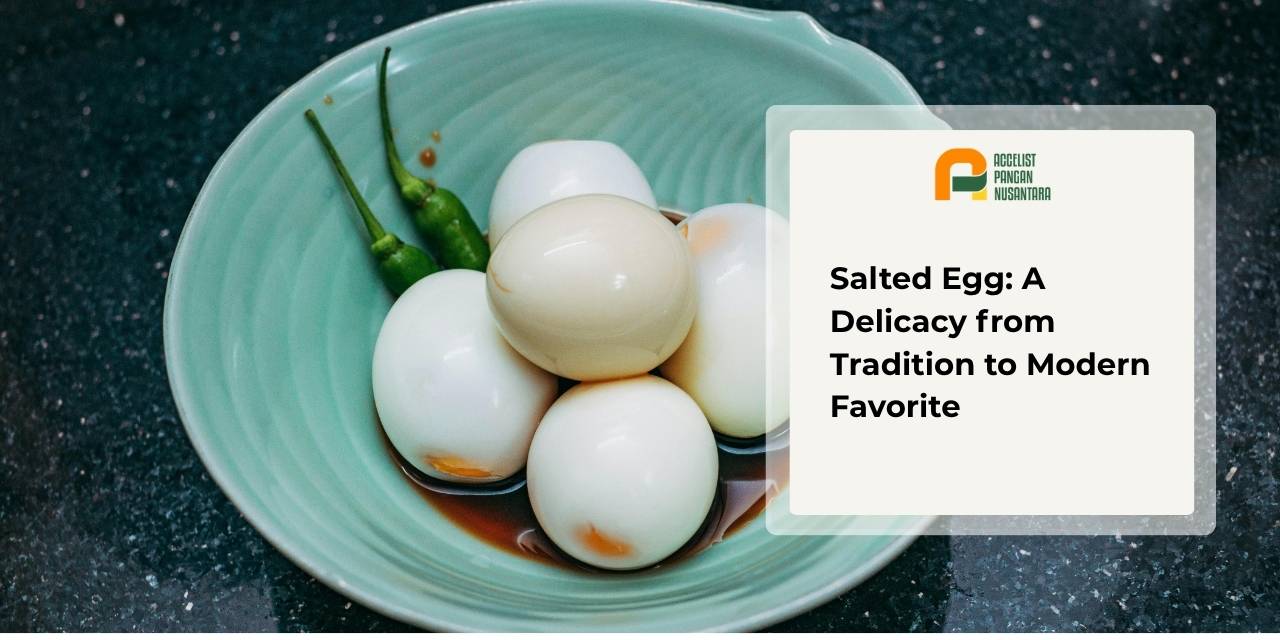
Salted eggs, or now more globally known as salted egg, are no longer just a complementary side dish in traditional meals. This food ingredient has transformed into one of the main commodities in the modern culinary industry.
The dominance of salted egg sauce-based dish trends can now be found across various business scales, from street food ventures to fine dining restaurants. This phenomenon is an interesting topic to analyze, both from a food science perspective and a commercial strategy perspective, to understand why this unique flavor profile has a universal appeal.
What is a Salted Egg?
Salted egg is a preserved whole egg product that uses a high-concentration salting method. This process is specifically designed to reduce water activity namely the amount of free water in the food that microorganisms can use to live so that the food’s shelf life becomes much longer.
The salting process triggers complex physicochemical changes inside the egg. Salt slowly penetrates the shell’s pores, causing protein denaturation (changes in the protein’s molecular structure that make the egg’s texture denser), as well as securing the egg’s internal components from bacteriological spoilage (food deterioration caused by bacteria).
In line with the food safety standards of the World Health Organization (WHO), hygienic preservation techniques are crucial to preventing pathogen proliferation (the multiplication of disease-causing bacteria). The practice of soaking eggs in a highly saturated salt solution has been proven effective for centuries in maintaining microbiological stability to keep food safe for consumption.
The final result of this long incubation process is the egg white with a distinctive savory flavor profile, and the egg yolk that solidifies, becomes gritty in texture, and releases natural oils. The sensory characteristics a blend of taste, aroma, and texture that pampers the taste buds ultimately become the main foundation for the various modern culinary dish innovations we enjoy today.
Origins and Trends of Salted Egg Sauce
The practice of salting eggs is rooted in the food preservation traditions of ancient China, which utilized salt to extend the shelf life of animal protein sources. Through trade routes and cultural interactions, this technique spread to Southeast Asia and adapted to become part of local culinary scenes, such as the signature Brebes salted egg in Indonesia.
However, the biggest evolutionary leap occurred when the modern culinary industry began extracting only the egg yolks to be processed into thick sauces or powders. Starting from fine dining restaurant innovations that combined seafood with this sauce, salted egg successfully transformed from a mere traditional side dish into a high-value premium culinary component.
Now, this modernized form of tradition in a much more practical and hygienic sauce or powder format makes it easy for the food industry to continue innovating. They can consistently integrate this iconic savory flavor profile into various global culinary product lines, ranging from snacks like fish skin chips to modern creations like croissants, pastas, and crispy chicken.
The Appeal of the Salted Egg Flavor
The extraordinary success of salted egg sauce in captivating consumers’ palates is no coincidence. This appeal comes from the natural blend formed during the egg’s curing process in salt. This process creates a sensory profile a unique combination of taste, aroma, and texture that is highly distinctive and difficult to replicate by any artificial flavoring. Let’s dissect the two main factors that make this flavor so popular.
The Umami Sensation
The term “Umami” refers to a rich, deeply satisfying savory taste. The profound savory flavor in salted eggs arises due to the breakdown of proteins during the curing period, which naturally releases savory flavor-forming compounds on the tongue.
Amazingly, this umami sensation immediately works to stimulate our taste buds, triggers saliva production, and instantly increases appetite. This savory content also leaves a long-lasting aftertaste in the oral cavity. It is this combination of strong savory flavor with a creamy touch from the egg fat that often makes consumers feel addicted.
Texture Balance
Besides its flavor superiority, the texture dimension also plays a very important role in providing satisfaction when eating. One of the indicators of a high-quality salted egg is its grainy or finely sandy texture as it melts in the mouth. This unique sensation emerges naturally as a result of structural changes in the egg yolk when salt slowly seeps into it.
When this oily egg yolk is melted into a sauce, its natural fat content acts as a highly stable emulsifier. The final result is a sauce with the right level of thickness (viscosity) that feels luxurious and has optimal adhesion. This ideal sauce can perfectly coat the surface of the food without ruining the crunchy texture of the main dish.
Differences in Characteristics Between Duck Eggs and Chicken Eggs in Salted Egg
In the culinary industry, the selection of raw materials heavily determines the final quality of a product. Although in theory all types of eggs can be salted, the end results will differ. Duck eggs are always considered the primary standard in making salted egg, whereas chicken eggs are generally only used as an alternative choice.
Based on nutritional composition data from the Ministry of Health of the Republic of Indonesia, duck eggs have a relatively high fat content, which is mostly located in the yolk.
This fat content plays a role in forming the savory flavor and improving the product’s sensory quality. In the salting process, saltiness penetration occurs through salt diffusion into the egg, while the fat-rich characteristics of the yolk help strengthen that flavor perception.
To make it easier for you to understand the difference, here is a comparison of the characteristics of the two types of eggs:
| Criteria | Duck Egg (Primary Standard) | Chicken Egg (Alternative) |
| Fat Content | Very high, producing an oily egg yolk. | Medium, the final result tends to be drier and paler. |
| Egg Yolk Texture | Very dense, chewy, and grainy. | Softer, smoother, and lacks a grainy texture. |
| Flavor Intensity | Sharp savory taste, rich flavor, and strong aroma. | Tends to be mild, more neutral, and often requires additional flavoring. |
For the sake of operational cost efficiency, chicken eggs are indeed often used as a substitute ingredient. Although this is a good and economical alternative, the final result may not fully present the oily sensation and grainy texture that has long been the main attraction of salted egg dishes.
Creative Applications of Salted Egg Sauce for Household and Business Needs
The flexibility of salted egg sauce makes it a strategic raw ingredient capable of increasing the selling value and deliciousness of a dish, both in home kitchens and the culinary industry. Here are some inspirations for optimally applying salted egg sauce:
- Household Main Courses
This sauce is highly ideal as a luxurious drizzle for crispy protein dishes, such as fried chicken or shrimp, to bring a restaurant-style taste sensation at home. - Cake and Pastry Creations
In the bakery sector, salted egg yolks are often melted into liquid fillings (molten lava) in steamed buns (bakpao), croissants, or donuts to create an addictive sweet and savory flavor pairing. - Commercial Snacks
In the premium snack industry, salted eggs are processed into a coating seasoning (seasoning dust) for chips or fish skin using special techniques so the texture remains crispy.
On a business scale, maintaining flavor consistency and production time efficiency is very important. Therefore, using raw materials in the form of ready-to-use sauces or powder formats is often a more practical and hygienic choice compared to manually processing whole salted eggs.
Besides minimizing the risk of flavor failure due to fluctuating fresh egg quality, these instant powder or sauce forms are also very easy to measure precisely. With this approach, both small businesses and large-scale industries can continue to innovate in serving delicious dishes with consistently stable raw material quality.
Conclusion
Salted egg has proven itself as a culinary masterpiece capable of crossing eras. From merely a traditional preservation method, it has now evolved into the gold standard in global culinary trends. Understanding its ingredient characteristics, such as the quality difference between duck and chicken eggs, is key for food industry players to continue innovating without sacrificing flavor.
In this modern era, operational efficiency and food safety are the determinants of a business’s success. Therefore, switching to practical, factory-standard salted egg derivative products is the best step to minimize the risk of production failure.
With the support of Salted Egg Powder (Salted Egg Powder) from Accelist Pangan Nusantara, you can realize high-value dish creations efficiently, practically, and consistently.
FAQ
This oily or gritty condition occurs because the salting process separates the bonds between fat and water in the egg yolk. As a result, natural fats are released and accumulate, producing a distinctive oily texture.
If the shell is intact and not cracked, boiled salted eggs can generally last 14 to 21 days at room temperature. However, storing them in the refrigerator is highly recommended to prevent bacterial growth and extend their shelf life.
As a standard, making salted eggs only requires pure table salt and a soaking medium such as wood ash or water. The addition of artificial chemical preservatives is not recommended and must comply with strict regulations from local food safety authorities.
Sauce breaking or oil separating from the sauce usually occurs due to excessively high temperatures (high heat) when cooking. The solution is to use a slow cooking technique over low heat and stir consistently so the mixture remains well blended.
It is not strictly forbidden, but its consumption must be very strictly limited. The salting process causes salted eggs to have a very high sodium (salt) content, so the portion must be wisely regulated for those who have high blood pressure conditions.