
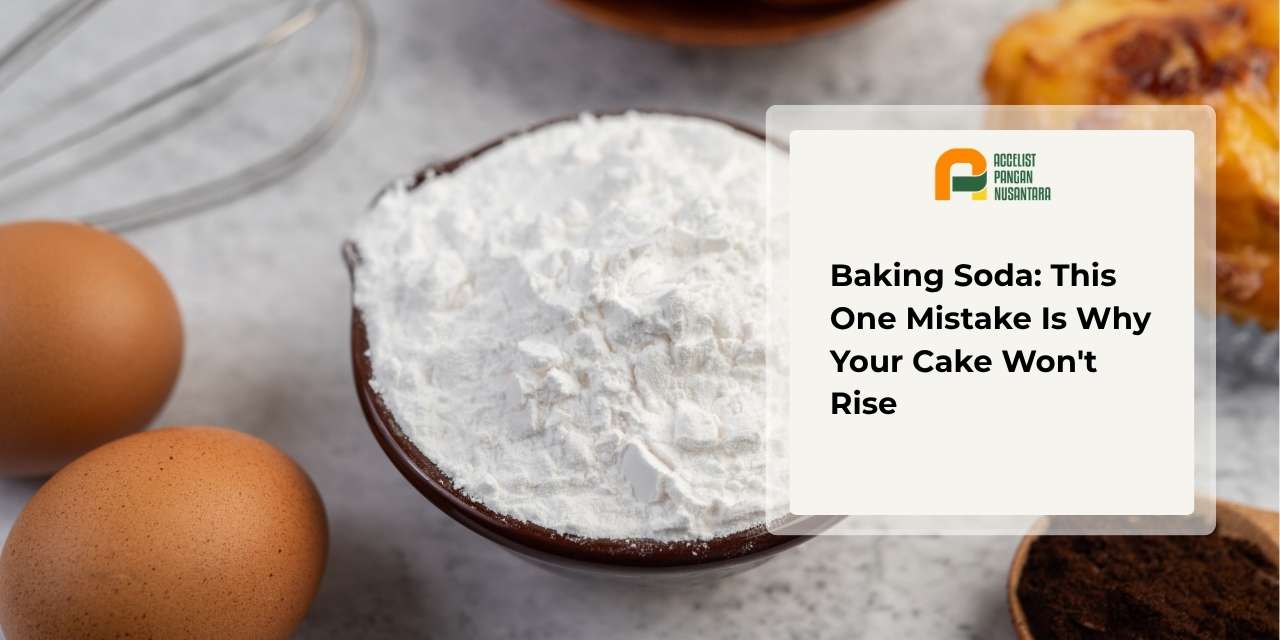
Picture this: you have carefully prepared every ingredient and followed the recipe step by step, yet the baked goods that come out of the oven are still flat and dense. Most people immediately blame their mixing technique or flour measurements, when the cause is often far simpler than that.
A leavening agent that is wrong for the recipe, or one that has lost its potency, is one of the most commonly overlooked reasons baked goods fail. Baking soda is a leavening ingredient found in nearly every baking recipe, yet how it actually works is frequently misunderstood, leading to results that fall short.
What Is Baking Soda?
Baking soda is a chemical compound known as sodium bicarbonate, with the formula NaHCO₃, and it comes in the form of a fine, odorless white powder. It has been used extensively in the food industry and in home kitchens alike as a reliable leavening agent.
It falls under the category of chemical leavening agents because it produces carbon dioxide gas (CO₂) through a chemical reaction. That gas is what forms tiny bubbles throughout the batter or dough, giving baked goods a light and airy texture.
How Baking Soda Works in Batter
Baking soda does not become active the moment it is mixed into the batter, as certain conditions need to be met for the reaction to occur properly. Understanding this mechanism before using it in any recipe is what separates predictable results from guesswork.
Reaction with Acidic Ingredients
Baking soda begins releasing carbon dioxide gas when it comes into contact with acidic ingredients, such as buttermilk, plain yogurt, vinegar, or lemon juice. This acid-base reaction happens quickly, so any batter that already contains baking soda should be processed without unnecessary delay.
In a red velvet cake recipe, for instance, the combination of baking soda and white vinegar produces a strong enough reaction to create a soft and tender crumb. Without an acidic ingredient present, baking soda will not function as intended and the cake will not rise.
The Role of Heat During Baking
Oven heat also accelerates the release of carbon dioxide from baking soda in the batter, particularly in the early stages of baking before the cake’s structure sets and firms up. This process happens fast, which is why batter should not sit at room temperature too long after all the ingredients have been combined.
If a muffin batter, for example, is left to rest for 30 minutes before going into the oven, some of the formed gas will escape and the texture will end up denser than expected. Bake immediately after mixing to get the most out of baking soda’s leavening power.
The Difference Between Baking Soda and Baking Powder
Baking soda and baking powder are frequently confused because their names sound similar and their basic purpose is the same: to make baked goods rise. However, the two differ in composition and in how they work, and that difference has a direct impact on the final result.
| Comparison | Baking Soda | Baking Powder |
| Composition | Pure sodium bicarbonate | Sodium bicarbonate + acid + starch |
| Requires Acidic Ingredient | Yes | No |
| Leavening Strength | Stronger (about 3x) | Milder |
| Common Use | Recipes with buttermilk, yogurt, vinegar | Recipes without acidic ingredients |
In practice, if a recipe calls for baking soda but contains no acidic ingredient, the finished baked good may taste bitter or carry a soapy aftertaste. Always choose a leavening agent based on what the recipe actually requires, not simply on what happens to be in the pantry.
Sodium bicarbonate itself is a mineral compound made up of sodium, hydrogen, carbon, and oxygen. Put simply, it is a powdered mineral salt with alkaline properties that has been used in culinary applications for centuries, valued for its ability to react with acids and release gas.
The Functions of Baking Soda in Baking
Baking soda does more than just make batter rise. Each of its functions directly affects the texture, color, and flavor of the finished baked goods, which is why its selection and use should not be taken lightly.
Leavening the Batter
The carbon dioxide gas produced by baking soda gets trapped in the batter and forms small pockets of air during baking. That porous structure is what gives baked goods a light feel and prevents them from turning out dense when eaten.
In a buttermilk pancake recipe, baking soda produces the characteristic fluffy texture that makes the pancakes thick and soft. Without a leavening agent, the same batter would yield pancakes that are noticeably thinner and chewier.
Creating Surface Browning
The alkaline nature of baking soda speeds up the Maillard reaction, a chemical process that turns the surface of baked goods brown when exposed to oven heat. This same process also contributes to the distinct toasted aroma and fuller flavor that well-baked goods are known for.
In chocolate cookies, baking soda produces a noticeably darker surface and a deeper, more complex flavor. The difference is clear when compared to cookies baked without any leavening agent at all.
Adding Crispness to Baked Goods
In dry baked goods such as biscuits or crackers, baking soda creates a more open dough structure that keeps them from going soft after baking. The resulting crispness also lasts longer compared to baked goods made with only flour and fat.
Oatmeal cookies made with baking soda, for instance, produce crisp edges while keeping the center soft. That contrast in texture is difficult to achieve without the right leavening agent.
Tips for Using Baking Soda Correctly
Despite appearing straightforward, small mistakes in using baking soda can compromise the final result of an entire batch. There are a few things worth noting to ensure baking soda performs at its best every time it is used.
1. Use the Right Amount
Too much baking soda makes baked goods taste bitter and leaves an unpleasant metallic aftertaste. A general guideline is to use 1/4 teaspoon of baking soda for every 120 grams (about 1 cup) of flour in a recipe.
For a recipe that calls for 240 grams of flour, 1/2 teaspoon of baking soda is sufficient. Use proper measuring spoons rather than regular cutlery to keep measurements accurate and consistent.
2. Pair It with the Right Acidic Ingredient
Baking soda only works effectively when there is an acidic ingredient in the batter to trigger the chemical reaction. Common acidic ingredients used in baking recipes include buttermilk, plain yogurt, apple cider vinegar, lemon juice, and natural cocoa powder (not the Dutch-processed kind, which has been treated with an alkalizing agent to reduce its natural acidity, resulting in a milder flavor and darker color).
If a recipe contains no acidic ingredient at all, use baking powder as a substitute, since it already contains an acid component within its formulation.
3. Store Baking Soda in the Right Place
Baking soda easily absorbs moisture and carbon dioxide from its surroundings, which causes it to lose its leavening potency faster than expected. Store it in an airtight container in a dry location, away from the stove and any source of steam.
To check whether baking soda is still active, dissolve one teaspoon in half a cup of hot water: if it fizzes vigorously, it is still usable. If there is no reaction, replace it before incorporating it into a recipe.
4. Combine with Eggs for a Stronger Batter Structure
Baking soda expands the batter by releasing gas, but that gas still needs a strong structure around it to hold its shape after the baked goods come out of the oven. Eggs play a critical role here, as their protein content forms a network that keeps the batter firm while also locking in moisture so the baked goods do not dry out quickly.
In a chiffon cake recipe, for instance, the combination of baking soda and whipped egg whites produces a texture that is both light and structurally stable. Without eggs, a batter that has risen well in the oven often collapses back down once it is removed from the heat.
Conclusion
Baking soda is a leavening agent that works through a chemical reaction between sodium bicarbonate and an acidic ingredient, producing carbon dioxide gas that makes batter rise while also shaping the texture, color, and flavor of the finished baked goods. Understanding how it works, how it differs from baking powder, and the right way to use it will make baking far more predictable and the results more consistent.
Beyond baking soda, the quality of supporting ingredients also determines the final outcome of any baked good, including eggs, which help bind the batter and retain its moisture. To meet that need, Accelist Pangan Nusantara offers Mixed Egg Powder that is practical, easy to measure, and consistent in quality, making it a reliable choice to support every baking process.
FAQ
Yes, they are different names for the same ingredient: sodium bicarbonate (NaHCO₃).
Yes, as long as the recipe contains an acidic ingredient. Use about 1/4 of the amount of baking powder called for, since baking soda is roughly three times stronger.
Baking soda generally stays effective for up to two years when stored in a tightly sealed container in a dry location.
The baked goods will taste bitter, carry a metallic aftertaste, and may collapse in the center during baking.
In amounts specified by a recipe, baking soda is safe to consume. Taking it in large amounts directly is not advisable due to its relatively high sodium content.