
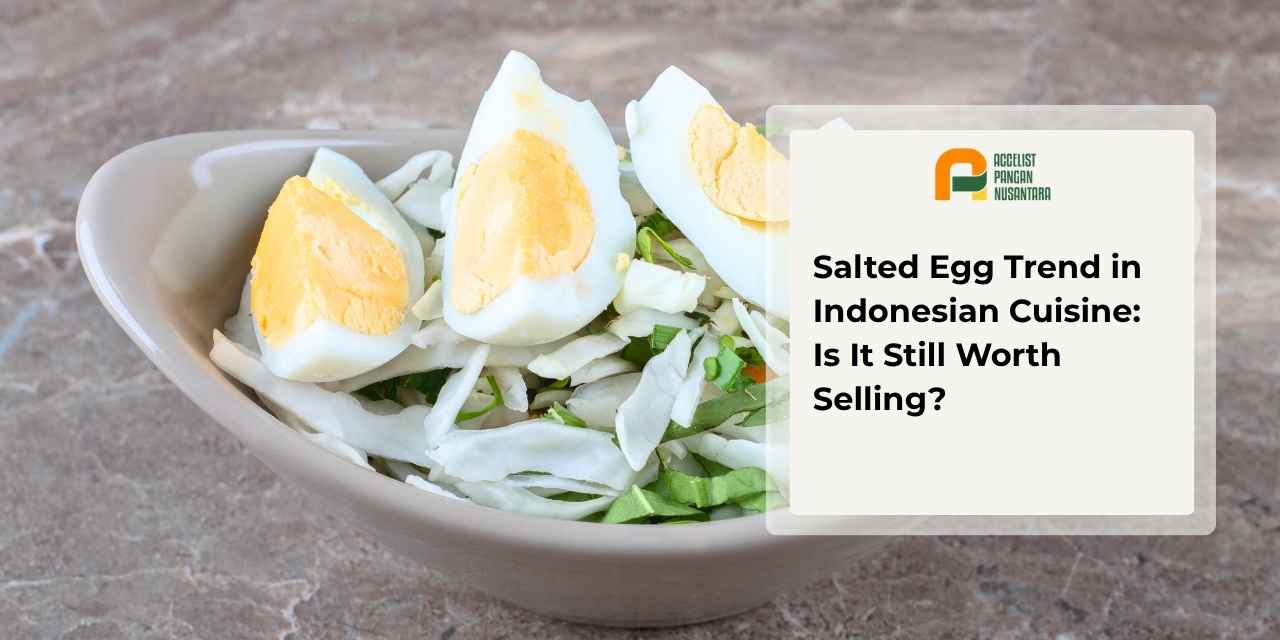
The salted egg trend is the growing popularity of foods flavored with salted egg yolk, known for a smooth, rich, salty-savory taste. For restaurants, cafes, caterers, and snack producers, the question is whether this flavor still deserves a place on the menu.
The short answer: it is still worth selling, as long as you treat salted egg as a flavor variant and not as your business’s only identity. This article covers how the trend began, its forms today, why people like it, whether it will last, and five steps to test it in your business.
The Origins of the Salted Egg Trend in Indonesia
The salted egg trend in Indonesia started to show in early 2017, when searches for “salted egg” on Google began to climb, and it peaked in mid-2018. This pattern comes from Google Trends data (Google’s tool for tracking search interest) cited by Tirto.id, an Indonesian news site.
Salted eggs (telur asin in Indonesian) have long been a familiar side dish in Indonesia, and Brebes in Central Java is known for them. An article on the origins and character of salted egg covers the history of egg salting and its flavor.
What sets the trend apart from plain salted eggs is the salted egg yolk sauce flavor, which became popular in Singapore and Malaysia first. It entered Indonesia through restaurants, cafes, and social media, and local producers then turned it into packaged snacks and ready-to-use sauces.
Forms of the Salted Egg Trend in Indonesian Food Today
The salted egg trend in Indonesian food today appears in four food groups: snacks, restaurant and cafe menus, bread and desserts, and processed ingredients. Below are example dishes, the businesses that suit each group, and what to watch for.
Snacks
Salted egg flavor on snacks comes from seasoning powder dusted onto cassava chips, potato chips, fish skin, macaroni snacks, or popcorn. This group suits snack producers and small businesses that sell oleh-oleh (regional food gifts).
Make sure the seasoning coats evenly and the saltiness does not overpower the snack’s own flavor.
Restaurant and Cafe Menus
Restaurants and cafes use salted egg sauce to coat fried chicken and shrimp, and as a sauce served with chicken rice, pasta, burgers, and rice bowls.
Keep the sauce’s thickness and flavor consistent in every serving. A sauce that separates or makes fried food soggy lowers the quality of the dish.
Bread and Desserts
In bread, salted egg yolk serves as a molten filling in bakpao (steamed buns), croissants, and doughnuts. Another form is fried bread with a sweet filling made from mashed salted egg yolk.
Bakeries and small cake businesses need to balance the filling against the dough so the saltiness does not dominate and the filling does not leak.
Processed Ingredients
Salted egg is also sold as a processed ingredient: separate salted yolks, powder, instant seasoning, and ready-to-use sauce. These ingredients make things easier for businesses that would rather not cure eggs and process the yolks themselves.
One example is Salted Egg Powder from Tamaco, which delivers the taste of salted egg without manual processing. The product can be used for snack seasoning and fillings in savory baked goods.
Why Salted Egg Is Popular
Salted egg is popular because savory, salty, slightly sweet, and creamy flavors come together in a single seasoning. Four factors explain its appeal.
- Salted egg yolk has a fine, sandy texture and releases natural oil, which makes the sauce taste rich.
- A deep savory taste, known as umami, leaves a flavor that lingers in the mouth.
- Salted eggs have long been a familiar side dish in Indonesia, so the flavor does not feel foreign as a sauce or snack.
- One flavor pairs with foods that already sell well. A business only needs to add one variant without changing the base menu.
Is the Salted Egg Trend Still Going?
The salted egg trend is still going in 2026, but as one flavor option among others.
In March 2026, Indonesian news agency ANTARA listed crispy baby crab and crispy chicken skin with salted egg seasoning in a review of snacks with viral potential. The same review also lists seaweed and spicy cheese flavors on basreng (crispy fried meatball snacks) and macaroni snacks, and truffle and honey butter flavors on chips.
That means salted egg competes with other flavors for customers’ attention, and the interest peak in 2018 does not guarantee the same demand in 2026. For that reason, you should not depend on a single flavor for all your sales.
5 Steps to Test the Salted Egg Trend on Your Menu or Product
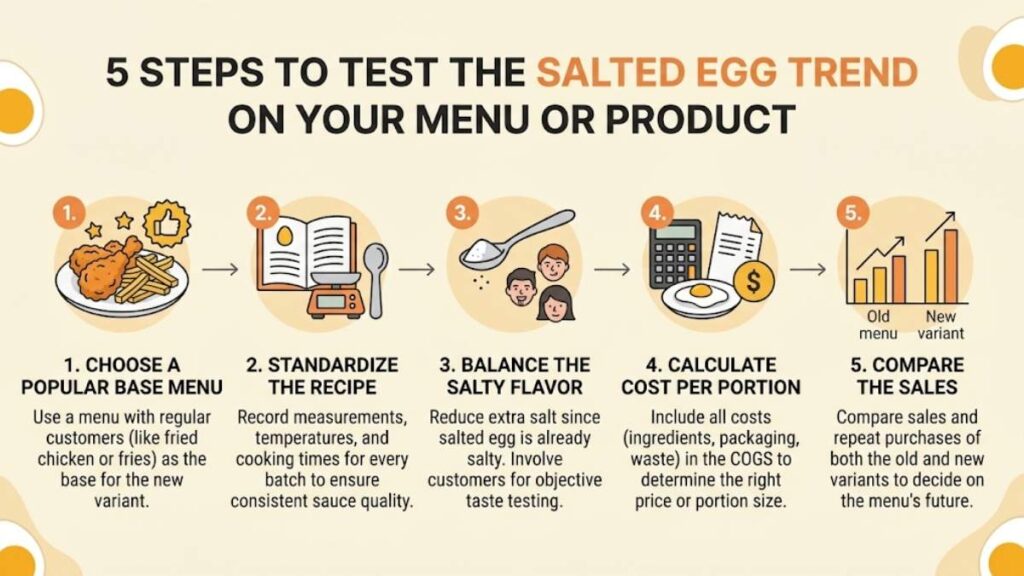
The safe way to test the salted egg trend is to add it as a variant of a proven menu item, then review sales before expanding production. The five steps below walk you through it.
1. Choose One Proven Menu Item as the Base for the Variant
Pick an item with regular customers, such as fried chicken or french fries. Customers already know the base item, so the variant’s sales reflect interest in the salted egg flavor.
2. Standardize the Sauce or Seasoning Recipe
Record the amount of every ingredient by weight, plus cooking temperature and time, for each batch (one production run).
Egg yolk works as an emulsifier, an ingredient that binds fat and water in a sauce. That bond can break if the sauce gets too hot.
3. Balance the Saltiness
Salted egg yolk is already salty, so use less added salt than a regular sauce recipe calls for. Include your target customers in taste tests, because a kitchen team tends to be biased toward its own recipe.
4. Calculate the Cost per Serving
Include the price of salted egg yolk, fat, seasoning, packaging, waste, and defective products in the cost of goods sold (COGS) per serving. A variant that sells well but has a thinner margin than other menu items needs a price or portion-size adjustment.
Egg prices can change, so recalculate your COGS regularly. An article on managing egg supply chain risk covers this risk in more detail.
Read also: How to Manage Egg Supply Chain Risk Without Disrupting Output
5. Compare Sales, Then Decide
Sell the variant alongside the existing item over the same period, then compare sales volume and repeat purchases. Set a minimum sales target before the test starts so the decision does not follow the team’s preferences.
Check Google Trends regularly to read the direction of search interest. Compare the keyword “salted egg” with one benchmark flavor, such as balado (a spicy Indonesian chili seasoning), over a long period so seasonal patterns show up.
Conclusion
The salted egg trend in Indonesia has grown since 2017 and now persists as a flavor variant in snacks, restaurant menus, bread, and processed ingredients. Salted egg is worth selling as a variant, not as the only identity of a business.
Standardize the recipe and calculate the cost per serving before you increase production. Read the sales results, then decide on the next step. The first step you can take is to choose one best-selling menu item and write a standard recipe for its salted egg variant.

FAQ
What Is the Difference Between Telur Asin and Salted Egg?
Literally, they are the same thing. In food trends, “salted egg” usually means a flavor or sauce made from the yolk, while telur asin means a whole salted duck egg served as a side dish.
Why Is Salted Egg Usually Made with Duck Eggs?
Duck egg yolks contain more fat than chicken egg yolks, so the cured result is denser and oilier. You can also use chicken eggs, but their yolks tend to be drier and paler.
What Other Ingredients Go into Salted Egg Sauce?
Recipes usually combine mashed salted egg yolk with butter or margarine, garlic, chili, and curry leaves. Some cooks add milk to make the sauce smoother.
Do Salted Egg Menu Items Need an Egg Allergen Label?
Yes, eggs are a common allergen, so you should list them on the menu or product label. This information helps customers with an egg allergy choose another item.