
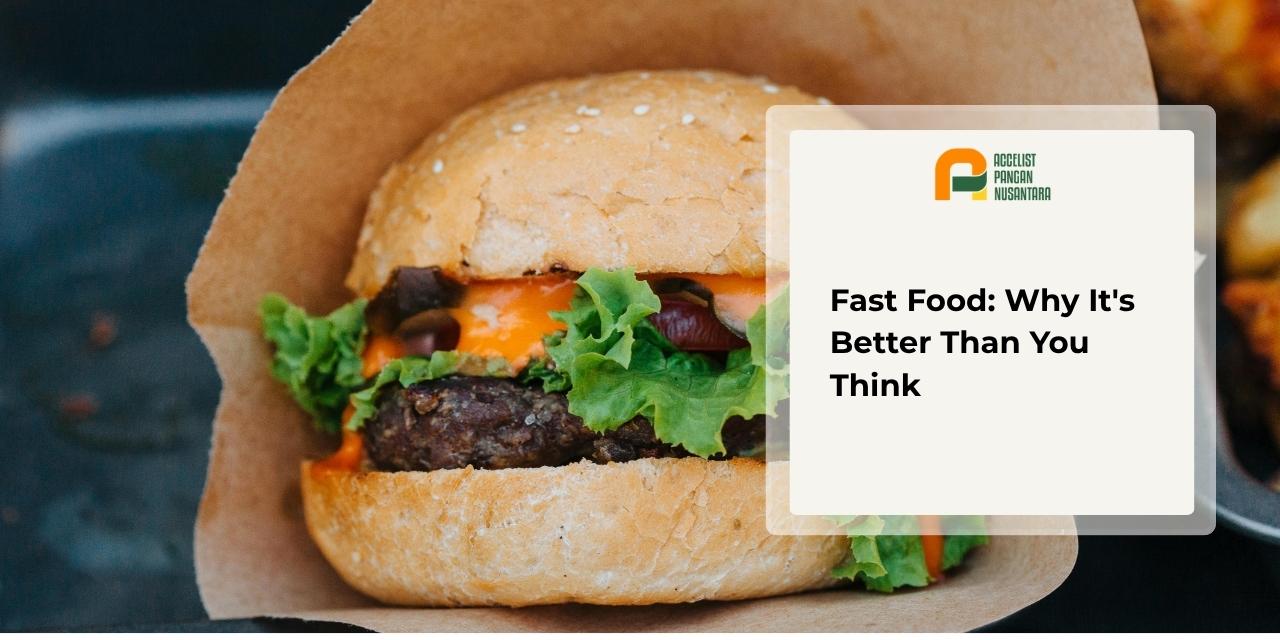
The global food industry has undergone massive changes in the last two decades. However, this sector is often faced with misconceptions surrounding the quality of fast food menus.
Many consumers and business players assume that speed of service is always closely related to a decline in nutritional standards and raw material quality. In fact, when viewed from the perspective of health and food safety systems, the operational reality of the modern culinary business is very different.
The quality of a dish is not determined by how fast the food is served, but by the integrity of the supply chain (the flow of raw materials) and the standardization of processes in the kitchen.
What is Fast Food?
Technically, the term fast food refers to a fast-paced restaurant service system model. In the culinary industry, this concept is better known as Quick Service Restaurant (QSR). Its main focus is the efficiency of product movement from the kitchen area to the customer’s hands.
This definition purely explains how the restaurant’s daily operations work. This term is not a benchmark indicating the low nutritional value of a food. Serving speed is a tangible result of a highly mature workflow management system.
Based on data from Mordor Intelligence, the global QSR industry is valued at around USD 1.16 trillion in 2026. This figure is projected to continue growing at a rate of 8.41% annually until 2031. The report states that rapid urbanization and busy lifestyles are the main drivers.
This operational transformation is also visible from the high adoption of technology in various outlets. Currently, more than 40% of QSR transactions come from digital orders by consumers. This directly reflects the high demand for efficiency and speed in today’s service systems.
This short food preparation process is supported by ingredient preparation in integrated distribution centers. The use of high-tech cooking equipment in outlets also largely determines the quality of the final product. Machine automation in commercial kitchens has successfully replaced slow and bacteria-prone manual workflows.
Various fast food menus are currently required to comply with multinational standard food safety audits. These strict procedures refer to the World Health Organization (WHO) guidelines to prevent biological contamination. The modern fast food industry has also begun implementing more transparent nutritional information standards for consumers.
Characteristics of Fast Food
The main characteristic of fast food is the very short serving time. This can happen because the raw materials have been thoroughly prepared at the distribution center. The workflow of each kitchen crew is also arranged in such a way that customer service runs quickly.
In addition to time efficiency, standardization is a key factor in this commercial industry. You will always get the exact same taste, food temperature, and portion in every branch. This strict quality control guarantees food safety for all customers.
This consistency starts with a very strict selection of raw materials at the supplier level. Every food ingredient must first pass modern food industry standard tests. These technical tests include checking water content up to safe microbiological limits.
This industry also minimizes direct contact between workers’ hands and raw materials. The goal is to reduce the risk of bacterial transfer or cross-contamination. Therefore, hygiene standards in commercial kitchens are often much stricter than in home kitchens.
Today, the transparency of nutritional information is also a new operational hallmark. Consumers can directly see the details of nutritional values on the available restaurant menus. You can easily check the number of calories to allergen warnings before ordering food.
Most Popular Fast Food Menu Categories
The fast food industry has a very wide variety of menus that go far beyond just fried dishes. Here are some classifications of the main dishes that dominate consumer preferences in the global culinary market. These various menus are specifically designed to meet the needs of highly mobile customers.
- Burger
A combination of carbohydrates, animal protein, and vegetables in buns, assembled quickly using standardized ingredients. - Sandwich
Bread layered with vegetable fiber and high-quality meat, efficiently concocted for a practical lifestyle. - Fried Chicken
Flour-coated chicken cooked using high-temperature industrial pressure fryers to maintain meat moisture. - Mass Pizza
Quick-fermenting dough automatically baked through a conveyor oven with absolute heat stability levels. - Salads and Wraps
Sanitized fresh vegetables specially arranged to retain vitamin content during lightning-fast serving times.
The various categories above show that the availability of menu choices today is highly diverse. The culinary industry essentially only provides a measurable and fast food service platform. The final nutritional composition consumed will heavily depend on your smart decisions as a customer.
Differences Between Junk Food and Fast Food
Public understanding is often trapped in bias when identifying these two culinary terms. It is very important for you not to confuse fast food with junk food. Both have very different technical parameters and nutritional matrices
Fast food refers to the logistical methods and service speed of a restaurant. In contrast, junk food is a term for a group of foods with a very poor nutritional profile. These foods are loaded with empty calories that have no essential nutritional function for the body.
Dietitians and the Food and Drug Supervisory Agency (BPOM) regulations also separate the boundaries of these two categories. You should always pay attention to the food labels on packaged products according to applicable regulations. This rule ensures that every product must transparently display nutritional value information.
Here is a comparison table to help you objectively distinguish between the two:
| Aspect | Fast Food | Junk Food |
| Main Definition | A restaurant service model based on operational serving speed. | A low-nutrition consumption product packed with empty calories. |
| Nutritional Content | Macronutrient composition varies from balanced to protein-dense. | Always dominated by added sugars, sodium, and saturated fats. |
| Specific Examples | Salads, grilled chicken wraps, burgers, and french fries. | Sweet candies, carbonated drinks, biscuits, and highly preserved chips. |
| Security Standards | Generally possesses global-level food safety procedure certifications. | Often in the form of mass-produced, ultra-processed packaged products. |
Fast Foods That Are Not Considered Junk Food
Fast food service business players are currently very proactive in responding to the increasing health awareness of modern consumers. Many outlets now offer functional menu formulations specifically designed with macronutrient balance in mind. You now have full control to enjoy practical services without having to sacrifice daily nutritional intake.
This food product innovation is clear evidence that the culinary industry continues to evolve in a more positive direction. Here is a lineup of fast food menu innovations validated to not fall into the junk food category:
- Protein Salad Bowl
A combination of hygienic hydroponic vegetables and pure protein sources without saturated fats to meet nutritional needs. - Authentic Sauce Fried Chicken
Export-standard quality meat fillets seasoned with natural spices without excessive synthetic flavorings. - Whole Wheat Sandwich
Fiber-rich complex carbohydrate bread that is highly effective in keeping the body’s glycemic index stable. - Ready-to-Eat Pastry
Functional bakery products optimally baked using high-quality vegetable fats as a quick energy source.
These innovative formulations prove that fast food menus can remain delicious with a much more balanced nutritional profile. However, replicating the quality standards of healthy products on a mass scale is certainly a unique operational challenge for industry players. This continues to push corporate culinary research divisions to always maintain their commitment to food quality control.
Fast Food Kitchen Operational Challenges
Managing a fast food kitchen is a highly complex technical task for culinary industry players. These operations involve managing massive food production volumes within very short time frames. Every staff movement in the kitchen must comply with Standard Operating Procedures (SOPs) with discipline and accuracy.
Standardizing Flavor Identity Across Outlets
Maintaining food taste consistency across various cities is a massive technical challenge. This process requires the use of seasoning measurements that have undergone strict laboratory supervision. Cooking equipment in every outlet must also be calibrated regularly to ensure temperature stability.
Without this standardization, consumer trust levels towards a brand would certainly decline rapidly. Therefore, quality control is strictly carried out at every stage of production without exception. This quality evaluation ensures the product you receive always meets expectations.
Supply Chain Management and Raw Material Shelf Life
Fresh raw materials have a limited expiration period and are highly susceptible to microbiological spoilage. Cold chain management must be disciplined from the supplier stage to the restaurant. This temperature-controlled system is the main key so that raw materials remain fresh when processed for you.
According to food safety guidelines from the Food and Agriculture Organization (FAO), food quality starts from the integrity of the supply chain. Modern fast food restaurants are generally equipped with highly advanced raw material tracking systems. This tracking technology makes it easy for managers to accurately monitor the viability of every supply.
Preparation Time Efficiency and Contamination Control
Fast food kitchen designs are specifically tailored to cut customer waiting times without neglecting hygiene standards. The use of various automated equipment greatly helps in suppressing the risk of manual errors from workers. This technological approach has proven effective in preventing potential food poisoning due to cross-contamination.
Every kitchen staff member is also required to undergo food safety training according to the Indonesian Ministry of Health standards. This training aims to ensure a culture of cleanliness is deeply ingrained in every operational action. Thus, the food processing can run very quickly while still ensuring its health safety.
Conclusion
The fast food operational system is a major innovation in the modern culinary service industry. Equating service speed efficiency with low nutritional quality is an unscientific misconception. With strict hygiene regulations, modern commercial restaurants have proven capable of serving safe and quality food.
The operational success of a Quick Service Restaurant (QSR) heavily depends on selecting processing technology from the right supplier vendor. This decision is crucial to answer operational challenges such as quality standardization and short ingredient shelf life. The risk of spreading harmful bacteria can also be significantly suppressed through smart supply management.
As a form of adaptation to the complexity of flavor standardization, component shelf-life limits, and the threat of pathogen spread, commercial catering businesses down to the household realm have a cutting-edge choice. Integrating Tepung Telur Mix (Whole Egg Powder) as well as Tepung Kuning Telur (Egg Yolk Powder) produced by Accelist Pangan Nusantara is a highly essential supply maneuver.
This technology is formulated to guarantee your dish’s flavor character identity is safe, its application is very concise, and it eliminates the problem of premature spoilage of liquid ingredients.
FAQ
No, fast food refers to the speed of service, while junk food refers to food with very low nutritional value.
You can check the nutritional information tables usually available on menus, product packaging, or the restaurant’s official website.
Food safety is generally assured, but for long-term health it should be combined with a balanced variety of other nutrients.
They typically use global standards such as HACCP, ISO 22000, and Halal certification to ensure product quality.
This is achieved through economies of scale in sourcing raw materials and highly optimized operational systems.