
Operational efficiency and consistent quality are two standards the food industry cannot afford to compromise. Fluctuating prices for fresh raw materials and the risk of microbiological contamination remain persistent challenges for businesses at every scale, from small enterprises to large manufacturers.
Egg powder addresses both. It has grown from an alternative ingredient into an industry standard for producers who prioritize food safety and scalable operations.
What Is Egg Powder?
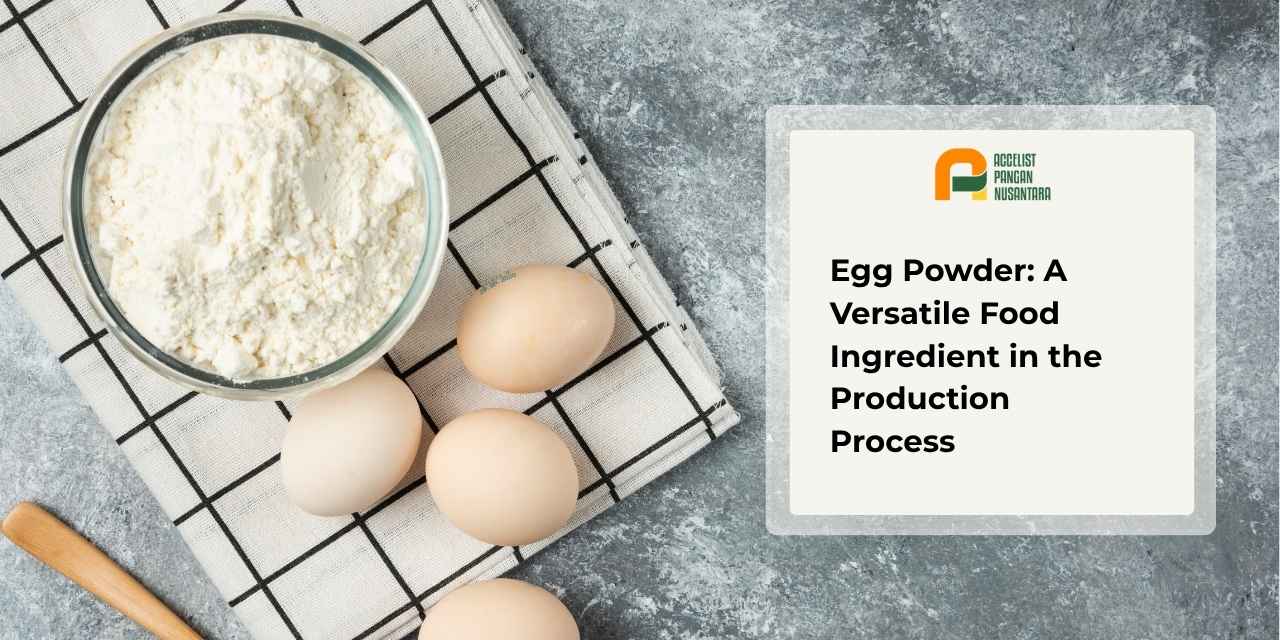
Technically, egg powder is a dehydrated form of fresh eggs processed through advanced drying methods, most commonly spray drying technology.
This process converts liquid egg into a fine powder by removing most of its moisture content without damaging the core protein structure.
The primary goal of this conversion is to extend the shelf life while preserving the biological functionality of the eggs, such as their ability to aerate (trap air) and emulsify (bind fat and water together)
For manufacturers, egg powder delivers a level of standardization that fresh eggs simply cannot guarantee. Fresh egg quality varies with the hen’s age, feed, and post-harvest handling. Powder eliminates that variable.
Benefits of Egg Powder at Industrial Scale
The shift toward egg powder in global food manufacturing comes down to technical efficiency and risk management.
1. Extended Shelf Life
Fresh eggs spoil quickly and are highly sensitive to temperature. Egg powder has very low water activity (aw), which stops spoilage bacteria from growing.
This allows it to be stored far longer than fresh eggs, directly reducing losses from wasted raw materials.
2. Space-Efficient and Practical
Storage space costs money. Fresh eggs require refrigeration, dedicated trays, and careful handling to prevent breakage.
Egg powder packs high nutritional density into a compact form. No chiller required. No cracked shells to deal with.
Measuring becomes precise, and the time spent breaking eggs during production disappears entirely.
3. Lower Risk of Bacterial Contamination
Food safety is non-negotiable. Fresh eggs carry an inherent risk of Salmonella contamination, both on the shell and inside.
Egg powder is pasteurized before drying. This controlled heat process kills dangerous pathogens without over-denaturing the proteins.
The result is a hygienic raw material that supports compliance with food safety standards like HACCP and ISO 22000.
Is Egg Powder Safe to Consume?
This question often comes to mind for both consumers and manufacturers who have recently made the switch. The answer is: It’s very safe.
Egg powder is fresh egg with the water removed. No harmful chemicals are added in any standard industrial production process. Macronutrients (protein and fat) remain intact. The pasteurization step actually makes it safer than conventionally marketed fresh eggs.
For businesses targeting export markets or strict retail standards, egg powder also offers better traceability and hygiene consistency than eggs sourced from open markets.
The Difference Between Egg Powder and Fresh Eggs
To help you make decisions regarding ingredient substitutions, here is a technical comparison of these two products:
Parameter Fresh Eggs Egg Powder
To help you make decisions regarding ingredient substitutions, here is a technical comparison of these two products:
| Parameter | Fresh Eggs | Egg Powder |
| Moisture Content | High (~75%) | Very Low (<5%) |
| Shelf Life | 3–4 Weeks (Room Temp/Chiller) | 12–24 Months (Room Temperature) |
| Storage | Requires Chiller & Trays (Space-Heavy) | Room Temp, Sealed Packaging (Compact) |
| Bacterial Risk | High Salmonella Risk | Salmonella-Free (Pasteurized) |
| Handling | Fragile, Labor-Intensive | Easy to Measure, Precise |
| Waste | Eggshells | None |
Types of Egg Powder
In industrial applications, a single type of egg cannot serve all purposes. Accelist Pangan Nusantara understands the need for different technical specifications for each product line. The following is a classification of egg powder variants based on their functional characteristics:
1. Egg White Powder
Egg white powder is processed purely from albumen. High protein content, low fat. Functionally, it is a strong structural agent: its proteins trap air when whipped, giving dough maximum volume.
Technical Benefits & Applications: This product is ideal for applications that require high foam stability and a sturdy yet lightweight structure.
- Bakery & Pastry: Important for aerated batters like sponge cake, chiffon cake, angel food cake, and Swiss roll, prevents collapse during cooling.
- Confectionery: Required for meringue, macarons, marshmallows, and royal icing that need a firm, stable texture at room temperature.
- Savory & Healthy Food: High-protein binder for healthy nuggets, chicken sausage, pempek sutra, and low-cholesterol frittata.
- Supplements: Used as a base for protein shakes and energy bars because of its complete amino acid profile.
2. Salted Egg Powder
Food innovation demands efficiency in flavor. Processing fresh salted eggs is time-consuming from boiling to separating the yolks and results in significant flavor variability. Salted egg powder is the solution for delivering a consistent, authentic savory flavor profile without the hassle of manual processing.
Technical Benefits & Applications: The powder form facilitates precise dosing in seasoning mixes or sauces, ensuring that every production batch has a consistent flavor.
- Dry Snacks: Premium seasoning for potato chips, fish skin, popcorn, and tempeh chips.
- Sauces & Condiments: Base ingredient for salted egg sauce (poured over fried chicken or shrimp) and the filling for molten salted egg bao.
- Modern Pastry: Adds a savory-sweet dimension to salted egg croissants, cookies, and Indonesian layer cake variations.
3. Whole Egg Powder (Egg Mix Powder)
Whole egg powder is the closest replica of a full fresh egg. Made from a precise combination of white and yolk in their natural ratio, it is designed as a drop-in replacement for producers who want to switch from fresh eggs without reformulating recipes.
Technical Benefits & Applications: It is highly versatile, providing a balance between structure (from the egg whites) and creaminess/emulsion (from the egg yolks).
- General Bakery: Direct substitute for fresh eggs in sweet bread, donuts, pound cake, muffins, and pancake mixes.
- Pasta & Noodles: Gives natural color and chewiness to egg noodles, fresh pasta (fettuccine, ravioli), and dim sum wrappers.
- Processed Meat: Effective binder for meatballs (bakso), sausages, burger patties, and katsu breading.
- Outdoor & Emergency Food: Common in military rations and hiking supplies because it reconstitutes quickly and stores without refrigeration.
4. Egg Yolk Powder
Egg yolk is an exceptionally rich source of fat and lecithin (a natural emulsifier). This product is specifically designed to provide a creamy texture and natural richness. In addition to its flavor, egg yolk powder imparts an appealing natural color to the final product, eliminating the need for additional synthetic colorants.
Technical Benefits & Applications: Its main strength lies in the emulsion’s ability to bind water and oil together so they do not separate.
- Cold Emulsion Sauces: A food-safety standard (Salmonella-free) for mayonnaise, salad dressings (Caesar, Ranch), and Hollandaise sauce.
- Premium Bakery: Gives the moist, tender texture that defines lapis legit (spekkoek), lapis Surabaya (spiku), brioche, and panettone.
- Desserts & Custard: Base ingredient for custard cream (vla), ice cream (French vanilla), crème brûlée, and egg tart.
- Finishing: Used as egg wash on nastar cookies and bread for a glossy, golden-brown surface.
Accelist Pangan Nusantara Solutions for Your Business
Recognizing these complexities, Accelist Pangan Nusantara serves not merely as a supplier, but as a strategic partner to the food industry.
We understand that in the B2B sector, you need more than just products; you need reliability.
Our commitment to quality centers on three key areas: Food Safety, Consistency, and Customer Efficiency.
Our products are designed to support businesses of all sizes:
- Food Manufacturers: Stable supply for high-volume production runs.
- HORECA: Faster preparation and leaner kitchen operations.
- SMEMSMEs (Micro, Small, and Medium Enterprises): Easy application and storage without expensive cold chain investment.
Every product is formulated to preserve the natural taste and functional properties of eggs, so your finished products meet the standard your customers expect.
Conclusion
Switching to egg powder is a practical decision for any food business looking to tighten efficiency without compromising quality. It reduces raw material spoilage, strengthens food safety compliance, and delivers consistent flavor and texture across every production batch.
Choose a supplier who does more than sell powder. Standards and certifications matter. Accelist Pangan Nusantara is built to keep your business safe, efficient, and reputation-worthy.
FAQ
As a general rule, 1 kg of egg powder is equivalent to approximately 80–85 fresh eggs (depending on size). Always follow the rehydration ratio on our technical product sheet for best results.
Yes. Halal compliance is a production standard, not an optional add-on. Our products meet Indonesia’s Halal regulatory requirements.
Absolutely. Our Whole Egg Powder is formulated to be versatile enough for both home kitchens and industrial production lines.
Stored in an airtight container in a cool, dry place, the product remains stable for an extended period. We recommend following a First-In-First-Out (FIFO) system to maintain freshness and aroma quality.