
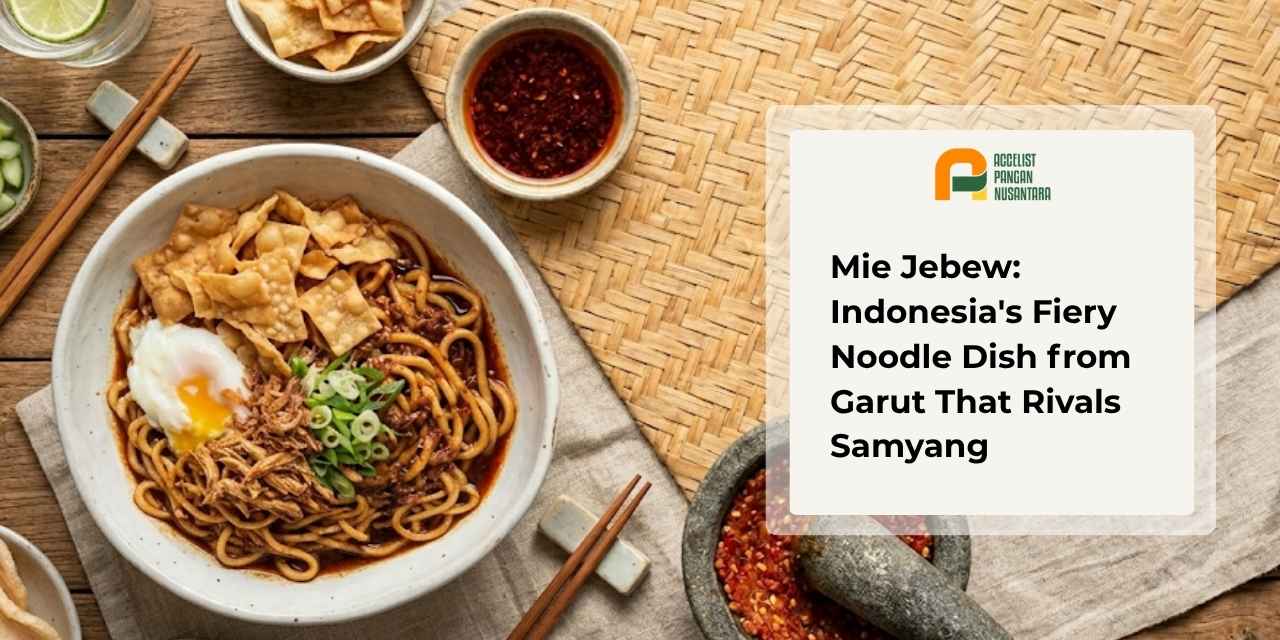
Some foods announce themselves through color alone. Not because they look appetizing in the conventional sense, but because there is something about them that feels like a direct challenge.
That is the first impression almost anyone gets when they see a bowl of mie jebew for the first time. This spicy noodle dish from Garut, West Java, grew from a modest street stall into one of the most talked-about local street foods in Indonesia, earning the title of “Indonesia’s answer to Samyang.”
What Is Mie Jebew?
For those who have never tried it or are simply curious, there is quite a bit worth understanding before taking on this noodle’s “challenge.” From the meaning behind its unusual name to the story of how it came to be, every part has something to say.
The Origin of the Name “Jebew”
The word “jebew” is not just a name that sounds amusing. It carries a meaning that accurately describes the experience of eating it: the word comes from Sundanese and refers to swollen or puffed-up lips, the condition that sets in after consuming something intensely spicy.
Picture someone who has just finished a level 5 bowl (extreme heat), their lips feeling slightly thickened from the chili’s intensity. That sensation is exactly what the name “jebew” has always tried to capture since the dish was first introduced.
The History Behind Mie Jebew
Mie jebew did not come from a large factory or a food corporation. It came from the simple creativity of a local seller in Garut, West Java. According to an interview published by iNewsGarut.id (February 12, 2023), the person behind Mie Jebew Teh Emil is Haedy Robert, known as Obet, a Garut native who around 2015 was working as an office boy at a hotel in Garut before being reassigned to the kitchen, and that is where his inspiration began.
What started as something enjoyed only by neighbors gradually grew into a much wider following that crossed city lines. Mie Jebew Teh Emil then became the starting point for the dish’s spread across West Java and eventually the rest of Indonesia.
What Makes Mie Jebew Different from Other Spicy Noodles
Not every red noodle qualifies as mie jebew, because there are specific characteristics that define it. From its striking visual identity to its tiered spice system, each element plays a role in shaping what makes the eating experience distinct.
1. A Bright Red Color That Stops People in Their Tracks
Unlike typical fried noodles with their yellow-brown color, mie jebew arrives in a vivid, almost arresting shade of red that often surprises first-time buyers. That color is not artificial coloring for its own sake. It reflects the thick chili paste coating every strand of noodle.
A first-time customer almost always reacts with visible surprise when the bowl arrives, because nothing about it matches the expectation of a regular noodle dish. That visual effect is also what drives so many people to photograph it before eating.
2. A Flexible Spice Level System
One thing that sets mie jebew apart from other spicy noodle dishes is its spice level option, typically running from level 1 (mild heat) to level 5 (extreme heat). This gives buyers direct control over how much intensity they want to take on.
Level 1 works well for those who are new to spicy food, while level 5 is a genuine test even for experienced chili eaters. That flexibility is what allows mie jebew to reach a wider audience than most extreme-spice dishes ever do.
3. Varied Toppings
Mie jebew is not served plain. Sellers typically offer a range of toppings: bakso (Indonesian meatballs), cuanki (steamed fish dumplings), chicken feet, wontons, and more.
The variety of toppings means every bowl can feel slightly different depending on what is chosen. This is part of what keeps the dish from feeling repetitive even for those who come back often.
Key Ingredients in Mie Jebew
One reason mie jebew has been so easy to replicate and adapt across regions is that its ingredients are simple and widely available. Below are the components commonly used in making it.
Noodle components:
- Fresh yellow noodles or egg noodles with a chewy texture
- Eggs, which contribute to the noodle’s elasticity and characteristic color
Seasoning components:
- Chili powder or chili oil as the main source of heat
- Garlic, sautéed until fragrant
- Soy sauce, oyster sauce, sugar, and pepper to balance the flavor
Toppings (optional):
- Bakso, cuanki, chicken feet, or wontons, as preferred
- Sliced green onions and fried shallots as garnish
The quality of the noodle itself determines the texture of the whole dish. Noodles that stay chewy and intact when tossed in hot seasoning produce a noticeably better result than ones that fall apart.
Regional Variations of Mie Jebew
As its popularity has spread, mie jebew has been adapted to suit local ingredients and preferences in different parts of Indonesia. Below are some of the best-known variations to date.
| Variation | Brief Description |
| Classic Garut Mie Jebew | The original version, with thick chili paste, bright red color, and spice levels from 1 to 5 |
| Mie Jebew Kuah (Soup) | Served in savory broth, easier on the stomach but still carries the signature heat |
| Bangka Mie Jebew | A version from Bangka Island; the word “jebew” here comes from Hakka Chinese meaning “mixed noodles,” made rich with fresh seafood toppings |
| Modern Mie Jebew | A city adaptation with contemporary toppings such as melted cheese, sausage, or a fried egg |
Each variation holds onto the core character of a noodle dish with a bold, assertive flavor. That range is part of what gives mie jebew staying power, because the same concept can take many different forms without losing what makes it recognizable.
How Mie Jebew Compares to Other Noodle Dishes
To some people, spicy noodles may all seem alike. Looked at more closely, though, mie jebew has several clear differences from other popular noodle dishes in Indonesia, including mie ayam, mie goreng, seblak, and Samyang, which is the most frequent comparison.
| Aspect | Mie Jebew | Mie Ayam | Samyang |
| Color | Bright red | Yellow/brown | Orange/red |
| Flavor Profile | Spicy-dominant, savory | Savory, light broth | Spicy, slightly sour |
| Spice Level | High, levels 1 to 5 | optional (as needed) | Very high |
| Origin | Garut, Indonesia | Indonesia (Chinese influence) | South Korea |
The most fundamental differences lie in color, spice intensity, and the level system that puts control in the eater’s hands. Where Samyang delivers a standardized heat level set at the factory, mie jebew gives each seller room to adjust the formula, which means the experience can vary from one stall to the next.
Nutritional Information and Health Considerations
Before enjoying mie jebew, it helps to understand what is in it so consumption can be approached sensibly. The dish is not just about heat; it also carries nutritional information worth knowing.
Nutritional Content per 100 Grams
Based on data from FatSecret Indonesia, below is the nutritional breakdown of mie jebew per 100 grams:
| Nutritional Component | Amount |
| Energy | 208 kcal |
| Fat | 10.12 g |
| Carbohydrates | 25.06 g |
| Protein | 5.36 g |
| Fiber | 1.9 g |
| Sodium | 575 mg |
| Cholesterol | 54 mg |
From that breakdown, mie jebew is a fairly calorie-dense dish, with energy contributions from fat (43%) and carbohydrates (47%) running almost equal. The sodium content of 575 mg per 100 grams is also worth noting for those who monitor their daily salt intake.
Can Mie Jebew Be Made Gluten-Free?
The original version of mie jebew uses fresh yellow noodles, which typically contain gluten. However, the dish can be adapted into a gluten-free version by substituting the standard noodles with alternatives made from rice flour or sorghum, without changing the seasoning profile or flavor.
This is good news for those with gluten sensitivity who still want to enjoy the taste of mie jebew. Adaptations of this kind have already been practiced by fans of the dish who follow specific dietary patterns.
A Note for Those with Acid Reflux or GERD
Mie jebew contains a high amount of chili, and this is something that people with acid reflux or GERD should take seriously. According to Halodoc, capsaicin in chili can irritate the esophageal lining and trigger acid reflux, particularly in those who already have a sensitive digestive system.
Additionally, the relatively high sodium content in mie jebew can worsen reflux symptoms when consumed in excess, as noted by Ciputra Hospital. For those with GERD or chronic gastritis, it is strongly advisable to consult a doctor before eating this dish, or at the very least, to start with the lowest spice level in a small portion.
Conclusion
Mie jebew shows that a culinary idea born in a small street stall can grow into a national phenomenon. With a strong visual identity, a flexible spice system, a very accessible price point, and a name with a genuine story behind it, the dish has found its place in the attention of a new generation of Indonesian food lovers.
Its staying power is not simply about riding a trend. It reflects the deep connection Indonesian society has with spicy food as part of everyday eating culture. Mie jebew is no longer just a dish from Garut. It is a living street food identity that continues to grow in cities across the country.
For food business owners looking to produce mie jebew with consistent quality, the ingredient side cannot be overlooked, particularly when it comes to the noodle itself. Accelist Pangan Nusantara provides Egg Mix Powder designed to produce noodles with a chewy texture, a naturally attractive color, and a rich savory flavor, without the daily effort of handling fresh eggs. For more information about your raw material needs, feel free to contact our team.
FAQ
Mie jebew is a spicy noodle dish from Garut, West Java, known for its bright red color and intense heat. The word “jebew” comes from Sundanese and means swollen lips, a reference to what happens after eating very spicy food.
Because its extreme spice level and “spicy challenge” concept closely mirror those of Samyang from South Korea, though mie jebew uses Indonesian spices and seasonings.
The original stall is in Garut (Mie Jebew Teh Emil), but the dish has since spread to many cities across Indonesia and can also be made at home.
Prices typically range from IDR 5,000 to IDR 20,000, depending on the toppings selected.
It is not recommended, as the high sodium content and capsaicin from the chili can irritate the stomach if consumed too frequently.