
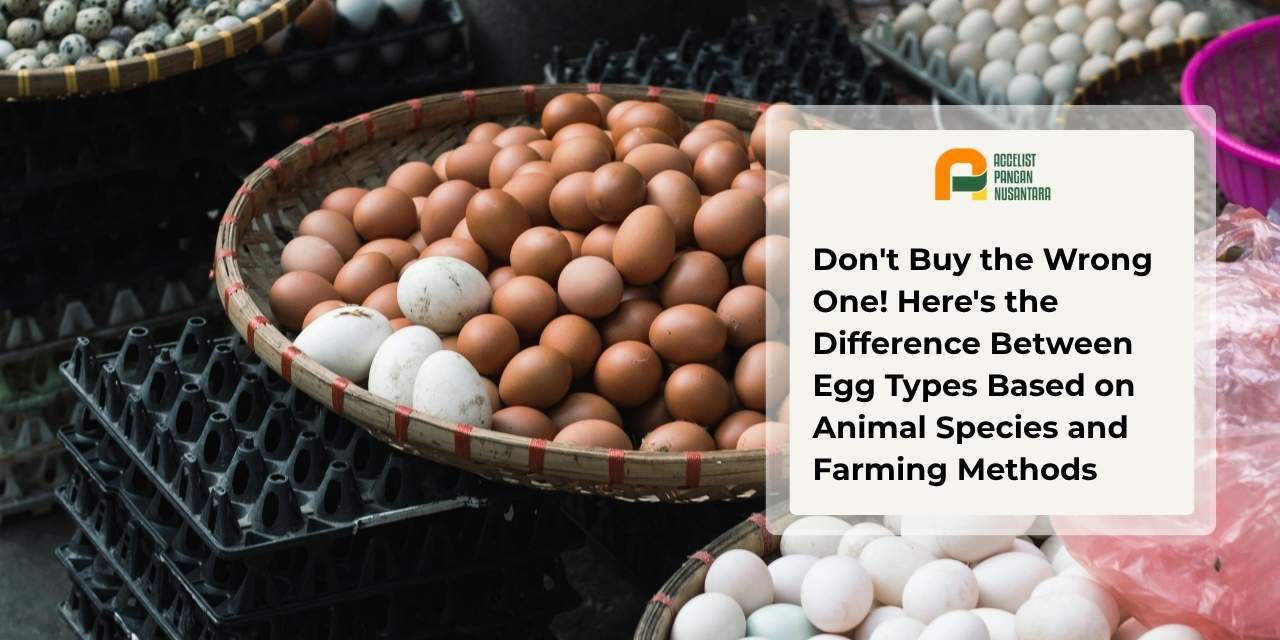
Eggs are a staple food item that is almost always present in your kitchen, both for daily breakfasts and culinary business production needs. However, the abundance of choices in the supermarket is often confusing.
Different poultry species and farming systems will produce varying nutritional profiles, physical characteristics, and uses. Choosing the wrong type of egg risks ruining the final result of your dish.
Health Benefits of Eggs
Eggs are classified as one of the most nutrient-dense foods because they provide a combination of macronutrients and micronutrients that are very easily absorbed by the human body.
According to the American Heart Association, the consumption of up to one whole egg per day can be included in a healthy diet for most adults who do not have heart health issues. For healthy older adults, consuming up to two eggs per day is still acceptable in a heart-healthy diet.
Here are its three main benefits for your body:
- Macro Protein Source
Eggs provide all essential amino acids with a high absorption rate. The body optimally uses this protein to repair damaged cell tissues and build muscle mass after physical activity. - Brain Health
Egg yolks contain a large amount of choline. This nervous system-supporting compound works to maintain cognitive function, helps you sustain concentration, and sharpens long-term memory. - Eye Protection
The antioxidants lutein and zeaxanthin in the egg yolk play an active role in maintaining vision health. These substances protect the retina from free radical exposure, prevent cataracts, and lower the risk of age-related eye function decline.
Types of Eggs Based on Animal Species
Animal species greatly affect the final result of your cooking. Each type of poultry or fish produces eggs with different nutritional profiles, flavors, and physical characteristics. Let’s discuss the differences so you don’t make the wrong choice.
1. Conventional Chicken Eggs (Telur Ayam Negeri)
Conventional chicken eggs are the most dominating type in the market and are easy to find. Breeders raise this poultry in large-scale systems with consistent commercial feed. Their shells are generally brown or white, depending on the chicken breed.
The water, yolk, and egg white content are very balanced. This proportion makes them highly versatile for almost all daily cooking recipes and basic cake batters. Their price is also affordable, making them a practical daily protein source for the general public.
2. Free-Range Village Chicken Eggs (Telur Ayam Kampung)
Village chickens live freely and forage naturally outside the coop, eating plants and insects. This diet makes their egg yolks bright orange due to the high natural carotenoid content. Their eggs are indeed smaller than conventional chicken eggs, but they have a distinct savory aroma.
Village chicken eggs are very popular for raw consumption, mixed in traditional herbal medicine (jamu), or as soft-boiled dishes. Their thick texture provides a richer flavor when you cook them.
3. Duck Eggs
Duck eggs have a larger size with a thick shell that is usually greenish-blue. The volume of their yolk is much more massive and contains a high fat content. These characteristics produce a creamy texture that is perfectly suited for making martabak or salted eggs.
Nutritionally, duck eggs store high amounts of vitamin B12 and iron. Their egg white structure is also sturdy, making them often the primary choice for premium bakers to ensure batters expand perfectly.
4. Quail Eggs
You can easily recognize quail eggs by their tiny size and their brown-and-black speckled shell patterns. Even though they are small, these eggs have a larger yolk ratio compared to their whites. This composition makes them nutrient-dense, especially in choline and iron content.
Quail eggs are often nutrient-dense complementary dishes in various restaurants. You can usually find them as soup fillings, satay, or mixed into other traditional dishes.
5. Turkey Eggs
The size of turkey eggs is almost twice as large as regular chicken eggs. Their shells are creamy white with distinct, thick brown spots. These eggs produce a savory flavor with smooth egg whites and very thick egg yolks.
You might rarely find them sold freely in the market. Breeders focus more on utilizing turkeys for commercial meat production rather than their eggs. The turkey’s laying cycle is also very limited, so their price is quite high when available.
6. Goose Eggs
One goose egg is equivalent to three to four regular chicken eggs. Its shell is chalky white and has a very hard calcium structure. Due to its large size, this egg contains much higher calories and fat.
This fat content makes the taste of goose eggs very rich and heavy in the mouth. Professional chefs often use them to create dense and savory cake batters. Their supply is very seasonal and usually only circulates in premium culinary markets.
7. Emu and Ostrich Eggs
Ostriches produce the largest eggs in the world, weighing up to 1.5 kilograms each. The volume of one of these eggs is equivalent to about two dozen regular chicken eggs. Meanwhile, emu eggs look exotic with dark emerald green shells.
One of these giant eggs can instantly fulfill the meal portion of a large family. Their texture is very soft, but you need quite a long cooking time until they are completely cooked. Their massive size makes these eggs an exclusive dish in certain restaurants.
8. Caviar
Caviar is unfertilized sturgeon fish eggs preserved through a special salting process. This food ingredient occupies the highest tier in the culinary world due to its extremely expensive price. Nutritionally, caviar stores highly dense omega-3 fatty acids.
Its taste is very distinctive with a salty and popping sensation in the mouth that brings a strong sea aroma. Its serving is always in small amounts, usually only as a garnish on luxury dishes. This small portion is intentionally maintained so its exclusive flavor does not ruin the flavor balance of the main dish.
Types of Eggs Based on Farming and Fortification Methods
The farming method and poultry feed type greatly determine the final nutritional quality of the eggs you consume. Pay attention to the packaging labels when shopping to ensure you get a product that suits your health needs.
- Omega-3 Eggs
Breeders provide a special feed mixed with flaxseed or fish oil to increase the healthy fat levels inside the egg. This nutritional intake works effectively to suppress inflammation and maintain the health of your heart’s blood vessels. - Pasteurized Eggs
These eggs go through a controlled temperature heating process to kill Salmonella bacteria without cooking the contents. You must use this type if you want to make safe raw preparations, such as fresh mayonnaise or tiramisu. - Vegetarian Eggs
The chickens producing these eggs purely consume plant-based feed without any additional animal by-products like fish meal. This process produces eggs without a pungent fishy smell, which are very safe for those of you on a strict vegetarian diet. - Organic Eggs
Organic certification guarantees the chickens eat natural feed completely free from synthetic pesticides and chemical herbicides exposure. Breeders also do not administer antibiotic injections, so the final product is much cleaner from agricultural chemical residues. - Free-Range Eggs
Breeders let the chickens move freely in open spaces every day to lower the animal’s stress levels. This physical activity and direct sun exposure produce sturdier shells and very dark egg yolks.
Choosing the right egg turns out to greatly affect the final result of your cooking and the nutritional quality your family receives. You can use conventional eggs for daily breakfast needs, but be sure to switch to pasteurized eggs if your recipe requires raw batter.
Understanding each of these egg type differences ensures you do not buy the wrong one and always produce the best dishes in the kitchen.
The Challenges of Processing Fresh Eggs in Modern Kitchens
The use of fresh eggs in high-volume kitchens has its own technical risks. You must balance between pursuing production speed and maintaining food hygiene standards.
Here are the three main obstacles that most frequently arise when you process fresh eggs:
- Food Hygiene Risks
Eggshells are highly vulnerable to carrying Salmonella bacteria from poultry droppings, which triggers food poisoning. A slight negligence when washing the shells can cause cross-contamination to other cooking ingredients in your kitchen. - Limited Shelf Life
Fresh eggs are very sensitive to temperature changes and need a large cooling space capacity. The quality of the egg whites will quickly become watery and spoil if the storage temperature is unstable during the delivery process. - Cooking Preparation Inefficiency
Cracking shells one by one consumes too much working time for mass production needs. The risk of shell fragments falling into the batter is also highly detrimental to the safety standards of your final product.
Conclusion
Choosing the right type of egg greatly influences the flavor of your dish and your daily nutritional intake. You can directly match the specific character of each poultry egg to your family’s dietary needs or culinary business operations.
But for modern kitchen management, relying on fresh eggs often triggers issues of work efficiency and food hygiene. You need an alternative raw material that is long-lasting, saves storage space, and can stabilize the consistency of the dish’s flavor every day.
As a solution, you can switch to using egg powder from Accelist Pangan Nusantara. The advanced dehydration technology used ensures the leavening function and natural taste of the egg remain intact without carrying the risk of shell-borne bacteria.
This egg powder product frees you from the routine of manual egg cracking that consumes kitchen staff’s time. Its very low moisture content makes this egg powder safe from pathogen threats and allows you to store it much longer in a dry warehouse.
FAQ
Not always, the main difference lies only in the feed source and micronutrient ratio, while the macro protein is almost the same.
Duck eggshells have larger pores and fat-rich yolks, allowing them to absorb salt more optimally.
Yes, because the pasteurization process has killed pathogenic bacteria without altering the egg’s basic nutrients
Egg powder is processed using technology that maintains original flavor characteristics, making the final result highly identical when applied to cooking.
Egg powder can last up to a year or more at room temperature, provided it is stored in a dry, tightly sealed place.