
Warehouse conditions determine whether egg powder stays usable by the time food manufacturers put it to work. The wrong temperature, humidity, or packaging can leave egg powder clumped, rancid, or contaminated well before its expiration date.
Based on oxidation modeling, whole egg powder stored at room temperature around 25°C (77°F) has a predicted shelf life of 450 to 500 days before quality noticeably declines. That window shrinks further if warehouse conditions fall short of standard.
This article covers the ideal warehouse conditions for storing egg powder, from temperature and humidity to proper packaging. You will also find the warning signs of spoilage and practical tips for keeping egg powder in top condition.
Why Do Warehouse Conditions Affect Egg Powder Quality?
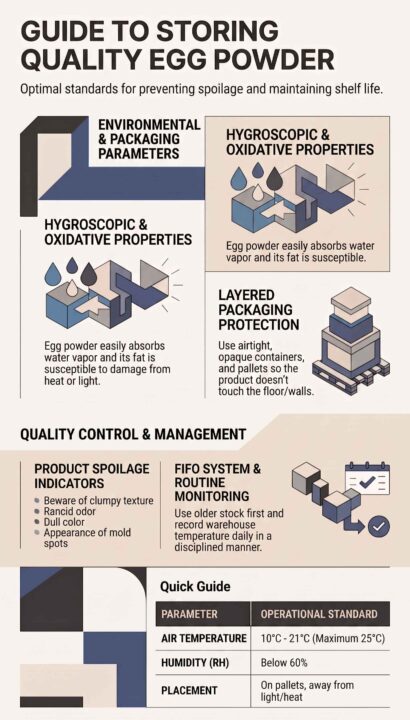
Warehouse conditions affect egg powder quality because the product is hygroscopic, meaning it easily absorbs moisture from the surrounding air. Poorly controlled temperature, humidity, light, and packaging can all speed up its deterioration.
Whole egg powder and egg yolk powder also contain fat, which is prone to oxidation when exposed to excess heat, light, or oxygen. The right storage conditions keep the nutritional content and flavor of egg powder stable throughout its shelf life.
Ideal Temperature and Humidity for Storing Egg Powder
Temperature and humidity are the two factors that most affect how long egg powder stays usable in storage. Here is a breakdown of the ideal conditions to maintain in your warehouse.
| Parameter | Ideal Condition | Reason |
|---|---|---|
| Room temperature | 50°F to 70°F (10°C to 21°C), or below 77°F (25°C) for facilities without full climate control | Slows fat oxidation and preserves the powder’s texture |
| Relative humidity (RH) | Below 60% | Prevents clumping and mold growth |
| Light exposure | Minimal, kept in a dark space | Light speeds up fat oxidation in egg powder |
| Air circulation | Good airflow, free of pests | Keeps temperature stable and prevents contamination |
A warehouse with stable temperature and humidity helps egg powder keep its fine, free-flowing texture without clumping. Regular monitoring is still worthwhile, especially during humid seasons when moisture levels tend to rise.
How to Package Egg Powder to Preserve Its Quality
The right packaging protects egg powder from moisture, light, and oxygen while it sits in storage. Here are four packaging factors worth paying attention to.
- Use airtight packaging so oxygen does not trigger fat oxidation in the egg powder
- Choose layered or opaque packaging that blocks light to prevent direct exposure
- Once opened, keep the packaging in a tightly sealed container so the egg powder does not absorb moisture from the air
- Avoid stacking packaging too high or placing it directly against a warehouse wall prone to dampness
Signs of Egg Powder Spoiled by Improper Storage
Storage that falls short of standard can leave visible and detectable signs of spoilage in egg powder, both in texture and smell. Here are four signs worth watching for.
- A clumped or hardened texture that no longer flows freely like a typical powder
- A rancid smell caused by prolonged fat oxidation
- A darker or duller color compared with its original shade
- Visible spots or stains that point to mold growth
Tips for Keeping Egg Powder in Good Condition in Storage
Keeping egg powder in good condition during storage takes a mix of discipline and the right system. Four steps below can be applied in your warehouse.
1. Apply the First In, First Out (FIFO) System
Use older stock of egg powder before newer stock that just arrived. This helps ensure no batch sits in storage past its optimal shelf life.
2. Keep It Away From Direct Heat and Light
Place egg powder in a part of the warehouse away from heat-generating equipment and windows exposed to direct sunlight. Repeated exposure to heat and light speeds up fat oxidation inside the powder.
3. Maintain Good Air Circulation and Warehouse Hygiene
A damp, poorly ventilated warehouse is an ideal breeding ground for mold and pests. Clean the storage area regularly and keep airflow moving well.
4. Log Temperature and Humidity Regularly
Use a thermometer and hygrometer to check warehouse conditions daily, especially during rainy or humid seasons. Regular logging helps you catch changing conditions before they affect the quality of your egg powder.
Conclusion
The right warehouse conditions, from temperature and humidity to packaging, determine how long egg powder keeps its quality. Overlooking these factors risks leaving egg powder clumped, rancid, or even contaminated before it gets used.
Applying a FIFO system, maintaining airflow, and logging temperature and humidity regularly are the simplest steps for keeping egg powder in good condition in storage. Together, these steps help food manufacturers get a raw material that stays consistent batch after batch.
For culinary businesses or food manufacturers who want quality egg raw material without having to manage the complexity of storage themselves, Egg Powder from Accelist Pangan Nusantara is packaged to standards that keep its quality intact all the way to your hands.
This product is Halal-certified and produced under hygienic standards to support your production needs. Contact Us for product information and to discuss your business’s egg raw material needs.

FAQ
The ideal range is 50°F to 70°F (10°C to 21°C), or below 77°F (25°C) for warehouses without full climate control.
Whole egg powder at room temperature is estimated to last about 450 to 500 days, depending on storage conditions and packaging type.
A clumped texture, rancid smell, and color change are the main signs that egg powder is no longer usable.
Not necessarily, but cold storage can extend shelf life, especially for whole egg powder or egg yolk powder, which contain fat.
High humidity causes egg powder to absorb moisture, making it clump easily and creating conditions for mold growth.