
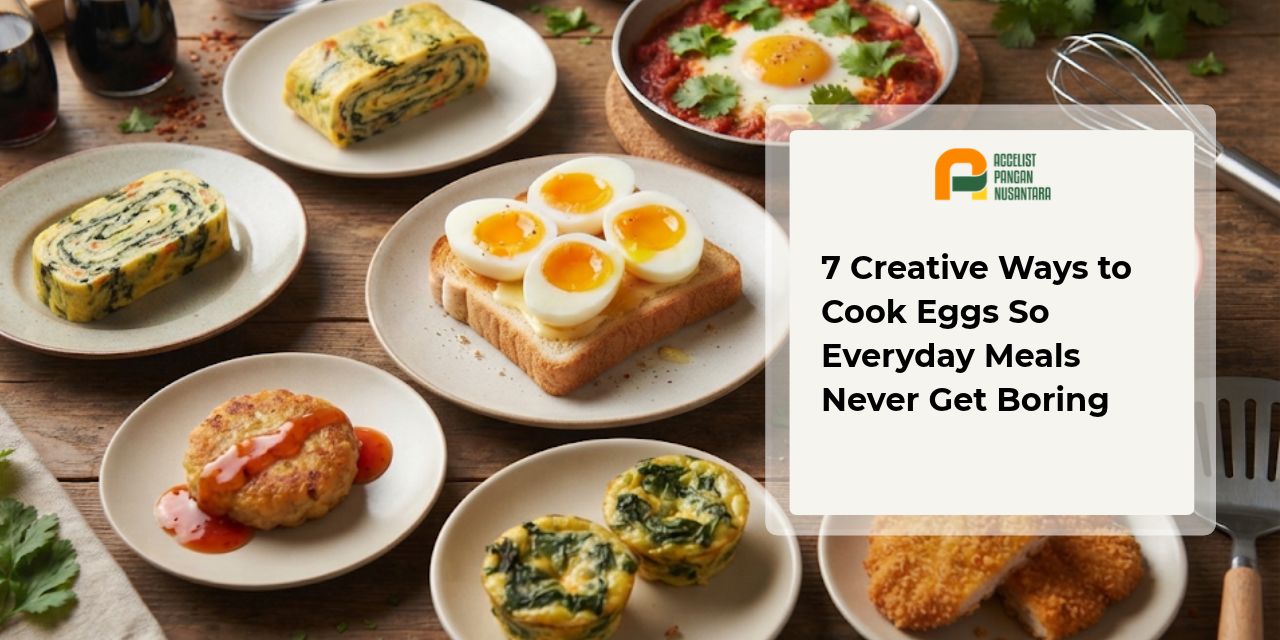
Creative ways to cook eggs for everyday meals come down to one principle: change the technique, doneness, seasoning, filling, or presentation each time you cook. That way, the same eggs can become a different dish every day with ingredients you already have.
Eggs are easy to get creative with because they are affordable, cook quickly, and absorb seasoning well. The problem is that egg dishes at home often stop at fried eggs and omelets, so families and customers soon lose interest.
This article covers seven creative tips for cooking eggs, plus a sample egg menu rotation for a full week.
7 Creative Ways to Cook Eggs So They Never Get Boring
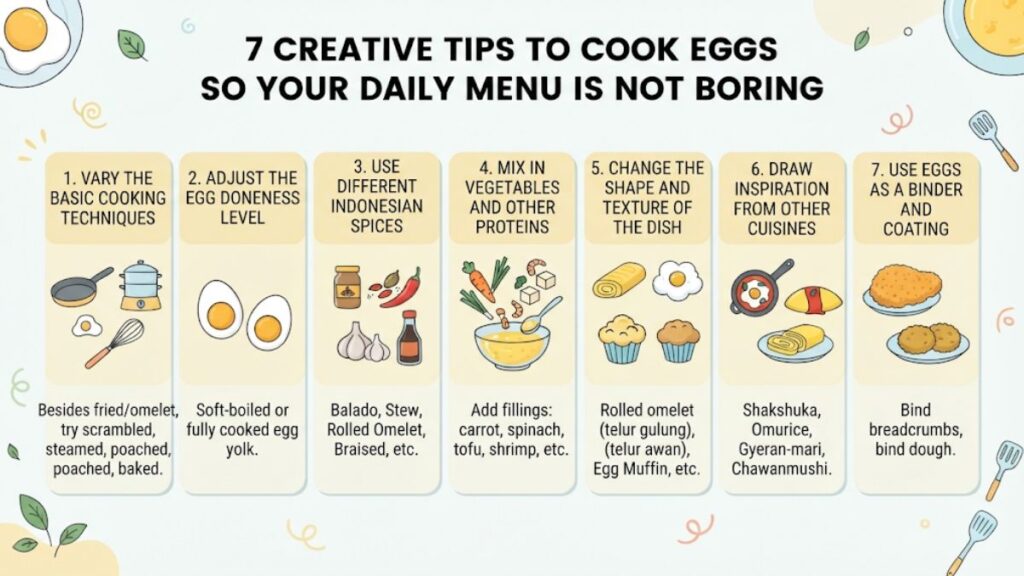
The key to varied egg dishes is changing the technique, seasoning, or filling rather than hunting for a new recipe every day. With a simple formula of one technique, one seasoning, and one filling, a single type of egg can become a different dish every day for a whole week.
1. Vary the Basic Cooking Technique
The cooking technique decides an egg’s texture, so changing the technique alone makes a dish feel new. Beyond fried eggs and omelets, you can make scrambled eggs, steamed eggs, poached eggs, or oven-baked eggs.
Steamed eggs suit young children and older adults because of their soft texture. Poached and baked eggs work better for a café-style breakfast, such as on toast or salad.
2. Adjust How Well the Eggs Are Cooked
Changing the boiling time alone makes a boiled egg taste different. A runny soft-boiled yolk suits noodle soup and warm rice, while hard-boiled eggs work better in balado (eggs in chili sauce) and semur (sweet soy stew).
Set the boiling time for the doneness level you want, then soak the eggs in cold water to stop the cooking. For young children, older adults, and pregnant women, serve eggs cooked until the yolk is firm.
3. Try Different Indonesian Seasonings
Seasoning is the easiest way to change flavor without changing technique, because boiled or fried eggs pair with almost any Indonesian spice paste. Balado uses a red chili sambal and semur uses sweet soy sauce and spices, while bumbu bali (Balinese-style seasoning) uses a sweeter tomato sambal.
For a dish with sauce, try gulai (eggs in coconut milk curry) or telur pindang, eggs simmered for a long time with shallot skins and guava leaves. Make one batch of basic red spice paste (bumbu dasar merah), then use it in turn for balado, sambal goreng (a chili stir-fry), or egg fried rice (nasi goreng).
4. Mix in Vegetables and Other Proteins
Adding fillings to beaten eggs makes the dish more satisfying and puts more vegetables on the plate. Grated carrot, scallions, cabbage, or spinach work well in a vegetable omelet, while crumbled tofu and tomato suit scrambled eggs.
For something more special, try fuyunghai, a thick omelet with vegetables and shrimp or chicken, topped with sweet-and-sour sauce. Cut the fillings small and drain watery vegetables so the omelet holds together when you flip it.
5. Change the Shape and Texture
A new shape often appeals to children more than a new flavor. A thin omelet can be rolled up and sliced, or cut into strips to fill rice balls and sandwiches.
Cloud eggs are made by whipping egg whites until stiff, baking them, and then placing the yolk in the center. Egg muffins, which are beaten eggs and vegetables baked in a muffin tin, are handier for lunch boxes.
6. Borrow Ideas from Other Cuisines
Egg-based dishes from other countries can be made with everyday pantry ingredients. Shakshuka from the Middle East cooks eggs in a spiced tomato sauce, while Japanese omurice wraps fried rice in a thin omelet.
From Korea, there is gyeran-mari (a rolled omelet with vegetables) and gyeran-jjim (soft steamed egg), both now easy to find in Indonesian cafés. Japanese chawanmushi is similar to steamed egg but uses broth, which gives it a silkier texture.
7. Use Eggs as a Binder and Coating
Eggs don’t have to be the main dish, because the functions of eggs as a binder and coating carry over to other dishes. Eggs hold together perkedel (potato fritters) and bakwan jagung (corn fritters), and they help breadcrumbs stick to fried chicken or fish.
This is a good way to use up the last one or two eggs in the fridge. Mini martabak telur (savory egg-filled pastries) made with spring roll wrappers, beaten egg, and scallions can also serve as a side dish or snack.
Also read: 8 Korean Egg Dishes That Have Become a Food Trend in Indonesia
Sample Weekly Egg Menu Rotation
A menu rotation keeps the same technique and seasoning from showing up two days in a row, so egg dishes stay interesting. The table below is a seven-day example that uses the techniques and seasonings from the tips above.
| Day | Technique | Seasoning or filling | Sample dish |
|---|---|---|---|
| Monday | Hard-boiled | Red chili sambal | Telur balado |
| Tuesday | Omelet | Carrot, cabbage, and scallions | Rolled vegetable omelet |
| Wednesday | Steamed | Chicken broth and scallions | Soft steamed egg |
| Thursday | Scrambled | Tomato and tofu | Tofu and tomato scramble |
| Friday | Soft-boiled | Sweet soy sauce, garlic, and chili | Soy-marinated eggs |
| Saturday | Simmered in sauce | Spiced tomato sauce | Simple shakshuka |
| Sunday | Baked | Chopped vegetables and cheese | Egg muffins |
This pattern changes the technique every day, so the texture never repeats even though the main ingredient stays the same. You can shuffle the days, as long as the same technique doesn’t appear two days in a row.
For caterers or canteens, the seven-day rotation can stretch to two weeks by changing only the seasonings. If your kitchen has no oven, swap the egg muffins for a thick omelet cooked in a covered pan.
Conclusion
Creative ways to cook eggs start with changing one element: the technique, doneness, seasoning, filling, shape, or inspiration from another cuisine. Eggs also work as a binder and coating, so one ingredient can serve as both a main dish and a side.
Start by planning a seven-day menu rotation so the same technique never appears two days in a row. For young children, older adults, and pregnant women, make sure every egg dish is fully cooked.

FAQ
Which Egg Dishes Need No Oil?
Boiled eggs, steamed eggs, poached eggs, telur pindang, and egg soup can all be made without oil. You can also cook fried-style eggs with a little water in a covered nonstick pan.
How Do You Make a Thick, Fluffy Omelet?
Beat the eggs until frothy, add a splash of water or milk, then cook them in a small pan over low heat with the lid on so the top sets. Flip the omelet only once, after the bottom turns golden brown.
How Do You Get Rid of the Eggy Smell in Egg Dishes?
Use fresh eggs and add scallions, pepper, or garlic to the beaten eggs. Avoid overcooking, because an overcooked yolk can give off a sulfur smell.
Can Quail Eggs Be Used in the Same Dishes?
Yes, especially for balado, semur, and egg skewers, since each one makes a single bite. Adjust the quantity and boiling time, because quail eggs are much smaller than chicken eggs.
Can You Reheat Egg Dishes?
Yes, as long as they were kept in the refrigerator and are reheated until hot all the way through. Don’t reheat whole boiled eggs in the microwave, because steam inside can make them burst.