
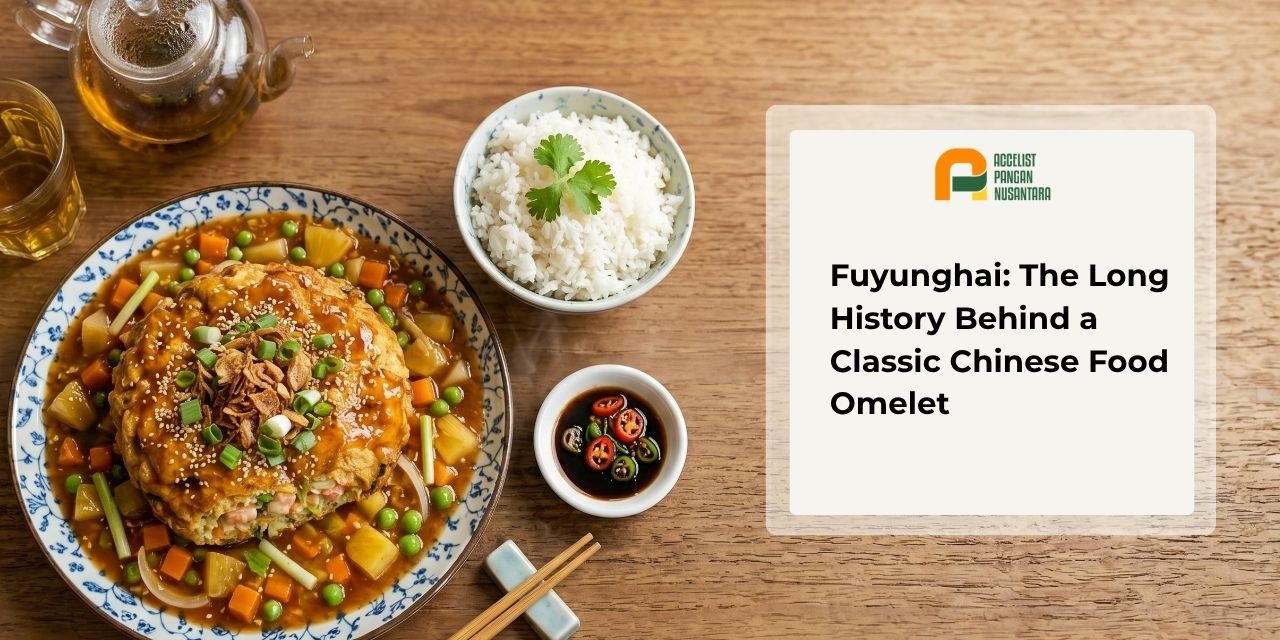
Fuyunghai is one of the easiest Chinese food dishes to recognize: a thick omelet filled with vegetables and meat, topped with warm sweet and sour sauce. Its appearance may seem simple, but its flavor is difficult to resist for anyone who has ever tasted it.
Behind its simplicity lies a fascinating culinary journey, from the kitchens of China to the dining tables of millions of Indonesians. This article explores what fuyunghai actually is, its popular variations, nutritional content, and how the dish evolved into a part of everyday Indonesian cuisine.
What Is Fuyunghai?
Fuyunghai is more than just an ordinary omelet. Behind its name and composition lies a layer of culinary history and tradition that sets it apart from other egg-based dishes.
The Meaning of the Name and Its Origins
The name “fuyunghai” comes from Cantonese. In Mandarin, the dish is written as 芙蓉蛋 (fúróngdàn), which literally translates to “hibiscus flower egg,” a poetic description inspired by the fluffy texture and golden-yellow appearance of the omelet when fried.
The dish originated in Guangdong Province on the southern coast of China before spreading across the world through Chinese immigrant communities during the 19th century. Interestingly, fuyunghai is now often easier to find outside China, including in Indonesia, than in its country of origin.
How Fuyunghai Is Served
Fuyunghai is made from beaten eggs mixed with vegetables and meat, then fried until fluffy and golden brown. The most commonly used vegetables are thinly sliced carrots and cabbage, although some versions also include bean sprouts, mushrooms, or green onions.
The dish is always served with a slightly thick sweet and sour tomato-based sauce, sometimes accompanied by peas or pineapple chunks. This sauce is what mainly distinguishes fuyunghai from a regular omelet.
(Read also: Fuyunghai Chicken Recipe: A Classic Chinese Food Dish You Can Make at Home)
Popular Variations of Fuyunghai
One of the reasons fuyunghai has remained a favorite for generations is its flexibility. The filling can easily be adjusted depending on available ingredients, resulting in various versions with their own unique characteristics.
1. Shrimp and Chicken Fuyunghai
Shrimp and chicken fuyunghai is the most commonly found version in Indonesian Chinese food restaurants and food stalls. The combination of roughly chopped shrimp and shredded chicken creates a denser texture and richer flavor compared to versions made with eggs alone.
The blend of these two proteins also makes the dish more filling, making it a perfect companion to warm steamed rice.
2. Duck Egg Fuyunghai
Duck egg fuyunghai uses duck eggs instead of chicken eggs, producing an omelet that is richer, more savory, and slightly denser when fried. The stronger flavor of duck eggs adds extra depth to the dish.
This variation is ideal for those who want to experience a slightly different take on conventional fuyunghai.
3. Squid and Shrimp Fuyunghai
For seafood lovers, squid and shrimp fuyunghai offers a combination of two ocean ingredients in one dish. Small pieces of squid provide a chewy texture that contrasts nicely with the shrimp, creating a more dynamic bite.
This version is usually served with a slightly more savory sauce due to the addition of oyster sauce in the seasoning.
4. Vegetable Fuyunghai
Vegetable fuyunghai is a suitable option for those who do not consume meat or seafood. The filling consists entirely of vegetables such as carrots, cabbage, and bean sprouts, resulting in a lighter texture while still delivering delicious flavor through proper seasoning.
This variation is also ideal for everyday meals because the ingredients are easy to find and the cooking process is relatively quick.
5. Minced Chicken Fuyunghai
Minced chicken fuyunghai uses finely chopped chicken as the main filling without additional seafood. Its texture blends more evenly into the egg mixture, creating a more compact omelet that is easier to slice.
This version is suitable for children who may not yet enjoy seafood flavors but still want to experience fuyunghai.
6. Vermicelli Fuyunghai
Vermicelli fuyunghai is a fairly unique variation because it incorporates boiled corn vermicelli into the egg mixture. The result is a thicker, denser, and more filling omelet even without rice as a side dish.
This version is often chosen as a practical lunchbox meal that does not require many additional side dishes.
Nutritional Content of Fuyunghai
Besides being delicious, fuyunghai is also interesting from a nutritional perspective. This egg-based dish provides several important nutrients in a single serving.
According to data from FatSecret, one piece of fuyunghai (approximately 86 grams) contains around 113 calories. Below is the nutritional breakdown:
| Nutrient | Per Serving (86g) |
| Energy | 113 kcal |
| Fat | 8.35 g |
| Saturated Fat | 2.08 g |
| Protein | 6.49 g |
| Carbohydrates | 3.1 g |
| Fiber | 0.6 g |
| Cholesterol | 185 mg |
| Sodium | 323 mg |
| Potassium | 124 mg |
Of the total calories, approximately 66% come from fat, 23% from protein, and 11% from carbohydrates. Its relatively high protein content makes fuyunghai more filling compared to starchy foods with similar calorie counts.
However, its cholesterol content of 185 mg per serving should be considered, especially for individuals following a low-cholesterol diet. For daily consumption, fuyunghai can still be enjoyed in moderate portions as part of a balanced diet.
The Development of Fuyunghai in Indonesia
Fuyunghai arrived in Indonesia through Chinese Peranakan communities that had settled across the archipelago long before the 20th century. Over time, the dish continued adapting to local tastes and ingredients until it evolved into the version most Indonesians recognize today.
This phenomenon actually occurred in many countries. The fuyunghai known in the United States, the United Kingdom, and Indonesia are all diaspora versions that evolved independently from the original recipe in China. That is why each country has its own distinctive interpretation of the dish.
Adaptation of Ingredients and Flavors
The Indonesian version generally replaces pork with chicken and shrimp so it can be consumed by the country’s Muslim-majority population. This adjustment allowed fuyunghai to become widely available in various food stalls, not only specialized Chinese restaurants.
The vegetables used also reflect local market availability. Carrots and cabbage became the primary choices because they are affordable, widely available throughout Indonesia, and suitable for mixing into egg batter.
Sweet and Sour Sauce as Its Signature Identity
One element almost never absent from Indonesian-style fuyunghai is the sweet and sour sauce. This sauce, made from tomatoes, vinegar, and sugar, is sometimes enriched with peas or pineapple chunks for additional texture.
The combination of thick sweet-tangy sauce with a soft outer omelet and dense inner texture has become the strongest identity of fuyunghai in Indonesia. At this point, the dish found its perfect form: no longer purely Chinese, yet not entirely local either, but rather the result of centuries of cultural acculturation.
Conclusion
Fuyunghai proves that even simple food can carry a rich story. From the kitchens of Guangdong, through the long journey of Chinese immigrants, to becoming a permanent fixture on Indonesian dining tables, fuyunghai continues to endure for one simple reason: its flavor is unforgettable.
For culinary businesses aiming to create consistently delicious fuyunghai, whether for home kitchens or commercial-scale production, egg quality is one of the most important factors. Accelist Pangan Nusantara offers Whole Egg Powder as a practical solution, made from selected egg whites and yolks to produce soft batter texture, perfect expansion, and excellent heat resistance during cooking. It is an ideal base ingredient for authentic fuyunghai without unnecessary hassle.
FAQ
Fuyunghai is a Chinese-style omelet filled with vegetables and meat, served with sweet and sour sauce. It originates from Guangdong Province in southern China and spread globally through Chinese immigrant communities.
One piece of fuyunghai (around 86 grams) contains approximately 113 calories, with 66% of calories coming from fat, 23% from protein, and 11% from carbohydrates according to FatSecret data.
Popular variations in Indonesia include shrimp and chicken fuyunghai, duck egg fuyunghai, squid and shrimp fuyunghai, vegetable fuyunghai, and vermicelli fuyunghai. Each version offers its own unique flavor and texture.
Fuyunghai is relatively high in protein but also contains fat and cholesterol that should be considered. As part of a healthy eating pattern, it can still be enjoyed in moderate portions within a balanced diet.
The Indonesian version of fuyunghai generally replaces pork with chicken or shrimp, making it more widely acceptable, including among Muslim communities.