
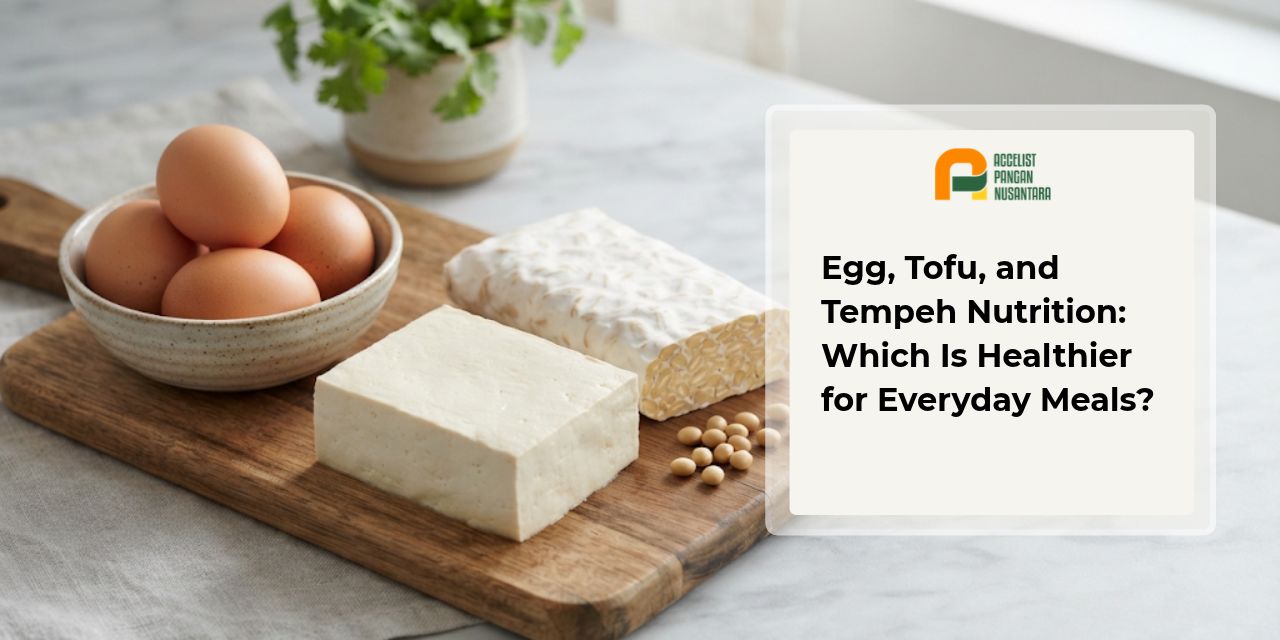
When you compare egg, tofu, and tempeh nutrition, no single food wins, so the healthiest everyday choice is to pair eggs with tempeh or tofu in the same meal. Eggs lead in protein quality, tempeh in protein amount and fiber, and tofu in calcium, with the fewest calories of the three.
According to the Indonesian Food Composition Table (TKPI) 2017, the official nutrient database from Indonesia’s Ministry of Health, pure soybean tempeh contains 20.8 grams of protein per 100 grams. That is far more than conventional chicken eggs (12.4 grams) and tofu (10.9 grams), but a typical serving of each does not weigh the same.
For caterers and home kitchens, these differences shape how you plan protein dishes without raising costs. This article covers the nutrition and benefits of all three, how cooking changes them, and which one does more to meet your daily nutritional needs.
Egg, Tofu, and Tempeh Nutrition Compared
Per 100 grams of raw food, tempeh leads in protein and fiber, tofu leads in calcium with the lowest energy, and eggs contain almost no carbohydrates. The table below uses TKPI 2017 figures for the edible portion.
| Nutrient per 100 grams | Conventional chicken egg, fresh | Tofu, raw | Pure soybean tempeh, raw |
|---|---|---|---|
| Water | 74.3 g | 82.2 g | 55.3 g |
| Energy | 154 kcal | 80 kcal | 201 kcal |
| Protein | 12.4 g | 10.9 g | 20.8 g |
| Fat | 10.8 g | 4.7 g | 8.8 g |
| Carbohydrates | 0.7 g | 0.8 g | 13.5 g |
| Fiber | 0 g | 0.1 g | 1.4 g |
| Calcium | 86 mg | 223 mg | 155 mg |
| Iron | 3.0 mg | 3.4 mg | 4.0 mg |
Tempeh has almost twice the protein of tofu, even though both are made from soybeans. The main reason is water, since more than 80 percent of tofu’s weight is water.
Eggs contain no fiber and almost no carbohydrates, so their energy comes from protein and fat. They are also the lowest in calcium, with less than half the calcium found in tofu.
Why Is Tempeh More Nutrient-Dense Than Tofu?
Tempeh is made from whole soybeans that are boiled, dehulled, and fermented, which means processed with the help of microbes. Rhizopus, a type of mold, binds the beans into a firm cake, and because almost the whole bean is eaten, tempeh keeps its fiber and stays low in water.
Tofu is made from soy milk that is curdled and pressed, while the leftover pulp is removed. Some of the fiber goes out with that pulp, and the protein curds hold water, which gives tofu its soft texture.
Tofu’s high calcium comes from its coagulant, calcium sulfate, known locally as batu tahu, which adds calcium to the product. Tofu curdled with vinegar or leftover whey from earlier batches may contain less calcium.
The table figures apply to pure soybean tempeh, meaning tempeh made from soybeans alone. Tempeh sold in markets may use different recipes and water content, so its protein may differ slightly from the table.
What Eggs Offer Beyond Protein
Eggs provide vitamin A as retinol, a form the body can use directly and one that plant foods do not contain. Egg yolks are also rich in choline, a nutrient similar to the B vitamins that the brain and liver need to work properly.
On the other hand, egg yolks contain cholesterol, a fatty substance found only in animal foods, so tofu and tempeh are cholesterol-free. Yolks also contain saturated fat, a type of fat that can raise blood cholesterol when eaten in excess.
If your LDL, or “bad,” cholesterol is high, follow your doctor’s advice on how many eggs to eat each week.
Benefits of Eggs, Tofu, and Tempeh
Eggs, tofu, and tempeh support growth, weight management, digestion, immunity, and bone health, but each one contributes in a different way. You get the most from them when they are cooked with little oil and eaten as part of a balanced diet.
Building Muscle and Supporting Growth
Eggs stand out here because their protein is high in quality and easy for the body to use when building muscle and new tissue. Indonesia’s Balanced Nutrition Guidelines, set out in Minister of Health Regulation No. 41 of 2014 (Permenkes 41/2014), count one chicken egg (55 grams) as one serving of animal protein.
Since one egg already equals one serving, eggs are practical for children’s breakfasts, school lunch boxes, or meals for older adults with a smaller appetite. Tempeh and tofu add plant protein on top of this.
Helping Manage Portions on a Diet
Protein is digested more slowly than carbohydrates, so protein-rich dishes help you stay full longer and resist snacking. Tofu suits a low-calorie diet best because it has the least energy of the three, while boiled eggs provide animal protein without added oil.
Supporting Digestive Health
Tempeh is the best of the three for digestion because it has the most fiber, which helps keep bowel movements regular. A 2024 review in Future Foods explains that enzymes from the tempeh mold split complex soybean nutrients into simpler forms the body absorbs more easily.
Fermentation also lowers phytic acid, a natural compound in beans and grains that blocks the absorption of iron and zinc. Tofu is not fermented, but its soft texture makes it easy for young children and older adults to chew and swallow.
Supporting the Immune System
Your body uses protein to make antibodies, the protective proteins that recognize and fight germs, so daily protein intake helps maintain your defenses. Eggs supply vitamin A, while tempeh supplies iron and zinc, nutrients your immune system needs to work normally.
Keeping Bones and Teeth Healthy
Tofu and tempeh provide calcium, the main mineral that builds bones and teeth, with tofu containing the most. Eggs are low in calcium but still provide protein and phosphorus, a mineral that works with calcium in bone.
Antioxidants from Soy
The Balanced Nutrition Guidelines note that tofu and tempeh contain unsaturated fat, the kind that is usually liquid at room temperature, as in vegetable oil. Both also contain isoflavones, natural soy compounds that work as antioxidants (substances that protect cells from damage) and resemble the hormone estrogen in structure.
Eggs contain no isoflavones, so pairing eggs with tofu or tempeh gives you animal protein and soy plant compounds in a single meal.
Also read: What Happens to Your Body If You Eat Eggs Every Day?
How Cooking Affects the Nutrition of Protein Dishes
The cooking method can change the energy and fat in a dish more than the nutritional gap between the foods themselves, especially when frying. TKPI 2017 lists fried tempeh and telur dadar (Indonesian-style omelet) as much higher in energy and fat than their raw forms, because they absorb oil.
Tempeh and tofu are porous, so they soak up oil during long frying, especially when coated in batter, as in tempe mendoan (thin battered tempeh) or crispy tofu. Palm oil, the usual frying oil in Indonesia, also adds saturated fat to the food that absorbs it.
Steaming, boiling, or stir-frying with little oil keeps added energy down. Good examples are pepes tahu (tofu wrapped in banana leaves and steamed) and telur pindang (eggs simmered with spices).
Bacem dishes (simmered in palm sugar and spices) still gain energy from the sugar, especially when they are fried afterward.
In catering kitchens, oil reused for frying many times lowers the quality and taste of the food. Schedule oil changes and limit fried items to one dish per menu.
Also read: 7 Egg-Based Tofu Dishes That Are Totally Addictive and Worth Trying
Which Is Better for Meeting Your Nutritional Needs?
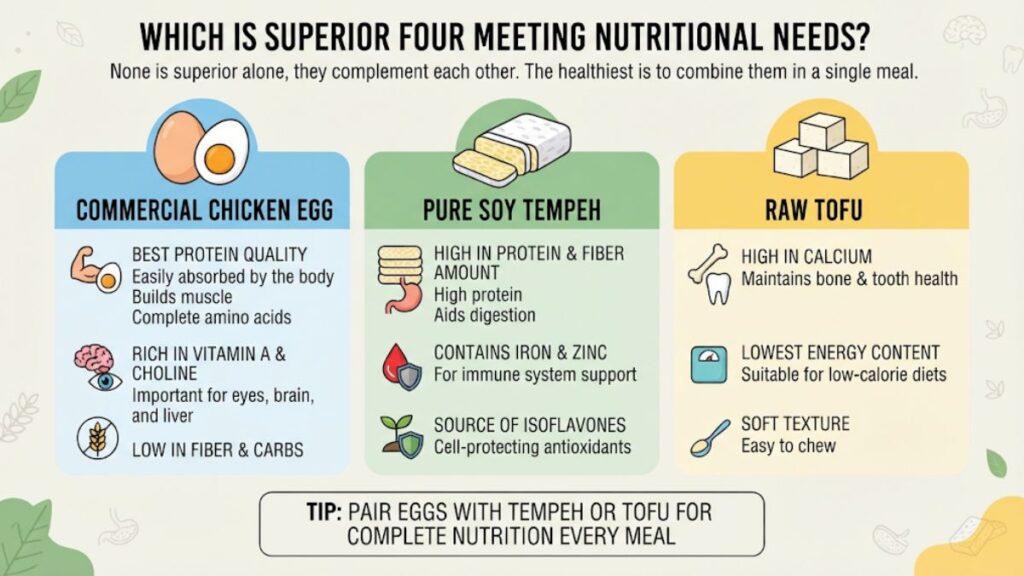
No single food covers your daily nutritional needs on its own, so the healthiest protein dish is eggs paired with tempeh or tofu. If you have to pick one, eggs lead in protein quality, tempeh in protein amount and fiber, and tofu in calcium with low energy.
For people with a soy allergy, eggs or other animal-protein dishes can replace tofu and tempeh.
Eggs Have the Most Complete Protein
In terms of quality, egg protein comes out on top, even though tempeh contains more protein per 100 grams. The Balanced Nutrition Guidelines rate animal protein such as eggs as having a more complete set of amino acids, the building blocks of protein, that the body absorbs more easily.
Protein quality depends on how complete its essential amino acids are, meaning the amino acids your body cannot make and must get from food. Eggs contain all nine essential amino acids in proportions that match the body’s needs, so they don’t need another food to complete their protein.
An egg stores its protein in two places. The white is almost all water and protein, mostly ovalbumin (its main protein), while the yolk is denser in protein per gram and also holds fat and vitamins.
Once fully cooked, egg protein is easiest to digest, because heat unfolds the protein so digestive enzymes can break it down more easily. This process is called denaturation, and cooking eggs thoroughly also kills Salmonella, a bacterium that causes food poisoning.
Soy Needs a Partner to Complete Its Protein
Soy protein is high in lysine but low in methionine, two essential amino acids. The amino acid in shortest supply, like methionine in soy, is called the limiting amino acid because it sets how much of the protein the body can use.
That is why tempeh pairs well with rice, since rice protein is low in lysine and the two fill each other’s gaps. Eggs strengthen the pairing because they are rich in methionine, so rice, tempeh or tofu, and one egg together form a complete protein.
Examples include telur balado (eggs in chili sauce) with orek tempe (stir-fried sweet soy tempeh), or tofu sayur lodeh (a coconut milk vegetable stew) with telur pindang. Besides completing the protein, tempeh adds fiber that eggs lack.
Per Serving, the Protein Gap Is Small
The Balanced Nutrition Guidelines use exchange servings, which are portions with equivalent nutrition that can replace one another on a menu. By this measure, one serving of egg (1 egg, or 55 grams) provides 7 grams of protein.
One serving of plant protein, which is 2 medium pieces of tempeh (50 grams) or tofu (100 grams), provides 6 grams of protein. This 1-gram gap is much smaller than the gap per 100 grams, because exchange values are rounded and adjusted to serving size.
The same guidelines recommend 2-4 servings of animal protein and 2-4 servings of plant protein a day, depending on age and conditions such as pregnancy or breastfeeding.
Conclusion
Egg, tofu, and tempeh nutrition works best for everyday meals when the three foods are combined. Eggs lead in protein quality, tempeh in protein amount and fiber, and tofu in calcium and low energy.
In typical servings under Indonesia’s Balanced Nutrition Guidelines, the protein gap between them is only about 1 gram. Pair eggs with tempeh or tofu at every meal, and cut back on frying so the oil does not cancel out their nutritional benefits.

FAQ
Can You Eat Tempeh Without Cooking It?
It’s best not to, because fresh tempeh still carries mold and bacteria from fermentation. Cook tempeh until done, for example by steaming or stir-frying, before serving.
Does Tempeh Contain Vitamin B12?
Traditional tempeh contains vitamin B12, made by bacteria that grow during fermentation, and your body needs this vitamin to form red blood cells and keep nerves working. The amount varies from product to product, so vegetarians should not rely on tempeh as their only B12 source.
Is It Better to Eat Only Egg Whites or Whole Eggs?
Whole eggs offer more complete nutrition, because the vitamin A and choline are in the yolk. Egg whites alone suit people whose doctor has asked them to limit cholesterol or fat.
Are Free-Range Chicken Eggs More Nutritious Than Conventional Eggs?
The nutritional difference between them is small, and it can shift with the hens’ feed and how they are raised. For everyday meals, conventional eggs are good enough and easier to buy in steady quantities.
Are Eggs, Tofu, and Tempeh Safe for Baby Food?
All three can be introduced in complementary foods for babies (known in Indonesia as MPASI) as long as they are fully cooked and the texture suits the baby’s age. Eggs and soy are common allergens, so introduce them one at a time and follow your pediatrician’s advice if there is a history of allergies.