
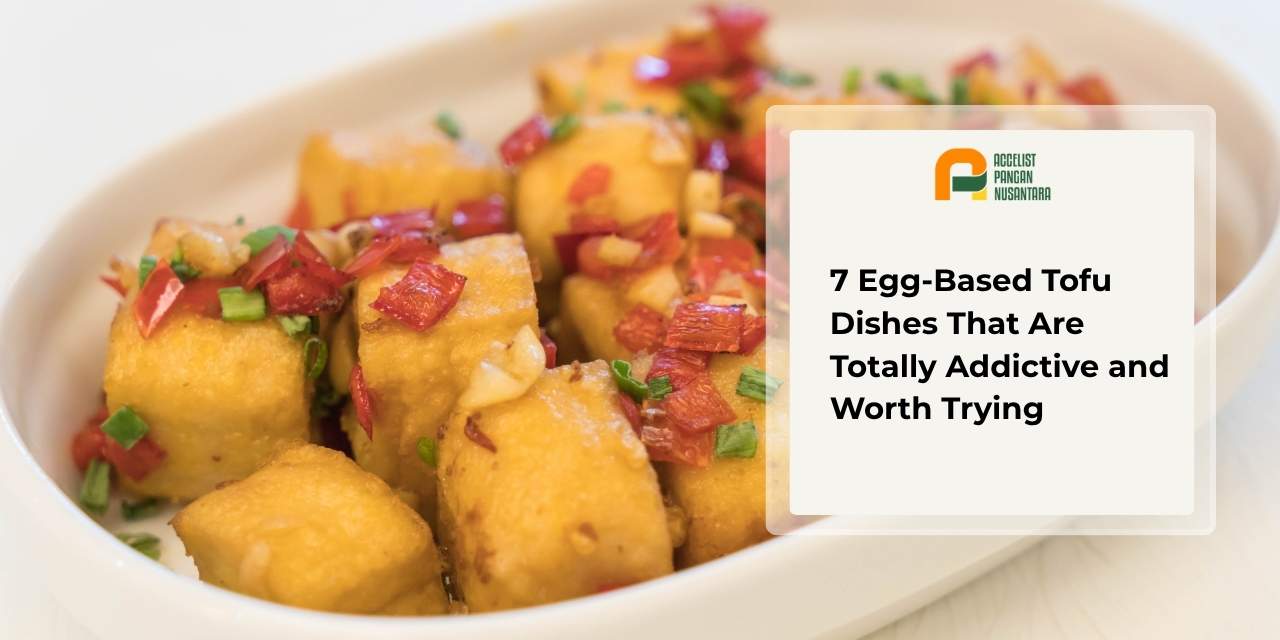
Tofu is one of the most widely used ingredients in Indonesia’s culinary industry, spanning home kitchens to large-scale food production lines. Its steady price, consistent availability, and versatility in cooking make it a staple that few other ingredients can match.
What is interesting is that most of the best-loved tofu dishes share one thing in common. Nearly all of them use eggs somewhere in the cooking process.
Eggs act as a natuNutritional Content of Tofu and Eggs
Eggs act as a natural binder that improves the texture of tofu when cooked. The fat and protein content in eggs also amplify flavor, making the final dish taste richer than tofu prepared without them.
From a nutritional standpoint, combining the two delivers a more complete protein intake in a single serving. Tofu contributes approximately 9 grams of plant-based protein per 100 grams (Gemma Sampson, RD), while a single large egg provides around 6.3 grams of animal protein covering all nine essential amino acids the body requires (Healthline, 2023).
7 Egg-Based Tofu Dishes Most Commonly Found Across Indonesia
Of the many ways to prepare tofu, the seven dishes below are the ones that appear most consistently across different regions of Indonesia. Each carries its own history and flavor profile, though all of them are built on the same foundation of tofu and eggs.
1. Crispy Tofu Martabak
Tofu martabak is a local adaptation of the egg martabak that was already well-established in Indonesia. Crumbled tofu replaces the meat filling as the main ingredient, resulting in a lighter version that is still savory and satisfying.
The crispy variation uses thin spring roll pastry that turns golden and crunchy on the outside when fried. The contrast between the crisp outer layer and the soft tofu-egg filling inside is what makes it so appealing.
Crispy tofu martabak is now widely sold as a frozen food product as well as a menu item at modern street food stalls.
Read also: Crispy Tofu Martabak Recipe
2. Fried Tofu with Egg
Fried tofu with egg is one of the oldest and most widely eaten tofu dishes in Indonesia. Its roots can be traced back to small warungs in Central and East Java, where it has been a staple for decades.
Its defining quality lies in the texture: the outer layer turns slightly crispy from the egg coating that sets first in the hot oil. The inside stays soft because the tofu absorbs moisture from the seasoned egg mixture surrounding it.
In Semarang, this dish is commonly served with peanut sauce or sweet soy sauce alongside sliced bird’s eye chili. The simplicity of its ingredients and preparation is exactly why it has never really gone out of style.
Read also: Fried Tofu Egg Recipe
3. Tofu Fritters (Perkedel Tahu)
Perkedel entered the Indonesian kitchen through Dutch culinary influence, derived from the Dutch word frikadel. Over time, local ingredients replaced the original composition, and tofu became one of the most popular substitutes.
Tofu fritters are made from mashed tofu mixed with egg as a binder and various aromatic seasonings. The result is a flat, pan-fried patty with a golden-brown exterior and a soft, savory center.
The texture is lighter than potato fritters and more tender than meat-based versions. This is precisely why perkedel tahu is well-received across almost all age groups.
Read also: Perkedel Tahu Recipe, Budget-Friendly Indonesian Tofu Fritters That Keep You Coming Back
4. Tofu and Egg Semur
Semur was introduced to Indonesia through Dutch culinary influence, specifically from the dish smoor, meaning “slowly braised in sauce.” The Indonesian version replaced the original base with sweet soy sauce and warm spices such as nutmeg, cinnamon, and cloves.
Tofu and egg semur combines both ingredients in a single seasoned broth until the flavors penetrate evenly into each component. The sweet soy sauce reduces into a thin glaze that coats the surface of both the tofu and eggs by the time the dish is done.
What makes semur tahu telur particularly special is that it tastes even better the next day. The seasonings continue to deepen as the dish sits, making it a practical and flavorful leftover.
5. Tofu in Salted Egg Sauce
Tofu in salted egg sauce draws inspiration from Singaporean and Malaysian cuisine, where the salted egg yolk sauce technique gained widespread popularity in the mid-2010s. The method was soon adapted across Indonesia and found its way into virtually every segment of the culinary scene.
Its signature is unmistakable: tofu is fried until fully crispy, then coated in a rich yellow sauce made from salted egg yolks. The sauce is cooked with butter, curry leaves, and chili, producing a deep, intensely savory flavor.
The textural contrast between the crunchy tofu and the smooth, creamy sauce is the main reason for its widespread appeal. It is also a favorite among small-scale food business owners because the core ingredients are accessible and manageable.
6. Steamed Tofu with Egg
Steamed tofu with egg has long been recognized as a healthier approach to cooking tofu. The steaming method preserves the nutritional content of the tofu while producing a texture that is delicate and easy on the palate.
The technique is actually quite similar to Japan’s chawanmushi, a silky steamed egg custard flavored with dashi broth. The Indonesian version uses tofu as the main ingredient with local seasonings such as soy sauce and oyster sauce.
Tofu and egg steamed together form a cohesive, savory layer that is light and free from added oil. This dish suits anyone looking to enjoy tofu without any frying involved.
7. Tofu Omelette
Tofu omelette is the most flexible combination of tofu and egg in a single pan. There are no fixed rules on ratios or additional ingredients, making it easy to adapt to whatever is available.
What sets it apart from fried tofu with egg is the texture: the tofu is finely crumbled and mixed evenly into the beaten egg before cooking. The result is a denser, more unified omelette rather than separate pieces of tofu sitting inside egg.
Tofu omelette is a popular breakfast choice because it cooks quickly and relies on ingredients that are almost always on hand. The flavor can range from a simple salt and pepper seasoning to a more layered profile with added oyster sauce.
Why Egg Powder Is a Practical Solution for Egg-Based Cooking
One of the most common challenges when preparing egg-based dishes, whether in a home kitchen or a production setting, is consistency. The quality of fresh eggs can vary depending on their origin, season, and storage conditions, which means the final result is not always uniform from one batch to the next.
Egg powder addresses this challenge directly. Compared to fresh eggs, it is easier to store, has a more stable protein content, and produces consistent results every time it is used.
Accelist Pangan Nusantara provides four variants of egg powder, each designed for different applications:
- Egg white powder is suited for dishes that require high binding strength and a lighter finish.
- Egg yolk powder delivers the characteristic richness and color that egg yolk provides.
- Egg mix powder is the all-purpose option for a wide range of cooking needs.
- Salted egg powder serves as the key ingredient for salted egg sauce with a reliably savory flavor in every use.
Conclusion
The seven egg-based tofu dishes above prove that two humble ingredients are capable of producing a remarkably diverse range of cooking, from the warm and saucy semur to the bold crunch of tofu in salted egg sauce. Each dish carries a character shaped by history, cultural influence, and the ongoing creativity of the Indonesian kitchen.
Egg mix powder from Accelist Pangan Nusantara is a practical choice for maintaining consistent flavor and texture in every cooking process, without relying on fresh egg quality that can fluctuate between purchases. It is also available in egg white powder, egg yolk powder, and salted egg powder variants for more specific culinary needs. For further information or ordering inquiries, feel free to contact the Accelist Pangan Nusantara team directly.
FAQ
Eggs work as a natural binder that improves tofu’s texture during cooking. The fat and protein in eggs also enhance the overall flavor, resulting in a more savory and well-rounded dish.
Not all. Silken tofu is best for steaming, firm white tofu works well for frying or omelettes, and yellow tofu holds up better in long-simmered dishes like semur.
Tofu in salted egg sauce and crispy tofu martabak are two strong options for a small culinary business, as both have strong visual appeal and ingredients that are easy to source and manage.
Yes, the protein from both tofu and eggs supports children’s growth and development. Simply adjust the salt level and spice intensity according to their age and tolerance.