
Tourists exploring North Sumatra tourism always make searching for local souvenirs a mandatory agenda. Medan has a strong appeal as a culinary destination thanks to its rich flavors.
Bringing home food from this city now demands more carefulness than just taste. Consumers are getting smarter and seeking guarantees that the products they buy are standardized, clean, and safe.
Culinary Appeal and Market Potential of Typical Medan Souvenirs
The main strength of Medan’s culinary arts stems from its distinctive spice blends and traditional cooking techniques. The flow of tourists, which continues to rise every year, creates a massive market demand. This condition benefits both parties. End consumers get a variety of authentic culinary choices, while business players ranging from home-based scales to large factories get a golden opportunity to increase sales.
The most tangible challenge in the souvenir industry is the product’s shelf-life. Many regional specialty foods must be carried on long journeys, even across cities and islands, making product durability a highly important factor.
Products with high water content, such as wet snacks or traditional cakes, tend to experience a faster decline in quality, going stale or even becoming moldy if their distribution and storage are not handled well. According to PT Nutrisius Sari Nusantara, temperature changes during the shipping process can also accelerate the growth of microorganisms and degrade food quality before it reaches the consumer’s hands.
12 Typical Medan Souvenirs
Here is a list of iconic culinary products that you must know. Each product has highly specific nutritional characteristics and processing standards to guarantee its quality.
1. Bika Ambon
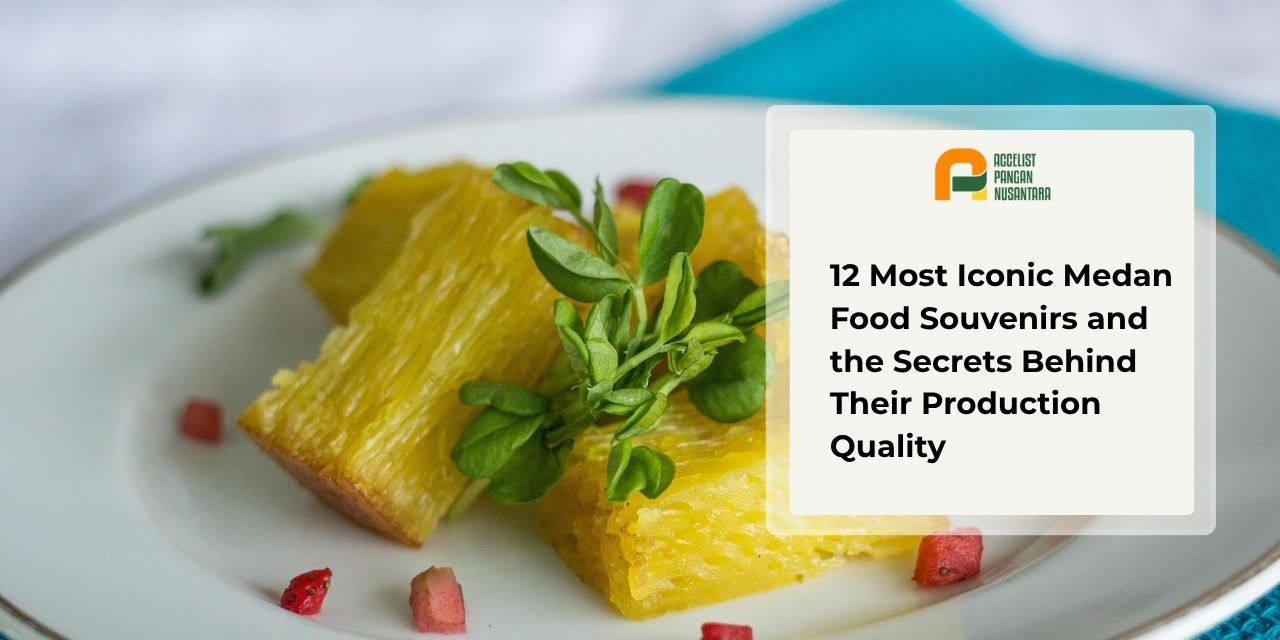
This cake is the prima donna of Medan with a hollow texture resembling a honeycomb and a strong kaffir lime leaf aroma. Its bright yellow color comes from the use of a large amount of egg yolks, which functions as a natural emulsifier (a substance that helps unite water and fat to keep the dough stable).
The manufacturing process involves yeast fermentation (the process of dough expansion by gas-producing microorganisms) that takes hours, making it highly vulnerable to contamination if the production area is not clean. Standardization of baking temperature is highly necessary to ensure perfect doneness and to kill any remaining active yeast (fermenting microorganisms that are still alive after processing).
2. Bolu Meranti
This legendary roll cake has a very soft texture with various filling options such as cheese, chocolate, or mocha. This softness relies on the egg white’s ability to trap air when whipped.
This moist bakery product has a relatively high water content, making it susceptible to bacterial growth if left at room temperature for too long. You are advised to use a cooler bag when carrying it on long journeys to maintain its nutritional quality and texture.
3. Lapis Legit (Spikoe)
Lapis legit is a premium cake category made with a precise layer-by-layer baking technique. The high-quality egg yolk and butter content provide a savory taste sensation and a texture that instantly melts in the mouth.
This cake has quite high calories and cholesterol, so consuming it in wise portions is highly recommended for health. Its lengthy manufacturing process requires strict sanitation of work tools so there is no dough residue that triggers germ growth.
4. Pancake Durian
This snack offers pure durian fruit meat wrapped in cream and a thin, flexible crepe skin. The elasticity of the crepe skin heavily relies on the protein balance from the egg batter used.
Storage must be done at freezing temperatures to maintain the quality of the fresh fruit and milk cream inside. The cold chain must not be broken during distribution so the product remains safe to consume and does not spoil quickly.
5. Passion Fruit Syrup (Sirup Markisa)
This refreshing drink is extracted from real passion fruit, which is rich in vitamin C and natural antioxidants. The natural citric acid from the fruit acts as a natural preservative that effectively inhibits bacterial growth.
Even though it has a good level of acidity, sterilizing the packaging bottles before filling is a highly critical stage. Store the syrup in a cool place after the seal is opened to prevent fermentation caused by yeast.
6. Teri Bajak (Medan Anchovies)
Medan anchovies are known for their small size and clean white color, and are often cooked with chili spices and peanuts. This dish is an excellent source of calcium and marine protein for maintaining bone health.
Proper drying and frying processes make this product able to last for months naturally. However, ensure the producer does not use cooking oil that has been oxidized repeatedly so the product remains healthy for consumption.
7. Kacang Sihobuk
These peanuts are uniquely processed using hot sand media without oil, producing a savory aroma and crispy texture. This traditional technique is healthier because it reduces additional fat intake from cooking oil.
Heating with hot sand is effective in killing microbes on the surface of the peanut shells. The main challenge is keeping the raw materials from becoming damp during storage to avoid the risk of fungal contamination.
8. Sidikalang Coffee
Coffee beans from these volcanic highlands offer a bold flavor profile with relatively low acidity. Its natural caffeine content is beneficial for increasing brain alertness if consumed within reasonable limits.
The roasting process at high temperatures ensures the sterility of the final product while creating a strong distinctive aroma. Store the coffee in an airtight, opaque container so its natural oils do not quickly undergo oxidation (a chemical reaction that can degrade the quality of the coffee’s aroma and taste).
9. Pia Mangko
Unlike pia from other regions, this pia is shaped like a sturdy small bowl with a dense mung bean filling. Its layered outer crust requires a special making technique to produce a crispy texture when bitten into.
The mung bean filling must be cooked to the boiling point to ensure the product’s durability and kill spoilage germs. The use of oxygen absorber technology in modern packaging greatly helps extend the shelf life of this pia.
10. Cream Puff (Choux Pastry)
Cream puff (choux pastry) features a crisp outer shell filled with sweet custard cream made from milk and eggs. Eggs act as a natural leavening agent (an ingredient that helps the dough expand during baking), allowing the pastry to rise perfectly in the oven.
Milk-based custard is highly susceptible to bacterial growth, so hygiene after the cooking process must be maintained carefully. For the best quality and food safety, cream puffs should ideally be consumed fresh on the same day they are prepared.
11. Lemang
Lemang is made from glutinous rice and thick coconut milk slowly cooked inside a bamboo cavity over hot coals. This process provides a highly distinctive smoky aroma that cannot be replicated by modern cooking methods.
The boiling temperature of the coconut milk during the roasting process acts like a natural sterilization process to kill microbes. You should reheat the lemang if it is not finished immediately because the fat content of the coconut milk easily goes rancid.
12. Kue Ombus-Ombus
This snack, made from rice flour and grated coconut, contains pure palm sugar that melts when steamed. The name “ombus-ombus” (blow-blow) comes from the habit of blowing on this cake before eating it because it is most delicious served while still hot.
The steaming method is a highly microbiologically safe cooking way because the hot steam kills germs all the way to the inside. Since it is a wet snack, it is best to finish this traditional cake in less than 24 hours.
Challenges in Processing Egg-Based Foods
Producing typical Medan souvenirs in large quantities raises real operational constraints. The use of whole fresh eggs brings a burden of risk that producers must face every day:
- Bacterial contamination risk
Eggshell pores often become a breeding ground for deadly bacteria such as Salmonella. If temperature and hygiene protocols are slightly neglected, cross-contamination to the dough table occurs very easily. - Fluctuating quality standards
Volume size, water content, and yolk color in fresh eggs are always changing. This condition makes it difficult for the quality control team to maintain recipe consistency and stabilize daily production costs. - Inefficient work process
The routine of manually cracking shells and separating egg yolks consumes productive time and extra labor costs. - Shell waste problem
Piles of raw eggshells risk triggering environmental hygiene issues and demand a special budget for managing foul-smelling waste.
If this string of constraints is left unchecked, producers not only risk losing time efficiency but also gamble their brand reputation. An increasingly large production scale clearly requires measurable raw material certainty so the final food quality remains maintained in the consumer’s hands.
Egg Powder as a Practical Modern Solution
The array of operational problems above demands a more hygienic and standardized raw material solution. The food industry can now switch to using food dehydration innovation through egg powder products.
Accelist Pangan Nusantara is here as a production and distribution company for high-quality egg powder. This technology is capable of keeping the functionality and natural taste of the egg intact. As a result, business players get ease of storage and far better work efficiency without having to deal with raw shells.
This innovative raw material is designed to answer the needs of all business scales. Ranging from food manufacturing factories, HORECA, MSME bakery industries, to home consumers seeking practicality. The use of egg powder ensures producers get stable color, taste, and dough functionality quality at all times.
By switching to this powder format, culinary business players can cut preparation time while drastically reducing the risk of spoiled food. The step of using this consistent raw material will directly impact the smoothness of daily operations, while making the process of innovating new products easier without worrying about failed recipes due to fluctuating egg quality.
Product Choices According to Production Needs
Accelist provides versatile formulations suitable for various culinary applications:
- Tepung Telur Putih (Egg White Powder)
This high-protein product is highly ideal for doughs that need a sturdy structure and maximum expansion volume like sponge cakes or macarons. - Tepung Kuning Telur (Egg Yolk Powder)
Provides a savory (creamy) taste and natural yellow color consistently in the final product. This product is guaranteed hygienic and free of Salmonella bacteria, suitable for mayonnaise sauce to premium lapis legit. - Tepung Telur Mix (Whole Egg Powder)
A precise ratio combination of egg white and yolk as a longer-lasting whole egg substitute. Very practical for the production of sweet breads, noodles, to processed meats. - Tepung Telur Asin (Salted Egg Powder)
A fast solution to present the authentic savory taste of salted egg without a complicated cooking process. In powder form so it is easy to measure for snack seasoning powder or trendy sauces.
Conclusion
The variety of archipelago souvenirs proves the high creativity of the local culinary industry. Wet traditional cakes to crispy snacks continue to gain a place in consumers’ hearts and create a large economic turnover for the region.
This massive opportunity certainly demands operational responsibility from producers. Business players in the food industry sector, bakery, HORECA, to MSMEs are required to implement food safety standards and efficient raw material supply chain strategies to maintain product quality in the market.
By using egg powder products from Accelist Pangan Nusantara, you can measure ingredient needs precisely, save storage space, and maintain dough taste consistency without having to bother cracking raw shells.
FAQ
Wet cakes go stale quickly due to high water content and the absence of artificial preservatives, making it easier for spoilage bacteria to multiply if left at room temperature.
It is safe, provided producers are disciplined in maintaining storage temperatures and separating raw egg handling areas from cooked products to prevent cross-contamination.
Producers can switch to egg powder products to cut the labor costs of shell cracking, reduce storage space needs, and prevent financial losses due to rotten eggs.
Yes, current egg powder technology is guaranteed to be capable of replacing the dough binding function, maintaining cake expansion power, and providing the intact natural egg taste.
Egg powder is far more hygienic because it is free from shell dirt and has passed the factory pasteurization stage that kills pathogenic bacteria like Salmonella.