
How to cook eggs with limited equipment depends on matching the technique to the tool, such as frying or scrambling in one pan or steaming in a rice cooker. This approach helps people living in rented rooms or dorms, office workers with a basic pantry, and anyone who owns only one or two cooking appliances.
Problems usually start when the technique does not match the tool, such as an egg bursting in the microwave or a thick rice cooker omelet staying raw inside.
This article covers the minimum equipment for cooking eggs, how to cook eggs with each tool, and tips for making sure your eggs are cooked safely.
The Minimum Equipment You Need to Cook Eggs
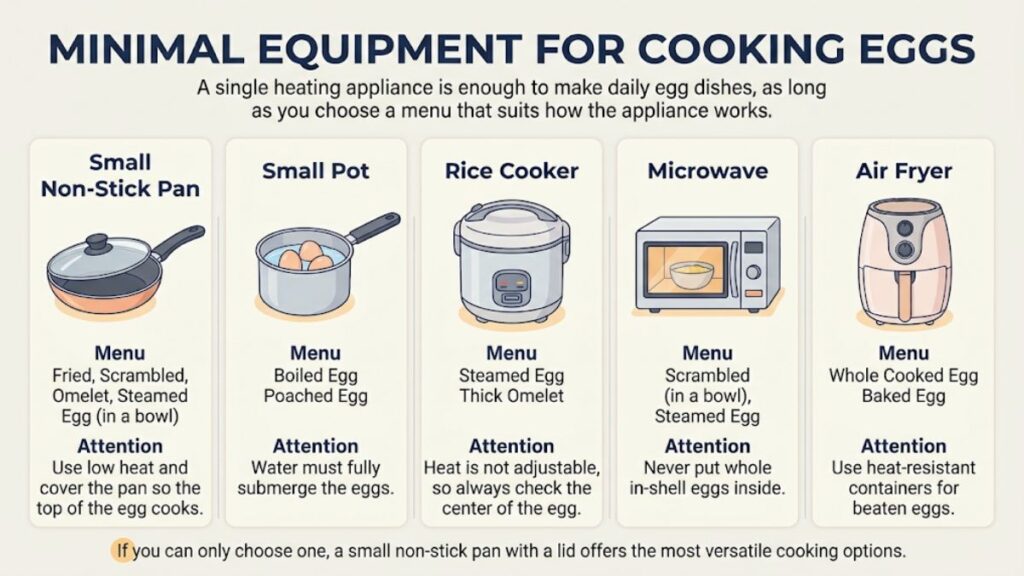
A single heat source is enough for everyday egg dishes, as long as you pick dishes that suit how that tool works. The table below sums up what each tool can make and what to watch for.
| Tool | Egg dishes you can make | What to watch for |
|---|---|---|
| Small nonstick pan with a lid | Fried eggs, scrambled eggs, omelets, steamed eggs in a bowl | Use low heat and cover the pan so the top of the egg cooks too |
| Small pot | Boiled eggs, poached eggs | The water must cover the eggs completely |
| Rice cooker | Steamed eggs, thick omelets | The heat cannot be adjusted, so check the center of the egg |
| Microwave | Scrambled eggs in a bowl, steamed eggs | Never put a whole egg in its shell inside |
| Air fryer | Whole cooked eggs, baked eggs in a mold | Use a heatproof container for beaten eggs |
If you can choose only one tool, a small nonstick pan with a lid gives you the widest range of egg dishes. Rice cookers and microwaves suit rented rooms or office pantries without a stove, as long as you check doneness carefully.
How to Cook Eggs with the Tools You Have
Each tool heats eggs differently, so the technique and the signs of doneness also differ. Here is how to cook eggs with five tools that are common in small kitchens.
Nonstick Pan: Fried Eggs, Scrambled Eggs, and Omelets
For fried eggs, heat the pan over low heat, crack in the egg, and cover the pan so the steam cooks the top without flipping. This works well if you are not used to flipping eggs or your pan is small.
Scrambled eggs also need low heat and constant stirring to stay soft, while an omelet needs only one flip once the bottom turns golden. Avoid high heat, which burns the outside before the inside is set.
You can also steam eggs in the same pan by setting a heatproof bowl of beaten eggs inside, pouring a little water around it, and covering the pan.
Small Pot: Boiled and Poached Eggs
Boil the eggs in enough water to cover them completely, then adjust the time to the doneness you want. Once they are done, move the eggs to cold water to stop the cooking and make the shells easier to peel.
For poached eggs, crack each egg into a small bowl first, then slide it into water that is just below a boil. Lift it out once the white has set.
Rice Cooker: Steamed Eggs and Thick Omelets
If your rice cooker comes with a steamer basket, place whole eggs or a bowl of beaten eggs in the basket while the rice cooks. The eggs and rice finish together, so you only need to run one appliance.
For a thick omelet, grease the rice cooker pot with a little oil, pour in the beaten eggs and vegetables, and press the cook button. Since you cannot adjust the heat, poke the center of the omelet and make sure no liquid egg remains before serving.
Microwave: Scrambled and Steamed Eggs in a Bowl
Beat the eggs in a microwave-safe bowl, heat them briefly, stir, and repeat until they set. Cooking in short rounds keeps the edges from overcooking while the center is still runny.
Never microwave a whole egg in its shell or a peeled whole hard-boiled egg, because the steam inside can make it burst. If you microwave a fried egg, pierce the yolk with a fork and cover the bowl loosely.
Air Fryer: Whole Cooked Eggs and Baked Eggs
An air fryer can cook whole eggs in their shells without water, with results similar to boiled eggs. Once they are done, soak them in cold water so they peel easily.
For fried eggs or baked eggs with vegetables, use a heatproof mold greased with a little oil. Never pour beaten eggs straight into the air fryer basket, because they will drip through the holes.
Tips for Cooking Eggs Safely with Limited Equipment
With basic tools, you need to watch egg doneness and kitchen hygiene more closely, because you cannot always control the temperature and your workspace is tight. These tips apply to every tool above.
- Cook eggs until both the white and yolk are firm, and cook scrambled eggs until no wet spots remain. The USDA Food Safety and Inspection Service (FSIS) recommends cooking egg dishes to a safe internal temperature of 160°F (71°C).
- Infants, young children, older adults, pregnant women, and people with weakened immune systems should eat only fully cooked eggs.
- Wash your hands, knives, and work surfaces after touching raw eggs, because eggshells can carry Salmonella bacteria.
- Refrigerate hard-boiled eggs within 2 hours of cooking and eat them within a week, as the same USDA FSIS guidance advises.
Conclusion
Cooking eggs with limited equipment works when the technique suits the tool, such as covered frying in a pan, steaming in a rice cooker, or microwaving in short rounds. A small nonstick pan with a lid is the most versatile option if you can have only one tool.
Whatever tool you use, make sure the white and yolk are fully set, especially for young children, older adults, and pregnant women. Refrigerate any boiled eggs you will not eat right away.

FAQ
Can You Boil Eggs in an Electric Kettle?
It is better not to, because an electric kettle is designed to heat water, and a cracked egg can dirty the heating element. Use a small pot or a rice cooker instead.
Can You Cook Eggs with Hot Water from a Water Dispenser?
It is not recommended, because the hot water from a dispenser does not reach a boil, so the eggs will not cook evenly until the yolks are firm. Use something that can bring water to a boil, such as a pot or a rice cooker.
How Can You Tell If Eggs Are Cooked without a Thermometer?
Fully cooked eggs have a firm white and yolk, with no liquid when you cut or poke them. Scrambled eggs and omelets should have no wet, shiny spots left.
Can You Cook Eggs Straight from the Refrigerator?
Yes, but cold eggs take a little longer to cook, and their shells crack more easily if they go straight into boiling water. Put them in while the water is still cold so they warm up gradually.
How Do You Clean Stuck-On Egg from a Pan or Rice Cooker?
Soak it in warm, soapy water for a short while, then scrub with a soft sponge. Avoid steel wool, which can damage the nonstick coating.