
The benefits of eggs for children come from the complete protein, choline, vitamins, and minerals they contain, which help build muscle and bone and support brain development. For parents, eggs are an animal protein that is easy to find and quick to cook, especially when a child is going through a picky eating phase.
Practical protein sources like this matter because chronic undernutrition is still a problem for children in Indonesia. Indonesia’s 2024 Nutritional Status Survey (SSGI) recorded a national stunting prevalence of 19.8%, or roughly one in five young children.
This article covers egg nutrients, six benefits for children’s growth, the link to stunting, how many eggs a day are enough, and what to watch out for.
Egg Nutrients Children Need
Eggs contain complete protein, choline, vitamin A, vitamin D, vitamin B12, iron, and zinc, all of which children need while they grow. The protein is called complete because it supplies all the essential amino acids, which the body cannot make on its own.
The table below shows where each nutrient sits in the egg and what it does for children.
| Nutrient | Richest part of the egg | Role in child growth and development |
|---|---|---|
| Protein | White and yolk | Builds muscle, organs, and new tissue as a child’s body grows |
| Choline | Yolk | Supports the formation of brain cells and the nervous system |
| Vitamin A | Yolk | Supports vision and the immune system |
| Lutein and zeaxanthin | Yolk | Help protect the retina from blue light |
| Vitamin D | Yolk | Helps the body absorb calcium for bones and teeth |
| Vitamin B12 | Yolk | Helps form red blood cells and supports nerve function |
| Iron | Yolk | Builds hemoglobin, the protein that carries oxygen in the blood |
| Zinc | Yolk | Supports immunity and cell growth |
The table shows that most of an egg’s vitamins and minerals sit in the yolk, while the white mainly provides protein. Serve your child the whole egg, because giving only the white means missing out on the choline, iron, and vitamins concentrated in the yolk.
The fat in the yolk is useful too, since children need it for energy and to absorb vitamins A and D.
6 Benefits of Eggs for Children’s Growth and Development
Eggs support child growth and development because their nutrients work on muscles, the brain, the eyes, the immune system, bones, and blood at the same time. Here are the six benefits and the nutrients behind each one.
1. Supports Growth in Height and Weight
Protein is the main building material for muscles, organs, and new tissue as a child grows taller and heavier. Egg protein is also concentrated in a small serving and easy to digest, which suits toddlers who still eat small portions.
When protein intake stays low for a long time, a child’s growth can slow down and their height can fall behind that of other children the same age.
2. Supports Brain Development and Memory
Egg yolk is one of the most concentrated sources of choline among everyday foods. Choline helps build brain cells and the nervous system, which develop rapidly in the first years of a child’s life.
The body also uses choline to make acetylcholine, a chemical messenger between nerve cells that is linked to memory and focus.
3. Protects Eye Health
The vitamin A in egg yolk helps the eyes see in dim light and keeps the cornea, the clear front layer of the eye, healthy. A vitamin A deficiency in children can cause night blindness, a condition that makes it hard to see as daylight fades.
Egg yolk also contains lutein and zeaxanthin, two natural pigments that collect in the macula (the center of the retina) and help filter blue light.
4. Strengthens the Immune System
Eggs provide zinc, selenium, vitamin A, and vitamin D, which the immune system needs to fight off germs. The body also uses egg protein to make antibodies, the proteins that recognize and neutralize viruses and bacteria.
A healthy immune system means a child gets sick less often, so more of their energy and nutrients can go toward growth.
5. Helps the Body Absorb Calcium for Bones and Teeth
The vitamin D in egg yolk helps the body absorb calcium from other foods, such as milk, anchovies, tofu, or leafy greens. That calcium is the main building block of a child’s bones and teeth.
Eggs also contain phosphorus, a mineral that works with calcium to form bone structure.
6. Helps Prevent Anemia
Egg yolk contains iron and vitamin B12, two nutrients the body needs to make red blood cells. A shortage of either one can lead to anemia, which leaves a child tired and pale.
Iron from eggs is easier to absorb when your child also eats vitamin C-rich vegetables or fruit at the same meal, such as tomatoes or oranges.
Eggs and Stunting Prevention in Children
Eggs can help prevent stunting because they provide animal protein, vitamins, and minerals in a small portion that children can easily finish. Stunting is a condition in which a child’s height falls below the standard for their age because of chronic undernutrition and repeated infections.
One piece of evidence comes from a randomized controlled trial in Ecuador published in the journal Pediatrics in 2017. Infants aged 6 to 9 months who ate one egg a day for 6 months had a 47% lower stunting prevalence than a comparison group that received no eggs.
These results are consistent with the WHO guideline on complementary feeding published in 2023, which covers the solid foods given alongside breast milk to children aged 6 to 23 months. It recommends that children eat animal-source foods, such as meat, fish, or eggs, every day.
That said, eggs cannot prevent stunting on their own. Children still need a varied diet, breast milk, immunizations, clean sanitation, and regular growth monitoring at community health posts (posyandu) or health facilities.
How Many Eggs a Day Are Enough for Children?
One egg a day is enough for children aged 1 year and older, and babies aged 6 to 11 months need half to one egg. This recommendation appears in Indonesia’s Ministry of Health (Kemenkes) guidance on foods that help prevent stunting.
| Child’s age | Recommended eggs per day | Serving ideas |
|---|---|---|
| Under 6 months | No eggs yet | Breast milk or formula only until complementary feeding starts at 6 months |
| 6 to 11 months | Half to one egg | Fully cooked boiled egg, mashed and mixed into porridge or soft steamed rice |
| 1 year and older | One egg | Boiled egg, omelet, or scrambled egg as a side dish, alternating with fish, chicken, or meat |
One egg a day already meets this recommendation, so there is no need to push your child to finish two or three eggs at once. Fish, chicken, meat, tofu, or tempeh can cover the rest of their protein needs and keep meals varied.
For children with an egg allergy or other health conditions, follow your doctor’s advice on how many eggs to give.
4 Things to Watch Out For When Your Child Eats Eggs
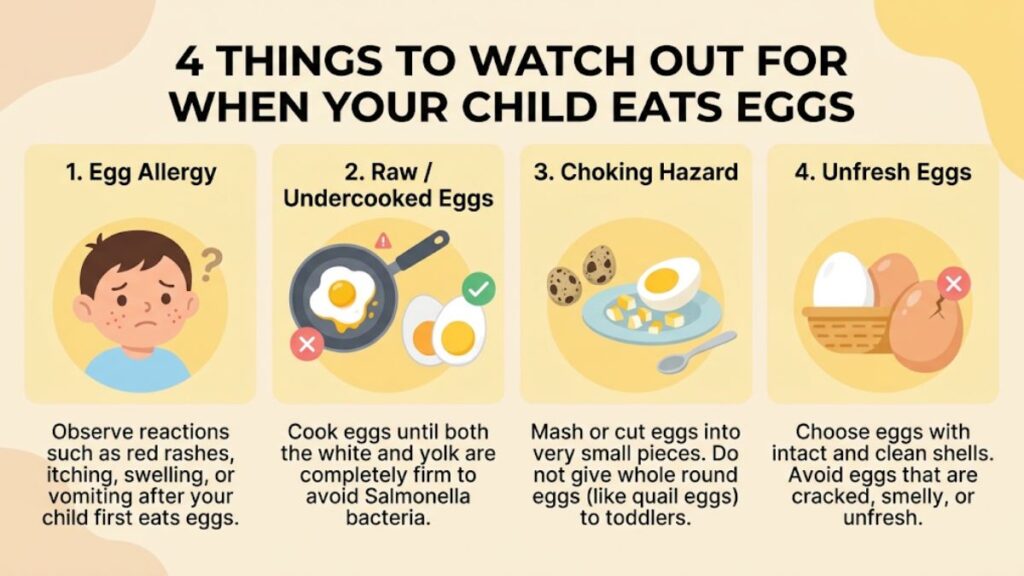
There are four things to watch out for when children eat eggs: allergies, undercooked eggs, choking, and eggs that are no longer fresh. You can prevent most of these risks by choosing, cooking, cutting, and storing eggs the right way.
1. Egg Allergy
Egg allergy is a common food allergy in children, so watch for reactions from the very first time you offer eggs. Start with a small amount without mixing in other new foods, then look for signs such as a rash or hives, swelling around the lips or eyes, vomiting, and diarrhea.
Take your child to a health facility right away if they have trouble breathing, start wheezing, or seem limp after eating eggs. If your child has severe eczema or a history of food allergies, ask a doctor before introducing eggs.
If your child has a confirmed egg allergy, tell their school, daycare, or caterer, because eggs also appear in cakes, bread, noodles, and mayonnaise.
2. Raw or Undercooked Eggs
In Indonesia, some families still give babies raw or soft-cooked eggs, a habit the Indonesian Pediatric Society (IDAI) warns against because such eggs can carry Salmonella bacteria. The USDA Food Safety and Inspection Service lists infants and young children among those particularly vulnerable to infection, so cook eggs until the white and yolk are firm.
Be careful with homemade foods made with undercooked eggs too, such as homemade mayonnaise, tiramisu, and mousse. Store-bought mayonnaise is usually made with pasteurized eggs, which are heated enough to kill bacteria without being cooked.
3. Choking Hazards
Pieces of egg that are too large can make babies and toddlers choke, especially before they can chew well. For babies, make sure the egg is completely smooth, then move to small pieces as their chewing skills develop.
Whole boiled quail eggs should also be cut before you give them to toddlers, because they are round and slippery. Stay with your child during meals and make sure they sit upright rather than running around or lying down.
4. Eggs That Are No Longer Fresh
Choose eggs with clean, uncracked shells, because cracks give bacteria a way into the egg. Do not serve eggs that smell rotten or have changed color inside.
Cooked eggs should go in the refrigerator if they won’t be eaten right away. For school lunches, use a lunch box with an ice pack so the eggs don’t sit at room temperature for too long.
Also read: 7 Egg Storage Myths and Facts Worth Setting Straight
Conclusion
Eggs provide complete protein, choline, vitamins, and minerals that support physical growth, brain development, and the immune system in children. Most of those vitamins and minerals sit in the yolk, so serve the whole egg rather than the white alone.
Indonesia’s Ministry of Health recommends half to one egg a day for babies aged 6 to 11 months and one egg a day for children aged 1 year and older. Pair eggs with other animal proteins and a varied diet to help prevent stunting.
Cook eggs until fully done, cut them to suit your child’s chewing ability, and watch for allergy signs the first time you serve them.

FAQ
Is the Cholesterol in Eggs Harmful to Children?
For healthy children, the cholesterol in one egg a day is generally not a concern if their diet is varied and low in saturated fat from foods like fried snacks. Children with high cholesterol or a family history of high cholesterol should follow their doctor’s advice on how many eggs to eat.
Can Eggs Cause Boils in Children?
No, because boils come from a bacterial infection in a hair follicle, not from eating eggs. If your child’s skin turns itchy, red, or bumpy after eating eggs, it may be an allergic reaction that a doctor should check.
Are Free-Range or Conventional Chicken Eggs Better for Children?
Both offer the same nutrients with only small differences in content, so conventional chicken eggs are good enough for a child’s daily meals. What matters more is how fresh the eggs are and how clean the shells are.
What If My Child Doesn’t Like Eggs?
Try serving eggs in other forms, such as mixed into porridge, soft steamed rice, potato fritters (perkedel), or pancake batter. If your child still refuses, cover their animal protein needs with fish, chicken, meat, or chicken liver.
Are Boiled or Fried Eggs Better for Children?
Boiled, steamed, or scrambled eggs cooked with a little oil suit daily meals better because they add less fat. Fried eggs are fine once in a while, as long as you use fresh oil that hasn’t been reused and don’t make them too salty.