
Egg powder is not a single, uniform product, since the way it is dried can produce very different levels of quality depending on the scale and purpose of production. That difference comes down to the drying method used, which ultimately determines how much the protein inside is affected by denaturation.
Commercial spray drying of whole egg typically runs at inlet air temperatures between 165°C and 195°C, according to a peer-reviewed food science study. Despite that heat, the brief contact time between the hot air and the liquid egg is what keeps protein denaturation from getting out of hand.
This article covers the difference between industrial-grade and home-grade egg powder, from the production process to when each grade makes more sense for your needs. You will also find out why the level of protein denaturation plays such a big role in the final quality of egg powder.
What Is Industrial-Grade vs Home-Grade Egg Powder?
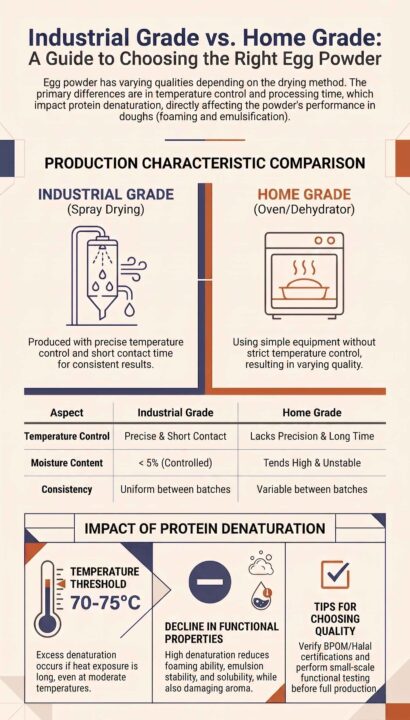
Industrial-grade egg powder is produced using a spray dryer with precise control over temperature and pressure, which results in consistent quality from batch to batch. Production runs at a large scale and is generally intended for bakeries, sauce manufacturers, or other processed food industries.
Home-grade egg powder is usually made with simpler methods, such as an oven or basic dehydrator, without the same tight temperature control as industrial machinery. The result tends to vary more from batch to batch and is better suited to small-scale home cooking.
Differences in the Production Process Between Industrial-Grade and Home-Grade Egg Powder
The main difference between the two grades comes down to how precise and consistent the drying process is. Here is a breakdown of the production differences that affect the final quality of egg powder.
| Aspect | Industrial Grade | Home Grade |
|---|---|---|
| Drying method | Spray drying with dedicated machinery | Oven or basic dehydrator |
| Temperature control | Precise, with inlet air temperatures between 165°C and 195°C and very short contact time | Less precise, with longer drying times |
| Quality consistency | Uniform batch to batch, proven suitable for large-scale industrial use such as bakery and mayonnaise production | Varies from batch to batch |
| Moisture content | Tightly controlled, generally below 5% | Tends to be higher and less consistent |
The short contact time in a spray dryer actually helps limit protein denaturation even though the air temperature itself is high. Home drying methods, by contrast, tend to run longer at moderate heat, which raises the risk of excessive denaturation from prolonged heat exposure.
Why Does the Level of Protein Denaturation Affect Egg Powder Quality?
Protein denaturation is a change in a protein’s three-dimensional structure caused by heat, and in egg white the main protein, ovalbumin, begins to denature at around 74°C. The higher the level of denaturation during drying, the bigger the impact on the functional properties of the resulting egg powder.
- Foaming capacity, or the ability to expand when whipped, tends to drop when the protein is denatured too much, as shown in comparisons between spray-dried and freeze-dried egg white
- Emulsifying capacity, or the ability to evenly bind fat and water, becomes less stable at high denaturation levels
- Protein solubility in water decreases as the level of denaturation increases
- Color and aroma can change due to the Maillard reaction if drying runs too long at high temperatures
This is why industrial-grade egg powder, produced with precise temperature control and a short contact time, tends to retain its functional properties better than home-grade powder. That process control, not just the equipment itself, is what really sets the final quality of egg powder apart.
When Should You Choose Industrial-Grade Egg Powder?
Choosing the right grade of egg powder should depend on the scale and purpose of your production. Here are four situations where industrial-grade egg powder is the better choice.
- Large-scale production that needs consistent results in every batch, such as a bread or biscuit factory
- Products that rely on strong foaming capacity, such as sponge cakes or bakery products that need to rise properly
- Products that need stable emulsifying capacity, such as mayonnaise or salad dressing
- A need for raw material with a long shelf life and verified food safety standards
Tips for Choosing Quality Industrial-Grade Egg Powder
Not every egg powder marketed as industrial grade actually meets the production standard it claims. Four steps below can help you choose the right product.
1. Check the Moisture and Protein Content
Make sure the egg powder’s moisture content is below 5% and its protein content meets the applicable standard. This information is usually listed on the packaging label or the manufacturer’s Certificate of Analysis (CoA).
2. Look for Food Safety Certification
Choose egg powder that already carries a Halal certificate and an official registration number. This certification is an indicator that the production process has gone through food safety oversight.
3. Test the Functional Properties Before Full-Scale Production
Run a small-batch test to check the foaming and emulsifying capacity of the egg powder before using it in large-scale production. This step helps make sure your final product stays consistent.
4. Choose a Manufacturer With a Clear Track Record
Look for an egg powder manufacturer that is transparent about its production process and willing to provide supporting documents. A clear track record lowers the risk of ending up with a product of inconsistent quality.
Conclusion
The difference between industrial-grade and home-grade egg powder essentially comes down to the level of protein denaturation that occurs during drying. Industrial grade is produced with precise temperature control, so functional properties such as foaming and emulsifying capacity stay intact.
Home grade remains perfectly fine for small-scale home cooking, but it is less ideal for large-scale food production that needs high consistency. Understanding this difference helps you choose the type of egg powder that actually fits your production needs.
For culinary businesses or food manufacturers that need a raw material with consistent functional properties, Egg Powder from Accelist Pangan Nusantara is produced with precise spray-drying temperature control to preserve its foaming and emulsifying capacity. Contact Us for product information and to discuss your business’s egg raw material needs.

FAQ
The main difference lies in temperature control during production, which affects the level of protein denaturation and the functional properties of the resulting egg powder.
It’s safe as long as it’s produced and stored hygienically, though its functional properties may not be as consistent as industrial grade.
The contact time between the heat and the liquid egg during spray drying is very short, which limits the level of denaturation even though the air temperature is high.
Generally yes, since it involves more complex machinery and process control to maintain consistent quality.
Check the Certificate of Analysis (CoA), Halal certificate, and official registration number from the manufacturer as indicators of its production standard.