
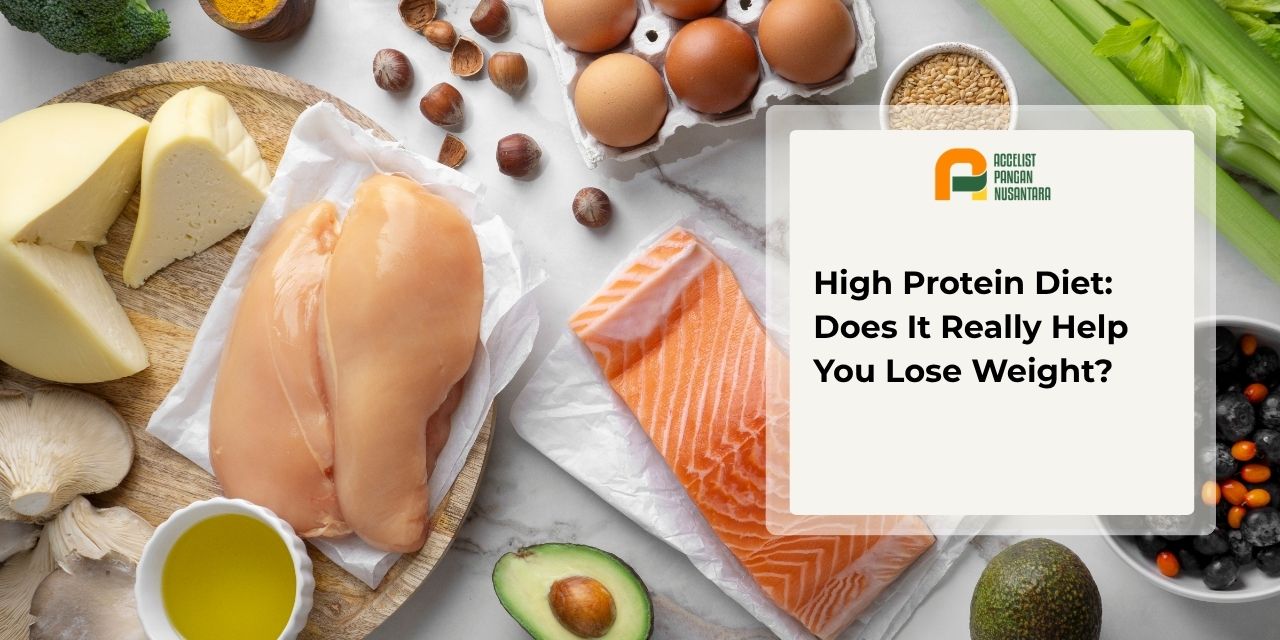
A high protein diet is an eating pattern that places protein as the main energy source, exceeding the portion normally consumed each day. This approach is widely chosen by people who want to lose weight while preserving muscle mass.
In fact, Indonesia’s average protein adequacy, according to Health Ministry Regulation No. 28 of 2019, is only around 57 grams per person per day. This figure is far below what a high protein diet practitioner needs, which in some cases can reach twice that standard.
This wide gap is exactly what makes the high protein diet a frequent topic of discussion. Both for people who want to shape their bodies and for those simply curious about how it works.
What Is a High Protein Diet?
In simple terms, a high protein diet means arranging your meals so protein intake exceeds the standard portion, whether from animal or plant sources. This pattern is generally followed for three main goals: losing weight, building muscle, or preserving muscle mass while cutting calories.
For example, someone who usually eats rice with a small side dish would swap it for a larger portion of chicken, eggs, or tofu and tempeh, while cutting back on rice. This kind of change in plate composition is the core idea behind a high protein diet.
How Much Daily Protein Is Ideal?
Everyone’s protein needs differ, depending on body weight, age, and physical activity level. Based on Halodoc’s guide to calculating daily protein needs, here is an overview of protein needs by activity level and goal.
| Group | Daily Protein Requirement |
|---|---|
| Light activity or mostly sedentary | 0.8 to 1.0 grams per kilogram of body weight |
| Moderate activity or regular exercise | 1.2 to 1.5 grams per kilogram of body weight |
| Intensive muscle-building program | 1.6 to 2.2 grams per kilogram of body weight |
| Seniors aged 60 and above | Around 1.2 grams per kilogram of body weight |
The range for the muscle-building group is not an arbitrary figure. A study published in the Journal of the International Society of Sports Nutrition puts the range at 1.6 to 2.2 grams per kilogram of body weight as sufficient to maximize muscle building. Meanwhile, protein intake recommendations for seniors from Tzu Chi Hospital put the figure at 1.2 grams per kilogram of body weight as a benchmark for preserving muscle mass in older age.
As an illustration, a person weighing 60 kilograms who wants to build muscle needs roughly 96 to 132 grams of protein a day. This amount should ideally be split across three to five meals so the body absorbs it more efficiently.
What Are the Benefits of a High Protein Diet?
A high protein diet offers a number of benefits, especially for people who exercise regularly or are on a weight-loss program. Here are its main benefits.
- Helps with weight loss, since protein keeps you fuller for longer than carbohydrates.
- Preserves muscle mass when the body is in a calorie deficit.
- Speeds up tissue recovery after injury or surgery.
- Supports antibody formation for the immune system.
- Helps the body repair cells and tissue in general.
For example, a packaged sweet snack contains an average of 150 to 200 calories without much satiety, while a single boiled egg has only about 70 to 80 calories yet keeps you full longer. As a result, total daily calorie intake can drop without feeling like a forced restriction.
What Are the Best Sources of High Protein Foods?
Protein sources for this diet can come from both animal and plant foods. Here are 5 options that are easy to find at markets or supermarkets.
- Lean meat, such as skinless chicken breast or lean beef.
- Freshwater or saltwater fish, such as catfish, mackerel, or salmon.
- Eggs, one of the most complete and affordable protein sources.
- Dairy products, such as milk, cheese, and yogurt.
- Legumes and their products, such as tempeh, tofu, and mung beans.
Alodokter notes that one medium-sized chicken egg contains around 6 to 7 grams of protein. This makes eggs a practical choice for a daily breakfast menu without complicated calculations.
How Do You Start a High Protein Diet?
Starting a high protein diet should be done gradually so the body can adjust easily. Here are the steps to follow.
- Calculate your daily protein needs using this formula: body weight (kg) multiplied by the requirement factor for your goal (see the protein requirement table above, for example 1.2 for weight loss or 1.6 for muscle building). For instance, a body weight of 60 kilograms with a factor of 1.2 results in a requirement of 72 grams of protein per day.
- Add protein portions gradually, not all at once in large amounts.
- Spread protein intake across several meals rather than one large meal.
- Combine it with vegetables and fiber to keep digestion running smoothly.
- Vary your cooking methods, such as grilling, stir-frying, or steaming, so meals do not become monotonous.
As an illustration, instead of having toast with jam alone for breakfast, someone could add two boiled eggs. This simple change is already enough to boost daily protein intake without drastically altering eating habits.
What Are the Risks of Excessive High Protein Dieting?
Despite its benefits, a high protein diet followed without limits also carries risks. Here are 4 effects to watch out for.
- Digestive issues, such as constipation, since this eating pattern tends to be low in fiber.
- Bad breath and headaches from the body breaking down excess protein.
- Deficiency in other nutrients, since carbohydrate and vegetable portions are often reduced drastically.
- Decline in kidney function, since the organ works harder to eliminate protein metabolism waste.
For example, someone consuming more than 2 grams of protein per kilogram of body weight without supervision risks placing long-term strain on their kidneys. For this reason, consulting a nutritionist is still recommended before significantly increasing protein intake.
What If Fresh Eggs Are Hard to Get Every Day?
For households or production kitchens that rely on eggs as a daily protein source, the availability of fresh eggs can sometimes be a challenge, whether due to fluctuating prices or a short shelf life. Egg powder has become a solution that more people are turning to for this problem.
As an illustration, egg powder products are generally used in a specific ratio dissolved with water to replace fresh eggs in recipes, with protein content that remains intact despite going through a drying process (Pasteurization). A formula like this makes it easier for anyone to calculate protein intake from eggs more consistently, without the size variation found in fresh eggs.
Have You Calculated Your Own Protein Needs?
Before making a significant change to your eating pattern, try calculating your daily protein needs first using the formula and table explained above, then adjust gradually over one to two weeks. If you have a history of kidney disease, diabetes, or other chronic conditions, this adjustment should be done together with a doctor or nutritionist, not based on general figures alone.
Making a High Protein Diet a Sustainable Habit
A high protein diet can be an effective choice for losing weight or building muscle, as long as it is followed with portions that match the body’s actual needs. The key is not simply adding more protein, but maintaining a balance with fiber, carbohydrates, and fluids.
Consistently choosing quality protein sources matters far more for results than chasing a specific gram count every day. With the right meal planning, a high protein diet can be followed safely over the long term without straining the body’s organs.
For culinary businesses and households looking for a more practical way to meet their protein needs from eggs, egg powder can be a worthwhile alternative to consider, particularly the Whole Egg Powder from Accelist Pangan Nusantara, which combines egg white and yolk in a single ingredient, is Salmonella-free, and Halal-certified. Contact Us for more information on the product and how to order it.
FAQ
It is generally safe for healthy adults, but people with kidney disorders should consult a doctor first.
Usually two to four weeks, depending on how consistent your eating pattern and physical activity are.
Yes, by relying on tempeh, tofu, and legumes as substitutes for animal protein.
Ideally yes, since exercise helps protein work more effectively to build muscle.