
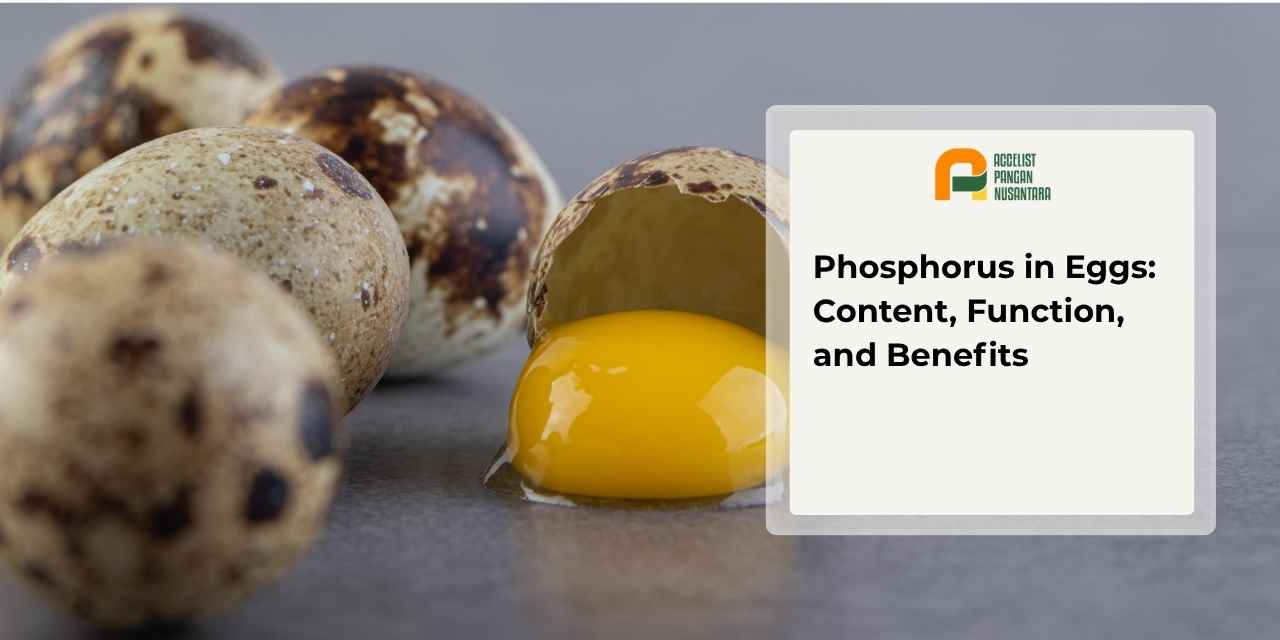
Phosphorus is a mineral your body needs to build bones, teeth, and produce energy. It is the second most abundant mineral in the human body after calcium.
A single large egg provides about 93 milligrams of phosphorus, with most of it concentrated in the yolk. That amount covers roughly 13% of the daily requirement for adults, which is set at 700 milligrams by the National Institutes of Health.
This article looks at how much phosphorus eggs contain, how the mineral works in the body, and how to meet your daily needs naturally. You will also find out why eggs are considered an efficient source of phosphorus.
What Is Phosphorus?
Phosphorus is a mineral that naturally combines with oxygen to form phosphate in the body, with about 85% of it stored in bones and teeth. Eggs are among the foods that provide phosphorus in a form the body absorbs easily, especially from the yolk.
Why Are Eggs a Good Source of Phosphorus?
Eggs are an efficient source of phosphorus because their content is fairly high relative to such a small serving, and it comes packaged with protein and other minerals that work together. This combination makes eggs an easy, reliable way to get phosphorus without needing a large portion.
- Most of the phosphorus in an egg comes from the yolk, which contains about 66 mg, while the white contributes a much smaller amount, generally under 15 mg
- Phosphorus in eggs works alongside the calcium also found in eggs to support bone and teeth health
- Eggs are relatively affordable compared with other animal foods high in phosphorus, such as chicken liver
- Eggs can be prepared in countless ways, from boiling to scrambling to steaming, which makes them easy to eat regularly
Function of Phosphorus in the Body
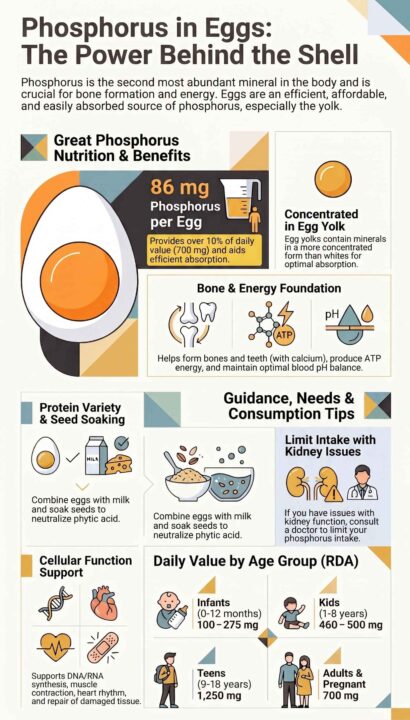
Once absorbed from food such as eggs, phosphorus immediately gets to work forming and maintaining strong bones and teeth alongside calcium. Beyond that main function, five other roles keep the body running every day:
- Forms and maintains strong bones and teeth alongside calcium
- Forms DNA and RNA, the genetic material of every cell
- Helps produce energy in the form of ATP inside cells
- Maintains the body’s acid-base (pH) balance
- Supports muscle contraction and nerve signaling, including a steady heartbeat
- Helps repair damaged cells and tissue
Daily Phosphorus Needs by Life Stage
Phosphorus needs vary by age and life stage, from infancy through adulthood. Here is the full breakdown of recommended amounts set by the National Institutes of Health, Office of Dietary Supplements.
| Life Stage | Recommended Amount |
|---|---|
| Birth to 6 months | 100 mg |
| Infants 7-12 months | 275 mg |
| Children 1-3 years | 460 mg |
| Children 4-8 years | 500 mg |
| Children 9-13 years | 1,250 mg |
| Teens 14-18 years | 1,250 mg |
| Pregnant and breastfeeding teens | 1,250 mg |
| Adults 19 years and older | 700 mg |
| Pregnant and breastfeeding women | 700 mg |
As a reference point, an adult’s 700 milligram requirement is roughly equal to 8 eggs if eggs were the only source. In practice, combining eggs with other foods is still the better approach for a balanced daily diet.
How to Meet Your Daily Phosphorus Needs
The most effective way to meet your phosphorus needs is through a varied daily diet that still relies on eggs as one of the main sources. Four steps below can help you get enough naturally.
1. Eat Animal Protein Regularly
Eggs are the most practical choice because they are easy to cook and pair well with other animal protein like fish and chicken. All three contribute quality protein the body needs at the same time.
2. Add Dairy and Nuts
Milk, cheese, and nuts such as Brazil nuts can round out your phosphorus intake alongside eggs. This combination also helps meet your calcium needs, which works together with phosphorus for bone health.
3. Soak Seeds Before Cooking
If you round out your egg-based meals with plant sources like pumpkin seeds, mind how you prepare them, since much of their phosphorus is bound as phytic acid, which is hard for the body to digest. Soaking seeds before cooking helps release the phosphorus so it is easier to absorb.
4. Talk to a Doctor If You Have Kidney Problems
People with kidney disease, including regular egg eaters, need to limit phosphorus intake because the kidneys cannot clear the excess efficiently. Talking with a doctor helps determine a safe phosphorus limit for your specific health condition.
Conclusion
Eggs are one of the most practical ways to meet your daily phosphorus needs, delivering a good amount in an easily absorbed form even in a small serving. A single egg alone provides more than 13% of an adult’s daily phosphorus requirement, mostly from the yolk.
Phosphorus from eggs also works alongside calcium and protein to support bone health, energy production, and nerve function every day. Daily needs, ranging from 700 milligrams for adults to 1,250 milligrams for teens aged 9 to 18, can be met by combining eggs with other protein sources in your everyday meals.
For culinary businesses or food manufacturers that rely on eggs as a raw material, maintaining nutrients like phosphorus in processed products can be an ongoing challenge. Egg Powder from Accelist Pangan Nusantara offers a practical, hygienic, Halal-certified solution for that exact need.
This product lets you maintain consistent flavor and nutritional quality without relying on a daily supply of fresh eggs. Contact Us for product information and to discuss your business’s egg raw material needs.

FAQ
A single large egg contains about 93 milligrams of phosphorus, most of it from the yolk.
Yes, phosphorus from eggs is easy to absorb because it comes from an animal source and is packaged with quality protein.
In theory, about 8 eggs could meet an adult’s daily phosphorus needs, though combining eggs with other foods is still recommended.
Yes, though in a much smaller amount than the yolk, egg white still contributes some phosphorus.
No, adult pregnant and breastfeeding women need the same amount as other adults, 700 milligrams per day.