
Eggs are one of the most practical animal protein sources that are almost always present in the breakfast menu. However, when consuming them, many people still have the habit of setting aside the egg yolk and eating only the white. This habit generally arises from the fear of high cholesterol numbers.
Consequently, throwing away the yolk means you are throwing away the highest nutritional density of the egg itself. Fortunately, the latest medical and nutritionist explanations actually position the egg yolk as a highly recommended daily intake. Moreover, this area stores an abundance of healthy fats, fat-soluble vitamins, and essential fatty acids.
What is Egg Yolk?
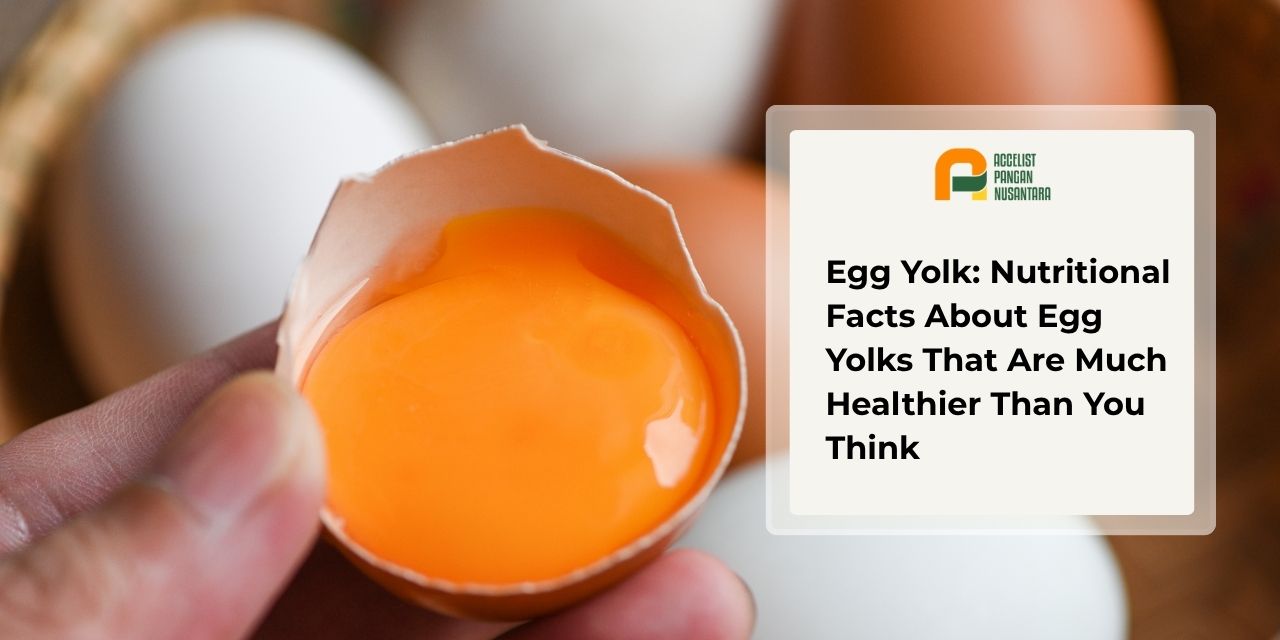
Egg yolk is the center part of the egg that is bright yellow to golden orange in color. If you crack a raw egg into a bowl, the thick-textured round part located exactly in the center is the egg yolk. Fundamentally, this is the part that provides a savory taste, distinctive aroma, and soft texture to dishes.
Behind its role in the kitchen, the egg yolk is the gathering location for highly dense nutrition. In fact, you can find most of the calories, iron, folate, calcium, and B-complex vitamins in this part. As a result, the entire combination forms a natural nutritional warehouse fully loaded with essential minerals.
Therefore, the human body desperately needs the nutritional components from this yolk part. Proper daily consumption helps you meet the needs of essential fatty acids instantly. For example, your body can directly absorb vitamins A, D, E, and K from food thanks to the help of the healthy fats present in the egg yolk, without needing additional supplements.
Nutritional Content Facts in Egg Yolk
The nutrients in the egg yolk are arranged together with phospholipids (natural fats that help carry and absorb nutrients in the body). Based on research from the National Library of Medicine, this natural structure makes its nutritional content bioavailable (easily absorbed and utilized by the human body).
To give you a clearer picture, here are the details of the egg yolk’s nutritional content based on a report from Egg Info UK:
| Nutritional Information | Per Egg Yolk (Medium Egg 58 grams) | Per 100 grams of Egg Yolk |
|---|---|---|
| Energy kcal (calories) | 52 | 347 |
| Energy kJ | 217 | 1437 |
| Fat (g) | 4.7 | 31.3 |
| Saturated Fat (g) | 1.3 | 8.8 |
| Monounsaturated Fat (g) | 1.8 | 12.0 |
| Polyunsaturated Fat (g) | 0.8 | 5.0 |
| Carbohydrates (g) | 0.0 | 0.0 |
| Sugar (g) | 0.0 | 0.0 |
| Protein (g) | 2.5 | 16.4 |
| Salt (g) | 0.02 | 0.13 |
If you look at the amount of fat in the egg yolk, there is no need to worry immediately. This is because most of those fats are monounsaturated and polyunsaturated fats, which are healthy types of fat that help maintain heart health, support body functions, and aid the absorption of important vitamins like vitamins A, D, E, and K.
Read also: Do Eggs Contain Fat? Here are the Complete Facts You Need to Know
Is It True That Egg Whites Contain More Protein Than Egg Yolks?
Many of us might think egg protein comes only from the egg white; consequently, the egg yolk is often discarded when undergoing a diet or exercise program. However, that assumption is not entirely accurate.
If calculated per one whole egg, the egg white does indeed contain more total protein. Nevertheless, this happens because the portion of the egg white inside the shell is indeed much larger compared to the egg yolk.
On the other hand, when compared by the same weight, the protein concentration in the egg yolk is actually denser. Based on data from Egg Info, every 100 grams of egg yolk contains about 16.4 grams of protein, while the egg white only has about 10.8–10.9 grams of protein.
Ultimately, this data shows that the egg yolk is not only a source of good fat, but also contains high-quality protein with a higher nutrient density compared to the egg white. Even so, because the amount of egg white in one egg is larger, the total protein per egg still appears more dominant in the white part.
Does Egg Yolk Contain High Cholesterol?
Egg yolk does naturally contain cholesterol. For instance, one medium-sized egg contains about 186 milligrams of cholesterol. However, dietary cholesterol does not always directly increase cholesterol levels in the blood.
Based on a report from TIME, the human liver has a natural regulatory system to maintain cholesterol balance. Therefore, when the body gets cholesterol intake from food, the liver will usually reduce its own cholesterol production.
In addition, in most healthy people, this process can run normally without causing health disturbances. Besides containing cholesterol, egg yolk is also rich in various important nutrients, such as:
- Choline
A nutrient that helps support brain function and the nervous system. - Lutein and zeaxanthin
Antioxidants that play a role in maintaining eye health and helping to protect vision. - Phospholipids
Natural fats that aid nutrient absorption as well as maintain the function and structure of body cells.
Despite this, egg consumption rules may differ for people with a history of heart disease or hypercholesterolemia (a condition of high cholesterol levels in the blood). Thus, if you have certain health conditions, it is best to consult your egg consumption pattern with a doctor or nutritionist so the intake amount remains safe and suits the body’s needs.
Read also: Omelet Calories: A Complete Guide to Nutritional Content and Healthy Consumption Tips
Benefits of Egg Yolk
Egg yolk contains various important nutrients that have benefits for many body functions. Here are some of its main benefits:
- Helps fetal brain development
Egg yolk is very rich in choline (an important nutrient for brain and nerve development) needed by pregnant women. Based on research from Times of India, this nutrient plays a role in fetal brain development, the central nervous system (the body’s nerve control center consisting of the brain and spinal cord), as well as the formation of neurotransmitters (chemicals that transmit signals between nerve cells). - Supports brain function and memory
The combination of choline, phospholipids (natural fats that help body cell function), and omega-3 fatty acids helps support cognitive function. Furthermore, these nutrients also help keep memory and communication between nerve cells optimal. - Helps maintain eye health
Egg yolk contains lutein and zeaxanthin, which are antioxidants (substances protecting body cells from damage) important for eye health. Based on data from the EFSA Journal, both of these substances help protect the retina from blue light exposure and help slow down macular degeneration (a decline in visual function due to damage to the central part of the retina). - Maintains bone and dental health
Egg yolk is one of the few natural foods carrying intact vitamin D. Consequently, the presence of this vitamin ensures calcium absorption in the intestines flows smoothly to strengthen the bone and dental matrix. - Aids vitamin absorption
Vitamins A, D, E, and K require a fat medium to be absorbed by the intestines maximally. Hence, the natural fat in the egg yolk ensures all these vitamin molecules enter the bloodstream perfectly. - Supports the body’s immune system
The content of selenium (an important mineral for body resistance), zinc (an immune system-supporting mineral), and vitamin D work together to help the formation of immune cells. According to a guide from Prevention, these nutrients help the body recover cells faster and support protection from daily infections.
Practical Alternatives to Fresh Egg Yolks
Moreover, besides from fresh eggs, egg yolk nutrition is now also available in the form of egg yolk powder. This product is made through a drying process designed to retain the protein, healthy fats, and important vitamins within it.
Additionally, its use is also more practical for food production needs such as bread, cakes, pasta, and even cooking spices because there is no need to crack and separate eggs manually.
How to Consume and Handle Egg Yolks Properly
In order for the nutritional benefits of egg yolk to be obtained safely, eggs need to be stored and processed correctly. Undoubtedly, eggs are among the food ingredients easily contaminated by bacteria if their cleanliness is not maintained.
Furthermore, simple mistakes like storing eggs for too long, using cracked eggs, or undercooking them can increase the risk of digestive disorders and food poisoning. Therefore, it is important to understand hygienic egg handling methods so their nutritional quality is maintained and they are safe to consume.
1. Choose Good Quality Eggs
The condition of the eggshell greatly affects the cleanliness of the contents inside. First and foremost, choose eggs with clean, intact, and uncracked shells. Small cracks on the shell often become an entry point for bacteria like Salmonella which can contaminate the inside of the egg.
Because of this, it is important to check the physical condition of the eggs before use. Eggs that look cracked, leaking, or smell bad should not be consumed in order to maintain food safety.
For further reading, a complete guide regarding egg cleanliness and handling standards can also be seen through the official guidelines from the U.S. Food and Drug Administration.
2. Ensure Eggs are Cooked Thoroughly
Cooking eggs thoroughly is very important to help kill pathogenic bacteria (disease-causing bacteria) that might be present in raw eggs. Therefore, make sure the egg white and yolk are perfectly cooked before consumption.
Specifically, in the food safety standards from the U.S. Food and Drug Administration, the internal temperature of the dish is recommended to reach a minimum of 71°C (160°F) so the eggs are safer to consume. Importantly, this recommendation applies especially for groups more vulnerable to infections, such as small children, pregnant women, the elderly, and individuals with weak immune systems.
3. Use Pasteurized Products for Raw Recipes
Some dishes like mayonnaise, ice cream, or carbonara sauce often use egg yolks that are not cooked thoroughly. In these instances, using regular raw eggs carries a higher risk of bacterial contamination.
As a safer alternative, you can use pasteurized products (products heated at a specific temperature to help kill harmful bacteria), such as egg yolk powder. Ultimately, this process helps maintain product safety without much altering its natural protein or fat content.
Besides being more hygienic, the powder form is also more practical to use for household kitchen needs as well as large-scale food production.
4. Pay Attention to How Eggs are Stored
Eggs should be stored in a refrigerator with a stable temperature below 4°C (40°F) so their quality is maintained, as explained by the U.S. Food and Drug Administration. Otherwise, fluctuating temperatures can accelerate the decline in egg quality and increase the risk of bacterial growth.
Consequently, avoid storing eggs on the refrigerator door shelves because this part is most frequently exposed to temperature changes due to the door constantly being opened and closed. Instead, it is best to store eggs in the inner part of the refrigerator where the temperature is more stable.
Conclusion
Egg yolk not only provides a savory flavor to food, but also contains many important nutrients beneficial to the body. Provided that it is consumed in a balanced amount, its nutritional content helps support brain function, eye health, and the immune system.
Because of this, egg yolk is widely used in the food industry, especially for bakery products, sauces, and emulsion-based foods (a stable mixture of water and fat like mayonnaise). However, the use of fresh eggs on a large scale often poses challenges, ranging from the storage process and bacterial contamination risks to the consistency of production yields.
As a more practical solution, Accelist Pangan Nusantara provides Egg Yolk Powder for the needs of commercial kitchens and the food industry. Essentially, this product helps maintain natural savory flavor, consistent color, and is more practical to use compared to fresh eggs.
Ultimately, besides being easier to mix into various recipes, the powder form also helps accelerate the production process and keeps food quality standards stable in every production batch.
FAQ
The egg yolk is the center part of the egg that is yellow. Historically and in the wild, its function is as a food distribution center and primary energy reserve for the developing poultry embryo inside the shell.
It is very safe for the majority of healthy people. The main condition is that your overall food portion remains balanced and not excessive every day.
They both complement each other for your daily nutritional intake. Specifically, egg whites win in the volume of protein-rich fluid, while egg yolks become the gathering location for healthy fats, dense minerals, and essential vitamin groups.
Put the leftover ingredient into a tightly closed airtight container, then store it directly in a stable-temperature refrigerator. Make sure you have completely cooked the leftover egg yolks within a maximum of two days.
The brightness level of this yellow color is purely influenced by the type of poultry feed. For instance, laying hens that routinely get feed intake with high natural pigments will produce a much darker yellow color.