

Pantothenic acid is a water-soluble B-complex vitamin that helps the body turn food into energy. It is also known as vitamin B5, and your body needs a fresh supply every day because it cannot store the vitamin for long.
A whole egg provides about 14% of the Daily Value for pantothenic acid, making it one of the easiest ways to meet your daily needs. Adults generally need 5 milligrams of pantothenic acid per day, based on guidance from the National Institutes of Health.
This article looks at how much pantothenic acid eggs contain, how the vitamin works in the body, and which other foods can round out your daily intake. You will also find the signs of deficiency and practical ways to get enough of this vitamin naturally.
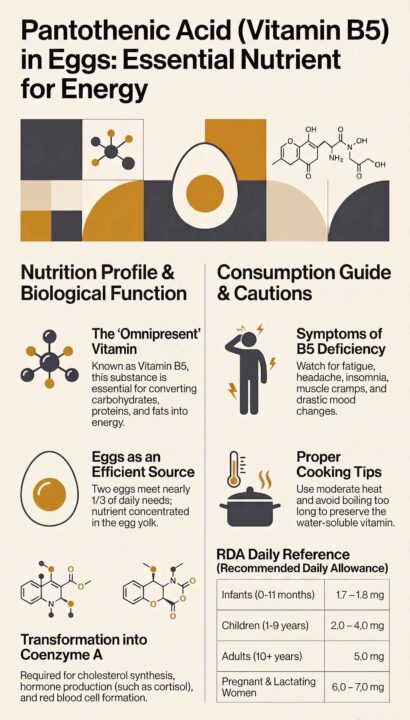
What Is Pantothenic Acid (Vitamin B5)?
The name pantothenic comes from the Greek word “pantothen,” meaning “from everywhere.” That reflects how the vitamin is found in nearly every type of food, both animal and plant based.
In the body, pantothenic acid is converted into coenzyme A (CoA), a compound needed to break down carbohydrates, protein, and fat into usable energy. The liver also relies on coenzyme A to process certain medications and toxins safely.
Because it is water-soluble, pantothenic acid does not stay in the body for long and is easily flushed out through urine. That is why you need a steady supply from food every day.
Why Are Eggs a Good Source of Pantothenic Acid?
Eggs are an efficient source of pantothenic acid because a single medium egg already provides around 14% of the Daily Value for adults. That content comes packaged with several other nutrients the body also needs for energy metabolism.
- Most of the pantothenic acid in an egg is concentrated in the yolk, which contains about 3 mg per 100 grams, several times more than the egg white alone
- Cooked egg protein is about 91% digestible, compared with roughly 51% for raw egg, so the nutrients are easier for the body to use
- Eggs are relatively affordable compared with other animal foods high in pantothenic acid, such as organ meats
- Eggs can be prepared in countless ways, from boiling to scrambling to steaming, which makes them easy to eat regularly
Function of Pantothenic Acid in the Body
The main function of pantothenic acid is to form coenzyme A, the compound that turns carbohydrates, protein, and fat from food into ready-to-use energy. Beyond that main function, four other roles keep the body running every day:
- Forms coenzyme A, which is needed for fat and protein metabolism
- Converts food into energy and glucose for daily activity
- Synthesizes cholesterol that the body needs in balanced amounts
- Supports production of the hormones cortisol, estrogen, and progesterone
- Supports red blood cell formation so oxygen is carried efficiently
Alternative Foods High in Pantothenic Acid Besides Eggs
If you need more variety in your diet or have an egg allergy, several other foods offer a pantothenic acid content equal to or higher than eggs. Here are four of the best options, along with how they compare to eggs.
| Food | Serving | Pantothenic Acid | Compared to Eggs (100 g) |
|---|---|---|---|
| Sunflower seeds | 100 g | 7.0 mg (141% DV) | About 5 times higher |
| Shiitake mushrooms (cooked) | 100 g | 3.6 mg (72% DV) | About 2.5 times higher |
| Salmon (cooked) | 100 g | 1.9 mg (38% DV) | About 35% higher |
| Avocado | 100 g | 1.4 mg (28% DV) | Roughly the same |
Data source: MyFoodData, powered by USDA FoodData Central. Whole egg contains about 1.4 mg per 100 g (28% DV) for comparison.
Even with higher levels, these foods do not always replace the role eggs play as a complete protein source in a small serving. Combining eggs with a few of the foods above is a practical way to make sure your daily pantothenic acid needs are met.
Daily Pantothenic Acid Needs by Life Stage
Pantothenic acid needs vary by age and life stage, from infancy through breastfeeding. Here is the full breakdown of Adequate Intake values set by the National Institutes of Health, Office of Dietary Supplements.
| Life Stage | Recommended Amount |
|---|---|
| Birth to 6 months | 1.7 mg |
| Infants 7-12 months | 1.8 mg |
| Children 1-3 years | 2 mg |
| Children 4-8 years | 3 mg |
| Children 9-13 years | 4 mg |
| Teens 14-18 years | 5 mg |
| Adults 19 years and older | 5 mg |
| Pregnancy | 6 mg |
| Breastfeeding | 7 mg |
These figures reflect average nutritional needs, not treatment doses for a specific medical condition. If you have a special dietary requirement due to a health condition, it is still worth checking with a doctor or registered dietitian.
Signs of Pantothenic Acid Deficiency
Pantothenic acid deficiency is rare because the vitamin is present in nearly every type of food. Even so, a deficiency can still occur with a severely unbalanced diet, and here are six early signs to watch for.
- Fatigue, even without heavy physical activity
- Headaches with no clear cause
- Irritability or mood changes
- Trouble sleeping or insomnia
- Muscle cramps and stomach pain
- Digestive issues such as nausea or vomiting
Side Effects of Too Much Pantothenic Acid
Pantothenic acid is considered a safe vitamin because any excess is easily flushed out through urine. Still, taking high-dose supplements, generally above 10 milligrams per day, can trigger five mild side effects.
- Diarrhea or mild digestive upset
- Nausea or an upset stomach
- Fluid retention or mild swelling
- Mild joint pain
- Mild allergic reactions such as skin rash
These side effects are typically linked to supplements rather than food. Contact a doctor right away if these symptoms appear after taking a pantothenic acid supplement.
How to Meet Your Daily Pantothenic Acid Needs
The most effective way to meet your pantothenic acid needs is through a varied daily diet, not supplements alone. Four steps below can help you get enough naturally.
1. Eat Animal Protein Regularly
Eggs, chicken, and fish are practical sources of animal protein that are easy to eat almost every day. All three help meet your pantothenic acid needs alongside your daily protein requirements.
2. Add More Vegetables and Whole Grains
Broccoli, mushrooms, and whole grains can round out your pantothenic acid intake from plant sources. This combination also helps fill the fiber gap that is often missing from daily meals.
3. Watch Your Cooking Methods
Water-soluble vitamins like pantothenic acid can break down under excess heat. Limit very high cooking temperatures or long boiling times to help preserve the nutrient content.
4. Talk to a Doctor or Dietitian About Supplements
Supplements are not always necessary if your food intake already covers your needs. Still, it is worth checking with a doctor or registered dietitian, especially if you have a specific health condition.
Conclusion
Pantothenic acid rarely gets the spotlight compared with vitamin C or vitamin D, but its role in turning carbohydrates, protein, and fat into energy runs in your body every single day. Daily needs range from 5 milligrams for adults to 7 milligrams for breastfeeding mothers, and most people can meet that through food alone without extra supplements.
Pantothenic acid deficiency is rare on a varied diet, though six early signs, such as fatigue and headaches, are still worth watching for. Choosing food from different groups, from eggs to mushrooms to leafy vegetables, remains the simplest way to keep this vitamin at healthy levels.
For culinary businesses or food manufacturers that rely on eggs as a raw material, maintaining nutrients like pantothenic acid in processed products can be an ongoing challenge. Egg Powder from Accelist Pangan Nusantara offers a practical, hygienic, Halal-certified solution for that exact need.
This product lets you maintain consistent flavor and nutritional quality without relying on a daily supply of fresh eggs. Contact Us for product information and to discuss your business’s egg raw material needs.

FAQ
They refer to the same substance. Pantothenic acid is the chemical name for vitamin B5.
Yes, because it is water-soluble and any excess is easily flushed out through urine. Side effects are more likely only if a supplement is taken far above the recommended dose.
Sunflower seeds and shiitake mushrooms rank among the highest natural sources. Eggs, salmon, and avocado are also easy-to-find options with a solid content.
Yes, needs rise to 6 milligrams per day during pregnancy. Breastfeeding mothers need even more, at 7 milligrams per day.
It is considered rare because pantothenic acid is present in nearly every type of food. A varied diet is usually enough to prevent a deficiency.