
A low-carb diet is an eating pattern that limits rice, bread, and other starchy foods, replacing them with larger portions of protein and fat. It’s popular because it’s often marketed as a faster way to lose weight than conventional dieting.
Recent data shows why this topic keeps coming up. According to a 2024 data brief from the CDC’s National Center for Health Statistics, obesity prevalence among US adults reached 40.3% between August 2021 and August 2023, up from 37.7% a decade earlier.
That upward trend is part of why low-carb diets keep showing up as a go-to solution. This article covers how the diet works, its benefits and risks, and what the research actually says about its effectiveness.
What Is a Low-Carb Diet?
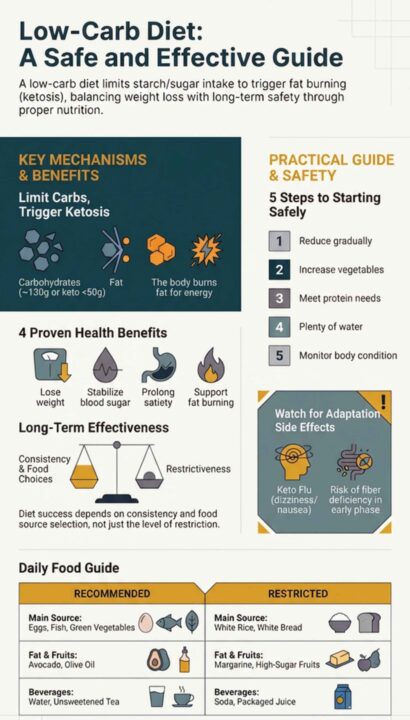
According to Harvard Health Publishing, a low-carb diet generally means limiting daily carbohydrate intake to about 130 grams, or 26% of total calories, well below the 225 to 325 grams found in a typical diet. The strictest version caps carbs at under 50 grams a day, known as the ketogenic diet.
Beyond keto, there’s also the Low Carb High Fat (LCHF) approach, which leans on healthy fats as the main energy source. The real difference between these terms comes down to how strict the carb restriction is, not the underlying concept.
How Does a Low-Carb Diet Work in the Body?
The body normally runs on carbohydrates as its primary fuel source. When carb intake drops sharply, the body switches to breaking down fat into ketones for energy instead, a state known as ketosis.
That shift is why weight tends to drop fairly fast in the first few weeks of the diet. Part of that early drop comes from water leaving the body along with depleted glycogen stores, not from actual fat loss.
4 Benefits of a Low-Carb Diet
A low-carb diet offers several benefits that have been fairly well studied, particularly around weight and blood sugar. Here’s a closer look at the ones reported most often.
1. Helps With Weight Loss
Weight loss usually shows up fastest in the first two to three weeks of a low-carb diet. That happens because the body burns through glycogen stores in the muscles and liver, and every gram of glycogen used carries several grams of water along with it.
After that initial phase, weight loss typically slows down and starts coming more from actual fat burning. This is why a low-carb diet often feels like it delivers quick results compared to other diets in the early weeks.
2. Helps Stabilize Blood Sugar
Carbohydrates affect blood sugar faster than any other nutrient after a meal. Cutting back on carbs keeps post-meal blood sugar spikes more controlled, which matters most for people with insulin resistance.
This is why a low-carb diet often gets recommended as part of managing prediabetes or type 2 diabetes. That said, anyone with diabetes should still do this under a doctor’s supervision, since blood sugar medication may need dose adjustments.
3. Reduces Hunger
Protein and fat digest much slower than simple carbohydrates, so fullness lasts longer after a meal. That’s very different from high-sugar or refined-flour foods, which digest fast and bring hunger back quickly.
That longer-lasting fullness is why many people find a low-carb diet easier to stick with than a standard calorie-restricted diet. They tend not to feel like they’re fighting hunger all day just to hit a calorie deficit.
4. May Lower Triglycerides
Triglycerides are a type of blood fat that can rise from eating too many simple carbs and added sugar. Cutting carbs has been shown to lower triglyceride levels in a lot of people, especially those who previously ate a high-sugar diet.
Lower triglycerides matter because they’re closely tied to long-term heart disease risk. That said, the effect varies from person to person depending on which fats and proteins replace the carbs.
The first two benefits are usually what draw people to try this diet in the first place. Even so, the long-term results deserve a closer look, which is exactly what the research section below covers.
Foods to Eat and Foods to Limit
Success on a low-carb diet comes down largely to daily food choices. Here’s a breakdown of what’s generally recommended and what should be limited.
| Category | Recommended | Limit |
|---|---|---|
| Protein | Eggs, fish, skinless chicken | Sugar-cured processed meats |
| Carbohydrates | Leafy greens, broccoli | White rice, white bread |
| Fat | Avocado, olive oil | Trans fats, processed margarine |
| Drinks | Water, unsweetened tea | Soda, packaged juice |
Eggs are one of the most commonly recommended protein sources because their carb content is nearly zero. Leafy greens are a staple too, since they add fiber without adding much to the daily carb count.
Risks and Side Effects to Watch For
A low-carb diet isn’t free of side effects, especially in the early stages. Here are the three most commonly reported.
- Keto flu, a cluster of symptoms like dizziness, fatigue, and nausea that shows up while the body adjusts to ketosis.
- Fiber shortfall, since many complex carb sources like whole grains end up restricted.
- Hard to sustain long-term, because strict restriction pushes a lot of people back to their old eating habits.
These side effects are usually temporary and fade once the body adapts. Talking to a doctor or dietitian first is still worth doing, especially for anyone with kidney disease or diabetes.
What Does the Research Actually Say?
The claim that low-carb diets are far superior to regular diets isn’t fully backed by strong scientific evidence. A Cochrane systematic review of multiple clinical trials paints a more grounded picture.
Cochrane found that the difference in weight loss between low-carb and balanced-carb diets was only about 1 kilogram in the short term, and less than 1 kilogram over the long term up to two years Cochrane. The difference in cardiovascular risk between the two diets was also small or not statistically significant.
This finding suggests low-carb isn’t the only effective route to weight loss. Sticking with any eating pattern consistently turns out to matter more than which specific diet someone picks.
5 Tips for Starting a Low-Carb Diet Safely
Starting a low-carb diet works best gradually, giving the body time to adjust. Here are the steps that make the transition safer.
- Cut back on carbs gradually instead of dropping them all at once.
- Load up on low-carb vegetables to keep daily fiber intake in check.
- Make sure protein intake is covered by sources like eggs, fish, and lean meat.
- Drink more water to help the body adjust during the early phase.
- Check in on how the body feels regularly, especially for anyone with an existing health condition.
Steps one and three matter most for keeping energy levels up during the transition. Regularly checking in on how the body responds also helps catch any side effects early, before they become a bigger issue.
Conclusion
A low-carb diet can genuinely help with weight loss, especially in the early stages. Research shows, though, that its long-term results aren’t all that different from a standard balanced-carb diet.
Success on this diet ultimately comes down to consistency and smart food choices, not just how strictly carbs get cut. Choosing low-carb protein sources is one of the most practical ways to support this way of eating day to day.
Eggs are one of the easiest low-carb protein sources to work with, and they’re now also available as egg powder, which is easier to store and use across all kinds of food products. That powdered form makes it simple to add quality protein to a daily menu without the hassle of prepping fresh eggs every time.
Accelist Pangan Nusantara supplies quality egg powder for both food businesses and household use. Feel free to Contact Us to learn more about the product.

FAQ
Not always. People with kidney disease or diabetes should get medical supervision before starting one.
Weight loss usually starts showing within the first 1 to 2 weeks, though most of that early drop is water weight.
No. Keto is one of the strictest forms of a low-carb diet, capping intake at under 50 grams of carbs a day.
Yes, as long as it’s a lower-sugar fruit like avocado, strawberries, or blueberries.