
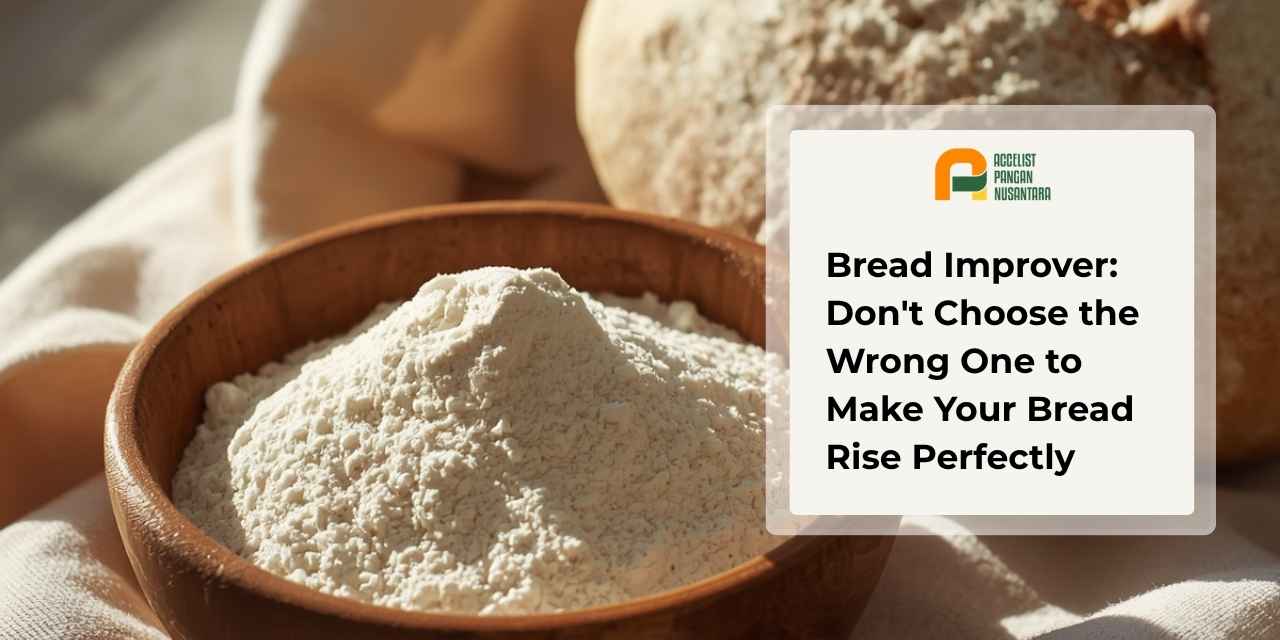
Making bread with stable volume and a soft texture requires more than just yeast and flour. Your homemade bread might end up dense, dry out quickly, or harden within hours of baking. Your recipe execution might be precise. Dough failing to rise often stems from a less-than-optimal fermentation process. The technical solution to prevent such failure lies in the accuracy of choosing additional ingredients.
What is a Bread Improver?
A bread improver is a dry powder-form food additive designed to stimulate yeast activity. It strengthens the structure of the gluten framework in the dough. This ingredient directly improves the physical characteristics of the bread as a whole. Baked goods without the right leavening mixture are prone to deflating. Dough using a bread improver will produce softer bread with a high volume.
This auxiliary ingredient has become a standard of efficiency in both commercial and home kitchens. Market reports from Mordor Intelligence show continuous global bread improver market growth. Consumers demand premium bakery products with consistent texture and longer shelf life. Modern consumers look for bread with artisanal quality, stable volume, and extended shelf life for retail sales.
Read also: Gluten Free: Interesting Facts Behind the Popular Diet
Main Composition of a Bread Improver
Knowing the contents of this leavening powder helps you measure its use accurately. You avoid overuse. Understanding the function of each component makes finding the cause of dough failing to rise easier. Every brand on the market has its own secret concoction. Bakery industry standards divide a bread improver’s composition into five main active ingredient categories.
1. Emulsifier
Emulsifiers unite water and fat. The strength of this ingredient lies in its ability to lock in the bread’s internal moisture. Emulsifiers ensure butter is evenly distributed coating the flour granules. The result is bread remaining soft for days. It does not dry out quickly. It slices neatly.
Common emulsifiers:
- Lecithin: A natural extract from soybeans binding water and fat. The dough becomes more homogeneous. The internal texture of the bread feels very smooth.
- DATEM: A stabilizing compound keeping the bread’s shape towering perfectly high. White bread factories use it to achieve consistent baked sizes.
- Mono-diglycerides: A plant-fat derivative holding back the hardening rate of bread fibers. The bread does not go stale quickly at room temperature.
2. Enzymes
Enzymes act as a biological driving motor inside the dough. Their main bargaining value is breaking down hard flour starches into simple sugars. This crucial function cannot be replaced by artificial chemicals. These broken-down sugars are the mandatory nutritional intake for yeast to produce gas. The yeast will starve without enzymes. Your dough will take much longer to rise naturally.
Specific enzymes inside the dough:
- Amylase: A starch-breaking enzyme providing an instant energy supply for yeast food. The performance of this enzyme stimulates the caramelization process. The bread crust’s surface becomes perfectly browned.
- Xylanase: A specific worker modifying the structure of wheat fibers. The dough becomes very pliable. The dough becomes elastic and resistant to tearing.
3. Dough Strengtheners
Dough strengtheners are tasked with ensuring gas does not leak out. This component works to lock and stabilize the gluten protein network. The dough is mixed hard inside the mixer machine. Its vital role builds sturdy bread framework walls holding the air pressure from inside. A large-risen dough could suddenly deflate just from being touched without this ingredient.
Ascorbic Acid (Vitamin C) is a dough strengthener ingredient. This active ingredient reacts directly upon contact with oxygen during the mixing process. Its presence tightens the gluten bonds. They are strong enough to withstand the yeast’s gas pressure maximally.
4. Oxidizing Agents
Oxidizing agents perfect the physical aesthetics of the bread. Its specific role focuses on whitening the color of the crumb. It looks cleaner and more premium. The chemical reaction from this ingredient accelerates the maturation of the gluten framework rapidly. The final result creates a very soft bread slice texture with a tight and uniform pore arrangement.
Oxidizing agents:
- Potassium Iodate: A compound working very quickly to oxidize the dough. This ingredient is highly suitable for commercial bread making with short fermentation times.
- High-Dose Ascorbic Acid: Large amounts of vitamin C function to whiten the dough. This process gradually produces a brighter interior bread color.
5. Functional Fillers
Functional fillers act as the foundation supporting the effectiveness of the previous four ingredients. Its main capability is distributing the active compounds perfectly into dozens of kilos of wheat flour. This carrier ingredient fortifies the improver powder against outside air humidity. The chemical concoction inside the packaging does not clump. It continues to react optimally.
Functional filler ingredients:
- Pure Soy Flour: A natural ingredient safe for the dough. This flour helps spread enzymes and emulsifiers evenly to all parts of the dough.
- Calcium Carbonate: A mineral with a dual function as a filler and water acidity balancer. The yeast can continue to live optimally in less than ideal water conditions.
Differences Between a Bread Improver and a Dough Conditioner
Many of us confusingly equate these two additive powders. Both are added to the flour during the initial mixing stage. Their working targets are very different. Understanding this difference will prevent measurement mistakes.
| Comparison Parameters | Bread Improver | Dough Conditioner |
|---|---|---|
| Main Focus | Helps the bread rise more maximally. Produces a soft texture and high volume after baking. | Helps the dough become more pliable, elastic, and easier to shape before baking. |
| How It Works | Helps the yeast work optimally in producing gas. Strengthens the dough structure to hold gas. | Makes an overly stiff gluten network relaxed. The dough feels softer, more elastic, and less prone to sticking. |
| Dominant Ingredients | Contains enzymes like amylase and gluten-strengthening ingredients. | Contains reducing agents like L-cysteine and emulsifiers to help the dough be more pliable. |
| Examples of Use | Suitable for bread requiring a high and soft rise. Examples are white bread, whole wheat bread, or brioche. | Suitable for dough needing to be stretched thin. Examples are pizza, tortillas, and puff pastry. |
A bread improver assists the bread leavening process. The baked result is softer and has a large volume. A dough conditioner improves the dough’s pliability. It is easier to stretch, roll, and shape.
A bread improver can help strengthen the dough structure for dense white bread. A dough conditioner is more suitable for hard pizza dough. It helps make the dough more relaxed and elastic.
Read also: Soft Bomboloni Recipe with Melted Custard Filling
The Challenges of Using Eggs as a Natural Bread Emulsifier
Bread improver powder is practical to use for large-quantity bread production. Egg yolk remains an important ingredient for premium breads like sweet bread, brioche, or milk bread.
Egg yolk works as a natural emulsifier. It helps soften the bread’s texture. This natural ingredient provides a distinctive savory taste and a natural golden-yellow color.
The use of whole fresh eggs in commercial kitchens makes the production process less efficient. The water content in fresh eggs varies. Liquid measurement in the dough becomes less consistent.
The process of separating egg yolks and egg whites manually takes quite a long time. More kitchen energy is drained preparing base ingredients.
Fresh eggs carry threats on their shell skin. Eggs can be contaminated with Salmonella bacteria. The Centers for Disease Control and Prevention (CDC) explains symptoms of this infection are diarrhea, fever, and abdominal cramps. These appear within 6 hours to 6 days after the bacteria is swallowed.
Managing the cleanliness of eggshells in large numbers becomes a distinct challenge in production kitchens. Bacteria from the eggshell can transfer to the dough, workbenches, or cooking equipment. This condition is known as cross-contamination.
Modern bread producers are looking for natural emulsifier alternatives. They need practical, safe, and effective options.
Practical Solutions for Premium Bread Quality
Making bread with a soft and fluffy texture requires the right combination of ingredients. A bread improver helps enhance yeast work and strengthen the gluten structure. The dough can rise more stably.
Egg yolk plays an important role as a natural emulsifier for premium bread. The use of fresh eggs poses efficiency constraints and food safety risks.
Accelist Pangan Nusantara provides a practical solution through Tepung Kuning Telur (Egg Yolk Powder). This product helps keep the bread texture soft and the color consistent. It presents the distinctive savory taste of eggs. There is no hassle of separating eggs one by one.
The use of egg powder makes the production process more efficient. Dough measurements are more stable. It reduces the risk of bacterial contamination from raw eggs or eggshells.
You can simplify the bakery production process using high-quality egg powder products from Accelist Pangan Nusantara. You maintain the emulsion quality and the natural savory taste of your premium bread.
FAQ
No, classic artisan breads like sourdough just need water, flour, yeast, and salt, but this ingredient is mandatory for commercial breads that need a long shelf life.
The average usage only ranges from 0.3% to 0.5% of the total weight of the wheat flour in your recipe.
Not at all, this chemical ingredient purely works on repairing the dough’s physical structure without leaving a trace of foreign taste or aroma.
It is not recommended, a dough conditioner focuses on relaxing the dough while being kneaded, while an improver focuses on expanding the volume when the bread enters the oven.
Very safe, all active components in it have gone through clinical trials and are permitted by BPOM as a standardized food additive.