
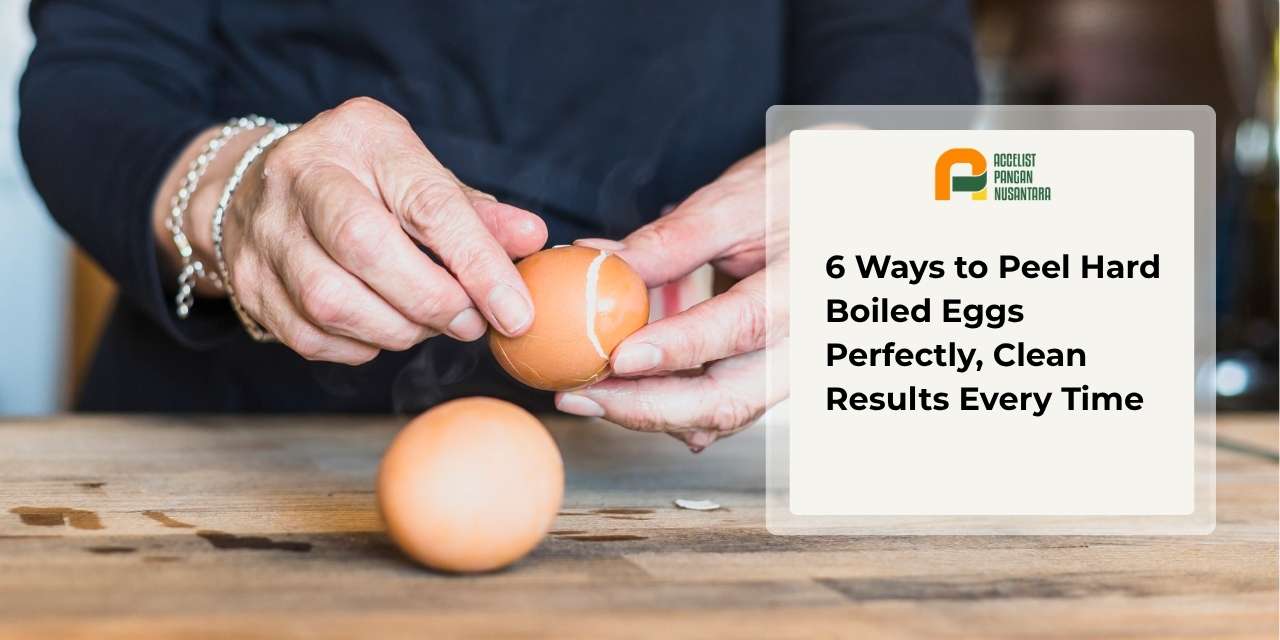
Picture this: you boiled your eggs for exactly the right amount of time, but the moment you start peeling, the shell tears through the egg white, the surface comes out uneven, and the whole thing looks nothing like what you had in mind.
It happens more often than most people realize, and the cause is almost never just the peeling technique itself. Getting clean results when peeling hard boiled eggs depends on several factors working together, from the freshness of the egg to the boiling method to how the egg is handled right after cooking.
Why Are Hard Boiled Eggs So Difficult to Peel?
Before getting into the how, it helps to understand the why. There are several technical factors that tend to go unnoticed, and each one has a direct impact on how cleanly the shell comes off.
1. The Eggs Are Too Fresh
Freshly bought eggs have a relatively low pH in the egg white, which causes the protein to bond more tightly to the inner membrane of the shell. That tight bond is what pulls chunks of egg white away when you try to peel.
Read also: 7 Ways to Choose Fresh Eggs Without Making Mistakes
2. Skipping the Ice Bath
Many people skip this step because it seems optional. In reality, eggs that are left to cool at room temperature do not undergo enough thermal contraction to create separation between the egg white and the shell.
Transferring eggs to an ice bath immediately after boiling creates a sharp drop in temperature, causing the inside of the egg to contract slightly and form a thin gap between the egg white and the shell. That gap is what makes peeling smooth and clean.
3. The pH of the Boiling Water
Not many people know that the pH level of the boiling water also affects how easily the shell peels off. Water that is too acidic causes the egg white protein to bond even more firmly to the inner membrane.
4. Boiling at Too High a Heat
A common mistake is keeping the water at a hard, rolling boil throughout the entire cooking process. This results in rubbery egg whites and unevenly cracked shells, both of which make peeling significantly harder.
The better approach is to bring the water to a boil first, then reduce the heat to a gentle simmer for the remainder of the cook time. This method produces a softer egg white texture and a shell that comes off far more cooperatively.
5. Overcrowding the Pot
Loading too many eggs into a single pot causes uneven cooking because the eggs stack on top of each other and do not receive consistent heat exposure. Some end up overcooked while others are still underdone.
Arrange the eggs in a single layer with enough space between them, and if you have a large batch, cook them in two rounds rather than forcing them all in at once.
6. Not Using Enough Water
Too little water creates an unstable boiling temperature, which leads to uneven cooking throughout. A reliable rule of thumb is to make sure the water sits at least one inch above the surface of all the eggs.
Adequate water volume keeps the temperature steady throughout the process, which directly affects both the texture of the egg and how easily the shell peels away afterward.
How Long Should You Boil an Egg?
Before moving on to peeling techniques, it is worth making sure the eggs were boiled for the right amount of time to begin with. Undercooking and overcooking both affect texture and make peeling harder than it needs to be.
The table below outlines boiling times by doneness level, based on Halodoc. All times are measured after the water has reached a full boil, not from when the eggs are first placed in the water:
| Doneness Level | Boiling Time | Yolk Texture |
| Soft boiled | 4 to 5 minutes | Still very runny |
| Medium boiled | 6 to 7 minutes | Slightly soft, not fully set |
| Hard boiled | 9 to 10 minutes | Fully set, no moisture |
Eggs boiled beyond 10 minutes tend to develop a greenish ring around the yolk, caused by a reaction between sulfur and iron inside the egg. The texture also becomes overly firm and noticeably less pleasant to eat.
6 Ways to Peel Hard Boiled Eggs Without Wrecking the Surface
Here are six peeling methods that consistently deliver smooth, intact results. Each one can be used on its own, but combining several of them will give you the most reliable outcome.
1. Use Eggs That Are 5 to 7 Days Old
Eggs that are too fresh are harder to peel because their egg white pH is still low and clings tightly to the shell membrane. Whenever possible, refrigerate your eggs for a few days before boiling them, especially when you need a clean presentation.
For example, if you are making egg salad or a dish with whole eggs for a weekend event, buy the eggs at the start of the week and let them sit in the fridge for 5 to 7 days. The difference in peeling ease compared to using a same-day purchase is noticeable.
2. Add Baking Soda to the Boiling Water
Add half a teaspoon of baking soda per liter of water before bringing it to a boil. This simple step raises the water’s pH level, which loosens the bond between the inner membrane and the egg white.
To see the difference for yourself, try boiling two eggs side by side: one in plain water and one with baking soda. The baking soda egg will peel noticeably more easily, particularly if it is on the fresher side, with absolutely no effect on flavor.
3. Transfer to an Ice Bath Immediately After Boiling
As soon as the eggs are done, move them into a bowl of ice water. Leave them there for at least 10 to 15 minutes to allow the cooling process to complete and for the gap between the egg white and shell to fully form.
This step also halts any residual cooking that could make the yolk too dense or leave dark spots around the edges. Two benefits in one, from a step that takes almost no effort.
4. Start Peeling from the Bottom of the Egg
The air pocket inside an egg sits at the bottom, which is the wider, more rounded end. Starting there gives you a natural entry point because the shell is already slightly separated from the egg white in that area.
Tap the bottom of the egg against a spoon or a countertop until the shell cracks, then begin peeling from that point outward. The difference compared to starting from the side or the narrow tip is significant: the shell tends to come off in larger, cleaner pieces.
5. Peel Under Cold Running Water
Hold the egg under a low-pressure stream of cold running water while peeling. The water works its way into the gaps between the shell and egg white, helping the membrane lift away without tearing the surface.
This method is especially useful for eggs that are still resistant to peeling even after using baking soda. The running water acts as a natural lubricant that reduces the risk of egg white being pulled off along with the shell.
6. Shake the Eggs in a Sealed Container
Place a few cooled, boiled eggs into a container with a lid, add a small amount of water, seal it tightly, and give it several firm shakes. The motion cracks the shell across the entire surface in one go.
This approach is particularly practical when peeling eggs in bulk, such as for catering prep or weekly meal planning. Once the shell is uniformly cracked, it slides off in larger sections rather than tiny, stubborn fragments, and the water helps get underneath each piece.
Can You Store Peeled Hard Boiled Eggs?
This question comes up often for anyone preparing eggs in large quantities, whether for daily packed lunches or catering needs. The answer is yes, but proper handling is essential to maintain quality.
According to the FDA, hard boiled eggs, both peeled and unpeeled, are safe to eat for up to 7 days after cooking when stored correctly in the refrigerator. The American Egg Board applies a stricter standard: peeled eggs should ideally be consumed the same day, since the shell acts as a natural barrier against contamination.
If storing peeled eggs is necessary, keep them in an airtight container filled with cold water and change the water daily. Peel only as many eggs as you plan to eat soon to preserve freshness and texture.
Read also:
- 7 Ways to Store Eggs Properly to Keep Them Fresh and Safe to Eat
- 6 Signs of Spoiled Hard-Boiled Eggs You Should Know Before Eating
Conclusion
Getting clean results when peeling hard boiled eggs is not just about what you do at the end. It starts much earlier, with the age of the egg, the temperature of the water, and the conditions right after boiling. Those early steps are what determine whether the shell comes off smoothly or takes half the egg white with it.
All six methods covered here require no special equipment and very little extra time. A few small adjustments to your kitchen routine are all it takes to make clean, intact hard boiled eggs a reliable, repeatable result.
For anyone who needs a more efficient egg solution at scale, whether for home cooking or industrial food production, egg powder from Accelist Pangan Nusantara offers a practical alternative with consistent quality. Our products are available for both B2C and B2B needs. Contact our team for product details and a quote tailored to your requirements.Bagikan
FAQ
The main culprit is almost always the freshness of the egg. Very fresh eggs have a low egg white pH, which causes the protein to grip the inner shell membrane tightly.
You can, but the results are rarely clean. It is better to soak them in an ice bath for 10 to 15 minutes first so the shell separates from the egg white more easily.
According to the FDA, up to 7 days. The American Egg Board recommends consuming peeled eggs on the same day for the best quality.
No. The nutritional content of an egg is not affected by how or when it is peeled.
Read also: Do Eggs Contain Fat? Here Are the Facts You Need to Know
It raises the pH of the water, which loosens the bond between the egg white and the inner shell membrane, making the egg noticeably easier to peel.