
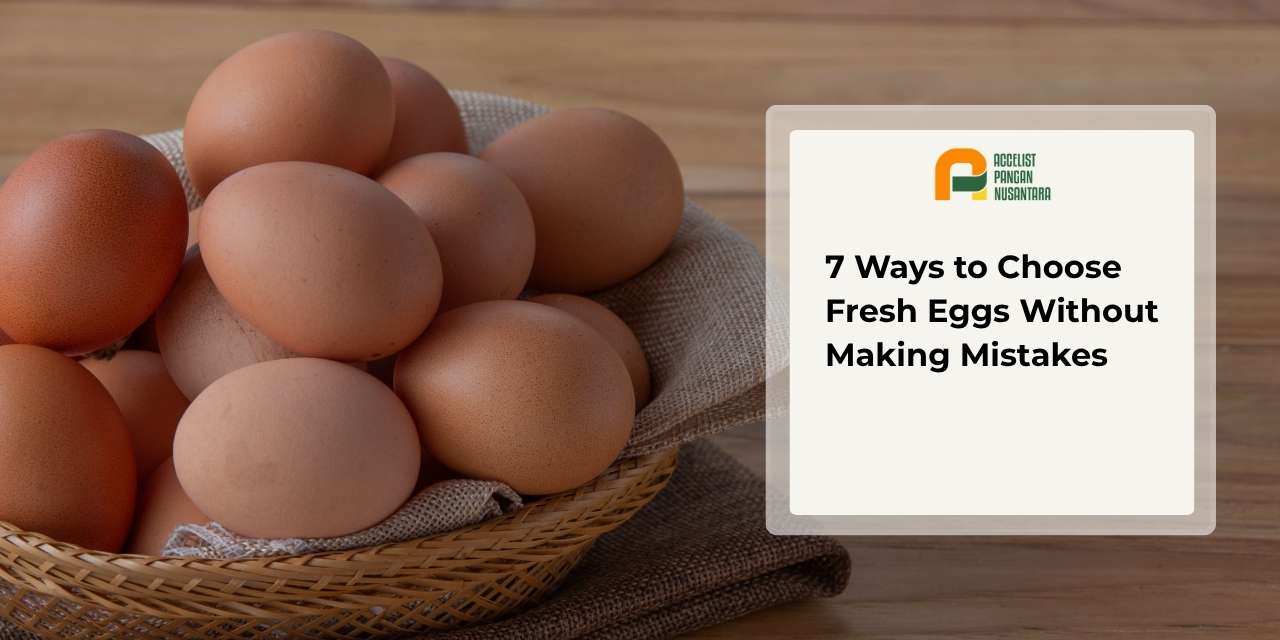
Picture this: you just got home from the grocery store with a full carton of eggs, and two of them already smell off before you even crack them open. It happens more often than people realize, and almost always because eggs were picked without a second look.
According to the Food and Drug Administration (FDA), Salmonella-contaminated eggs remain one of the leading causes of foodborne illness worldwide, and the risk is still present today. Most of those cases could have been prevented at the very first step: choosing the right eggs.
Learning how to choose fresh eggs does not require any special skills or tools. The seven checks below can be done right at the store or verified at home before the eggs ever reach the pan.
Why Egg Quality Matters More Than You Think
Eggs are one of the most affordable and widely consumed sources of animal protein in the world, found in nearly every kitchen regardless of culture or cuisine. The quality of the eggs you bring home directly affects both the nutritional value your body absorbs and the food safety of every dish you prepare.
According to Indonesia’s Ministry of Health, Salmonella infection symptoms can appear within 12 to 72 hours of exposure, including fever, nausea, diarrhea, and abdominal cramping. The illness typically lasts 4 to 7 days and tends to be more severe in young children, the elderly, pregnant women, and people with weakened immune systems.
In serious cases, the infection can lead to hospitalization and extended medical care. The cost of a bad egg choice goes far beyond wasted food; it is a health risk that is entirely preventable from the moment you pick up the carton.
Eggs that are past their prime also lose nutritional value gradually, particularly in protein content and essential nutrients. Choosing genuinely fresh eggs means the nutrients inside are still fully intact by the time they reach the table.
Read also: Salmonella: The Hidden Threat in Everyday Food
7 Ways to Choose Fresh Eggs the Right Way
Each check below is designed to be done in sequence: start at the store, then finish at home before cooking. The whole process takes no more than two minutes per carton, but it gives you a far more reliable picture of egg quality than a quick glance ever will.
1. Inspect the Shell Color and Cleanliness
The first step is to look closely at the shell under good lighting. Fresh eggs have a rich, even color throughout, whether brown or white, depending on the breed of hen.
A shell that looks dull, faded, or dotted with dark spots is a sign the egg has been sitting too long. Dark spots on the shell surface can indicate mold growth, which means the egg is no longer at its best.
Example: Picture two brown eggs sitting side by side on the shelf. One has a deep, uniform brown color while the other looks pale and blotchy: the choice should be straightforward.
2. Feel the Shell Surface
A fresh egg has a slightly rough shell surface, almost like very fine sandpaper under your fingertips. This coating is called the cuticle, a natural protective layer that forms as soon as the egg leaves the hen.
If the shell feels smooth and almost glossy, the cuticle has worn away from prolonged storage. Without it, bacteria from outside can enter the egg far more easily through the shell’s tiny pores.
Example: A freshly laid egg feels like fine grit at the tip of your fingers. An egg that has been sitting for weeks feels more like polished ceramic.
3. Check the Shape
A good egg has a proportional oval shape, not too elongated and not visibly flattened on one side. Rounder eggs tend to have a denser, more upright yolk compared to very elongated ones.
Avoid eggs with irregular shapes or visible dents on any part of the shell. An abnormal shape can point to a hairline crack that is not visible to the eye, leaving the inside more vulnerable to contamination.
Example: Choose an egg that feels balanced in your palm, a clean oval from one end to the other. Skip any that look flattened on one side or as if they have been pressed by something heavy.
4. mell the Egg Up Close
Hold the egg close to your nose and take a slow, gentle sniff. A fresh egg has almost no scent at all, or at most a very faint neutral smell.
If you detect a sharp, sulfur-like odor before the egg is even cracked, that is a clear signal the inside has already gone bad. That smell will not cook off, no matter how long the egg stays on the heat.
Example: Experienced egg vendors can hold an entire carton close to their nose and immediately detect a problem. Just one bad egg in a carton is enough to smell from a short distance away.
5. Give It a Gentle Shake and Listen
Hold the egg loosely and give it a soft shake near your ear. A fresh egg makes no sound because the egg white is still thick and holds the yolk firmly in place.
If you hear something sloshing around inside, the egg white has broken down due to protein changes over time. That sound is a reliable indicator the egg has passed its freshness window.
Example: Think of the difference between shaking a nearly full bottle of water and one that is only half full. A fresh egg responds like the full bottle: total silence.
6. Try the Float Test at Home
This check cannot be done at the store, but it is one of the most dependable ways to verify eggs before cooking. Fill a bowl with water and lower the eggs in one at a time, then watch where they settle.
A fresh egg will sink and lie flat on the bottom of the bowl. Any egg that floats must be discarded, as its air cell has expanded from long-term moisture loss, meaning the contents are no longer safe to eat.
Example: Fill a large bowl with water and drop in the eggs from your carton one by one. Set aside any that float straight to the surface before you start cooking.
7. Crack It Open and Check the Inside
Before cooking, crack the egg onto a flat plate and observe the contents closely. A fresh egg has a thick, compact egg white that holds its shape rather than spreading immediately across the surface.
The yolk should stand tall in the center like a small dome, not collapse or flatten the moment it lands. A very watery white and a flat yolk that breaks on contact are both signs the egg is well past its best.
Example: A fresh egg cracked into a pan looks like a neat stack: the white gathers tightly around the yolk, and the yolk stands up. An older egg spreads out flat almost immediately, like a thin puddle.
Accelist Pangan Nusantara Egg Powder: A Practical Choice for Long-Term Needs
Accelist Pangan Nusantara egg powder is designed as a more flexible solution for cooking needs, whether at home or at an industrial scale, without the concern of daily freshness. The product has a shelf life of up to several months under proper storage conditions, far outlasting fresh eggs.
Accelist Pangan Nusantara egg powder is available in several types to suit different needs:
- Egg yolk powder: well suited for cakes, sauces, and dishes that call for the distinctive flavor and color of egg yolk.
- Egg white powder (albumin): ideal for baked goods, meringues, and applications that require high protein content without added fat.
- Whole egg powder: a versatile option for a wide range of food applications, from bread products to large-scale industrial manufacturing.
Every product maintains consistent quality and hygiene standards, removing the dependency on daily freshness that fresh eggs require. Accelist Pangan Nusantara egg powder suits food manufacturers, bakeries, and catering operations that need reliable ingredients, as well as home cooks looking for a more convenient and shelf-stable option.
How to Store Eggs to Keep Them Fresh
Choosing good eggs needs to be followed by proper storage to preserve their freshness until they are used. According to the Bali Province Agriculture and Food Security Agency, eggs can last a maximum of 14 days at room temperature, or up to 30 days when refrigerated between 4 and 7 degrees Celsius.
The rules are simple: keep eggs in a covered container in the refrigerator, do not wash the shell before storing, and place them with the pointed end facing down. For a complete guide, read: 7 Ways to Store Eggs Properly to Keep Them Fresh and Safe to Eat
Conclusion
How to choose fresh eggs is something anyone can learn without tools, and the whole process takes under two minutes per carton. Understanding it also means understanding what is at stake when the choice is rushed: from eggs already past their prime to food safety risks that could have been stopped from the very start.
For those who need something more practical or are managing food supply at a larger scale, egg powder offers a shelf-stable alternative that removes daily freshness concerns entirely. The right food choice always starts with knowing exactly what you are working with.
Whether for everyday cooking at home or for business and food industry operations, Accelist Pangan Nusantara is ready to meet your needs with quality food products you can count on. Contact us to find out more about the products and food solutions that best fit what you are looking for.
FAQ
Fresh eggs can last 3 to 5 weeks in the refrigerator as long as the shell is intact and has not been washed before storing.
No. Shell color is determined entirely by the breed of hen and has no effect on the egg’s nutritional content.
It is better not to, as washing eggs before storing removes the natural cuticle layer that protects the shell from bacterial entry.
A floating egg means its air cell has expanded from moisture loss over time, indicating the egg is no longer fresh and may carry harmful bacteria.
ot directly. Egg size is determined by the hen’s age rather than freshness or nutritional value, so choose a size based on your cooking needs.