
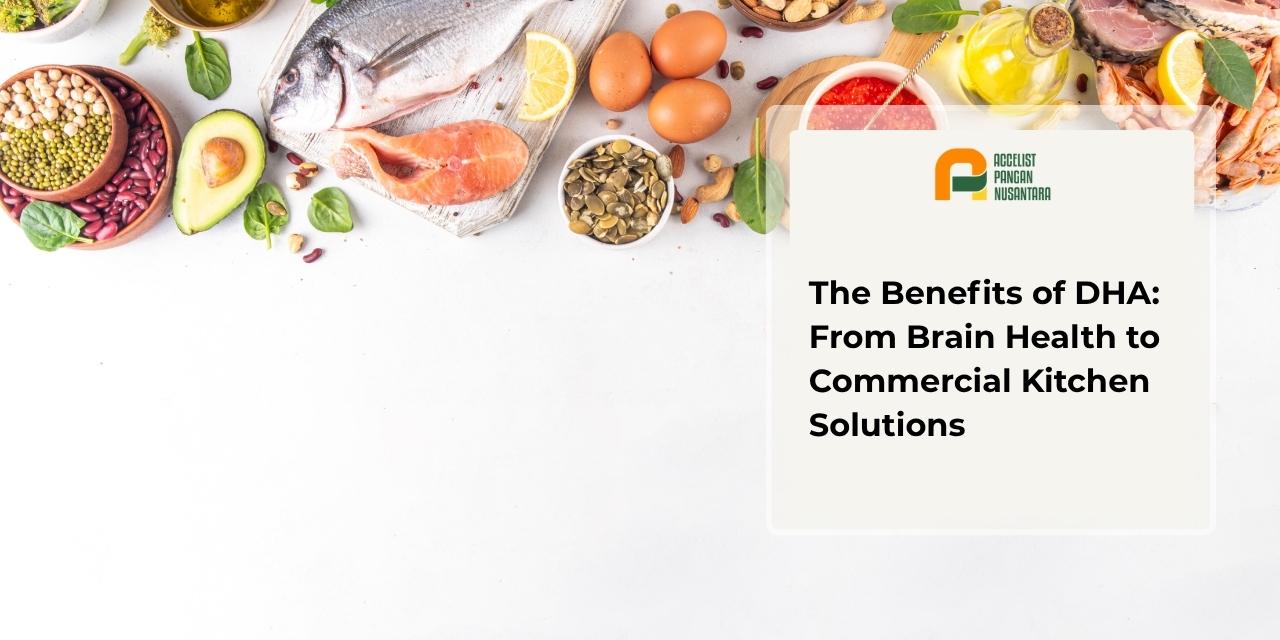
Have you ever heard the advice about the importance of eating fish so children grow up smart? Behind that simple advice, one specific nutrient acts as the main character.
We hear about this substance very often in growing-up milk commercials. However, people rarely understand its exact form and how it completely works inside our bodies.
What is DHA (Docosahexaenoic Acid)?
DHA (Docosahexaenoic Acid) serves as a polyunsaturated fatty acid (a healthy fat type that does not easily build up in blood vessels). It acts as the main pillar of nerve tissues. Furthermore, this nutrient starts working right from the embryonic phase (the early fetal formation period inside the womb). This substance also actively regenerates or repairs brain cells damaged by aging.
The main problem lies in our body’s limitations. Our body completely lacks sufficient enzymes to produce it independently. Consequently, this condition forces us to fulfill this need directly from our daily food intake.
In fact, the brain holds the status as one of the organs with the highest fat content inside the body. Scientific literature from the National Center for Biotechnology Information clearly shows this. About 50 to 60 percent of the human brain’s dry weight consists of lipids (the medical term for fats). Among that ocean of fat, DHA surprisingly occupies the position as the main structural component forming nerve tissues.
This substance contributes about 20 percent of the total overall brain fatty acids. Ultimately, this composition explains very clearly why our health and cognitive functions depend so heavily on essential fat intake (mandatory fats you must get from external sources).
The role of this substance becomes even more apparent when we observe a child’s growth period. A scientific analysis found a very clear pattern. ADHD sufferers (a mental disorder making it hard for children to focus and causing highly impulsive actions) tend to lack omega-3. Tests prove their DHA levels remain much lower compared to their peer group growing up without that condition.
The same research also powerfully confirms a strong link. High DHA levels in the body connect directly to sharp attention focus and reading abilities in elementary school-aged children. These findings strictly confirm that this complete nutrition does not merely act as an optional addition. Instead, adequate intake serves as an absolute requirement. It powerfully supports intelligence development and learning functions during a child’s golden age.
The Fundamental Differences Between DHA and EPA
DHA and EPA (Eicosapentaenoic Acid) both proudly belong to the large Omega-3 family. People very often find them side-by-side inside the exact same seafood sources. However, these two fatty acids possess completely opposing biological targets when they enter the digestive system.
| Comparison Parameter | DHA (Docosahexaenoic Acid) | EPA (Eicosapentaenoic Acid) |
|---|---|---|
| Main Biological Function | Actively builds the brain and nerve tissues that function to send messages throughout the body. | Actively helps relieve inflammation and protects the heart and blood flow so they stay healthy. |
| Daily Role Analogy | Acts as the foundation that helps build and maintain body structure. | Functions to help soothe inflammation and aggressively protects the body from damage. |
| Critical Need Phase | Highly needed during pregnancy up to the baby’s first 1,000 days of life. | Extremely important for adults and the elderly to thoroughly maintain body organ health. |
| Mental Health Impact | Actively helps maintain memory power and the brain’s ability to process information. | Powerfully supports mental health and plays a role in reducing symptoms and anxiety in some people. |
This task division makes DHA and EPA a perfectly complementary team. Our body absolutely needs pure DHA to print a child’s intelligence foundation while actively preventing dementia. Meanwhile, EPA steps forward as a protective shield. It strongly ensures our body does not break down easily due to inflammation.
4 Vital Functions of DHA for Human Body Health
This nutrient creates a direct impact on our life quality. This effect lasts from the first day of conception right to old age. Let us dissect its four main medical functions based strictly on the latest scientific findings.
1. Absolute Role in Pregnancy and Breastfeeding
First, DHA acts as the main raw material to form the fetus’s brain and retina structures. Pregnant women with this nutrient intake demonstrably possess a much lower risk of premature birth (giving birth too early).
Furthermore, experts continue to monitor this nutrient’s benefits until the post-delivery phase. However, ACOG (the American College of Obstetricians and Gynecologists) never states that this essential fat intake absolutely prevents postpartum depression directly. Various clinical studies found evidence that remains diverse. It simply lacks enough strength to make it a definitive prevention solution.
Consequently, that medical organization emphasizes the importance of comprehensive physical and mental health care for mothers. This exact good daily care serves as the main key. It effectively lowers depression risk factors after a mother delivers her baby.
2. Lowers Blood Cholesterol and Triglyceride Levels
Consuming these essential fatty acids in adequate amounts can actively help lower triglyceride levels. These act as a specific type of fat circulating in the blood. For some people, this substance also actively helps increase HDL levels or good cholesterol.
Ultimately, this combination contributes massively to maintaining heart and blood vessel health. With much more controlled blood fat levels, plaque buildup risks in blood vessels effectively decrease. As a result, blood flow stays smooth, and the body maintains heart functions perfectly.
3. Protects Eye Retina Health
This nutrient stands as one of the most abundant fatty acid components inside human eye tissues. Various medical reports show a crucial fact regarding the retina’s photoreceptor membrane (the light-capturing cell layer inside the eye). This intake heavily fills 50 to 60 percent of the total existing fatty acids.
This extremely dense content clearly shows how vital this substance’s role is for our sense of sight. You must absolutely fulfill this nutritional composition. It actively cares for the shape and function of retinal cells that regulate the entire seeing process every single day.
Ultimately, fulfilling this specific nutrition proves highly effective in completely preventing dry eye syndrome. Adequate intake also aggressively suppresses the risk of macular degeneration (an age-related eye disease causing blindness in the center area of the eye).
4. Slows Cognitive Decline and Alzheimer’s
Entering old age, the human brain volume becomes highly vulnerable to shrinking and losing its main memory functions. This nutritional intake actively works to keep the brain tissue volume completely precise and prevents it from deflating quickly.
This physical protection on the brain structure produces clearly visible long-term effects. Fulfilling DHA routinely proves highly effective in actively slowing down the memory decline trend. Simultaneously, this suppresses the risk percentage of developing dementia (a collection of severe senility symptoms) in elderly groups.
Nutritional Adequacy Rate and Daily DHA Needs
The daily need for this essential fatty acid is not identical for everyone. The dosage strongly depends on your current age and physical growth phase. Health guide data outlines the recommended standard for this nutritional intake as our absolute daily benchmark.
| Age Group and Demographics | Recommended Daily Intake (Grams) |
|---|---|
| Children (less than 1 year) | 0.5 grams |
| Children (1 to 3 years) | 0.7 grams |
| Children (4 to 9 years) | 0.9 grams |
| Teenagers (10 to 12 years) | 1.2 grams |
| Teenagers (13 to 18 years) | 1.6 grams |
| Adult Men (19 to 80 years) | 1.6 grams |
| Adult Women (19 to 80 years) | 1.1 grams |
| Pregnant Women | 1.4 grams |
| Breastfeeding Women | 1.3 grams |
At a glance, the gram numbers on that table indeed look extremely small on paper. However, fulfilling the exact daily quota according to this standard acts as an absolute requirement. It guarantees all our body organs possess enough fuel to work maximally every single day.
4 Best Natural Sources to Get DHA Intake
What acts as the most logical way to meet this daily nutritional intake target? Many people instantly think about hoarding high-dose fish oil supplements at the pharmacy. In reality, nature already provides this nutritional supply in an intact form. Consequently, our stomachs digest it much more easily.
We possess a massive amount of fresh food source options from ocean catches. We also have smart innovations from the modern food industry. Furthermore, choosing these natural food ingredients remains much safer. It actively minimizes the risk of chemical residue buildup inside the liver organ. Let us look at what capable food ingredients can go directly into your weekly shopping list.
1. Fatty Fish
The deep-sea fish group proudly holds the status as the world’s highest healthy fat producer. The meat from these marine species stores extremely high-density Omega-3 reserves. Therefore, this makes them the most natural shortcut to fulfill nerve tissue nutritional intake.
- Salmon
This fish meat famously possesses the most complete healthy fat profile among other fish. Routinely eating one whole portion of salmon a week already suffices to cover most of your brain’s nutritional quota. - Bigeye Tuna
Unlike regular canned tuna variants, this type boasts an extremely thick belly fat layer. This exact fat acts as the main gathering place for essential nutrients that actively build nerve pathways. - Fresh Sardines
Do not underestimate these tiny-bodied fish. Sardines actually store highly dense Omega-3 concentrations. Moreover, their price remains relatively friendly to your shopping budget. - Mackerel
Cooks very often serve this oily fish coated in canned tomato sauce. Besides being delicious, mackerel serves as a nutritional warehouse standing completely ready to protect the nervous system from senility risks.
2. Plant-Based Sources (Microalgae)
Vegan lifestyle followers (people who consume absolutely no animal products) do not need to worry about lacking this intake. Even though they cross marine fish off their daily menu, the plant world still offers an ultimate solution.
- Microalgae Oil Extract
This represents a type of microscopic pure marine algae. Originally, they act as the main food source for small fish in the ocean. This clear extract becomes the sole intact DHA source for you who practice a strict pure vegan lifestyle. - Chia Seeds and Walnuts
These two plant ingredients indeed act incredibly healthy. Unfortunately, they only contain ALA (short-chain plant fatty acids). The human body completely lacks sufficient enzyme machinery to maximally convert this raw ALA into intact DHA forms.
3. Other Seafood (Crustaceans)
Are you starting to feel bored with the exact same grilled or boiled fish menus? Seafood dishes from the crustacean group (shelled animals) can become delicious alternatives to violently break the boredom at the dining table.
- Shrimp
Almost everyone loves this seafood dish because its chewy texture and savory taste truly delight the tongue. Besides tasting great, shrimp also actively stores decent essential fat reserves to increase the brain’s daily nutritional savings. - Rock Crab
The soft marine crab meat does not merely pack pure protein for physical energy. Every single portion also carries a highly stable dose of nerve-protecting fat. - Sea Oysters
People often give these slimy sea shells the superfood nickname straight from the ocean floor. Fresh oysters contain a completely perfect blend of zinc minerals and Omega-3. Consequently, this actively spurs the brain to work much faster.
4. Fortified Products
In reality, many people suffer from seafood allergies or simply cannot tolerate the fishy aroma. As the ultimate way out of this problem, the food industry responds aggressively by creating various fortified products (intentionally adding micronutrients into food ingredients).
- Omega-3 Chicken Eggs
Farmers specifically feed their laying hens a mixture of seaweed or fish oil. As a result, the chicken egg yolk becomes much more nutrient-dense and exceptionally rich in nerve-supporting fats. - Toddler Formula Milk
A toddler’s digestive tract usually acts highly sensitive towards raw or cooked marine fish intake. Milk factories cleverly outsmart this by mixing seaweed extract directly into milk powder. This strictly guarantees the baby’s brain intake stays fully secured. - Special Yogurt
Several modern yogurt brands intentionally inject extra microalgae oil extract during their milk fermentation process. This brilliant innovation becomes a smart dessert snack specifically for you who truly hate the fishy taste of fish.
Conclusion
DHA acts as the fatty acid that powerfully supports brain intelligence and eye retina sharpness. This role lasts right from when humans are in the womb all the way to old age. Because the body completely lacks sufficient enzymes to produce it itself, daily intake from external food sources becomes an absolute, non-negotiable requirement.
Fortified eggs (like Omega-3 chicken eggs) serve as the most common and affordable route to fulfill this nutrition on a massive scale. However, using fresh whole eggs frequently causes huge hassles in commercial kitchen operations. The severe threat of Salmonella bacterial contamination from the shell skin always lurks. Furthermore, standardizing measurements becomes incredibly difficult because the egg liquid volume never stays uniform every day.
As the ultimate way out, the egg powder innovation arrives to perfectly neaten kitchen operations without ever sacrificing nutritional quality. Chefs no longer need to waste valuable time cracking shells. Consequently, the recipe measurement process becomes highly precise. Most importantly, factory sterilization guarantees total food safety. For bakery doughs demanding a sturdy structure, the Egg White Powder variant acts as the absolute solution.
Meanwhile, for premium sauce mixes or mayonnaise, Egg Yolk Powder stands ready to directly provide natural colors and highly savory flavors. With Accelist Pangan Nusantara egg powder, your production quality standards consistently remain exceptionally high. Ultimately, you achieve this without ever needing to sacrifice working time efficiency inside the kitchen.
FAQ
DHA specifically takes charge of building the physical structure of the brain and nerve tissues. Meanwhile, EPA actively works to soothe inflammation while aggressively protecting heart health.
The human body completely lacks sufficient enzymes to produce it independently. Therefore, we must fulfill this intake need directly from our daily food.
Fatty fish from the deep sea, such as salmon, bigeye tuna, sardines, and mackerel, act as the highest natural sources. The human digestive system absorbs them the easiest.
People who completely avoid eating animal products can actively consume microalgae oil extract from seaweed. It serves as a perfectly intact plant-based source.
Children lacking this essential fat possess a demonstrably higher risk of experiencing Attention Deficit Hyperactivity Disorder (ADHD). Furthermore, they actively experience severe delays in mastering essential reading skills.