
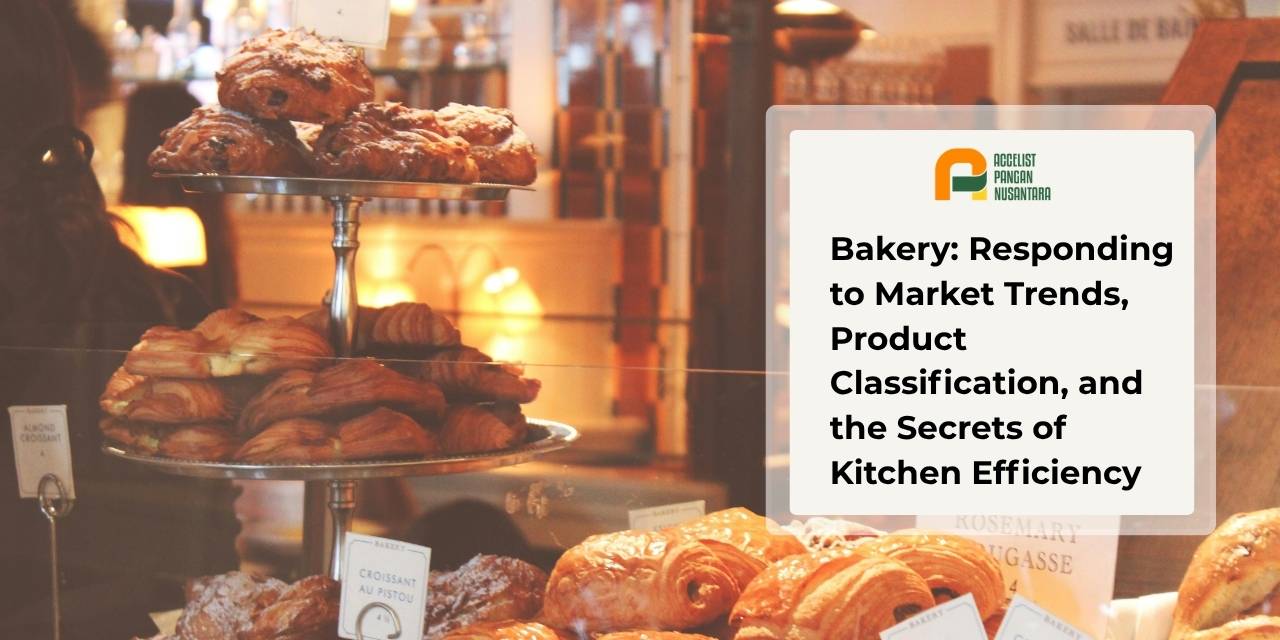
Bakery products have become a mandatory part of people’s daily consumption. Market demand flows continuously every day, ranging from white bread for breakfast to various cookies accompanying afternoon coffee.
For culinary business players, this sector offers opportunities for stable and long-term transaction turnover.
What is a Bakery?
A bakery is a production facility that makes and sells wheat flour-based foods. The core of this facility, whether for a large factory scale or a home kitchen, lies in the baking method using an oven.
The process inside the oven is not just about cooking the food, but triggering a series of chemical reactions in the dough. Heat works to activate the yeast and mature the gluten network, thereby creating a soft texture, expanding volume, and the distinctive aroma of baked goods.
Commercially, the bakery industry prospect has a strong growth foundation. According to Grand View Research, the global bakery product market value is estimated to continue rising to reach USD 714.1 billion in 2030 with a compound annual growth rate (CAGR) of 5.4 percent.
The report mentions that market growth is driven by changes in people’s increasingly busy lifestyles, so the need for practical and ready-to-consume food continues to increase. In addition, modern consumers are increasingly looking for bakery products that still offer good taste, quality, and nutritional value despite being consumed quickly and practically.
Running a bakery kitchen means you must be able to control technical calculations with precision. The quality of the final product is highly determined by how consistently you manage the oven temperature, baking duration, accuracy of basic ingredient measurements, and control of the production room’s humidity level.
Popular Bakery Product Categories and Business Models
The bakery market is very broad. You must understand its product classification to determine your business focus. Each category demands different production standards, kitchen techniques, and target consumers.
1. Bread (Roti)
Bread is a basic carbohydrate product with the highest consumption volume in the world. Its manufacturing process relies on yeast fermentation in a dough of wheat flour, water, and salt. This yeast triggers a biological reaction that produces gas, filling the dough with air pockets so it can expand when it enters the oven.
The choice of bread types is very diverse for various market segments. Examples include soft white bread for daily breakfast, sourdough which uses natural yeast from long fermentation, to the typical French baguette with a hard and crispy outer crust.
2. Cake
This category is characterized by a soft texture and a much sweeter taste. Making a cake requires a higher measurement of fat and eggs than bread.
To get a fine porous structure, cake makers rarely use yeast. They utilize chemical leavening agents or rely on high-speed egg whipping techniques. This whipping process serves to trap air into the batter. Examples of favorite products in the market include very light sponge cake, dense and rich butter cake, to lapis legit which requires baking precision on every layer.
3. Pastry
Pastry relies on lamination techniques to create a flaky and very crispy crust texture. This technique requires the baker to repeatedly fold thick sheets of fat into the basic dough.
The high butter content places pastry in the premium product category. However, this process needs precise room temperature control. The kitchen must be cold enough so the butter doesn’t melt before the dough enters the oven. Croissants, puff pastry, and danish pastry are some of the flagship products in this category.
4. Biscuits and Cookies (Kue Kering)
Cookies win on the durability factor. Their very low water content gives these products a long shelf life without easily getting moldy. Unlike bread, the cookie dough-making process intentionally minimizes gluten formation so the final result is crispy and not tough.
The final texture of the product can be adjusted to be crispy crunchy or slightly chewy simply by altering the ratio of sugar and fat in the recipe. This practical snack has many classic variants, ranging from chocolate chip cookies, cheese kastengel, nastar, to various modern artisan cookies.
5. Café Bakery
This is a modern business model combining a production area with dine-in facilities. You don’t just display bread in a showcase, but directly present a complete dining experience to customers.
The aroma of freshly baked bread will directly spread to the cafe area and function as a natural sensory promotion tool. This strategy is proven effective in making customers feel at home sitting longer. They can enjoy a slice of fresh cake while drinking coffee, which ultimately boosts total spending per table.
Health and Nutritional Considerations
Health trends are totally changing the competitive map of the bakery industry. Today’s consumers demand products that are delicious while simultaneously bringing functional benefits to the body. Innovations in nutritional content are now a mandatory requirement to secure market share.
1. Reduction of Sugar and Simple Carbohydrates
Consumers are increasingly strict in limiting added sugars to avoid diabetes and metabolic diseases. Many production facilities respond to this by replacing artificial sweeteners with natural alternatives like stevia or dried fruit extracts.
The use of whole wheat flour is also increasingly prioritized to boost daily fiber intake. So that your recipe standards meet safe nutritional consumption limits, you can refer to the healthy diet guidelines from the WHO (World Health Organization).
2. Demand for Gluten-Free Products
The demand for gluten-free products continues to soar due to high medical awareness of food allergies. For individuals with gluten intolerance, consuming regular wheat flour can trigger intestinal inflammation. You can study the medical details related to this digestive condition through Mayo Clinic literature.
This strict dietary need forces bakery kitchens to concoct new dough formulations without wheat flour. The use of alternative flours like cassava, almond, or sorghum becomes the main key to embracing this specific market segment.
3. Macro Protein Fortification
Today’s bread is evolving from a mere snack into muscle-building nourishment. The physical fitness lifestyle pushes consumers to look for baked products that support energy recovery after exercising.
A fortification strategy (the addition of nutrients to enhance the nutritional value of a product) can be done by incorporating high-quality protein sources into your basic recipe. Adding ingredients like whey isolate or extra egg white to bread or cookies is highly effective in attracting customers who care about their macronutrient composition.
Operational Challenges and Opportunities in the Bakery Industry Today
The high demand for nutritional innovation and flavor variation forces bakery kitchens to adapt quickly. In practice, you directly face the complexities of fresh raw material supply chains and food processing standards to maintain consumer safety.
Here is a mapping of the main challenges in the production kitchen along with innovation opportunities you can apply:
| Operational Aspects | Main Challenges in Bakery Kitchens | Innovation Opportunities |
|---|---|---|
| Raw Material Consistency | Size and water content of fresh whole eggs always fluctuate, triggering dough structural failures. | Switch to standardized ingredients like egg powder for exact recipe measurements. |
| Time Efficiency | The process of manually separating egg yolks and whites greatly slows down the daily production rate. | Adopt instant ingredient technology to cut down kitchen preparation working hours. |
| Food Hygiene | Dirty eggshells are prone to carrying Salmonella bacteria and contaminating the dough mixing room. | Use sterile processed ingredients to simplify the product safety certification process. |
The risk of microbial contamination like Salmonella from raw materials needs special attention. This bacterium is the main trigger for food poisoning cases. One customer poisoning incident is enough to destroy the business reputation you’ve built for years. Implementing strict food safety protocols is not just an operational formality, but the main shield for the continuity of your business.
Conclusion
Building a bakery business demands more than just dough kneading skills. You are facing a large market, but the demands are firm: products must be delicious, nutritious, and produced quickly.
This production speed constraint most often stems from handling wet raw materials like eggs. Cracking hundreds of shells every day wastes kitchen staff’s working hours. This practice also opens a loophole for bacteria to enter the dough mixing area and ruin hygiene standards.
To cut this long kitchen bureaucratic path, Accelist Pangan Nusantara produces and distributes high-quality egg powder. This raw material solution is specifically designed for both food factories and home kitchens pursuing operational efficiency.
Egg powder solves the problem of inconsistent measurements. You can weigh ingredients with precision using exact numbers. There’s no more story of dough failing to rise just because the size of the raw eggs you bought is shrinking. Through the right drying technology, the leavening functionality and the original taste of fresh eggs remain locked intact in a powder form that is much easier to store.
You just have to adjust your product selection with your showcase target. For making sponge cake or chiffon that demands light and airy volume, you can use Egg White Powder. Its high protein content is highly ideal for trapping air when whipped. However, if you are producing sweet bread or dense butter cake, Whole Egg Powder (Tepung Telur Mix) is here as a versatile option combining egg whites and yolks in a ready-to-use ratio.
Entrusting ingredient supply to Accelist Pangan Nusantara means you drastically cut kitchen preparation hours while holding full control over food safety.
FAQ
Bread needs yeast to trigger a biological fermentation process so the dough can rise. Conversely, pastry purely relies on the method of folding solid fat (butter) which melts inside the oven to create a crispy and flaky texture.
This increase is driven by increasingly intense medical education related to autoimmune celiac disease. Beyond medical reasons, many modern consumers are indeed deliberately looking for a low-inflammation diet for daily fitness.
There are two main hurdles: the risk of microbial contamination from dirty shells into the dough, and the slow work rhythm because staff must manually crack and separate eggs one by one.
Leave the habit of measuring by pieces or measuring cups. Apply a digital scale formula (baker’s percentage) for every recipe, then switch to industrial raw materials whose quality specifications are definite and standardized.
Yes. Egg powder manufacturing technology is specifically formulated so that this ingredient can restore the structural binding function, expansion volume, and flavor profile identical to natural eggs immediately after being dissolved.