
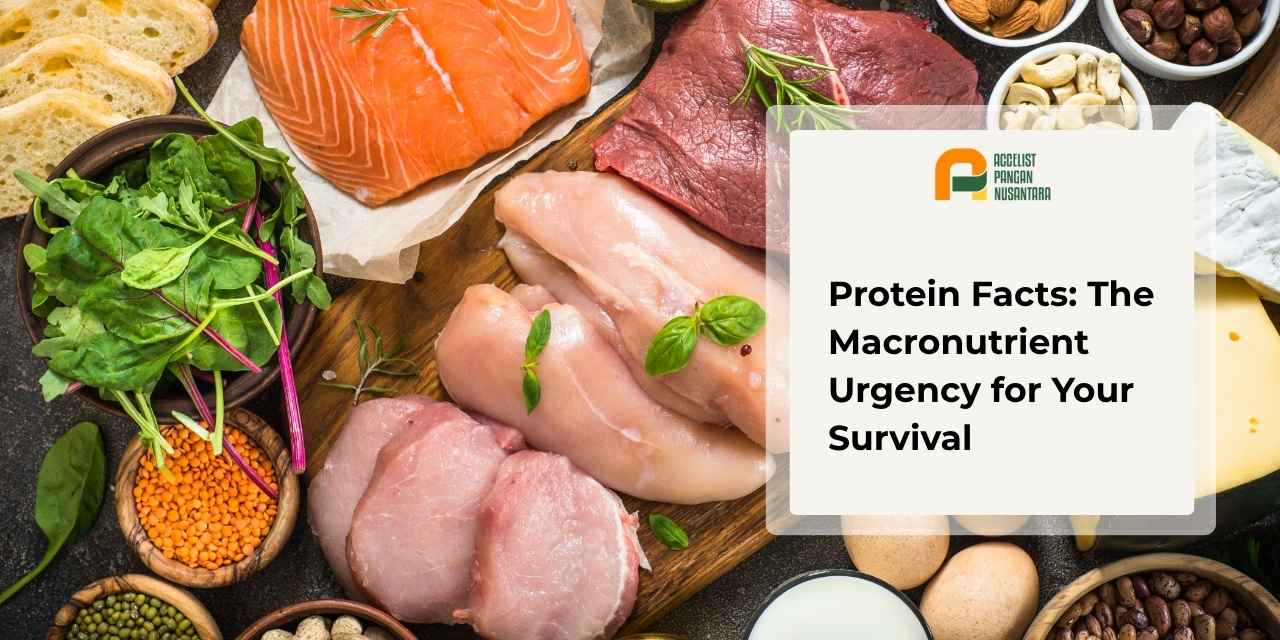
The body never truly stops working. Every day, the body repairs cells, renews tissues, and continuously produces energy to support activities. This entire process requires an adequate supply of nutrition, ranging from protein, carbohydrates, and healthy fats, to vitamins and minerals.
That is why nutrition serves not only as an energy source but also as a crucial raw material to keep bodily functions optimal.
What is Protein?
Protein is a macronutrient (a major nutrient the body needs in relatively large amounts as an energy source and building block) required by the body in large quantities to perform various essential functions. This nutrient consists of small chains called amino acids, which act like the body’s “building blocks.”
Inside the body, protein plays a role in forming new tissues, repairing damaged cells, and maintaining organ structures so they function properly. Additionally, protein helps the body’s recovery process after physical activity or injury, making its role highly essential in maintaining overall health.
In terms of composition, protein contributes the following:
- Makes up about 20% of human cell mass, which includes all cell-building parts in the body.
- Is estimated to be around 16% of total human body weight, including all tissues like muscles, organs, and body fluids.
- Can account for up to 75% of the dry matter weight in many body tissues (tissue mass without water content, excluding bones and fats).
This shows that protein is a primary structural component spread almost throughout the entire body, including muscles, skin, blood, organs, and hair.
Read also: Choline: The Often Ignored Brain Nutrient, Even Though the Body Desperately Needs It
5 Essential Functions of Protein for the Human Body
Protein is not just a nutrient for enlarging a bodybuilder’s muscles. You can imagine this macronutrient (a nutrient the body needs in large amounts) as thousands of construction workers busy maintaining the body’s machinery every second.
The human body does not have a safe to store amino acids (the smallest fragments forming proteins) like a pile of fat. You must supply this raw material through food every day so that the following five vital systems do not break down.
- Maintains Fluid Balance
Protein in the blood acts like a sponge that keeps water flowing within the blood vessels. If the body lacks albumin (the main type of protein forming blood plasma), water will leak into the outer tissues and cause your feet or stomach to swell. - Provides Backup Energy
Normally, the body always uses carbohydrates (the main fuel source from foods like rice or bread) to move. However, during extreme starvation, the body is forced to break down protein as emergency fuel to keep vital organs beating. - Acts as a Nutrient Courier
There is a protein called hemoglobin (the red coloring substance in the blood) that works like a courier delivering oxygen from the lungs to all corners of the body. Other types of proteins like ferritin (a special mineral-storing protein) take on the role of a warehouse to secure the iron stock. - Repairs Damaged Tissues
This nutrient is the main brick for regrowing peeling skin cells or falling hair. Its amino acid components also work to patch up skeletal muscle tissue (moving muscles attached to bones) that are sore after physical activity and speed up the drying of external wounds. - Forms the Body’s Protective Forces
The food breakdown process in the stomach is driven by enzymes (fluids triggering the body’s chemical reactions) so that nutrients can be absorbed by the blood. The immune system also uses the same raw materials to produce antibodies (body-protecting substances) that kill viruses and disease-causing bacteria.
Daily Protein Needs Based on Age Groups
The portion of protein you need is not always the same throughout your life. The numbers constantly change following your growth phases and body mass composition (total weight of muscles, bones, and body-forming organs).
As an illustration, actively growing children certainly need a different supply of raw materials than adult men. Health experts have set clear benchmarks so you know exactly the daily intake limits you must meet.
Here is the medical nutritional dosage reference based on a publication from the Dietary Guidelines for Americans:
| Age and Gender Group | Recommended Daily Protein Intake |
|---|---|
| Children aged 1 to 3 years | 13 grams |
| Children aged 4 to 8 years | 19 grams |
| Children aged 9 to 13 years | 34 grams |
| Teenage Women (14 to 18 years) | 46 grams |
| Teenage Men (14 to 18 years) | 52 grams |
| Adult Women (19 years and older) | 46 grams |
| Adult Men (19 years and older) | 56 grams |
Read also: Egg Yolk: Nutritional Facts of Egg Yolks That Are Actually Much Healthier
Clinical Impacts of Protein Deficiency and Excess
Maintaining balanced nutritional intake is a non-negotiable basic rule. The body will immediately give clear health problem signals if you eat too little or too much protein.
Impact of Protein Deficiency in the Body
Prolonged nutritional deficiency forces the body to take shortcuts to survive. Here are the physical symptoms that most frequently appear when the body lacks protein:
- Edema (tissue swelling)
Your feet, hands, or stomach can swell unnaturally due to fluid buildup. This condition occurs due to decreased albumin levels (the main blood-forming protein), causing water to seep out of the blood vessels. - Muscle Mass Shrinkage
The body is forced to break down skeletal muscle tissue (moving muscles attached to bones) to obtain an amino acid supply. The body must take this emergency step to keep the heartbeat and other vital organs functioning. - Threat of Kwashiorkor Disease
Children with severe protein deficiency are highly vulnerable to this deadly malnutrition syndrome. Signs of this disease are clearly visible from an enlarged stomach due to severe fluid buildup and fading hair color.
Impact of Excess Protein in the Body
Conversely, eating too high a portion of protein actually creates an extra workload for your internal organs. The human body has a daily maximum limit for processing leftover amino acid waste.
- Extra Burden on the Kidneys
Consuming protein that continuously exceeds the daily limit will force the kidneys to work much harder. These filtering organs must constantly dispose of nitrogen buildup (a waste product of protein breakdown) through urine without stopping. - Risk of Dehydration
The process of disposing of the leftover nitrogen automatically drains more water reserves from the body. You become highly vulnerable to acute dehydration (a condition of body fluid shortage) if you do not immediately balance it by drinking water. - Increased Cardiovascular Risk
A high-protein diet sourced from processed red meat is proven to trigger blood circulation problems. This habit slowly raises the risk of cardiovascular diseases (disorders of heart and blood vessel functions) if you rarely consume vegetable fiber.
Read also: Quail Egg and Chicken Egg Protein: Nutritional Comparisons You Need to Know
Categories of High-Protein Food Sources
Protein quality is measured by how complete its essential amino acid profile (nine types of amino acids that the body cannot produce itself) is. Generally, these highly nutritious food sources are divided into two main groups.
Plant-Based Protein
This group comes purely from plants. The majority of plant-based proteins indeed do not have an amino acid profile as complete as meat products.
However, foods in this group are very rich in fiber and free from bad cholesterol (fats that clog blood vessels). The best plant-based source options that you can easily buy at the market include:
- Tempeh
An original Indonesian fermented soybean product that is nutrient-dense and very friendly to digestion. - Tofu
A soft-textured plant-based nutritional source that is practical for you to process into daily menus. - Almonds
A healthy snack that also supplies extra vitamin E and good fats for body organs. - Edamame
Whole young soybeans that are very filling for a high-fiber snack. - Quinoa
Whole grains substituting white rice that store quite high amounts of protein.
Mixing a few of these plant-based ingredients into a daily recipe plate is enough to cover the body’s amino acid gaps without having to rely on meat.
Animal-Based Protein
This group comes from livestock and marine animals along with their derivative products. Animal sources are classified as complete proteins because they directly provide all nine essential amino acids in full.
The human digestive system is also more efficient in processing and absorbing nutrients from these foods. The best options include:
- Lean beef
Fresh red meat cuts with minimal saturated fat but very dense in iron content. - Fresh chicken breast
The community’s favorite white meat choice because its protein ratio is high and it has fewer calories. - Ocean salmon
A premium nutritional source that also offers plenty of omega-3 fatty acids (healthy fats protecting heart function). - Dairy cow’s milk
A liquid nutritional drink that people routinely rely on to support and care for bone density. - Eggs
A food source proven to have the highest bioavailability value (the percentage of nutrients successfully absorbed and used by the body) compared to all other foods.
In the modern culinary industry, high-value nutritional ingredients like eggs are even often extracted into powder form. This makes it easier to produce large-batch recipes without losing their original protein.
Read also: Omega Eggs: This is What Happens to the Body When You Routinely Consume Them
Diet Consistency Challenges and Practical Protein Processing Solutions
Maintaining a healthy eating routine often becomes a quite heavy hurdle. The biggest problem in sustaining a high-protein diet is actually not the difficulty of enduring hunger.
The main obstacle actually arises from the hassle of preparing food or meal-prep (food provisions preparation) every day. Cracking dozens of fresh eggs just to extract the whites clearly consumes a lot of your time. This processing method also leaves piles of egg yolks that ultimately get wasted in the trash bin.
This kitchen ingredient waste automatically makes it even harder for you to precisely calculate macro-calorie intake (major nutritional needs in large portions). Switching from raw eggs to the egg powder innovation (pure eggs dried into powder) is a highly practical solution. This powder directly supplies pure amino acids (the basic protein-forming compounds) that you can easily measure yourself.
Conclusion
Protein is the main foundation that determines the quality of your physical health in the long run. Ensuring this nutrient supply is always fulfilled according to your age dosage is proven effective in keeping you away from various disease risks caused by malnutrition.
The body’s need for this component is crucial, ranging from producing digestive enzymes to repairing skeletal muscle tissues. You must build a habit to routinely supply essential amino acids through a healthy daily diet.
To make it easier to reach these nutritional targets without the difficulty of cooking in the kitchen, Accelist Pangan Nusantara’s Egg White Powder serves as a practical answer. This innovative product is strictly processed from high-quality egg whites that are guaranteed to be low in fat.
This powder dissolves very easily in water, making it highly stable and efficient, whether for daily home consumption or culinary business production scales. The support from this product makes your macro diet fulfillment routine far more precise, time-saving, and consistent every day.
FAQ
Essential amino acids are the nine types of body tissue building blocks that the body absolutely cannot produce on its own, so you must obtain them directly from food.
Various medical literatures indicate that the human digestive system is optimally only able to process around 25 to 30 grams of amino acids in one eating cycle.
Consuming slow-absorbing nutrients like casein before bedtime is proven effective in preventing cell damage and maximizing the muscle recovery phase throughout the night.
Animal food sources automatically provide a complete amino acid profile that is immediately ready for the intestines to absorb, while plant-based materials often require varied combinations to reach a similar nutritional point.
The powder extraction format successfully removes the fat content from the egg yolk and gives you the most accurate pure nutrient isolation for daily macro-calorie calculations.