
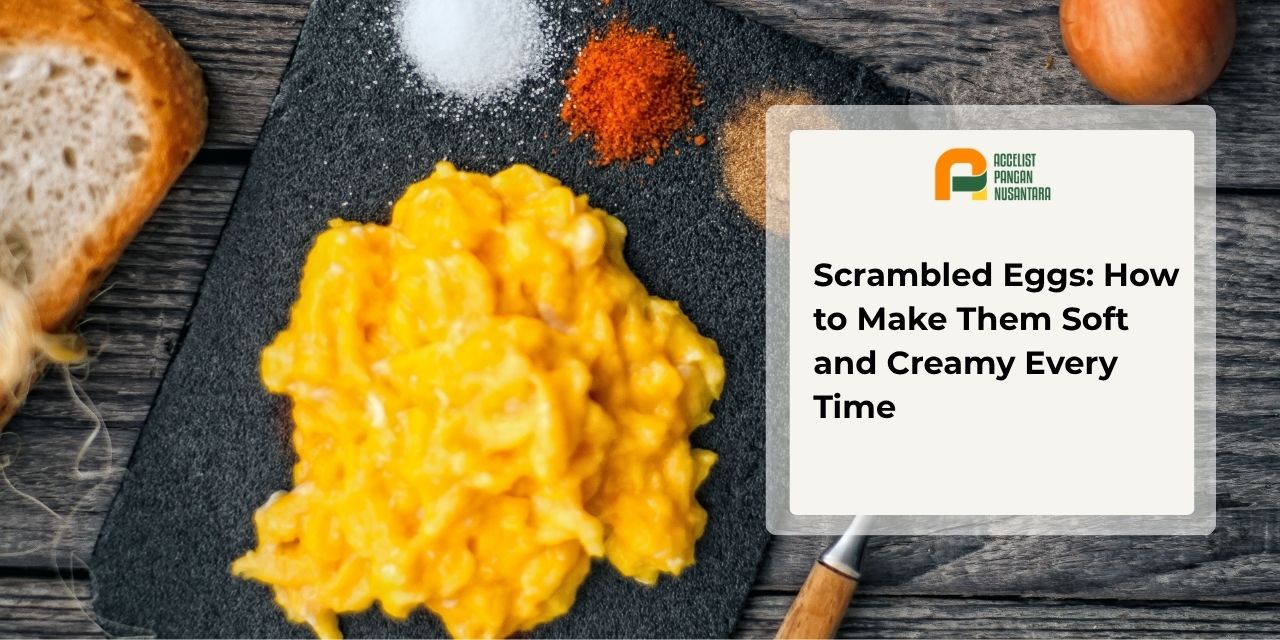
Scrambled eggs are beaten eggs cooked slowly until they form soft, slightly loose curds. Unfortunately, many home cooks struggle to recreate the creamy texture you get at a good restaurant or cafe.
The good news is that scrambled eggs are actually one of the simplest egg dishes to master, once you know the technique. The secret comes down to three things, namely low heat, added fat such as butter or milk, and pulling the eggs off the pan before they look fully cooked. The French call this dish oeufs brouillés, and the underlying technique is the same one used in restaurant kitchens everywhere.
Egg consumption is notably high in Indonesia, where this dish has become a cafe and hotel breakfast staple. A national survey by Statistics Indonesia (BPS), drawing on the Susenas socioeconomic survey, found that the average person there eats about 10.09 eggs per month, with the Jakarta metro area posting the country’s highest rate at 13.64 eggs per month, equivalent to roughly USD 1.50 per capita in spending.
What Are Scrambled Eggs?
Scrambled eggs are beaten before cooking, then stirred gently in the pan until they form small, soft curds. Unlike an omelet, which is left to set as one solid piece, scrambled eggs are deliberately kept loose and creamy rather than dense.
The dish is a classic breakfast item in the United States and the United Kingdom, typically served alongside toast, sausage, or bacon. In Indonesia, scrambled eggs are increasingly found on cafe and hotel menus, since the texture stands apart from the drier, home-style scrambled eggs most people grow up eating there.
Why Scrambled Eggs Often Turn Out Tough and Dry
Scrambled eggs usually fail because of a combination of too much heat and poor timing. The following mistakes are the most common causes, and they trip up even people who cook eggs regularly.
- The heat is too high
High heat makes egg proteins clump within seconds and forces out the moisture trapped inside them. For example, eggs poured into an overheated pan can seize up in as little as 20 seconds, well before you’ve had a chance to stir them evenly. - Constant stirring over a lit burner
Eggs keep cooking even after the pan is removed from the heat, since the pan itself retains warmth. If you keep stirring on the stove until the eggs look “perfectly done,” they will already be dry by the time you eat them. - No added fat
Butter or milk coats the egg proteins and helps keep the texture soft. Eggs cooked without any added fat tend to firm up faster and taste blander. - Salting the eggs before they hit the pan
Salt draws moisture out of eggs through osmosis. Salting too early makes the eggs runnier and harder to puff up properly during cooking. - Cooking until completely dry in the pan
Many people wait until there’s no visible moisture left before taking the pan off the heat. In reality, the slightly wet-looking portion finishes cooking on its own from residual heat.
Ingredients to Prepare Before You Start Cooking
You only need five things to make scrambled eggs, namely fresh eggs, unsalted butter, milk or cream, salt and pepper, and a nonstick pan. Here’s what each one does before you turn on the stove.
- Fresh eggs, two to three per serving. Fresher eggs tend to have thicker egg whites, which makes it easier to build a creamy texture during cooking. If you’re unsure whether eggs that have been stored for a while are still good, check the signs of spoiled eggs before using them.
- Unsalted butter, about one tablespoon. Butter adds savory flavor and coats the pan so the eggs don’t stick.
- Milk or heavy cream, one to two tablespoons per serving. This addition lightens the texture, similar to what you’d get at a cafe or hotel.
- Salt and finely ground pepper, to taste, added at the very end of cooking.
- A medium nonstick pan. A slick surface lets the eggs move freely while you stir, which produces smaller, more even curds.
Steps to Make Soft, Creamy Scrambled Eggs
There are six steps to soft scrambled eggs, namely beat the eggs, heat the pan on low, pour in the eggs, stir gently, pull them off the heat before they’re fully set, and season at the end. This technique is also the one popularized by chef Gordon Ramsay. Here are the full steps in order.
- Beat the eggs until smooth: Crack the eggs into a bowl and whisk with a fork until the yolks and whites are fully combined, about 30 seconds.
- Heat the pan on low: Add the butter and let it melt slowly, without letting it foam or brown.
- Pour the eggs into the pan: Let them sit for about 10 seconds before you start stirring, so the bottom layer begins to set first.
- Stir gently with a rubber spatula: Push the eggs from the edges of the pan toward the center, alternating sides, rather than stirring quickly the way you would for a typical scramble.
- Take the pan off the heat before the eggs look fully done: Once most of the eggs have formed soft curds but still look slightly wet, transfer them to a plate right away. Residual heat in the pan will finish cooking them within seconds.
- Season at the very end: Sprinkle on salt and pepper after the eggs are off the heat, then give them a quick stir before serving.
5 Variations Worth Trying at Home
The basic scrambled egg recipe can be varied with cheese, vegetables, smoked salmon, mushrooms, or a spicy twist, depending on your taste. Here are a few easy combinations that don’t require changing the core technique.
- Cheesy scrambled eggs: Add grated cheddar or mozzarella just as the eggs are nearly done, letting it melt from residual heat.
- Vegetable scrambled eggs: Finely dice bell peppers, tomatoes, or scallions, and sauté briefly before pouring in the eggs.
- Smoked salmon scrambled eggs: Serve the eggs over toast, then top with smoked salmon and a touch of dill.
- Mushroom scrambled eggs: Sauté button or oyster mushrooms in butter until softened, then fold in just before the eggs are taken off the heat.
- Spicy scrambled eggs: Add sliced bird’s eye chili or chili sauce during the final stir, for anyone who likes a sharper kick.
Extra Tips for Fluffier Scrambled Eggs
A few extra habits, such as starting with a cold pan, choosing a good nonstick pan, and not over-whisking the eggs, can make your scrambled eggs even fluffier. Here’s the detail behind each one.
- Start with a cold pan (the French method). Add the eggs and butter to the pan together before turning on the heat, then cook on low while stirring continuously. This produces an especially soft texture, though it takes longer to cook.
- Avoid heavy cast iron without a nonstick coating. This type of pan retains heat for too long, which makes the eggs prone to overcooking even after you’ve removed them from the burner.
- Serve immediately once done. Scrambled eggs left sitting on a plate keep cooking from their own residual heat, ending up tougher than when they were first plated.
- Don’t over-whisk the eggs until foamy. Excessive whisking traps too much air, resulting in a texture that’s airy rather than smoothly soft.
Conclusion
Soft scrambled eggs aren’t really about a secret recipe. They come down to controlling heat and timing correctly. A mistake as small as cooking on too-high heat or salting too early can turn the texture from creamy to tough and dry.
Consistency also depends on the quality of the main ingredient, the eggs themselves. Fresh, good-condition eggs form a soft texture more easily than eggs that have been stored too long or vary in quality.
For food businesses producing egg-based menu items at scale, such as restaurants, cafes, or hotel catering, keeping ingredient quality consistent is often a real challenge. Egg powder, particularly the Whole Egg Powder from Accelist Pangan Nusantara, offers a more stable and practical egg-based ingredient for kitchens ranging from home use to industrial-scale production.
Want to keep the quality of your egg dishes consistent every single day? Contact us for product consultation and ordering information on Egg Powder Mix.
FAQ
Not necessarily. Butter and low heat alone are enough to produce a soft result.
The heat or the pan is too hot when the eggs go in. Lower the stove temperature to keep the color pale and the texture soft.
About two to three minutes on low heat for two eggs. The cold-pan method takes a bit longer but yields a creamier result.
They’re best eaten right away while warm. If you must store them, use them within one day in the fridge.