
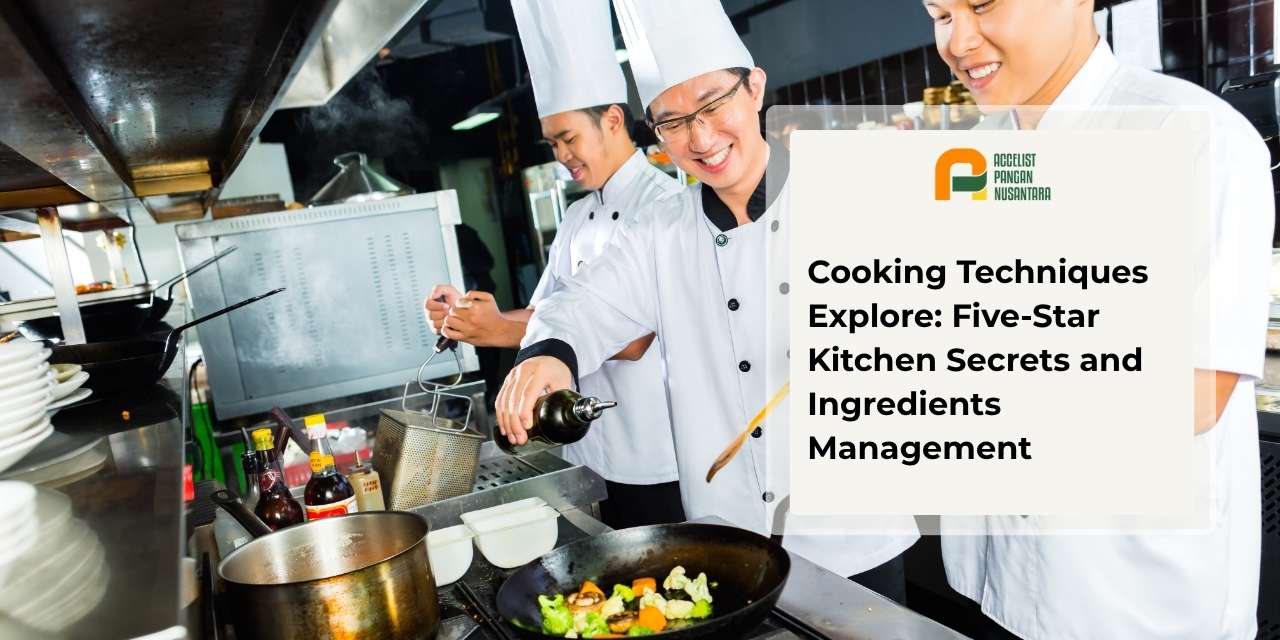
Commercial kitchens demand precision and consistency in every stage of food preparation. Fundamentally, the main difference between home cooking practices and a professional kitchen lies in the understanding of the processes that occur during food processing.
In professional kitchen operations, every cooking method is based on measurable and controllable scientific principles. Consequently, temperature, time, and the characteristics of raw materials become crucial factors influencing the quality, texture, flavor, and safety of the food produced.
Each food ingredient has different characteristics and temperature limits during processing. Because of this, understanding the physical and chemical changes in food helps chefs produce consistent dishes while maintaining applicable food safety standards.
What is Meant by Cooking Techniques?
Cooking techniques are methods or ways used to process food ingredients with the help of heat. Ultimately, the goal is to transform raw materials into food that is safe to consume, has an appropriate texture, and produces a more optimal flavor.
Each cooking technique affects the characteristics of food differently. For instance, temperature changes during processing can alter the texture, color, aroma, and even the water content of the food ingredients.
Furthermore, an understanding of proper cooking techniques plays an important role in professional kitchen operations. Using appropriate methods helps maintain the consistency of food quality while reducing the risk of production failure and raw material waste.
From a business perspective, the efficiency of the cooking process also affects operational costs. Based on data from the National Restaurant Association, labor costs account for about 36.5% of total sales in full-service restaurants. Therefore, implementing standardized work procedures not only helps maintain the quality of the dishes but also supports the efficiency and profitability of the culinary business.
What Are the Types of Cooking Techniques?
Cooking techniques can be grouped based on the heat transfer medium used during the food processing. Naturally, the difference in this heat transfer medium will affect how the food cooks, the resulting texture, and the flavor characteristics of the dish.
Here are the three main categories of cooking techniques:
- Moist Heat Cooking Methods
- Dry Heat Cooking Methods
- Combination Cooking Methods
Read also: 6 Ways to Peel Boiled Eggs Smoothly, Guaranteed Intact and Neat Results
Moist Heat Cooking Techniques
Moist heat cooking techniques use water, broth, or steam as a heat transfer medium. Generally, this method helps cook food ingredients evenly while maintaining their moisture and texture during the cooking process.
1. Boiling
Boiling is a cooking technique that involves fully submerging food ingredients in boiling liquid at a temperature of around 100°C. This method is commonly used to cook pasta, potatoes, eggs, and various types of vegetables.
Because it uses high temperatures, the cooking process takes place relatively quickly. However, food ingredients with a soft texture can easily break apart if boiled for too long.
2. Simmering
Simmering is a cooking technique using a liquid with a temperature of around 85°C to 96°C, which is slightly below the boiling point. In this method, small bubbles appear slowly so that the cooking process is much gentler compared to boiling.
This technique is often used to make broth, soups, and stews because it helps extract the flavors of the ingredients gradually. As a result, the broth tends to be clearer and the resulting flavor is richer.
3. Poaching
Poaching is a cooking technique using a liquid with a temperature of around 70°C to 82°C, strictly below the boiling point of water. At this temperature, heat transfers slowly so that proteins can cook without damaging their natural texture.
This technique is commonly used to process fragile-textured ingredients, such as poached eggs (eggs without shells cooked in hot water), fish fillets, or boneless chicken breasts. Consequently, the food cooks more evenly with its shape well-preserved.
Low-temperature methods like poaching and sous vide (a cooking technique in vacuum packaging at controlled temperatures) require precise time and temperature settings. Ultimately, the combination of these two factors determines the doneness level and safety of the food product.
The World Health Organization (WHO) emphasizes the importance of cooking food thoroughly to help reduce the risk of foodborne illnesses. This is important to prevent the growth of pathogenic bacteria (disease-causing bacteria) such as Salmonella and ensure the food is safe to consume.
4. Steaming
Steaming is a cooking technique that utilizes water vapor as a heat transfer medium. The hot steam surrounds the surface of the food and transfers heat energy evenly until the ingredients are cooked.
The main advantage of this method is its ability to maintain the nutritional content and natural color of the food ingredients. Because it does not come into direct contact with water, water-soluble vitamins and the natural pigments of vegetables can be better preserved.
5. Au Bain Marie
Au bain marie, or water bathing, is a cooking technique using two containers, where the container holding the ingredients is placed over a pot of hot water. The heat received comes from indirect steam and hot water, meaning the temperature is more stable and gentle.
This method is often used to process ingredients sensitive to high temperatures, such as chocolate, egg yolks, or hollandaise sauce (a classic sauce made from egg yolks and butter). In practice, this technique helps prevent ingredients from burning, separating, or curdling during the heating process.
6. Blanching
Blanching is the technique of putting food ingredients into boiling water for a few seconds to a few minutes, then immediately transferring them into ice water. This rapid cooling stage is known as thermal shock, which serves to stop the cooking process instantly.
The blanching technique is widely used for vegetables before they are frozen, sautéed, or processed further. Additionally, this method helps maintain the color, texture, and quality of the ingredients by inhibiting enzyme activity that can accelerate the degradation of vegetables.
Read also: How Many Minutes to Boil an Egg? Exact Time Guide According to Doneness Level
Dry Heat Cooking Techniques
Dry heat cooking techniques use hot air, radiant heat, or oil as a heat transfer medium without the help of water or broth. This method is often used to produce a crispy texture, browning, and distinctive aromas in food.
Importantly, one of the crucial processes that occur in this technique is the Maillard Reaction, which is a chemical reaction between amino acids and sugars that produces a brown color and a more complex flavor profile on the surface of the food.
1. Baking
Baking is a cooking technique using hot air that circulates inside an oven. This method is commonly used for preparing bread, cakes, pastries, and various other bakery products.
The even circulation of heat helps food cook gradually from the outside in. Furthermore, for dough products, this process plays a role in forming an expanded texture with a sturdier exterior.
2. Roasting
Roasting uses principles similar to baking, but it is generally applied to solid ingredients like meat, poultry, whole fish, or large-sized vegetables. This technique utilizes hot air to cook the ingredients slowly.
The relatively high temperature helps create a caramelized layer on the surface of the food. Consequently, this process enhances the aroma, color, and flavor without removing the moisture inside the ingredients.
3. Grilling
Grilling utilizes direct radiant heat from embers, charcoal, or heating elements located below the food. This technique produces characteristic grill marks on the surface of the ingredients.
The extremely high temperature accelerates the Maillard Reaction and creates a distinctive grilled aroma. Moreover, in meats, this aroma becomes even stronger when fat drips onto the heat source and produces aromatic smoke.
4. Broiling
Broiling uses a heat source located above the food. This method allows the surface of the food to become browned or crispy without having to cook the inside for too long.
The broiling technique is often used for melting cheese, creating a gratin layer (a surface layer baked until golden brown), or providing finishing color to a dish before it is served.
5. Sautéing
Sautéing is a fast cooking technique using a little oil or butter over medium to high heat. The food ingredients are cooked while constantly being stirred or tossed so the heat is distributed evenly.
This method is suitable for small-sized ingredients like vegetables, sliced meat, or seafood. Furthermore, the short cooking time helps maintain the texture and color of the food ingredients.
6. Frying
Frying is a cooking technique that involves partially or fully submerging food in hot oil at temperatures around 160°C to 190°C. The oil acts as a highly efficient heat transfer medium so that the food cooks rapidly.
This process produces a crispy outer layer due to the evaporation of water from the ingredient’s surface. Because it uses high temperatures, frying is one of the most effective methods for creating a crunchy texture in food.
7. Smoking
Smoking is a cooking or preserving technique using smoke generated from the slow burning of specific woods. In addition to providing heat, the smoke also imparts a distinctive aroma and flavor to the food.
During a process that lasts for a long time, collagen (the connective tissue protein in meat) breaks down into softer gelatin. As a result, the meat gets a tender texture with a distinct and complex smoky flavor profile.
Combination Cooking Techniques
Combination cooking techniques merge dry heat and moist heat methods in a single preparation process. Generally, the food is first cooked at a high temperature to develop color and flavor, then followed by slow cooking using liquid so its texture becomes much more tender.
This method is widely used to prepare cuts of meat that have high connective tissue and collagen. Consequently, combining these two techniques helps produce a more complex flavor along with a much softer texture.
1. Braising
Braising begins with browning the ingredients using high heat to trigger a chemical reaction that produces a brown color and distinct aroma in the food. Afterward, the ingredients are cooked again in a covered pot with a small addition of broth or liquid.
During the slow cooking process, the heat and steam help break down the collagen in the meat’s connective tissues. Ultimately, this collagen turns into gelatin, which makes the meat’s texture tenderer and enriches the flavor of the gravy.
2. Stewing
Stewing has principles similar to braising, but it uses smaller cuts of ingredients and a larger amount of liquid. Entire ingredients are usually submerged in broth, sauce, or cooking liquid during the cooking process.
Heating for an extended period helps soften the meat fibers and unify the flavors of all the ingredients. Over time, some of the liquid evaporates, making the stew thicker and richer in taste.
3. Sous Vide
Sous vide is a cooking technique that involves placing food in airtight vacuum bags, then immersing it in a temperature-controlled water bath. The cooking temperature is generally in the low to medium range and is precisely maintained using specialized equipment.
The main advantage of sous vide is its ability to produce highly consistent doneness levels without the risk of overcooking. Once the process is complete, the ingredients are usually quickly grilled or seared to create a browned outer crust.
Read also: 7 Ways to Choose Good and Fresh Eggs, Don’t Pick the Wrong One
Operational Challenges and Ingredient Stability in Cooking Techniques
The success of a cooking technique does not solely depend on the method used, but also on the consistency of the raw materials. Naturally, variations in the characteristics of fresh ingredients can affect the final outcome of the food.
Some frequently encountered challenges include:
- Changes in raw material moisture content
During the baking process, inconsistent moisture levels in fresh eggs can affect the dough’s expansion volume and final texture. - Temperature sensitivity
In the au bain marie technique, egg yolks have a limited heat tolerance. Consequently, temperatures that are too high can cause proteins to clump and the sauce’s emulsion (a cohesive mixture of oil and liquid) to break. - Food safety risks
Raw ingredients like eggs have the potential to carry pathogenic bacteria, including Salmonella. Therefore, temperature control becomes a crucial part of the cooking process.
To help ensure food safety, the Food Safety and Inspection Service (FSIS) of the USDA sets minimum internal temperatures for various types of food ingredients to reduce the risk of bacterial contamination like Salmonella and E. coli. Here are some minimum temperatures recommended by FSIS:
| Product | Minimum Internal Temperature |
|---|---|
| Beef, pork, veal, and lamb (steaks, chops, roasts) | 62.8°C (145°F), then let rest for at least 3 minutes |
| Ground meats | 71.1°C (160°F) |
| Ground poultry | 73.9°C (165°F) |
| Fresh or smoked ham (uncooked) | 62.8°C (145°F), then let rest for at least 3 minutes |
| Fully cooked ham (to reheat) | 60°C (140°F) or 73.9°C (165°F) depending on the product type |
| All poultry | 73.9°C (165°F) |
| Eggs | 71.1°C (160°F) |
| Fish and shellfish | 62.8°C (145°F) |
| Leftovers | 73.9°C (165°F) |
| Casseroles | 73.9°C (165°F) |
These data show that measuring temperature is a crucial step to produce food that is not only delicious but also safe for consumption.
Conclusion
Cooking techniques are essentially a process of controlling heat to transform raw materials into dishes that are safe, delicious, and have an appropriate texture. Whether using moist heat, dry heat, or combination methods, the success of the final outcome is highly influenced by the precision of the technique and the quality of the raw ingredients.
In commercial kitchen practices, ingredient consistency becomes a critical factor for maintaining product standards. Moreover, changes in the characteristics of fresh ingredients, including eggs, can affect processing results and complicate the recipe standardization process.
To help create a more stable production process, Accelist Pangan Nusantara provides various high-quality egg powder products that are practical, hygienic, and easy to apply across diverse food industry needs.
- Egg White Powder
Helps produce a stable and consistent dough structure for bakery applications and protein-based products. - Egg Yolk Powder
Suitable for sauces, mayonnaise, and emulsion products with a uniform color and texture without the egg yolk separation process. - Salted Egg Powder
Provides the distinctive taste of salted eggs in a more practical form for various snacks, sauces, and seasoning powders. - Whole Egg Powder Mix
A whole egg substitute alternative that is easy to measure, has a longer shelf life, and supports production consistency.
Ultimately, with standardized raw materials, business owners can maintain product quality, increase operational efficiency, and implement better food safety standards in their daily production processes.
FAQ
A temperature of 100 degrees Celsius triggers mechanical agitation that can potentially crack the shell and make the egg white texture tough.
The absence of water allows the surface of the food to reach temperatures above 140 degrees Celsius, triggering a reaction between amino acids and reducing sugars.
Ice water instantly halts the latent heat transfer process so that the vegetables do not continue cooking and lose their crisp texture.
You use braising when preparing cuts of meat with a lot of tough connective tissues that require extra moisture to break down.
You must ensure the bowl does not touch the boiling water beneath it and keep stirring the mixture to distribute the heat slowly.