
Central Java has a variety of signature dishes famous for their rich and authentic flavors. Each region presents traditional foods with unique characters. These result from blending local spices and cooking techniques inherited across generations.
Understanding Central Java’s culinary variety broadens insights into Indonesia’s gastronomic wealth. Furthermore, it serves as inspiration for menu development. Consequently, culinary business players can adapt these time-tested flavors into various product innovations according to current market needs.
Why is Central Javanese Cuisine So Popular Throughout the Archipelago?
The wider community widely recognizes Central Javanese cuisine for its distinctive and easily acceptable flavors. Local spices combine with abundant raw materials and ancestral traditions. Interestingly, this creates a strong culinary identity.
The Economic Impact of the Culinary Sector
Besides having cultural value, the culinary industry is also an important sector in the Indonesian economy. Data from the Ministry of Tourism and Creative Economy (Kemenparekraf) highlights this impact. The culinary subsector contributed around 41 percent of the creative economy GDP. It reached IDR 455.44 trillion in 2020.
Therefore, this large contribution shows that traditional food transcends mere cultural heritage. In fact, the regional culinary sector actively boosts tourism. It also opens business opportunities and creates new jobs.
Key Factors Driving Its Popularity
Several factors make Central Javanese traditional food remain popular today. These include:
- Distinctive Flavor Characteristics
Central Javanese cuisine is synonymous with a balanced blend of sweet and savory flavors. Typically, cooks produce this taste using palm sugar, sweet soy sauce, coconut milk, and traditional spices. - Using Local Raw Materials
Moreover, locals make many typical Central Javanese dishes using food ingredients they easily find nearby. This availability of local raw materials maintains taste authenticity. It also supports the sustainability of traditional culinary arts. - Relatively Affordable Prices
Additionally, most typical Central Javanese foods require simple ingredients and efficient processing methods. This condition ultimately allows people from various backgrounds to enjoy these traditional dishes. - Having Strong Cultural Value
Every region in Central Java keeps its own recipes and culinary traditions. As a result, this uniqueness makes traditional food attractive in taste. It also becomes an important part of regional cultural identity.
Read also: 12 Most Iconic Medan Souvenir Recommendations and the Secrets of Their Production Quality
10 Most Famous Traditional Foods of Central Java
Undeniably, Central Java offers a variety of traditional foods that are very popular throughout Indonesia. Each dish always presents a distinctive taste that reflects cultural wealth. They also showcase local raw materials and continuous culinary traditions.
1. Lumpia Semarang
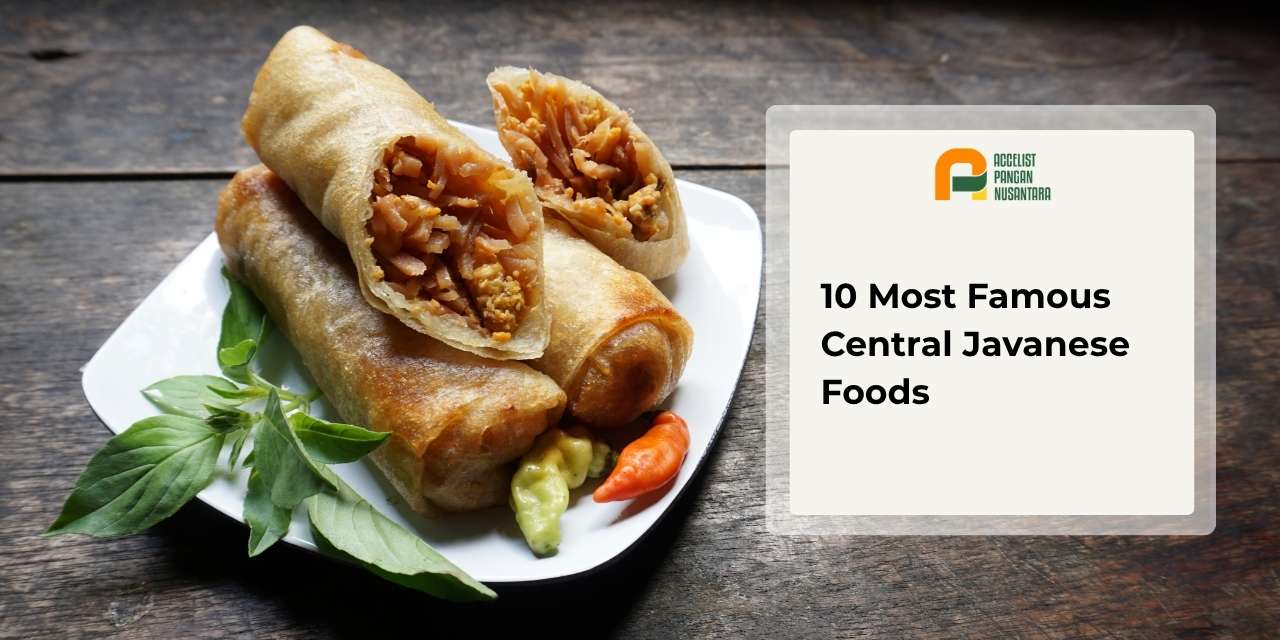
Lumpia Semarang is essentially the result of Chinese and Javanese cultural acculturation. Sellers concoct this dish from crispy spring roll wrappers enveloping bamboo shoots, chicken, and minced shrimp.
Particularly, egg serves as an important filling ingredient. The chef adds egg during the sautéing process. This binds the filling ingredients to keep the texture dense. Moreover, it protects the wrapper from tearing during frying.
2. Tempe Mendoan
Banyumas locals serve tempe mendoan half-cooked or mendo (soft and not too dry). Initially, the maker slices the tempeh thinly. Then, they dip it into a flour batter before frying it briefly.
They generally mix seasonings from coriander, garlic, and scallions. Consequently, the quick frying technique keeps the outside soft. Meanwhile, the inside of the tempeh still feels tender and moist.
3. Tongseng
Locals cook tongseng, a robust meat dish, in a spice-rich broth. Coconut milk, sweet soy sauce, chilies, and spices combine perfectly. They successfully produce a savory, sweet, and slightly spicy flavor.
Furthermore, sellers almost always add sliced cabbage and green tomatoes to the tongseng dish. These green tomatoes provide a fresh and slightly sour taste. This effectively balances the savory flavor of the broth and meat.
4. Bakmi Jawa
Bakmi Jawa appears as a typical noodle dish that customers can enjoy in both fried and boiled versions. Traditionally, vendors cook this noodle using an anglo (traditional charcoal stove), resulting in a smoky aroma.
Importantly, eggs play a role as a crucial cooking component. The chef mixes the egg into the hot broth. It immediately forms an emulsion by blending liquid and fat. Consequently, the broth tastes much thicker and more savory.
5. Soto Kudus
Soto Kudus captivates culinary enthusiasts through its yellowish clear broth and presentation in small bowls. Local stalls generally boil chicken or buffalo meat along with selected spices to concoct this dish.
The broth lacks coconut milk but still tastes rich. The combination of garlic, coriander, and other spices creates this flavor. Additionally, customers usually sprinkle fried shallots to strengthen the soto’s aroma and taste.
6. Garang Asem
Chefs steam chicken pieces inside banana leaf wrappings to create Garang Asem. They process the broth from thin coconut milk, chilies, and bilimbi. This presents a distinctive fresh taste sensation.
The slow cooking method allows the spices to seep perfectly into the meat fibers. Thus, the combination of savory, sour, and spicy flavors ultimately forms the unique character of garang asem.
7. Getuk
Makers mash boiled cassava until smooth to create Getuk, completing the list of traditional snacks. Afterward, they mix the dough with sugar before shaping and serving it to buyers.
Naturally, cassava quality heavily influences the final texture of the getuk. People usually perfect this sweet dish with a sprinkle of grated coconut. Therefore, it provides an additional savory sensation.
8. Brem
Crafters make brem, a traditional snack, from yeast-fermented glutinous rice extract. Crafters process and dry the ingredients. Ultimately, brem displays a solid yet easily crumbly texture.
Interestingly, the main attraction of brem lies in its melting sensation when touching the tongue. This sweet taste blends with a slight sourness from fermentation. It becomes the main hallmark of this light snack.
9. Nasi Gandul
Vendors traditionally serve Nasi Gandul, the proud culinary dish of Pati Regency, with spice-seasoned beef broth. They generally place this dish on banana or teak leaves to add a fragrant aroma.
Moreover, the broth offers a blend of savory and sweet flavors from cumin, nutmeg, and cinnamon. Meanwhile, the lengthy meat cooking process guarantees a very tender texture.
10. Nasi Megono
Nasi Megono represents a typical Pekalongan food that combines white rice with chopped seasoned young jackfruit. Culinary enthusiasts really like this dish because of its strong spice aroma and dominating savory taste.
To achieve this, the maker mixes grated coconut, aromatic ginger, and kaffir lime leaves. Ultimately, the fibrous young jackfruit provides a unique sensation. This becomes the main specialty of Nasi Megono.
Read also: Gluten Free: Interesting Facts Behind the Popular Diet
Operational Challenges in Making Egg-Based Dishes
Certain culinary dishes like Lumpia Semarang and Bakmi Jawa rely heavily on eggs to help form texture. However, using fresh eggs on a production scale brings up operational challenges. Entrepreneurs must carefully pay attention to these issues.
- Uncertainty in raw material quality and price
First, the size and weight of fresh eggs often vary. This potentially disrupts the consistency of measurements in recipes. Besides that, market egg price fluctuations greatly affect production cost planning. - Food safety risks
Second, raw eggshells easily carry bacteria like Salmonella (bacteria causing digestive disorders and food poisoning). Kitchen workers must handle them hygienically. Otherwise, cross-contamination risks to other food ingredients will rise sharply. - The need for larger storage space
Finally, storing fresh eggs demands quite a large space and super extra handling. Fresh eggs have a limited shelf life. Furthermore, they break very easily during storage or distribution.
Practical Solutions for Food Production
To help overcome these challenges, Accelist Pangan Nusantara presents egg powder products as a practical alternative. Producers designed its processing to maintain the egg’s main functions. Therefore, it provides extra convenience for storage and measuring.
- Egg White Powder
This product highly suits business players applying it to recipes requiring a stable dough structure. This innovative product eliminates manual yolk separation. Consequently, the kitchen preparation process runs faster, more hygienically, and more efficiently. - Mixed Egg Powder (Whole Egg Powder)
Similarly, this ingredient serves as the best whole egg substitute for various recipes. It guarantees uniform results and a longer shelf life. Its use cuts down the shell cracking process and reduces kitchen waste. Furthermore, staff can easily measure ingredients for large-scale needs.
In conclusion, egg powder helps the kitchen team prepare ingredients more efficiently and hygienically. This simplifies control in commercial production.
Conclusion
Central Javanese traditional food combines sweet and savory elements. Therefore, various society circles continue to enjoy it today. This culinary diversity strengthens local cultural heritage. In addition, it contributes to national tourism and creative economy growth.
For culinary entrepreneurs, maintaining taste and product quality heavily determines success in retaining customer loyalty. Consequently, this strategy absolutely requires stable, efficient, and practical raw materials for daily kitchen operations.
Accelist Pangan Nusantara releases high-quality egg powder products to answer this need. This spot-on solution perfectly replaces fresh eggs. Specifically, this innovation simplifies production by eliminating shell-cracking. It also suppresses bacterial contamination risks and ensures consistent ingredient measurements.
Armed with the right raw materials, restaurant managers can successfully maintain dish quality while optimizing work efficiency. Ultimately, Accelist Pangan Nusantara provides various high-quality egg powder variants. They stand ready as a trusted partner for practical, clean, and consistent food production.
FAQ
Sweet and savory flavors dominate every dish. Cooks achieve this using sweet soy sauce, brown sugar, and coconut milk.
Eggs act as a natural emulsifier. They transform the free-range chicken broth to become thicker and more savory.
Dirty shells on raw eggs easily carry Salmonella bacteria. These bacteria potentially trigger acute food poisoning.
Certainly, this innovation maintains the natural binding function of eggs. Furthermore, it provides perfect texture without rapid spoilage threats.
Its powder form lasts for months at room temperature. Therefore, it far exceeds the shelf life and safety of fresh eggs.