
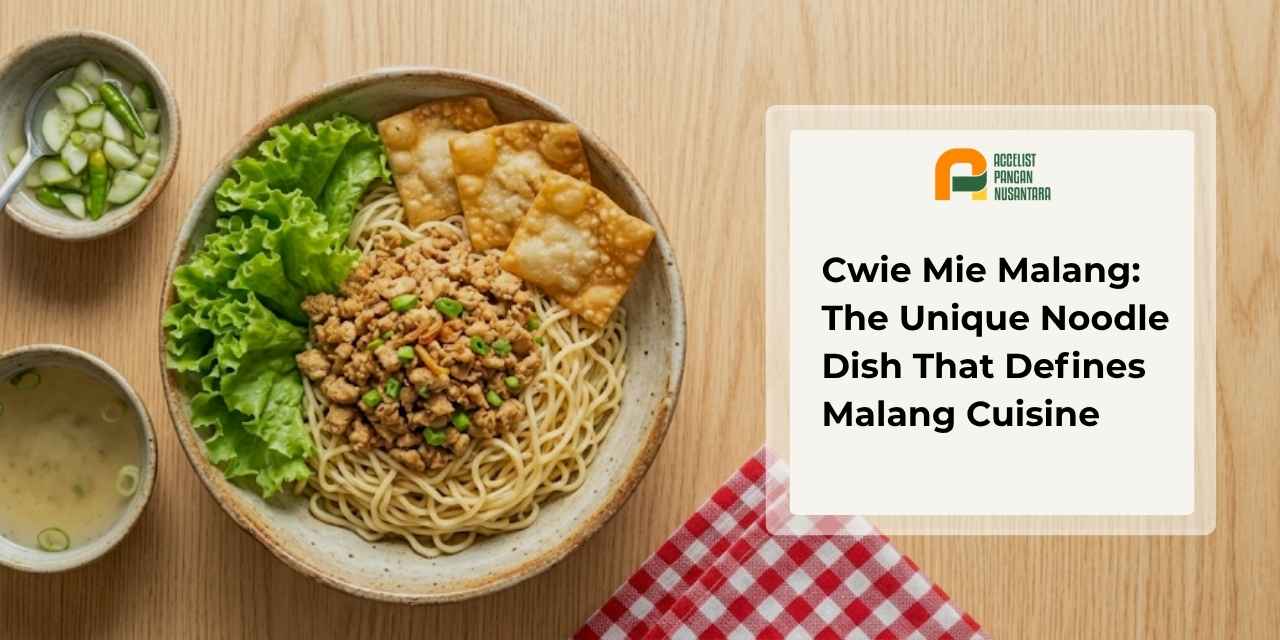
The city of Malang in East Java, Indonesia, is known as one of the country’s top culinary destinations. Among its famous local specialties such as meatball soup (bakso), rawon beef soup, and rujak cingur, there is one noodle dish that consistently attracts both tourists and locals alike.
Its name is Cwie Mie, a noodle dish with a unique flavor profile that is difficult to find anywhere else. For first-time visitors to Malang, Cwie Mie deserves a place on the must-try culinary checklist.
What Is Cwie Mie?
Cwie Mie is a traditional noodle dish originating from Malang. It is served with finely minced seasoned chicken, crispy fried wontons, fresh lettuce, fried shallots, and a clear chicken broth served separately. Unlike many Indonesian chicken noodle dishes, it does not use sweet soy sauce or dark, heavily seasoned toppings.
The word “cwie” comes from the Hokkien dialect, a Southern Chinese language commonly spoken among Chinese communities throughout Southeast Asia. Some sources suggest that the term refers to finely minced meat, while others interpret it as “small,” referring to the thin noodles used in the dish. Interestingly, both interpretations accurately describe its defining characteristics.
What truly sets Cwie Mie apart is not just its ingredients, but its philosophy of flavor. The taste is light, savory, and balanced rather than rich or overwhelming. This subtle profile is one reason many people enjoy eating Cwie Mie regularly without finding it too heavy.
A Brief History of Cwie Mie Malang
According to culinary records from Indonesia Kaya, Cwie Mie emerged from the culinary traditions of Chinese immigrants who settled in Malang during the Dutch colonial era. The dish evolved from a Chinese noodle preparation known as cwie bak, which was gradually adapted to local East Javanese ingredients and tastes. This process of cultural adaptation gave birth to the distinctive version of Cwie Mie that exists today.
The dish initially gained popularity through small street vendors throughout Malang. One of the most historic establishments associated with Cwie Mie is Depot Hok Lay, founded in 1946 on KH Ahmad Dahlan Street. It remains one of the city’s most respected destinations for authentic Cwie Mie.
As halal adaptations became more common, Cwie Mie gained acceptance among Indonesia’s Muslim-majority population. Over time, it evolved from an ethnic Chinese specialty into a culinary icon representing the city of Malang as a whole.
The Difference Between Cwie Mie and Regular Indonesian Chicken Noodles (Mie Ayam)
At first glance, Cwie Mie may appear similar to Indonesia’s popular mie ayam (chicken noodles). Both feature noodles, chicken toppings, and broth. However, the differences become immediately noticeable once you take a bite.
| Aspect | Cwie Mie Malang | Regular Chicken Noodles (Mie Ayam) |
| Chicken Topping | Finely minced white chicken with light seasoning | Diced chicken cooked with sweet soy sauce |
| Flavor Profile | Light savory taste | Richer and often sweeter |
| Noodles | Thin and delicate | Thicker and chewier |
| Vegetables | Fresh lettuce | Mustard greens |
| Condiments | Pickled cucumber and green bird’s-eye chili | Chili sauce and sweet soy sauce |
| Broth | Clear broth served separately | Seasoned broth often mixed with noodles |
The chicken topping is perhaps the easiest way to identify authentic Cwie Mie. If the chicken is finely minced, light-colored, and resembles a moist chicken floss, you’re likely looking at genuine Cwie Mie. If the topping consists of soy sauce-braised chicken cubes, it is more likely standard mie ayam.
The Secret Behind Cwie Mie’s Signature Noodles
One of the most common questions among food enthusiasts and noodle makers is how the noodles achieve their distinctive texture.
1. The Right Egg Combination
Authentic Cwie Mie noodles are made using a combination of whole eggs and additional egg yolks. Whole eggs provide structural strength because the egg whites contribute proteins that support gluten development. Gluten is the elastic network formed when flour and water are mixed, giving noodles their chewiness and durability during cooking.
Extra egg yolks are added to create a brighter yellow color, richer flavor, and softer texture. The result is a thin noodle that remains resilient during boiling while retaining a delicate bite and enough structure to absorb aromatic oils and seasonings.
2. The Role of Flour and Dough Development
High-protein wheat flour, typically containing around 11–13% protein, serves as the foundation for quality Cwie Mie noodles. The higher gluten content helps create elasticity and cooking stability. Some traditional noodle makers also incorporate a small amount of tapioca starch to add a subtle springiness.
After kneading, the dough is usually rested for 15–30 minutes before rolling. This resting period allows the gluten to relax, making it easier to produce thin noodles without tearing.
Read also: Omega Eggs: What Actually Happens to Your Body When You Eat Them Regularly
Popular Variations of Cwie Mie
As the dish has evolved, several variations have become popular throughout Malang and beyond.
- Classic Chicken Cwie Mie: The traditional version features thin noodles, finely minced chicken, crispy wontons, and clear broth served separately. This remains the benchmark for authentic flavor.
- Chicken and Mushroom Cwie Mie: This variation includes mushrooms as an additional topping, adding deeper umami flavors while preserving the dish’s original character.
- Special Cwie Mie with Meatballs: For those seeking a more substantial meal, some restaurants serve Cwie Mie with meatballs, chicken feet, quail egg skewers, or boiled wontons as additional toppings.
Cwie Mie Beyond Malang
The popularity of Cwie Mie has expanded far beyond its hometown. People from Malang who moved to other cities often brought their love for the dish with them, inspiring many to open Cwie Mie restaurants elsewhere.
Gresik, Pasuruan, Surabaya, and even Jakarta now have cwie mie restaurants that claim to offer the authentic taste of Malang. In Pasuruan, for example, according to Anjani.id, Cwie Mie Budi Boy on Jalan Menara has been in business since 2009, using a recipe adapted to the authentic taste of Malang cwie mie.
Tips for Serving Authentic Cwie Mie
Creating great Cwie Mie involves more than simply cooking noodles and adding toppings. Several details contribute to an authentic dining experience.
- Use Finely Minced Chicken. The chicken should be minced until very fine and lightly seasoned with salt, garlic, and a small amount of sesame oil. This topping is the defining element of the dish.
- Add Crispy Fried Wontons. Place fried wontons on the side of the bowl to preserve their crunch and prevent them from becoming soggy from steam.
- Choose Lettuce Instead of Mustard Greens. Fresh lettuce provides a crisp texture and refreshing contrast that distinguishes Cwie Mie from other Indonesian noodle dishes.
- Serve the Broth Separately. Traditionally, the clear chicken broth is presented in a separate bowl, allowing diners to add it according to their preference.
- Finish with Fried Shallots and Green Onions. These simple garnishes enhance aroma and savory flavor without overpowering the dish.
- Include Pickled Cucumbers and Green Chilies. The freshness and mild acidity of pickles help balance the richness of the noodles without relying on heavy chili sauces.
Read also: Gluten Free: Interesting Facts Behind the Popular Diet
Conclusion
Cwie Mie Malang demonstrates how a seemingly simple noodle dish can develop a strong culinary identity. Its combination of thin egg noodles, lightly seasoned minced chicken, fresh vegetables, and separately served clear broth creates a dining experience unlike any other Indonesian chicken noodle dish.
The quality of the noodles forms the foundation of the entire experience. Noodles that become overly soft, break easily, or lose their texture during cooking can diminish even the best toppings.
For food businesses looking to produce high-quality fresh noodles consistently, selecting the right flour is essential. Accelist Pangan Nusantara provides premium egg powder specifically formulated for fresh noodle production, offering stable protein content that helps maintain consistent texture in every batch. Contact us for product information and availability.
FAQ
Cwie Mie uses finely minced white chicken with light seasoning, while regular Indonesian chicken noodles typically use diced chicken cooked with sweet soy sauce, resulting in a darker and sweeter flavor.
Yes. Authentic Cwie Mie noodles are made using high-protein wheat flour combined with whole eggs and additional egg yolks to achieve a soft texture and natural yellow color.
Lettuce is a signature component of Cwie Mie Malang. It provides a crisp, refreshing texture that distinguishes the dish from other Indonesian noodle varieties.
Yes. Many restaurants in cities such as Surabaya, Gresik, Pasuruan, and Jakarta serve Cwie Mie inspired by traditional Malang recipes.
Fresh noodles generally remain at their best for 1–2 days when refrigerated. For commercial production, using high-quality flour helps maintain texture stability and product consistency.