
Chewy yellow noodle texture does not happen on its own. It comes from a combination of specific ingredients working on the gluten network within the dough. Egg is one of the ingredients that shapes that texture the most, whether used fresh or in powder form.
A production patent from Kewpie Corp shows a formulation using 2 parts dried egg white for every 100 parts wheat flour as a tested ratio that improves noodle texture. That small ratio shows just how much even a modest amount of egg powder can affect the final texture of yellow noodles.
This article covers the role of egg powder in shaping yellow noodle texture, from the protein-level mechanism to how it compares with fresh egg. You will also find tips for using egg powder to get the best results in your yellow noodles.
What Are Yellow Noodles?
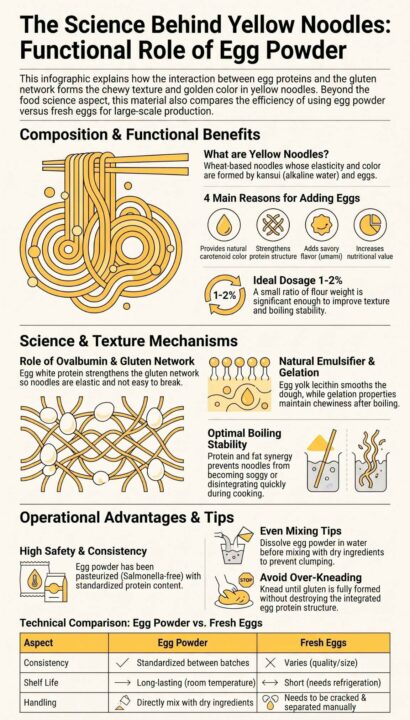
Yellow noodles are wheat-flour noodles that get their color and signature texture from egg, kansui, or a combination of both. Kansui is an alkaline solution commonly used in Chinese and Japanese-style noodles to strengthen chewy texture and produce a natural yellow color.
Why Add Egg Powder to Noodle Dough?
Adding egg powder to noodle dough is not just a matter of tradition. It comes down to functional reasons that shape the final result of the noodles. Here are four main reasons egg, whether fresh or in powder form, is commonly added to yellow noodle dough.
- Contributes a natural yellow color from carotenoid pigments, natural compounds behind the yellow to orange color also found in carrots and pumpkin
- Adds protein that strengthens the dough structure so the noodles hold together better, whether being shaped or boiled
- Gives the noodles a distinct savory taste, different from plain noodles made with only wheat flour and water
- Boosts the nutritional value of the noodles through the added protein from egg
How Does Egg Powder Protein Create a Chewy Noodle Texture?
Protein in egg powder acts directly on the gluten network that forms as the noodle dough is kneaded. Here is a breakdown of the mechanism across four key aspects.
- Protein in dried egg white (ovalbumin) strengthens the gluten network, making the dough more elastic and less prone to breaking
- The gelling property of egg powder protein helps the noodles hold their shape once boiled
- Fat and lecithin, a natural compound that helps bind water and oil together, in egg yolk powder act as an emulsifier that makes the dough smoother and easier to shape
- The combination of protein and fat from egg powder also affects how well the noodles resist becoming mushy during boiling
The Difference Between Egg Powder and Fresh Egg in Yellow Noodle Production
Egg powder and fresh egg can both be used in yellow noodle production, but each comes with different considerations from a production standpoint. Here is a comparison of the two for large-scale production needs.
| Aspect | Egg Powder | Fresh Egg |
|---|---|---|
| Result consistency | Protein content and moisture level are more standardized across batches | Varies depending on egg quality and size |
| Handling | No cracking or separating needed, can be mixed directly with the dry ingredients | Needs cracking, separating, and careful handling |
| Shelf life | Can be stored for a long time without refrigeration | Spoils easily and needs cold storage |
| Food safety risk | Lower, since it has already gone through pasteurization | Risk of Salmonella contamination if not handled properly |
This difference is a key consideration for large-scale noodle manufacturers who need consistent results over time. Using egg powder also simplifies production since it skips the manual cracking and separating steps.
Tips for Using Egg Powder for Optimal Yellow Noodle Texture
A chewy final noodle texture depends on both the ingredient and how it’s used. Four tips below help you get the most out of egg powder in your dough.
1. Adjust the Amount Based on the Type of Noodle You’re Making
Use an egg powder ratio suited to the type of noodle you want to produce, since thick noodles like Hokkien-style require a different proportion than thin noodles like standard egg noodles. The right amount helps achieve a chewy texture without making the dough too tough.
2. Dissolve the Egg Powder Before Mixing Into the Dry Dough
Mix the egg powder with part of the water first before combining it with the wheat flour and other dry ingredients. This helps the egg powder blend evenly and prevents lumps from forming in the dough.
3. Pair It With Kansui for an Even Chewier Result
Add kansui alongside egg powder to get a more pronounced chewy texture, especially for Chinese-style noodles. The two ingredients complement each other in strengthening the gluten structure.
4. Pay Attention to Kneading Time
Knead the dough long enough for the gluten network to fully develop, but avoid overkneading, which can damage the protein structure. The right kneading time helps egg powder do its job in strengthening the noodle texture.
Conclusion
Egg powder helps shape chewy yellow noodle texture through the interaction between its protein and the gluten network, while also contributing the signature yellow color. Compared with fresh egg, egg powder offers more consistent results for large-scale production needs.
Understanding the right amount and how to mix it into the dough helps noodle manufacturers achieve consistent texture across every production batch. Combining egg powder with kansui and proper kneading technique also plays into the final result of your yellow noodles.
For culinary businesses or food manufacturers producing yellow noodles at scale, Egg Powder from Accelist Pangan Nusantara offers consistent protein content to keep noodle texture chewy across every batch. Contact Us for product information and to discuss your business’s egg raw material needs.

FAQ
Yes, since egg powder provides a similar protein and color function to fresh egg, with even more consistent results.
The amount varies by noodle type, but it generally falls between 1% and 2% of the total wheat flour weight.
Yes, especially when kansui is used instead, though the taste and color will differ somewhat from noodles made with egg.
Yes, egg powder adds a distinct savory taste in addition to affecting texture, similar to what fresh egg typically does.
Not entirely, since egg white powder focuses more on strengthening texture, while whole egg powder also adds color and taste from the yolk.