
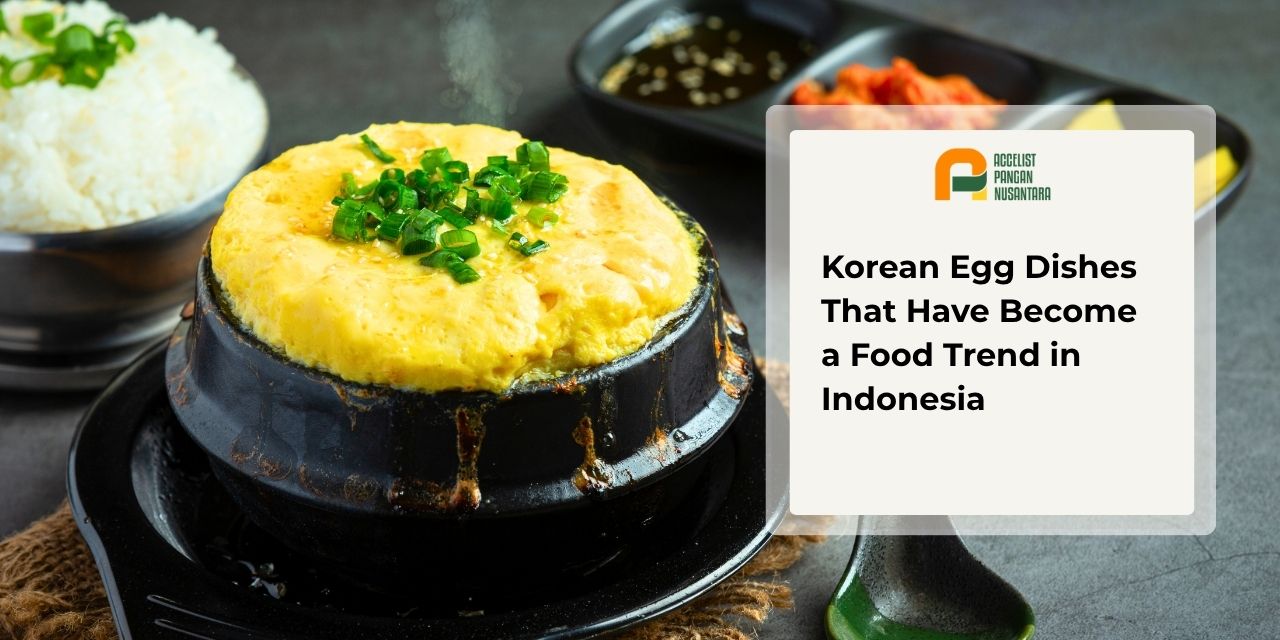
Korean egg dishes are recipes that make eggs the main ingredient, such as gyeran-mari (rolled omelet), gyeran-jjim (steamed eggs), mayak eggs (soy-marinated eggs), and gyeran-ppang (egg bread). They appeal to cafes, snack stalls, and caterers because the ingredients are easy to find, but each dish calls for its own cooking technique and way of handling eggs.
The trend has grown alongside Indonesia’s interest in Hallyu, the Korean Wave of pop culture. The 2026 Overseas Hallyu Survey by South Korea’s Ministry of Culture, Sports and Tourism found that 82.7% of respondents in Indonesia view Korean cultural content favorably.
Across the 30 countries and regions surveyed, food also ranked first among Korean content considered popular in respondents’ home countries, at 55.1%. This article covers why Korean egg dishes catch on, eight well-known dishes and what sets each apart, and what to check when you sell them.
Why Are Korean Egg Dishes Popular in Indonesia?
Indonesian diners take to Korean egg dishes easily because the seasonings suit local tastes and the ingredients are sold in any market. Soy sauce, garlic, scallions, and sesame oil are already familiar in Indonesian kitchens, so mayak eggs or gyeran-jangjorim do not taste foreign.
Korean dramas and food videos on social media have also introduced these dishes to Indonesian audiences. The layered spiral of gyeran-mari and the jammy yolks of mayak eggs stand out in photos and videos.
For food businesses, one ingredient can become a side dish, a snack, or a breakfast item. Korean dishes can join the menu with only a few new ingredients, such as Korean soy sauce and sesame oil.
Also read: Salted Egg Trend in Indonesian Cuisine, Is It Still Worth Selling?
8 Korean Egg Dishes Popular in Indonesia
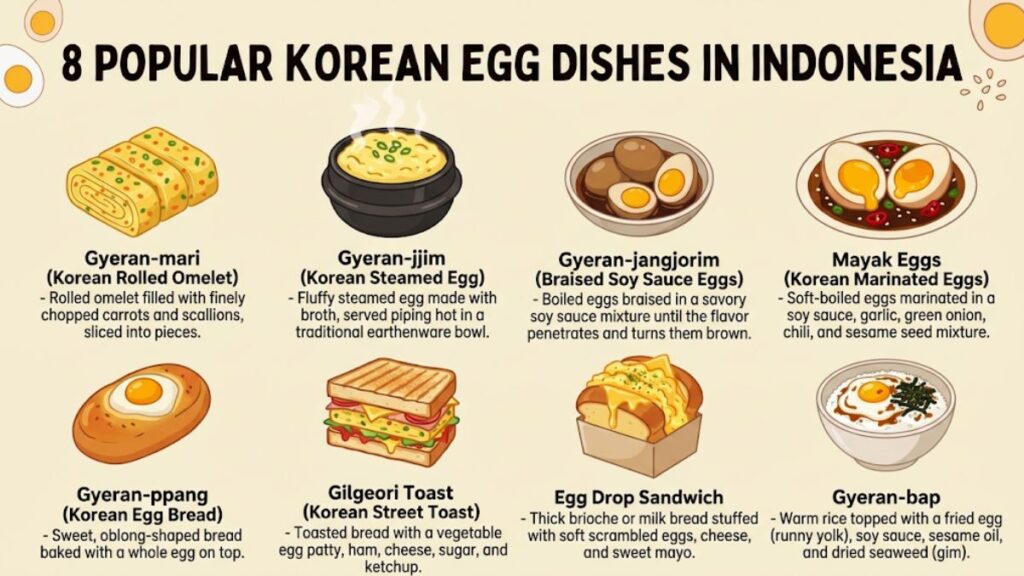
The eight dishes below often appear in Korean restaurants, snack stalls, and home recipes in Indonesia. Some are served as banchan (Korean side dishes), while others are street snacks or breakfast items.
1. Gyeran-mari (Korean Rolled Omelet)
Gyeran-mari is a rolled omelet made from beaten eggs mixed with finely chopped carrots and scallions, cooked in thin layers and rolled up in the pan. Each slice shows the spiral layers that define the dish.
It is usually served as banchan or packed in a dosirak (Korean lunch box). A rectangular pan makes rolling easier and keeps the slices the same width, so portions are easier to standardize for sale.
2. Gyeran-jjim (Korean Steamed Eggs)
Gyeran-jjim is beaten egg mixed with broth or water, then steamed until it puffs up with a soft, custard-like texture. At Korean barbecue restaurants, it usually arrives hot and steaming in a ttukbaegi, a Korean earthenware pot.
The ratio of egg to liquid determines the texture. Measure both with a measuring cup so the result is the same every time.
3. Gyeran-jangjorim (Korean Soy-Braised Eggs)
Gyeran-jangjorim consists of hard-boiled eggs simmered again in soy sauce, sugar, and garlic until they soak up the seasoning and turn brown. The quail egg version is called mechurial-jangjorim, and its size suits lunch boxes.
Because the eggs are fully cooked and stored in their braising liquid, jangjorim works well as a make-ahead side dish. Take out each portion with a clean spoon so the liquid in the container stays uncontaminated.
4. Mayak Eggs (Korean Marinated Eggs)
Mayak eggs, or mayak gyeran, are soft-boiled eggs marinated in soy sauce with garlic, scallions, chili, and sesame seeds. In Korean, mayak means narcotic, a nod to their famously addictive flavor.
In Indonesia, cooks also often make them with quail eggs because the small eggs absorb the marinade faster. Mayak eggs are usually served over warm rice with a spoonful of the marinade.
5. Gyeran-ppang (Korean Egg Bread)
Gyeran-ppang is a small oval bread made from a batter of wheat flour, milk, eggs, and sugar, with a whole egg baked on top. In Korea, it is known as a street snack that people often eat for breakfast.
Egg size decides the final look, because an egg that is too large overflows the mold, while a small egg makes the bread look empty. Use eggs of the same size so every piece looks the same.
6. Gilgeori Toast (Korean Street Toast)
Gilgeori toast is toasted white bread filled with an omelet patty made with cabbage, carrots, and onions, then topped with ham, cheese, sugar, and ketchup. Its mix of sweet and savory makes it a classic street breakfast in Korea.
You can prepare the egg and vegetable mixture ahead of time and cook it per order. This speeds up service during the busy breakfast rush.
7. Egg Drop Sandwich
An egg drop sandwich is thick brioche or milk bread filled with soft scrambled eggs, cheese, and a sweet mayonnaise sauce, sometimes with ham or smoked meat. It is known as a Korean cafe-style breakfast sandwich.
The key is scrambling the eggs over low heat so they stay soft and moist. That moist texture also means the eggs may not be fully cooked, so egg freshness needs strict control.
8. Gyeran-bap (Korean Egg Rice)
Gyeran-bap is warm rice topped with a fried egg whose yolk is still runny, seasoned with soy sauce, sesame oil, and dried seaweed (gim). The yolk is mixed into the rice just before eating, so it works like a sauce.
The dish is simple, but its flavor depends on piping-hot rice and fresh eggs. The runny yolk places gyeran-bap among the soft-cooked dishes.
Comparing Cooking Techniques and Egg Doneness in Korean Egg Dishes
The eight dishes differ in how the eggs are cooked, and that difference determines how you prepare and store each one. The table below summarizes the cooking technique, egg doneness, and typical serving style.
| Dish | Egg cooking technique | Egg doneness | Usually served as |
|---|---|---|---|
| Gyeran-mari | Cooked in thin layers and rolled | Fully cooked | Banchan and lunch boxes |
| Gyeran-jjim | Steamed with broth | Fully cooked | Banchan |
| Gyeran-jangjorim | Boiled, then simmered in soy sauce | Fully cooked | Make-ahead side dish |
| Mayak eggs | Briefly boiled, then marinated | Soft-cooked | Side dish and rice topping |
| Gyeran-ppang | Baked on top of batter | Usually fully cooked | Snack and breakfast |
| Gilgeori toast | Cooked as an omelet with vegetables | Fully cooked | Breakfast |
| Egg drop sandwich | Scrambled over low heat | Soft, may not be fully cooked | Breakfast and snack |
| Gyeran-bap | Fried | Runny yolk | Rice dish |
Mayak eggs, egg drop sandwiches, and gyeran-bap are the three dishes that serve eggs not fully cooked. They call for the freshest eggs and stricter handling than fully cooked dishes.
Gyeran-jangjorim and gyeran-mari, on the other hand, can be prepared in advance, which makes them a good fit for caterers or businesses that make side dishes in large batches.
Things to Keep in Mind When Selling Korean Egg Products
When you sell Korean egg dishes, pay attention to egg doneness, how you store marinated dishes, egg size consistency, and whether the seasonings are halal. These four points determine whether a dish is safe to eat, looks consistent, and is acceptable to Muslim customers.
1. Use Very Fresh Eggs for Soft-Cooked Dishes
Eggs that are not fully cooked can still carry Salmonella, a food poisoning bacterium that can be on the shell or inside the egg. For mayak eggs, egg drop sandwiches, and gyeran-bap, use very fresh eggs with clean, intact shells, or pasteurized eggs.
If your customers include young children, pregnant women, or older adults, offer a fully cooked option, such as mayak eggs made with hard-boiled eggs.
2. Store Marinated Dishes in the Refrigerator
Refrigerate boiled eggs for gyeran-jangjorim and mayak eggs as soon as they cool down, in a closed container with their marinade. Label each container with its production date so older stock gets used first.
3. Keep Egg Size and Yolk Color Consistent
Dishes such as gyeran-ppang and mayak eggs feature whole eggs, so differences in size and yolk color are obvious in a display case or menu photo. Buy eggs in the same weight class from the same supplier so every portion looks the same.
4. Make Sure the Korean Seasonings You Use Are Halal
Some Korean recipes call for mirin, cooking wine, or imported sauces that may not be halal-certified. Replace them with soy sauce and sugar, or choose halal-certified Korean sauces, especially if most of your customers are Muslim.
Also read: 7 Egg Storage Myths and Facts Worth Setting Straight
Conclusion
Korean egg dishes such as gyeran-mari, gyeran-jjim, mayak eggs, and egg drop sandwiches catch on in Indonesia because they suit local tastes and use easy-to-find ingredients. The biggest differences between them lie in the cooking technique and egg doneness.
If you want to add them to your menu, start with fully cooked dishes such as gyeran-mari or gyeran-jangjorim. Apply stricter egg freshness standards before you sell soft-cooked dishes such as mayak eggs.

FAQ
What Does Gyeran Mean in Korean?
Gyeran means egg in Korean. Another Korean word for egg is dalgyal, so gyeran-mari is sometimes called dalgyal-mari.
Can You Make Mayak Eggs with Sweet Soy Sauce?
Yes, but kecap manis, Indonesian sweet soy sauce, makes them sweeter and darker than the original version made with regular soy sauce. Cut back on the sugar in the recipe if you use it.
How Do You Soft-Boil Eggs for Mayak Eggs?
Boil the eggs briefly until the whites are set and the yolks are still soft, then move them straight into ice water so they stop cooking. Peel them once they are cold, then place them in the marinade.
Can You Make Gyeran-mari without a Rectangular Pan?
Yes. Use a regular round pan over low heat, then trim both ends of the roll for a neat shape. A rectangular pan simply makes it easier to get rolls of the same width.
What Is the Difference Between Gyeran-jjim and Chawanmushi?
Both are steamed egg dishes, but Japanese chawanmushi has a silky, pudding-like texture and usually contains shrimp or mushrooms. Gyeran-jjim puffs up more and is often cooked and served right in a ttukbaegi.