
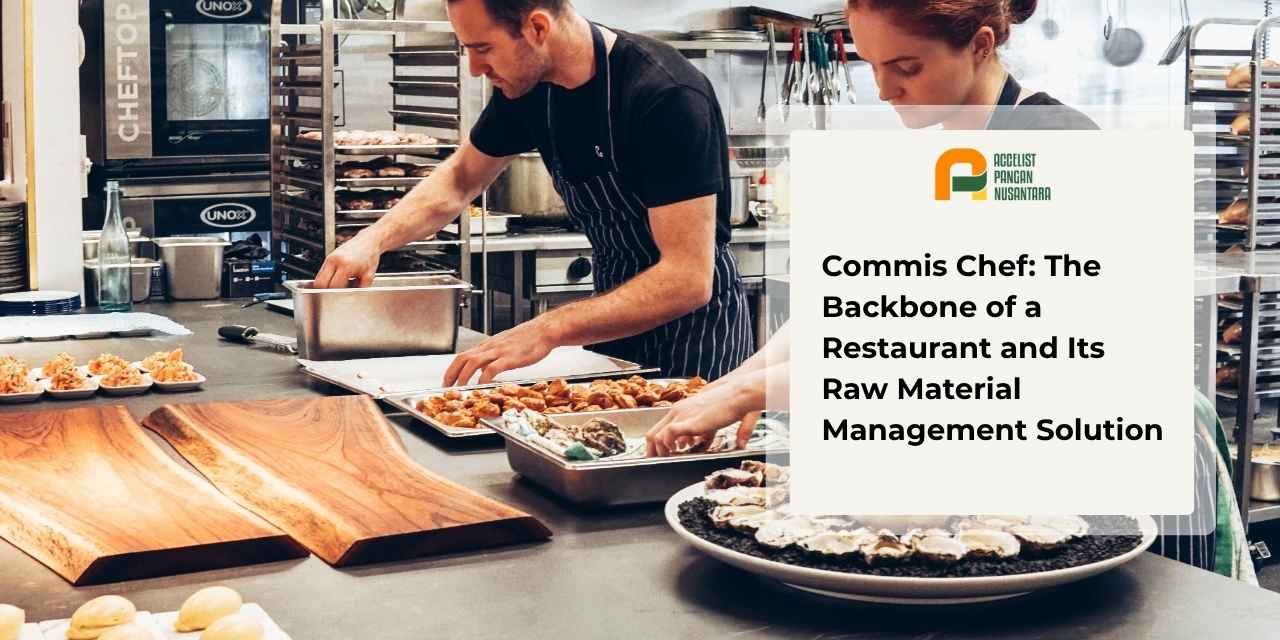
The commercial kitchen demands high speed and precision, especially when the number of orders increases during lunch and dinner hours. Behind every warm dish served to a customer, a structured work system exists. Consequently, this ensures all cooking components are prepared and cooked simultaneously.
Furthermore, the smooth operation of a kitchen depends on more than just the executive chef. Support staff working behind the scenes play a crucial role. Before cooking begins, all ingredients must be neatly prepared. As a result, the kitchen workflow remains efficient and customer service is not hindered.
Therefore, one important position becomes the main driving force in the kitchen preparation stage.
What is Meant by a Commis Chef?
A Commis Chef is an entry-level chef working in a commercial kitchen. This position is under the direct supervision of a Chef de Partie (kitchen section head). Specifically, their main task focuses on preparing raw ingredients before the restaurant enters its busy period.
Many people outside the culinary industry consider this position merely an initial stage for new graduates or interns. However, the role of a Commis Chef is highly important in maintaining smooth kitchen operations. Their speed and accuracy when preparing raw materials greatly affect the rhythm of food production throughout the day.
The ingredient preparation stage is also directly related to the restaurant’s operational efficiency. For instance, the National Restaurant Association notes two main factors affecting restaurant profitability. These factors are labor costs and kitchen management. If basic processes like cutting vegetables or preparing stock are done untidily, the entire kitchen workflow slows down.
A minor delay at the initial preparation stage can even impact the food serving time to customers. Thus, a Commis Chef’s discipline and precision are vital for keeping service fast, organized, and efficient.
The Strategic Position of a Commis Chef in the Brigade de Cuisine System
Professional kitchens work with a structured system, not randomly. Most professional restaurants and hotels use a traditional kitchen hierarchy system known as the Brigade de Cuisine. Historically, French chef Auguste Escoffier developed this organizational structure. It clearly divides kitchen tasks based on specific positions and responsibilities.
Today, this system remains the main foundation of modern kitchen operations. It effectively maintains work coordination and food quality consistency. Additionally, it ensures smooth service in large-scale restaurants and hotels.
Here is an overview of the position flow in a commercial kitchen system:
- Executive Chef
The top leader in the kitchen. They are responsible for designing menus, setting recipe standards, and overseeing dish quality. - Sous Chef
The deputy head of the kitchen. Their task is translating the Executive Chef’s directives into daily operations. Moreover, they directly supervise the kitchen staff. - Chef de Partie (CDP)
The head of a specific cooking station, like the grill or pastry. Ultimately, they prepare and finish dishes in their work areas. - Commis Chef
An entry-level chef tasked with preparing raw materials. This ensures all cooking stations work smoothly. Their tasks include washing, cutting, and weighing ingredients according to operational needs.
In this structure, the Commis Chef holds an important role as the initial pillar of the food production flow. Consequently, they ensure all ingredients are ready. This allows senior chefs to cook directly without doing additional preparation.
The smoothness of kitchen work heavily depends on the readiness of ingredients at the initial stage. For example, cut vegetables might run out or broth might not be ready. If ingredients are not measured, the cooking process at main stations is hindered. Naturally, these conditions risk slowing down food service during the busiest operational hours.
Tasks and Responsibilities of a Commis Chef
The role of a Commis Chef is not limited to simple tasks like cutting food ingredients. Instead, this position carries important responsibilities in early food production. They must prepare raw materials and ensure every station has sufficient supplies before operations begin.
Ultimately, these tasks keep the kitchen workflow fast, organized, and efficient during busy hours.
1. Assisting the Cooking Process
A Commis Chef assists basic processing under the direct direction of the Chef de Partie (CDP). They do not create menus or determine recipes. Rather, they support the cooking process so senior chefs can focus on finishing dishes.
Commonly performed work includes preparing basic broths, frying complementary ingredients, or boiling pasta. Importantly, every step must follow predetermined measurements, temperatures, and cooking times. This keeps the food’s taste and texture consistent.
2. Preparing Cooking Ingredients
The ingredient preparation stage or mise en place is an important part of professional kitchen operations. Thus, a Commis Chef is responsible for washing, cutting, weighing, and dividing food ingredients. This is done according to the needs of each cooking station.
This work requires precision and speed because processed ingredients reach large amounts daily. Tidy preparation helps the main chef work more efficiently when orders start pouring in. Otherwise, without a good preparation system, the cooking process slows down. This directly affects food serving times for customers.
3. Setting Up Work Stations and Managing Stock
Before restaurant service begins, every work station must be ready for use. The Commis Chef ensures all ingredients, spices, and cooking equipment are available in sufficient quantities. Furthermore, these items must be neatly arranged in the work area.
They also organize ingredient storage in the line chiller. As a result, items are easily reached during the cooking process. In stock management, a Commis Chef must implement a First In First Out (FIFO) system. Older ingredients must be used first. Consequently, this system maintains food ingredient quality. It also reduces waste from damaged or expired ingredients.
4. Maintaining Kitchen Cleanliness and Sanitation
Kitchen cleanliness is a primary standard in the food industry. Because of this, a Commis Chef is responsible for keeping the work area hygienic during operational processes.
Specifically, this task includes cleaning cooking equipment, sterilizing cutting boards, and washing work areas. They must also ensure the kitchen floor is safe and not slippery. Good sanitation procedures help prevent cross-contamination between raw ingredients and cooked food.
Besides maintaining food quality, workspace cleanliness ensures kitchen staff safety. This is especially true during packed operational activities.
5. Receiving and Inspecting Raw Material Quality
When raw materials from suppliers arrive, a Commis Chef is often involved in receiving goods. They must check if the quantity of goods matches the delivery list. Additionally, they ensure the ingredient quality remains in good condition.
The inspection involves checking physical conditions like color, texture, and aroma. They also verify the storage temperature for ingredients like meat and fish. If ingredients that do not meet quality standards are found, they can be rejected.
Ultimately, this inspection stage is important. Raw material quality heavily affects the final dish served to the customer.
Essential Skills That Must Be Mastered
Culinary school graduates are not always immediately ready to face a professional kitchen’s rhythm. Therefore, a Commis Chef builds technical skills through daily practice and experience.
Mastering basic techniques becomes an important foundation so the cooking process runs efficiently and dish quality remains consistent.
- Knife Skills
A Commis Chef must master precision food cutting techniques, such as julienne and brunoise. Uniform cuts help ingredients cook evenly. Moreover, they accelerate the kitchen preparation process. - Sauce Preparation Techniques
An understanding of mother sauces becomes an important foundation in processing various derivative sauces. A Commis Chef also needs to maintain texture and emulsion stability. As a result, the sauce does not break when cooked. - Food Temperature Control
Supervising food ingredient temperature is important to maintain food safety. A Commis Chef must understand the temperature danger zone that accelerates bacterial growth. Thus, ingredients remain safe during storage and processing. - Strict Time Management
A professional kitchen demands every preparation to be completed before operational hours begin. Therefore, a Commis Chef must set work priorities so the preparation process runs efficiently.
Fundamental Differences Between a Commis Chef and a Chef de Partie (CDP)
Many laypeople often equate the roles of all chefs inside a professional kitchen. However, every job stratum has very clear boundaries for authority and work functions.
The following table outlines the daily operational differences between a Commis Chef and a Chef de Partie.
| Comparison Parameter | Commis Chef (Entry-Level Chef) | Chef de Partie (Station Head) |
|---|---|---|
| Experience Level | Generally a recent culinary school graduate. They often have less than two years of kitchen experience. This position is an initial stage to adapt to the work rhythm and pressure of a commercial kitchen. | Usually has more than three to five years of work experience in a professional kitchen. They have deeply mastered cooking and operational techniques at specific cooking areas. |
| Work Focus | Responsible for raw material preparation and basic kitchen tasks, such as cutting vegetables or weighing ingredients. Consequently, their main focus is ensuring all ingredients are ready before cooking begins. | Leading a specific cooking station, such as the grill station or pasta station. They are tasked with processing ingredients into final dishes according to restaurant standards. |
| Decision Making | Working by following instructions and standardized recipes set by superiors. They do not yet have the authority to change ingredient composition or menu flavors. | They are responsible for arranging the workflow at their station. Additionally, they ensure final food quality before serving to customers. They can also make technical decisions regarding the cooking process in their work area. |
Looking at the comparison above, the kitchen’s work system heavily relies on the collaboration of these two positions. For instance, the station head cannot concoct food on time if the Commis Chef slowly cuts raw materials.
Conversely, managing precise food ingredients requires a Chef de Partie’s experience. This ensures they are processed into perfectly cooked dishes for guests.
Operational Challenges and the Transition to Using Egg Powder in Commercial Kitchens
One of the main challenges for a Commis Chef is completing all ingredient preparations before operational hours begin. If the preparation process is delayed, the kitchen workflow can be hindered when orders start pouring in.
Furthermore, using large amounts of fresh eggs often creates an operational bottleneck. It requires additional time and energy, especially for recipes needing manual yolk and white separation.
Some of the challenges of using fresh eggs in a commercial kitchen include:
- The egg cracking and separating process takes quite a long time.
- The risk of cross-contamination from raw eggshells is higher.
- Egg sizes that are not always uniform can affect recipe consistency.
- Eggshell waste adds to the kitchen area cleaning work.
To increase work efficiency, many professional kitchens have started to switch to using egg powder. Therefore, this ingredient helps accelerate the mise en place process. It also makes it easier to measure recipes in large quantities.
Some of the advantages of using egg powder include:
- The ingredient preparation process becomes faster and more practical.
- Ingredient measurement is more consistent and easy to control.
- Waste and contamination risks from eggshells can be reduced.
- The ingredient’s shelf life is longer compared to fresh eggs.
Ultimately, egg powder helps kitchens maintain operational efficiency without reducing cooking consistency. This is especially true in large-scale food production.
Conclusion
A Commis Chef is the main pillar supporting the restaurant’s daily operational burden. Their hand speed in preparing all cooking needs determines how quickly the dish reaches the customer’s table. Otherwise, without a tidy preparation process, the kitchen’s work rhythm falls apart when orders pile up. Therefore, maintaining the work stability of this frontline staff is essential. It is the key to preserving the quality standards of every served plate.
A tactical step for culinary business owners is to cut repetitive manual workloads from the shoulders of kitchen staff. For example, replacing time-consuming fresh raw materials with ready-to-use alternatives is a profitable investment. It directly accelerates the daily workflow.
Accelist Pangan Nusantara answers the demands of fast-paced commercial kitchens through dry egg powder products. Specifically, the Whole Egg Powder product is designed to practically replace fresh eggs. Additionally, it offers a much longer shelf life.
Kitchen staff no longer need to spend productive time cracking hundreds of shells manually. As a result, the preparation workflow becomes much faster. The risk of bacterial contamination from eggshells disappears. Furthermore, flavor consistency in doughs or sauces remains perfectly maintained.
FAQ
Generally, candidates must be culinary school graduates. Alternatively, they should have technical food-cutting experience for one to two years.
Generally, candidates must be culinary school graduates. Alternatively, they should have technical food-cutting experience for one to two years.
Not at all. Instead, they are obligated to comply with standard operating recipes set by the Executive Chef.
Typically, a chef needs two to three years of rotational experience. This must include consistent hygiene and speed performance.
They only check the physical quality of goods upon arrival. Meanwhile, daily orders are managed by the Sous Chef or administrative staff.
This basic position acts as the main gateway for every professional. It helps them understand the high-pressure system within the commercial culinary industry.