
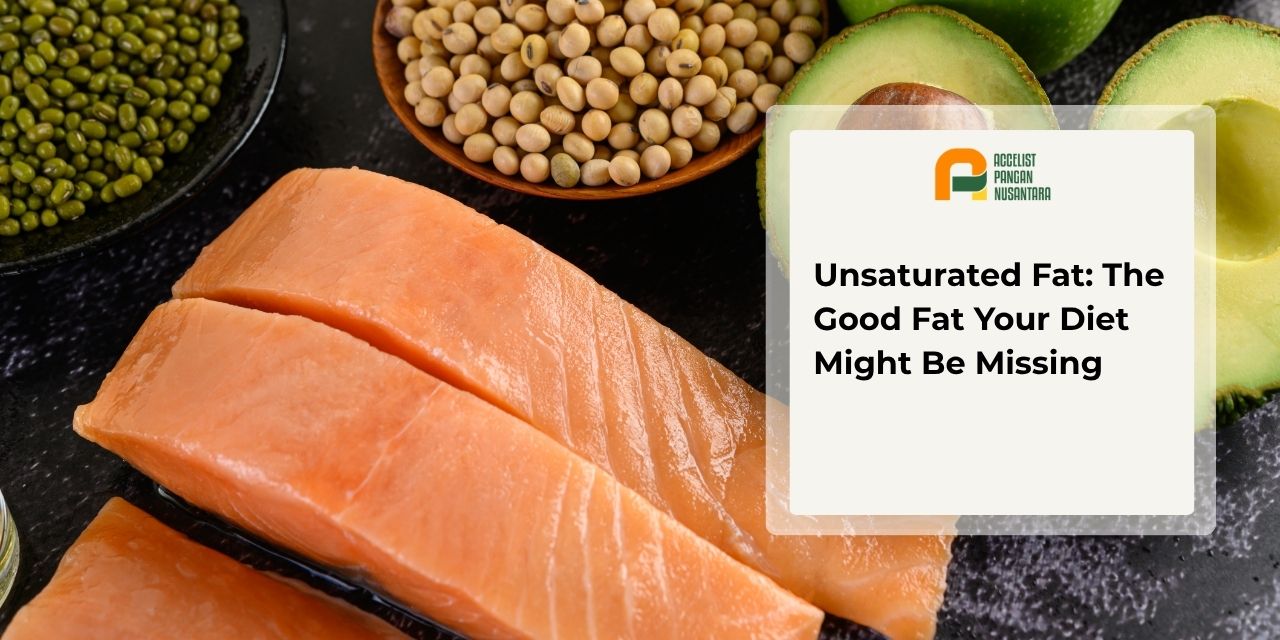
Unsaturated fat is a group of fatty acids with one or more double bonds in their chemical structure, which makes them liquid at room temperature. This trait sets them apart from saturated fat, which is solid and mostly comes from animal sources.
According to the World Health Organization (WHO), total fat intake should not exceed 30 percent of daily energy, with saturated fat limited to under 10 percent. This means most of a person’s daily fat needs should ideally come from unsaturated fat, not the other way around.
Unfortunately, many people still treat all fat as the enemy of a healthy diet. In reality, unsaturated fat plays a key role in maintaining heart health and overall metabolism.
What Is Unsaturated Fat?
Chemically, unsaturated fat is divided into two main groups based on the number of double bonds it contains. Each group has slightly different characteristics and food sources.
Monounsaturated Fat (MUFA)
Monounsaturated fatty acids contain a single double bond in their carbon chain. This type of fat is commonly found in olive oil, avocado, and various types of nuts.
Oleic acid is one of the most well-known examples of monounsaturated fat. This compound has anti-inflammatory properties and has been widely studied for its connection to heart health.
Polyunsaturated Fat (PUFA)
Unlike MUFA, polyunsaturated fat contains two or more double bonds. This group includes omega-3 and omega-6 fatty acids, both of which are essential fats since the body cannot produce them on its own.
Fatty fish such as salmon and sardines are well-known sources of omega-3. Beyond fish, omega-3 and omega-6 are also found in egg yolk, seeds, and several types of plant-based oils.
What Are the Health Benefits of Unsaturated Fat?
Unsaturated fat helps lower bad cholesterol (LDL) while keeping good cholesterol (HDL) levels stable. This benefit makes it an important part of any eating pattern aimed at long-term heart health.
Here are four key benefits of unsaturated fat worth knowing:
- Supports heart health. Unsaturated fat helps reduce the risk of plaque buildup in blood vessels.
- Reduces inflammation. Oleic acid and omega-3 both carry anti-inflammatory properties.
- Supports brain function. Omega-3 plays a role in forming nerve cells and preserving memory.
- Aids vitamin absorption. Unsaturated fat makes it easier for the body to absorb fat-soluble vitamins A, D, E, and K.
These four benefits show that unsaturated fat is more than just an energy source. This nutrient also plays an active role in supporting the body’s vital organ functions.
What Is the Difference Between Unsaturated and Saturated Fat?
The most fundamental difference between the two lies in their chemical structure and their effect on blood cholesterol levels. The table below summarizes this difference at a glance.
| Aspect | Unsaturated Fat | Saturated Fat |
|---|---|---|
| Form at room temperature | Liquid | Solid |
| Main sources | Plant-based (olive oil, avocado, nuts) and egg yolk | Animal-based (fatty meat, butter, chicken skin) |
| Effect on cholesterol | Lowers LDL, maintains HDL | Raises LDL |
| Recommended daily limit | Should make up the largest share of total fat intake | Limited to under 10 percent of daily calories |
The table above makes it clear that replacing part of your saturated fat intake with unsaturated fat is a heart-friendlier choice. This does not mean saturated fat needs to be eliminated entirely, only that its portion should stay small.
What Are the Best Food Sources of Unsaturated Fat?
Unsaturated fat sources are actually easy to find in everyday meals. Below are five foods known for their high unsaturated fat content.
- Olive oil, rich in oleic acid and vitamin E.
- Avocado, containing monounsaturated fat along with potassium.
- Almonds and walnuts, a source of healthy fat and fiber alike.
- Salmon and sardines, high in omega-3 for heart health.
- Egg yolk, containing healthy fat in a notably significant proportion.
Interestingly, egg yolk often gets overlooked as a source of unsaturated fat, even though its content is quite substantial. According to GoodDoctor, out of roughly 5 grams of fat in one egg, about 38 percent is monounsaturated fat and 16 percent is polyunsaturated fat, while the remaining 1.6 grams is saturated fat.
This proportion shows that more than half of the fat in an egg is actually unsaturated, not saturated. This fact matters, since egg yolk is often avoided due to a common misconception about cholesterol.
How Much Unsaturated Fat Do You Need per Day?
There is no single fixed number that applies to everyone’s unsaturated fat needs, since the amount depends on each person’s total calorie requirements. Even so, several health authorities have set general guidelines that can serve as a reference point.
Indonesia’s Ministry of Health recommends total fat intake of 20 to 35 percent of daily calories, with saturated fat kept under 10 percent. The remaining margin should ideally come from unsaturated fat, whether from plant sources or animal sources like egg yolk.
Meanwhile, the American Heart Association recommends an even stricter limit on saturated fat. This recommendation reinforces that replacing saturated fat with unsaturated fat is a strategy consistently endorsed across health authorities.
How Can You Meet Your Daily Unsaturated Fat Intake?
Meeting your unsaturated fat needs does not require a drastic overhaul of your eating habits. Four simple steps below can be applied in your kitchen starting today.
- Replace regular cooking oil with olive oil or canola oil for low-heat cooking.
- Add a handful of almonds or walnuts as a daily snack.
- Eat fatty fish such as salmon at least twice a week.
- Include eggs, egg yolk included, as a source of protein and healthy fat in your breakfast.
These four steps are easy to apply without requiring an extreme change in eating habits. Long-term consistency matters far more than drastic changes that are hard to sustain.
Conclusion
Unsaturated fat has proven to be an essential part of a healthy diet, particularly for supporting heart health and keeping cholesterol levels balanced. Replacing part of your saturated fat intake with unsaturated fat from sources like olive oil, nuts, fatty fish, and egg yolk is a step worth starting today.
For food industry players, understanding the fat composition of raw materials also adds meaningful value. The high unsaturated fat content in egg yolk, for instance, makes it a relevant ingredient worth developing further in a range of processed food products.
As a food ingredient manufacturer, Accelist Pangan Nusantara supplies egg powder, particularly Egg Yolk Powder, which preserves the natural nutritional profile of egg yolk, including its unsaturated fat content, in a form that is more practical for industrial-scale production. This powder format makes formulation and storage easier compared to fresh egg yolk.
If you are interested in using Egg Yolk Powder as a raw material for your products, please Contact Us for product specifications and further collaboration.

FAQ
Yes, as long as it stays within the recommended daily fat limit and does not displace other essential nutrients.
Yes, more than half the fat in egg yolk is unsaturated, which makes it a healthy fat source.
Unsaturated fat helps you feel full longer, but weight loss still depends on overall daily calorie intake.
The difference lies in the number of double bonds, with polyunsaturated fat covering essential fats like omega-3 and omega-6.