
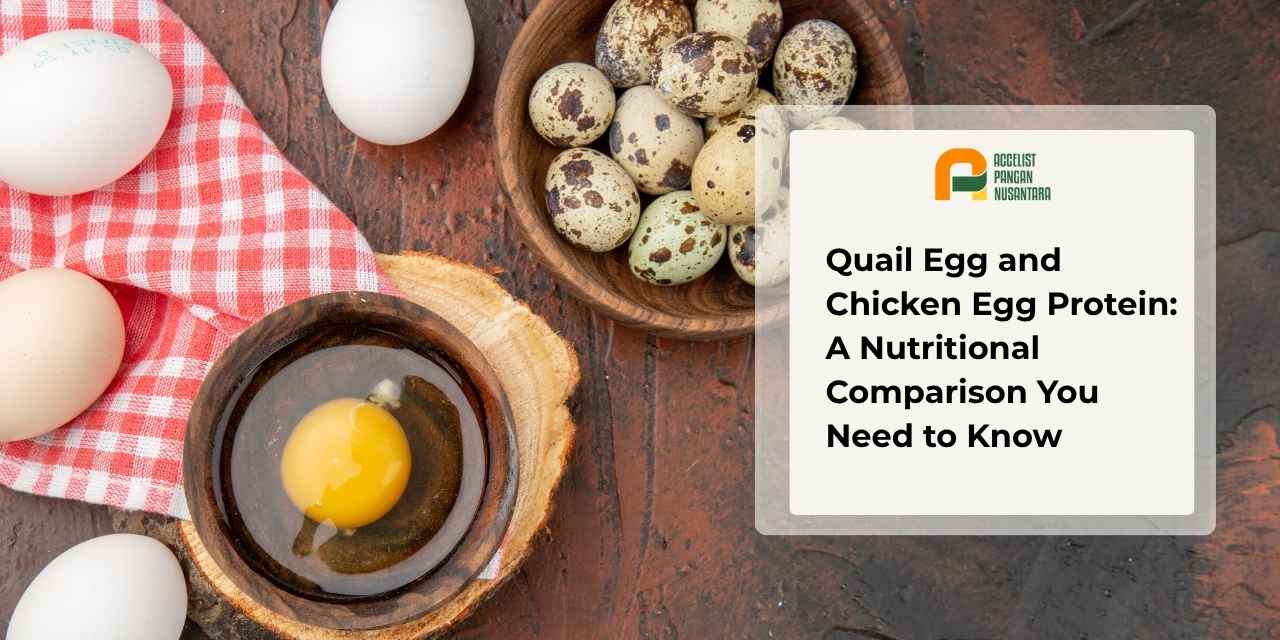
Indonesian street food staples like soto, bubur ayam, and siomay are almost always served with tiny speckled quail eggs as a classic topping. Chicken eggs, on the other hand, are a daily kitchen staple in households worldwide due to their larger size and easy availability.
Both have long been go-to sources of animal protein, yet few people actually take the time to compare their nutritional profiles in detail. The significant size difference often leads people to assume chicken eggs are automatically the more nutritious option.
The question of quail egg versus chicken egg protein is actually more nuanced than it appears. Beyond the protein count per egg, the micronutrient content is what makes the comparison genuinely worth exploring.
Quail Egg and Chicken Egg Protein Content Per Serving
Protein content in eggs is influenced not only by the type of egg, but also by portion size and the number consumed. Comparing protein per egg and per 100 grams can yield very different perspectives, so it is important to look at both together.
According to Alodokter, a single quail egg weighs around 9 grams and contains approximately 1.2 grams of protein. When consumed in a serving of 5 eggs (roughly 45 grams), the total protein reaches around 5 to 5.85 grams, nearly equivalent to one medium-sized chicken egg.
A medium chicken egg weighing around 55 to 60 grams, on the other hand, contains approximately 6 to 7 grams of protein per egg. Because of this higher protein count per egg, chicken eggs are often considered the more practical option for meeting daily protein needs with fewer pieces.
Overall, both quail eggs and chicken eggs are solid sources of quality protein. The key difference lies in the serving size and the number of eggs needed to reach an equivalent protein intake.
Per 100 grams, quail eggs contain around 13 grams of protein while chicken eggs contain around 12 grams, according to data from indonesiabaik.id. This indicates that gram for gram, quail eggs are slightly more protein-dense.
While the margin is not dramatic, the data confirms that quail eggs carry a slightly higher protein density than chicken eggs on a per-100-gram basis. That said, both remain excellent sources of animal protein with broadly similar fat and calorie profiles.
Quail Egg and Chicken Egg Nutrition Comparison
Understanding the full nutrition profile of both eggs helps in making the most informed choice for your specific needs. The table below summarizes the key nutritional content of each, measured per 100 grams for an objective comparison.
| Nutrient | Quail Egg (per 100g) | Chicken Egg (per 100g) |
| Protein | ~13 g | ~12 g |
| Calories | ~158 kcal | ~148 kcal |
| Fat | ~11 g | ~11 g |
| Iron | ~3.65 mg | ~1.75 mg |
| Vitamin B12 | Higher | Lower |
| Selenium | Higher | Lower |
| Riboflavin (B2) | Higher | Lower |
| Vitamin B1 (Thiamine) | Higher | Lower |
| Choline | Lower | Higher |
| Vitamin A | ~140 mcg | ~160 mcg |
| Cholesterol | ~844 mg | ~372 mg |
Source: hellosehat.com
From the table above, quail eggs have a clear advantage in iron, vitamin B12, selenium, and riboflavin, while chicken eggs lead in choline and vitamin A.
Important Fact to Consider: Quail eggs contain significantly more cholesterol than chicken eggs, at approximately 844 mg per 100 grams compared to just 372 mg for chicken eggs, according to hellosehat.com. For individuals with high cholesterol or certain cardiovascular conditions, this is an important factor to weigh when deciding on portion size and daily consumption.
The Benefits of Protein from Eggs
Both quail eggs and chicken eggs contain complete protein with a comparable essential amino acid profile. In terms of protein quality, both deliver equivalent benefits for supporting the body’s critical daily functions.
1. Supporting Muscle Building and Recovery
Egg protein is made up of a complete set of essential amino acids that the body needs to build new muscle tissue and repair muscle damage from physical activity. For anyone who exercises regularly, consuming 5 to 10 boiled quail eggs or 1 chicken egg after a workout is a practical, high-protein, low-calorie recovery option.
2. Meeting Daily Protein Needs Efficiently
One large chicken egg contains 6 to 7 grams of protein, making it a convenient way to cover part of your daily protein requirement in a single serving. To get the same amount of protein from quail eggs, you would need 5 to 6 eggs, according to hellosehat.com, so the best choice ultimately comes down to personal preference and availability.
3. Keeping You Fuller for Longer
Protein has a higher satiety effect than both carbohydrates and fat because the body takes longer to digest it. Starting the day with an egg-based breakfast, whether quail or chicken, helps naturally curb the tendency to overeat later in the day.
Read also:
- Quail Eggs Protein Content and the Nutrition Facts You Probably Overlooked
- Do Eggs Contain Fat? Here Are the Facts You Need to Know
Other Nutritional Differences Between Quail Eggs and Chicken Eggs
Beyond protein, the most meaningful differences between quail eggs and chicken eggs lie in their vitamin and mineral content. These differences are often what determine which egg is the better fit based on individual health conditions and specific nutritional needs.
1. Helping Prevent Iron-Deficiency Anemia
According to hellosehat.com, the iron content in 5 quail eggs reaches approximately 1.64 mg, nearly twice that of chicken eggs in a comparable serving. A study published in the Jurnal Vokasi Kesehatan further confirmed that regular quail egg consumption can increase hemoglobin levels in adolescent girls experiencing iron-deficiency anemia.
2. A Safer Option for Those with Chicken Egg Allergies
Quail eggs are known to be hypoallergenic, meaning they carry a lower risk of triggering allergic reactions compared to chicken eggs. For those who experience symptoms such as nausea, skin rashes, or digestive discomfort after eating chicken eggs, quail eggs can serve as a safer and nutritionally comparable alternative.
3. The Best Source of Choline for Brain Health
Chicken eggs contain more choline than quail eggs per comparable serving. Choline is essential for brain development, long-term memory function, and maintaining a healthy liver.
This is particularly relevant for pregnant women who need adequate choline intake to support fetal brain development. A single chicken egg already provides a meaningful portion of the daily choline requirement during pregnancy.
4. High in Vitamin A for Eyes and Immunity
According to hellosehat.com, one chicken egg contains approximately 80 mg of vitamin A, slightly more than the roughly 70 mg found in 5 quail eggs. Vitamin A plays a key role in maintaining corneal health, supporting immune function, and slowing cellular damage in the skin.
This higher vitamin A content makes chicken eggs the more efficient choice for meeting daily vitamin A needs. The benefit is especially relevant for growing children who require consistent vitamin A intake throughout their development.
Egg Powder as a Nutrient-Retaining Alternative to Fresh Eggs
As a more practical alternative to fresh eggs, Accelist Pangan Nusantara’s egg powder products are designed to meet the demands of food production that requires consistent quality, high hygiene standards, and ease of use. Through a modern spray drying process carried out at controlled temperatures, the protein and essential nutrition content of the eggs are preserved without significant degradation.
Compared to fresh eggs, which naturally vary in size, moisture content, and shelf life, egg powder delivers more consistent results across every production batch. Its significantly longer shelf life also makes storage, distribution, and precise ingredient measurement far more manageable.
Accelist Pangan Nusantara offers several egg powder variants that can be tailored to a wide range of food application needs:
- Egg White Powder
High in protein with a very low fat content, this product is ideal for bakery goods, meringues, marshmallows, cookies, and any application that requires a light, airy texture with maximum rise. - Egg Yolk Powder
Rich in choline, fat-soluble vitamins, and healthy natural fats from egg yolk, this product is perfect for sauces, egg noodles, pasta, and food products that call for a natural golden color and a richer, more savory flavor. - Whole Egg Powder
This product combines egg white and egg yolk in a balanced ratio, delivering the most complete nutritional profile of all egg powder variants. It is suitable for a wide variety of applications including general cooking, bread, cakes, and industrial food production. - Salted Egg Powder
Delivering the distinctive flavor of salted egg in a convenient powder form, this product is easy to incorporate into a wide range of food products. It is well-suited for snacks, pastries, salted egg sauces, and crispy coatings, which are currently among the most sought-after product formats across the culinary industry and snack market.
With consistently high quality and hygienic production standards, Accelist Pangan Nusantara’s egg powder range offers a practical solution for food manufacturers, bakeries, catering businesses, and home kitchens that prioritize efficiency without compromising nutritional value.
Read also: 7 Ways to Store Eggs Properly to Keep Them Fresh and Safe to Eat
Conclusion
Both quail egg and chicken egg protein are high quality, with a complete essential amino acid profile that supports the body’s daily needs. The key differences go beyond raw protein numbers and lie in their micronutrient profiles: quail eggs lead in iron, vitamin B12, and selenium, while chicken eggs are higher in choline and vitamin A. It is also worth noting that quail eggs carry a significantly higher cholesterol content, which is an important consideration for certain individuals.
The best choice ultimately comes down to each person’s specific health goals and dietary context. For those dealing with anemia or children in their growth phase, quail eggs offer a clear nutritional advantage; for those prioritizing high protein efficiency and choline intake, chicken eggs remain a hard-to-replace daily staple.
For home cooks, food business owners, SMEs, or the food industry looking to incorporate the nutritional benefits of eggs into production in a more efficient and consistent way, Accelist Pangan Nusantara offers a full range of quality egg powder products, from Egg White Powder and Egg Yolk Powder to Whole Egg Powder and Salted Egg Powder. Reach out to our team through the Contact page for product information and supply availability tailored to your needs.
FAQ
Per 100 grams, quail eggs contain around 13 grams of protein compared to 12 grams in chicken eggs. However, per individual egg, chicken eggs contain significantly more protein due to their larger size.
You would need approximately 5 to 6 quail eggs to match the protein content of one large chicken egg.
Yes, quail eggs contain nearly twice the iron of chicken eggs per comparable serving, making them a more recommended dietary choice for those with iron-deficiency anemia.
Chicken eggs are higher in choline, a critical nutrient for fetal brain development, but it is always best to consult a doctor or nutritionist regarding specific dietary needs during pregnancy.
Egg powder is processed using a method that preserves its protein content, so its protein profile is nearly equivalent to fresh eggs despite being in powdered form.