
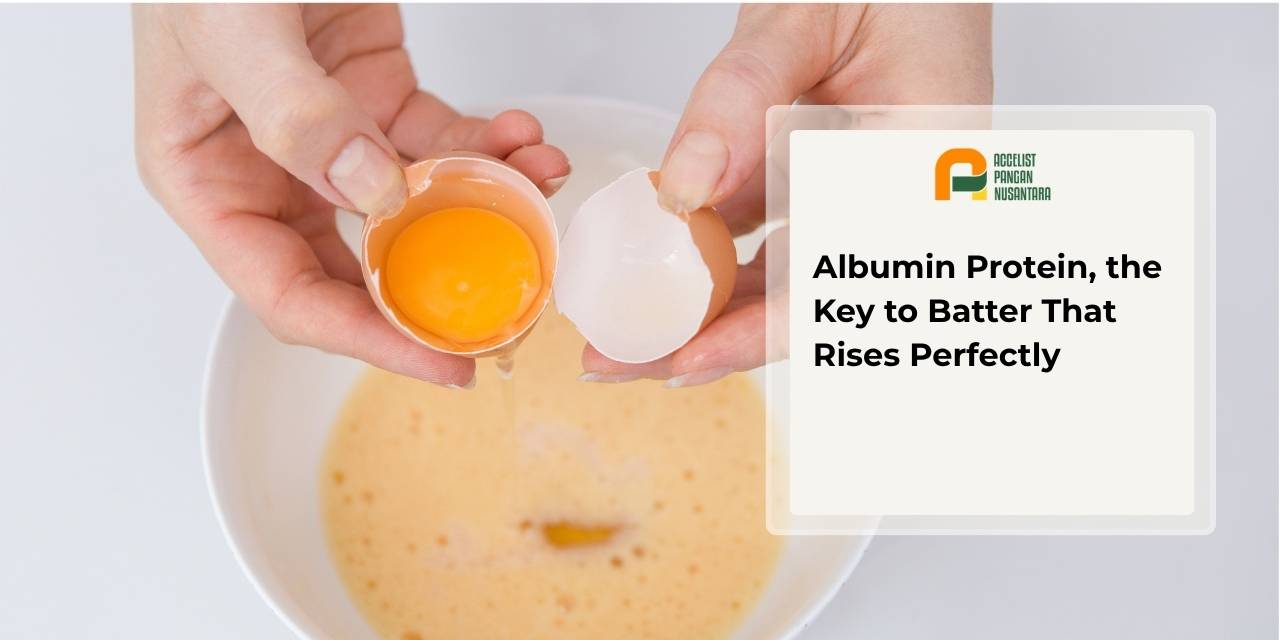
The rising capacity in many bakery products doesn’t always come from yeast or baking powder. In many cases, it comes from albumin protein found in egg white. This protein works in a completely different way from chemical leavening agents, yet it produces the same result: batter that rises perfectly.
According to a review published in ScienceDirect, ovalbumin, the main protein in egg white, unfolds and stabilizes air bubbles the moment it’s whipped, making it an essential element in baked goods and confectionery. This ability explains why albumin protein plays such a large part in determining a batter’s rising capacity.
This article covers albumin protein’s function in batter rising capacity, from the stages of its formation to how it differs from gluten’s role. You will also find out which products depend on this protein the most and what factors affect its performance.
What Is Albumin and What Role Does It Play in Egg White?
Albumin is a group of water-soluble proteins that dominates egg white’s composition, with ovalbumin as the most abundant type. This protein is responsible for most of egg white’s functional properties, including its ability to form foam when whipped.
Besides ovalbumin, egg white also contains ovotransferrin and lysozyme, which contribute to foam formation, though in smaller proportions. This combination of proteins is what creates the risen, sturdy structure of batter once it’s baked.
The Stages of Albumin Forming Batter’s Rising Capacity
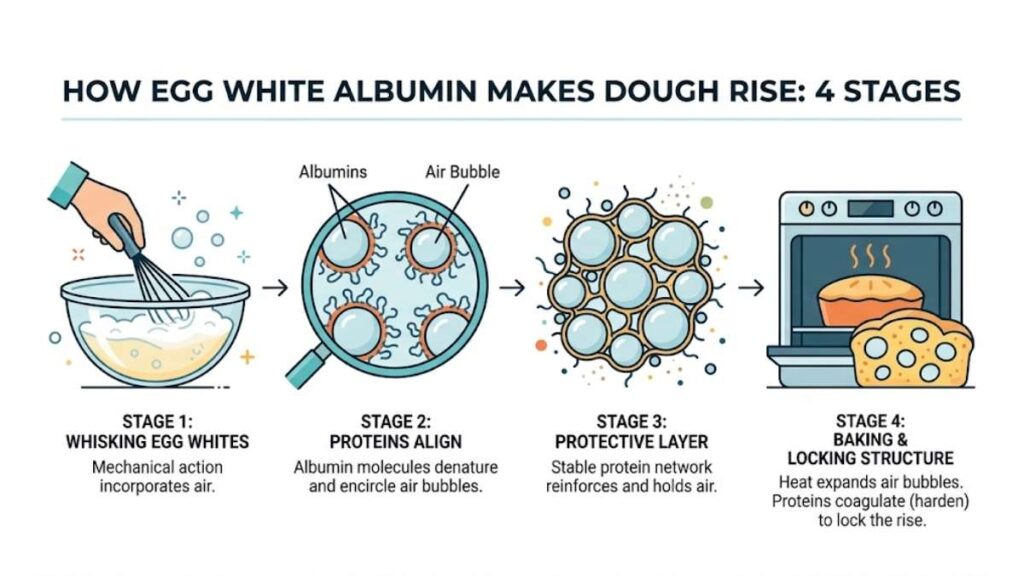
The process of albumin forming a batter’s rising capacity runs through four sequential stages, from whipping to baking. Here is a breakdown of each.
- Whipping causes albumin protein to unfold (denature), losing the tightly-packed globular structure it originally had.
- The hydrophobic part of the protein moves toward the air bubble, while the hydrophilic part faces the surrounding water phase.
- This arrangement forms a protective layer around the air bubble, so the trapped air doesn’t easily escape as the batter goes through further processing.
- Heat from baking causes the albumin protein to coagulate, locking the air bubble structure in place permanently and forming the batter’s risen texture.
The Difference Between Albumin and Gluten’s Role in Shaping Batter Structure
Albumin and gluten both play a part in shaping batter structure, but each works through a different mechanism. Here is a comparison of their roles.
| Aspect | Albumin Protein | Gluten Protein |
|---|---|---|
| Source | Egg white | Wheat flour |
| Main mechanism | Forms and stabilizes air bubbles through whipping | Forms an elastic network through kneading |
| Role in rising capacity | Keeps air trapped so the batter rises | Keeps the dough elastic so it can hold gas from yeast |
| Products that depend on it | Cakes and light bakery items such as angel food cake | Bread and noodles that need a chewy texture |
These two proteins can actually complement each other within a single product, such as in a cookie formulation where egg protein coagulates and helps gluten hold onto the volume it has already gained. Combining the two produces a sturdier final texture than relying on either protein alone.
Which Products Rely Most on Albumin’s Rising Capacity?
A number of bakery products rely on albumin’s rising capacity as their sole leavening source, without any help from yeast or baking powder. Here are four products that depend most heavily on this function.
- Angel food cake, which relies on egg white foam as its only source of rise, with no fat or chemical leavening agent
- Meringue, whose entire structure is built from egg white foam baked until dry
- Souffle, which needs albumin foam to create a light texture and a high rise once baked
- Sponge cake, which combines egg foam with wheat flour to produce a light texture that still holds its structure
What Factors Affect Albumin’s Rising Performance in Batter?
Albumin’s rising performance can drop sharply if a number of factors go unmanaged during processing. Here are four factors that most affect its performance.
- Fat or egg yolk contamination in the egg white being whipped, since fat inhibits foam formation
- The temperature of the egg white when whipped, since room temperature generally produces a more stable foam than cold temperature
- Over-whipping, which can actually break down a foam structure that has already formed
- Egg freshness, since fresher egg white tends to produce foam with a more stable structure
Conclusion
Albumin protein, particularly ovalbumin, forms a batter’s rising capacity through denaturation when whipped and coagulation when baked. This mechanism differs from gluten’s role, even though the two can complement each other within a single bakery product.
Understanding the stages and factors that affect albumin’s performance helps bakery manufacturers achieve more consistent results in products such as cakes and meringue. A combination of temperature control, ingredient freshness, and proper whipping technique is key to these products’ success.

FAQ
Albumin is a general group of water-soluble proteins, while ovalbumin is the specific type of albumin found in the largest amount in egg white.
Because albumin protein denatures from the whipping action, opening up its structure so it can stabilize air bubbles.
Egg yolk contains protein with a different function, while albumin in large amounts is found mainly in egg white.
Egg white generally coagulates at around 57°C, lower than egg yolk, which coagulates at around 65°C.
Not entirely, since the light texture that comes from albumin foam has a different character than the rise produced by a chemical agent like baking powder.