
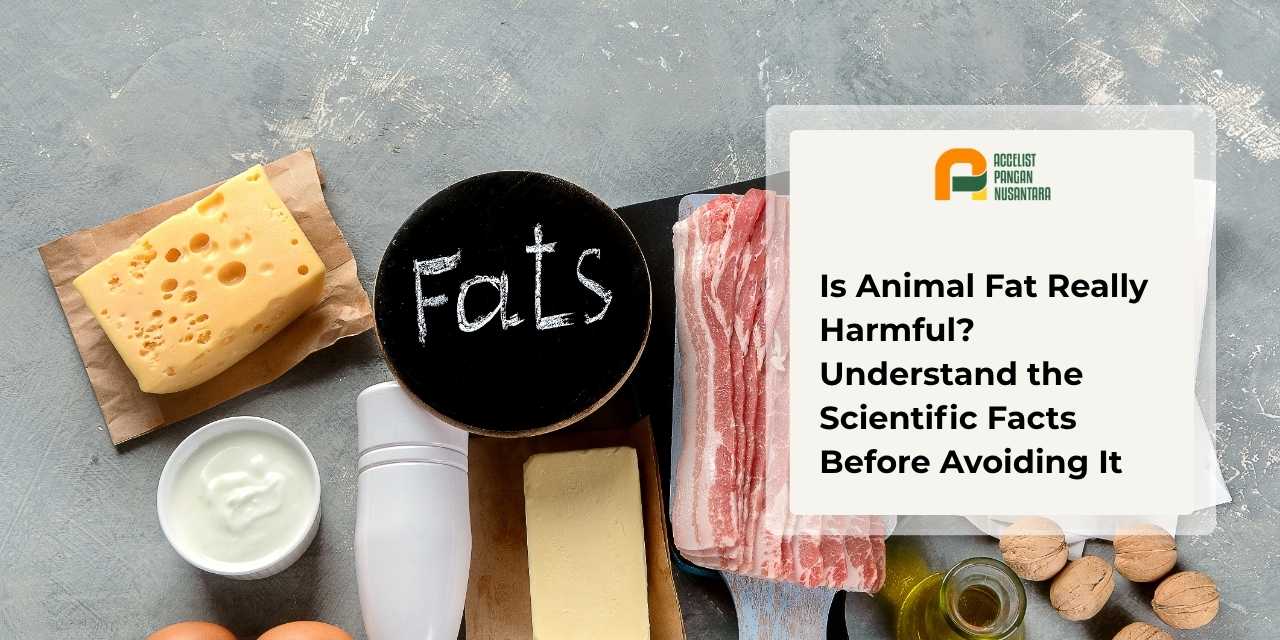
Many people frequently consider animal fat as the main cause of various health problems. Consequently, many individuals choose to limit or even avoid it entirely. However, the body still needs fat as a crucial part of a balanced diet.
As nutritional research develops rapidly, views on animal fat have become much more complex. Not all fats produce the exact same impact. In fact, some types actively play an important role in supporting daily bodily functions. Therefore, understanding the scientific facts behind animal fat remains essential before you decide to eliminate it from your daily menu.
What is Animal Fat?
Animal fat is a type of lipid (a group of fat compounds that function as energy sources and cell-building components). It comes directly from animals and their derivative products. You can easily find these sources in beef, poultry skin, milk, butter, and egg yolks.
Most animal fats naturally contain saturated fatty acids. However, their composition can vary greatly depending on the animal type and the specific part consumed. This specific content makes many animal fats solid or semi-solid at room temperature. This clearly differs from most vegetable oils, which tend to remain liquid.
Furthermore, these characteristics provide distinct advantages in various cooking techniques. Their relatively high saturated and monounsaturated fat content makes many types of animal fat more heat-stable compared to polyunsaturated-rich fats. As a result, chefs frequently use them for frying, baking, sautéing, and various other cooking techniques.
Besides functioning as a powerful energy source, animal fat also acts as a heat-transfer medium. Ultimately, it actively helps form the distinctive flavors, aromas, and textures in food.
Read also: Do Eggs Contain Fat? Here are the Complete Facts You Need to Know
Fundamental Differences Between Animal Fat and Vegetable Fat
Understanding the fundamental differences between animal fat and vegetable fat can perfectly help you design a more balanced diet. Both actively serve as energy sources and hold important functions for the body. However, they differ completely in fatty acid composition, cholesterol content, and their specific usage characteristics in various cooking techniques.
| Comparison Parameter | Animal Fat | Vegetable Fat |
|---|---|---|
| Main Source | Beef, poultry skin, egg yolks, butter, cheese | Avocados, nuts, seeds, olive oil, coconut |
| State at Room Temperature | Generally solid or semi-solid | Tends to be liquid |
| Fatty Acid Content | Tends to be higher in saturated fat, but still contains unsaturated fat | Tends to be much higher in unsaturated fat |
| Cholesterol Content | Naturally possesses dietary cholesterol. | Contains absolutely no cholesterol |
| Heating Stability | Highly stable and does not oxidize easily at high temperatures. | Mostly vulnerable to damage when exposed to high heat (except coconut and palm oil). |
According to the Mayo Clinic, saturated fat generally takes a solid form at room temperature. You can find it abundantly in meat and dairy products. Conversely, unsaturated fat usually takes a liquid form. You can easily find it in vegetable oils, nuts, and seeds.
Therefore, the ingredient origin does not solely determine the difference between animal fat and vegetable fat. The fatty acid composition they contain also plays a massive role. This specific factor heavily influences their characteristics, stability, and usage in food processing.
In practice, cooks often use animal fats like butter and beef tallow for baking or sautéing. They also utilize them to provide richer flavors to dishes.
Meanwhile, chefs widely utilize vegetable oils like olive oil for salads, sauces, and various other cooking techniques. Ideally, you should adjust your fat type selection according to your nutritional needs, ingredient characteristics, and chosen processing methods.
Is Animal Fat Bad to Consume During a Diet?
Avoiding animal fat entirely during a diet is absolutely not the right step. The body still needs fat as a backup energy source. It also actively needs it to help absorb fat-soluble vitamins, such as vitamins A, D, E, and K. Without adequate fat intake, the absorption of these essential vitamins can become severely suboptimal.
Besides playing a role in nutrient absorption, fat also helps regulate satiety. Research published in the American Journal of Physiology shows a fascinating fact. Fat and protein act as the main triggers for releasing the hormone cholecystokinin (CCK). This hormone actively helps slow down stomach emptying and securely sends fullness signals to the brain. This mechanism successfully helps control appetite and significantly reduces the desire to overeat between meals.
The Endotext medical reference from the National Center for Biotechnology Information details similar findings. The release of the CCK hormone after consuming fat can effectively help reduce total daily calorie intake. This happens because the feeling of fullness lasts much longer.
Therefore, eliminating animal fat completely does not determine diet success. Instead, overall portion control and food quality hold the true key. You should consume lean meat, eggs, or dairy products in appropriate amounts. Then, successfully combine them with vegetables, fruits, and other fiber sources. This helps fulfill nutritional needs while perfectly maintaining daily calorie balance.
Read also: Duck Egg Protein: Essential Nutrients Stored in Every Single Egg
Vital Benefits of Animal Fat for Body Health
People often associate fat solely with weight gain. However, this nutrient has various essential functions that carbohydrates or proteins simply cannot replace entirely.
Besides acting as an energy source, animal fat plays a vital role in vitamin absorption and hormone formation. It also actively maintains cell structures and nerve tissues. Here are some of its main benefits:
- Essential Vitamin Solvent Vehicle
First, according to medical publications from the National Center for Biotechnology Information, vitamins A, D, E, and K belong to the fat-soluble vitamin group (vitamins that require fat to enter the body). Therefore, the presence of fat in food helps the body utilize these vitamins much more optimally. - Supports Hormone Regulation and Satiety
Second, fat tissue does not merely function as an energy reserve. It also actively produces hormones. One of them is the hormone leptin (the satiety-regulating hormone). It helps signal the brain regarding energy availability inside the body. This function plays a crucial role in actively helping control appetite. - Maintains Cell Structure and Nervous System
Finally, fat and cholesterol serve as important components composing cell membranes (cell protective layers). Additionally, the body also needs cholesterol to form the myelin sheath (nerve fiber protector). This actively helps smoothen signal transmission between the brain and the entire body. Therefore, adequate fat intake plays a vital role in deeply supporting normal nerve function.
Proper Guidelines for Consuming Animal Fat Based on Medical Standards
You can successfully minimize cardiovascular disease risks by implementing a balanced and rational fat intake arrangement. You can definitely still consume animal fat, provided you carefully monitor its quantity and quality.
- Limit Daily Calorie Amount
First, according to the American Heart Association, about 25% to 35% of total daily calories can safely come from fat. For a 2,000-calorie per day diet, experts recommend saturated fat intake should not exceed 13 grams per day. This actively protects heart health (preventing fat buildup in blood vessels). - Increase Unsaturated Fat Intake
Second, according to the Mayo Clinic, unsaturated fats like omega-3 represent healthy fat types. They can deeply support heart health and help overall bodily functions, including energy metabolism. Excellent unsaturated fat sources include deep-sea fish and nutrient-enriched eggs. - Pay Attention to Fat Source Quality
Third, strictly choose fat sources from high-quality food ingredients. These include meat from naturally raised animals or eggs from more natural farming systems. These types tend to possess a much better fatty acid profile for body metabolism balance (how the body processes nutrients). - Pay Attention to Cooking Methods
Finally, absolutely avoid using excessively high temperatures in repeated frying processes. Extreme heating can severely damage fat structures. Furthermore, it produces oxidative compounds (substances resulting from fat reactions exposed to excess heat) that potentially impact blood vessels negatively.
Read also: How Many Calories in a Boiled Egg? A Complete Nutritional Guide Before It Enters Your Daily Menu
Challenges of Processing Fresh Egg Fat in Commercial Kitchens
Egg yolks act as an incredibly nutrient-dense source of fat and choline. In the culinary world, this ingredient plays a vital role as a natural emulsifier (a substance that helps mix water and oil). Chefs use it to thicken sauces and improve dough textures.
However, using it in its fresh form in commercial kitchens creates several operational challenges that management must address carefully.
Time-Consuming Manual Separation Process
First, chefs or kitchen staff must manually separate whites and yolks one by one. This process consumes excessive time and significantly hampers workflow. This becomes especially problematic during busy operational hours.
In a restaurant environment, technical jobs like this can drastically reduce the kitchen team’s efficiency. The staff’s energy becomes split between ingredient preparation and main dish production processes.
1. Risk of Nutritional Damage and Strict Storage
Second, the fat content in egg yolks remains highly sensitive to oxidation (change processes due to air exposure). This can quickly cause rancid odors. Therefore, staff must perform storage strictly at stable low temperatures.
Even a tiny mistake in temperature settings can drastically accelerate ingredient spoilage. Ultimately, this increases the risk of stock waste and severe operational losses in the kitchen.
2. Size Fluctuations That Destroy Recipe Precision
Third, egg sizes vary greatly from one egg to another. This ensures the resulting fat content never stays consistent. This specific issue can heavily affect the final result in products that demand extremely high-precision measurements.
Small differences in this composition can ruin sauce or dough textures. Consequently, production results never stay stable from one batch to the next.
3. The Threat of Pathogenic Bacterial Contamination
Finally, eggshells potentially carry dangerous dirt. This dirt can easily contain bacteria like Salmonella. If contact occurs with the egg contents, cross-contamination risks can skyrocket immediately.
This forces commercial kitchens to implement extremely strict cleanliness standards during every raw egg handling process. They must do this to prevent severe health risks to consumers.
Read also: Bread Improver: Don’t Choose the Wrong One So Your Bread Rises Perfectly
The Advantages of Animal Fat Sources for Vegetarian Dieters
Many people mistakenly think vegetarians absolutely never touch animal-derived products. In reality, lacto-ovo vegetarian groups (vegetarians who still consume eggs and dairy products) make eggs and dairy products their main nutritional pillars. For this diet group, fat intake from egg yolks and butter does not merely act as a calorie supplement. Instead, it serves as a highly important part in actively supporting the body’s metabolic functions.
Fat sources from eggs provide active vitamin B12 intake. You absolutely cannot find this in vegetables or nuts. The body absorbs this fat-soluble vitamin optimally to actively help prevent anemia and nervous system disorders.
Additionally, the choline content in egg yolks plays a major role in actively supporting daily brain memory functions. The presence of these high-quality animal lipids can easily help cover potential nutritional deficiencies. These deficiencies often occur when a person drastically reduces red meat consumption.
Practical Animal Fat Management Solutions for the Culinary Industry
The human body holds an absolute need for high-quality fatty acids. This animal nutrition controls many vital systems. It manages everything from smoothening vitamin absorption to actively protecting brain nerve cells. Cutting fat intake extremely actually destroys your internal organs’ work balance.
The most appropriate step to maintain cardiovascular health is actively managing daily calorie portions. You must also ensure your cooking ingredients always remain deeply hygienic.
Specifically for culinary entrepreneurs, you can easily use modern raw materials. They brilliantly overcome the complexity of processing fresh fats in production kitchens. Accelist Pangan Nusantara presents highly specific egg powder innovations. These actively support the operations of the food industry, bakery lines, and MSMEs.
You simply store this powdered product neatly in a dry warehouse at room temperature. Kitchen staff can precisely measure the grams for recipes instantly. They no longer need to deal with the hassle of cracking bacteria-prone shells. The use of Egg Yolk Powder immediately provides a rich savory flavor and a completely natural yellow color without adding any artificial dyes.
FAQ
Consuming these food ingredients will not automatically increase weight as long as you strictly keep it below the daily calorie threshold.
The digestive tract utilizes bile fluid supplies and lipase enzymes in the small intestine to actively break down fat molecules into the bloodstream.
Patients with high cholesterol levels can still enjoy this fat intake. However, they must stick to extremely strict portions according to precise medical advice.
Perfectly cooked egg yolk servings and salmon fillets act as highly nutrient-dense daily portion options.
That claim is completely false. Raw palm oil and coconut extract perfectly represent two plant ingredients with highly dominant saturated fatty acid profiles.