
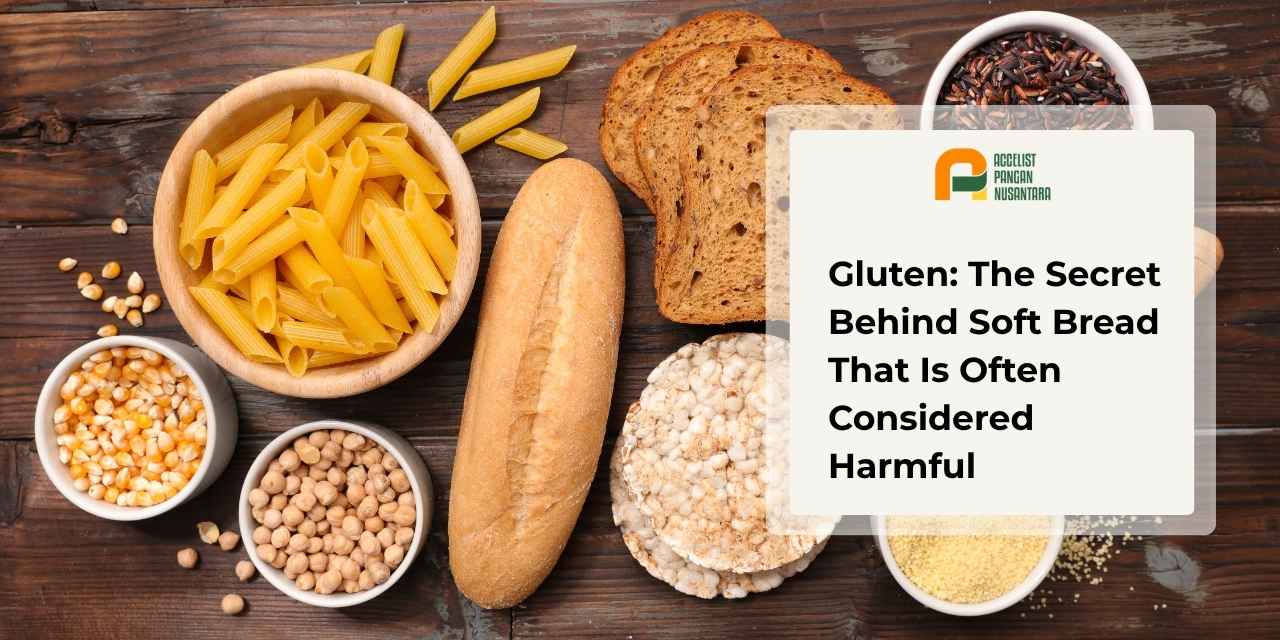
Undoubtedly, we often find the “gluten free” label on various food products. These range from bread and biscuits to healthy foods. Consequently, the presence of this label makes people discuss gluten more frequently. Many even consider it a component they must avoid.
On the other hand, the food industry relies heavily on the presence of gluten. Manufacturers need it to produce various products with consistent textures. In fact, bakers cannot form many familiar food characteristics, such as perfectly risen bread or chewy noodles, without the role of this component.
What is Gluten?
Essentially, gluten refers to a group of natural proteins found in specific grains, especially wheat. Two main proteins, glutenin and gliadin, form gluten. They work together to build the dough structure when bakers mix them with water.
Historically, the name gluten comes from the Latin word for “glue”. This term perfectly describes its ability to bind flour and water particles together. Ultimately, it creates an elastic and easy-to-work dough.
Furthermore, when bakers knead the dough, the gluten network develops. It forms a strong structure that actively traps the carbon dioxide gas produced by yeast fermentation. This exact ability allows bread to rise beautifully during baking. Additionally, gluten plays a vital role in giving bread its elastic texture and providing products like noodles with their chewy character.
Read also: Bread Improver: Don’t Choose the Wrong One So Your Bread Rises Perfectly
The Benefits of Gluten Consumption for Healthy Individuals
Many people consider gluten a component they must completely avoid. However, for healthy individuals without celiac disease or gluten sensitivity, science has not proven that consuming gluten increases heart disease risks.
In fact, a study published in the British Medical Journal (BMJ) found an interesting result. Restricting gluten without medical reasons actually causes people to reduce their whole grain consumption. Doctors have long associated these whole grains with excellent cardiovascular health benefits.
- Lowers Cardiovascular Disease Risk
First, health experts routinely link regular whole grain consumption to better heart health. According to Harvard Health, replacing refined grains with whole grains helps lower coronary heart disease risks. This happens because they contain fiber, vitamins, minerals, and bioactive compounds. - Supports Digestive Health
Second, many gluten-containing foods, especially whole grains, serve as excellent fiber sources. This fiber acts as a prebiotic, providing nutrition for good bacteria in the gut. These bacteria then produce short-chain fatty acids (SCFAs). These acids actively help maintain digestive tract health and gut microbiota balance. - Reduces Nutritional Deficiency Risks from Improper Gluten-Free Diets
Third, research published in the BMJ shows a clear warning. Avoiding gluten without medical needs causes individuals to consume fewer whole grains. Consequently, their intake of fiber and various essential nutrients drops, which potentially harms their overall health. - Requires Attention to Gluten Substitutes
Finally, food manufacturers use rice flour as the main ingredient in many gluten-free products. The Food and Drug Administration (FDA) notes an important fact. Rice plants tend to absorb more arsenic from the environment than other cereals. Therefore, people should avoid diets that rely too heavily on one type of substitute. This ensures their nutritional intake remains diverse and balanced.
Importantly, you need to understand that these benefits generally come from consuming whole wheat and gluten-containing grains, not just the gluten protein itself. Therefore, healthy individuals should keep their main focus strictly on the quality and diversity of their daily diet.
List of High-Gluten Food Categories
You can find this structural protein in various types of daily foods. While you can easily recognize some sources because chefs use them as main ingredients, many others hide as additives in processed products.
For food manufacturers, understanding gluten sources remains crucial. This knowledge actively helps them prevent cross-contamination during the production process. Meanwhile, for consumers, this knowledge helps them choose foods that perfectly fit their individual needs.
Here are four main categories of gluten sources you need to know.
1. Wheat
Wheat stands as the largest source of gluten. The global food industry uses it more than any other ingredient. Furthermore, this ingredient plays an essential role in various food products because it forms a strong and elastic dough structure. Certain varieties, such as durum wheat, actually possess higher protein contents compared to other wheat types.
Its versatile characteristics ensure wheat appears in many types of daily foods. The protein inside helps build a stable dough structure. This produces the exact texture that consumers love.
Here are some examples of its derivative products:
- White bread and various sweet breads.
- Authentic Italian pasta.
- Breakfast cereals.
- Instant noodles.
- Roux (a mixture of butter and flour that chefs use to thicken sauces or soups).
2. Barley
Barley is a whole grain that naturally contains gluten. The food and beverage industry widely utilizes this ingredient. They primarily use it as a source of distinctive flavor and to support the fermentation process.
Besides utilizing it as food, manufacturers often include barley in various malt-based products. Many consumers do not realize that this ingredient appears in numerous daily processed products.
Examples of barley usage include:
- Beer and fermented beverages.
- Brewer’s yeast.
- Malt and malt syrup.
- Malt milk and malt vinegar.
- Certain food flavorings or food coloring products.
3. Rye
Rye possesses a stronger and slightly more sour flavor profile than regular wheat. Farmers widely cultivate this plant in cold-climate regions. Moreover, it has long served as a vital part of the culinary traditions in various European countries.
Its unique taste ensures the modern food industry continues to use rye extensively. Additionally, bakers frequently utilize rye flour in natural fermentation processes, including sourdough bread production.
Common products that use rye include:
- Rye bread, which features a dense texture.
- Several types of fermented beverages, including rye beer.
- Rye-based breakfast cereals.
4. Other Grains & Hidden Gluten
This category includes cross-bred grains. It also covers various products that carry a risk of containing gluten due to their processing methods. Besides natural gluten sources, this group also features ingredients that naturally lack gluten. However, factories might accidentally contaminate them during production.
Cross-contamination often happens during harvesting, storage, milling, or processing. This occurs when facilities handle them using the exact same equipment as wheat, barley, or rye. Therefore, naturally gluten-free ingredients do not automatically guarantee safety for individuals who must avoid gluten.
Examples of products in this category include:
- Triticale
A cross-bred grain from wheat and rye that naturally contains gluten. - Oats
They naturally lack gluten. However, factories often contaminate them during production unless they specifically bear a gluten-free label. - Soy Sauce
Manufacturers create many soy sauce products using a mixture of soybeans and wheat during the fermentation process.
Ultimately, understanding these gluten sources helps consumers read food labels more carefully. This holds especially true for individuals who suffer from celiac disease, wheat allergies, or gluten sensitivity.
Read also: Why Are Restos Becoming More Popular? Getting to Know the Modern Restaurant Concept
Medical Conditions That Require a Gluten-Free Diet
A gluten-free diet does not serve as a shortcut for weight loss. Instead, it acts as a strict medical therapy procedure for patients with specific immune disorders.
At least four absolute diagnoses strictly require a person to eliminate this binding protein from their plate for life:
- Celiac Disease
This genetic autoimmune disorder forces the body to destroy the villi (small projections that absorb nutrients) in the small intestine as soon as the sufferer swallows gluten. This digestive structure damage permanently blocks nutritional pathways. Consequently, it leads directly to severe malnutrition. - Non-Celiac Gluten Sensitivity (NCGS)
Sufferers of this intolerance immediately experience stomach cramps, severe diarrhea, and brain fog after swallowing gluten-containing food. Interestingly, medical examinations will not detect even the slightest physical atrophy (tissue damage or shrinkage) on their intestinal walls. - Wheat Allergy
This condition triggers antibodies to fight directly against specific proteins hiding inside wheat grains. This systemic allergic reaction (spreading throughout the body) potentially blocks the airway. Furthermore, it can provoke a fatal, life-threatening anaphylaxis attack. - Gluten Ataxia
This rare neurological disorder causes the immune system to directly attack motion-controlling brain cells when patients consume gluten. As a result, sufferers progressively lose muscle control. They eventually face severe difficulties just to walk or swallow.
If you do not have one of the four medical diagnoses above, removing wheat from your daily menu will not provide any physical benefits.
Moreover, following the gluten-free diet trend without a doctor’s recommendation will only inflate your food grocery bills. At the same time, it silently robs your body of the essential heart-protecting fiber that you desperately need every day.
Operational Challenges of Making Gluten-Free Dough in the Kitchen
Producing gluten-free food creates unique challenges for restaurant kitchens and the bakery industry. When bakers remove wheat from the formulation, they also eliminate the gluten network. This network normally helps form the structure and retain air inside the dough. Consequently, the dough easily becomes dense, crumbly, or fails to rise properly if chefs do not arrange the formula correctly.
To overcome these challenges, manufacturers usually use various substitutes. These substitutes actively help build the dough structure. Specifically, chefs most frequently use egg whites. The protein inside them powerfully helps build structure, maintain volume, and preserve moisture in gluten-free products.
However, using large quantities of fresh eggs also presents its own operational challenges. The moisture content variation and natural characteristics of each egg heavily affect the dough consistency. This holds especially true for gluten-free formulations, which tend to be far more sensitive than wheat-based doughs.
Furthermore, the process of manually separating the white and the egg yolk consumes significant time and extra energy. From a food safety perspective, handling fresh eggs requires strict procedures. Kitchen staff must do this to reduce cross-contamination risks from pathogenic microorganisms in the production area.
Read also: Choline: The Often Ignored Brain Nutrient, Even Though the Body Desperately Needs It
Conclusion
Gluten serves as a natural protein that plays a crucial role. It forms the texture, elasticity, and structure of various wheat-based products. For the vast majority of healthy individuals, you do not need to avoid consuming gluten-containing foods. You can safely include them as part of a perfectly balanced diet. Conversely, individuals with specific medical conditions genuinely require a gluten-free diet. These conditions include celiac disease, non-celiac gluten sensitivity, or a wheat allergy.
For the food and bakery industry, producing gluten-free dough presents unique challenges. This happens because bakers lose gluten’s function as a strong structure builder. Therefore, they need alternative ingredients. These ingredients must actively help maintain the final product’s volume, texture, and consistency.
To support these specific needs, bakers can use Egg Powder from Accelist Pangan Nusantara. It acts as a highly functional protein source that helps build a gluten-free dough structure much more consistently. Its powder form simplifies the measuring process. It effectively reduces the moisture variations frequently found in fresh eggs and actively boosts kitchen operational efficiency.
Ultimately, with the right raw materials, gluten-free food production runs more stably and efficiently. It successfully produces high-quality, consistent products over time.
FAQ
No. Only individuals diagnosed with specific medical conditions like Celiac disease or wheat allergies strictly need to avoid it.
Its main function acts as a glue that actively traps yeast air. This directly allows the dough to expand elastically.
Pure oats naturally lack wheat. However, commercial products often experience cross-contamination because manufacturers process them in wheat factories.
Egg whites supply a very strong protein network. They perfectly replace the wheat glue function, ensuring the cake still rises beautifully.
Raw eggs trigger moisture variations that easily ruin recipes. Additionally, they carry severe risks of spreading Salmonella bacteria from their shells.