
Adding egg powder to noodle dough brings a noticeable change to the final result, from color to texture once boiled. That difference matters to noodle manufacturers looking to tailor their product to a specific market preference.
A study published in ScienceDirect found that adding egg to noodle dough meaningfully increases the noodles’ extensibility once cooked, even though it does little to change the optimal cooking time. That finding suggests egg’s impact on noodles shows up more in texture than in how fast they cook.
This article covers the comparison between noodles with and without added egg powder, from color and texture to nutritional content. You will also find out when it makes sense to choose noodles with added egg powder for your production needs.
Why Does Adding Egg Powder Change the Final Result of Noodles?
Protein in egg powder integrates with the gluten network in the dough, changing the noodles’ physical characteristics once kneaded and cooked. That shift at the protein level is what makes noodles with added egg powder behave differently from noodles without it, especially in terms of extensibility and how well they hold up during boiling.
Comparing Noodles With and Without Added Egg Powder
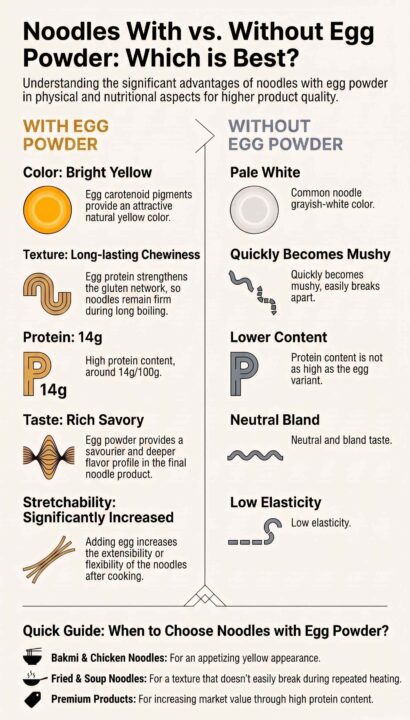
The difference between noodles with and without added egg powder can be seen across five main characteristics, from appearance to taste. Here is a full breakdown of the comparison.
| Characteristic | Noodles With Egg Powder | Noodles Without Egg Powder |
|---|---|---|
| Color | Bright yellow from carotenoid pigments | Pale white or grayish |
| Texture when boiled | Chewier and holds up longer without turning mushy | Tends to turn mushy faster if boiled too long |
| Protein content | Higher, at about 14 grams of protein per 100 grams in dry form | Relies only on protein from wheat gluten, generally lower |
| Taste | Savory and richer in flavor | More neutral and plain |
| Extensibility | Increases meaningfully once cooked | Lower compared with noodles made with egg powder |
Color and taste are usually the differences consumers notice first, while the texture and extensibility differences are felt more by manufacturers during production and boiling. Together, these five characteristics ultimately determine which type of noodle better fits your needs.
When Should You Choose Noodles With Added Egg Powder?
Choosing between noodles with or without added egg powder should depend on the type of dish and your target market’s preferences. Here are four situations where noodles with added egg powder are the better choice.
- Noodle products that rely on a bright yellow color as their main visual appeal, such as chicken noodle soup or bakmi
- Dishes that need noodles with a chewy texture that holds up over time, such as fried noodles or noodle soup that gets reheated repeatedly
- A target market looking for noodle products with higher protein content than standard noodles
- Premium noodle production aimed at standing out from plain noodles on the market
Conclusion
Noodles with added egg powder offer a bright yellow color, chewier texture, and higher protein content compared with noodles made without egg powder. That difference shows up most clearly in extensibility once cooked, even though the optimal cooking time for both is not far apart.
Choosing the right type of noodle depends on the needs of the final product, whether that’s appearance, texture, or the target market you’re aiming for. Understanding this comparison helps noodle manufacturers make a better decision before settling on a formulation.
For culinary businesses or food manufacturers that want to produce noodles with consistent color and texture, Egg Powder from Accelist Pangan Nusantara offers reliable protein content to support your noodle quality. Contact Us for product information and to discuss your business’s egg raw material needs.

FAQ
Not necessarily healthier, since both have a different nutrition profile: noodles with egg powder tend to be higher in protein, while noodles without egg are usually lower in calories and fat.
Generally yes, though the intensity of the color can vary depending on how much egg powder is used and whether kansui is also added to the dough.
They can come close, especially with the help of kansui, though the extensibility still won’t match noodles made with egg powder.
The added protein from egg powder strengthens the gluten network, making the noodles more resistant to heat and water without losing their shape as quickly.
Generally slightly more expensive due to the added raw material, but that difference is usually offset by the improvement in texture and taste quality.