
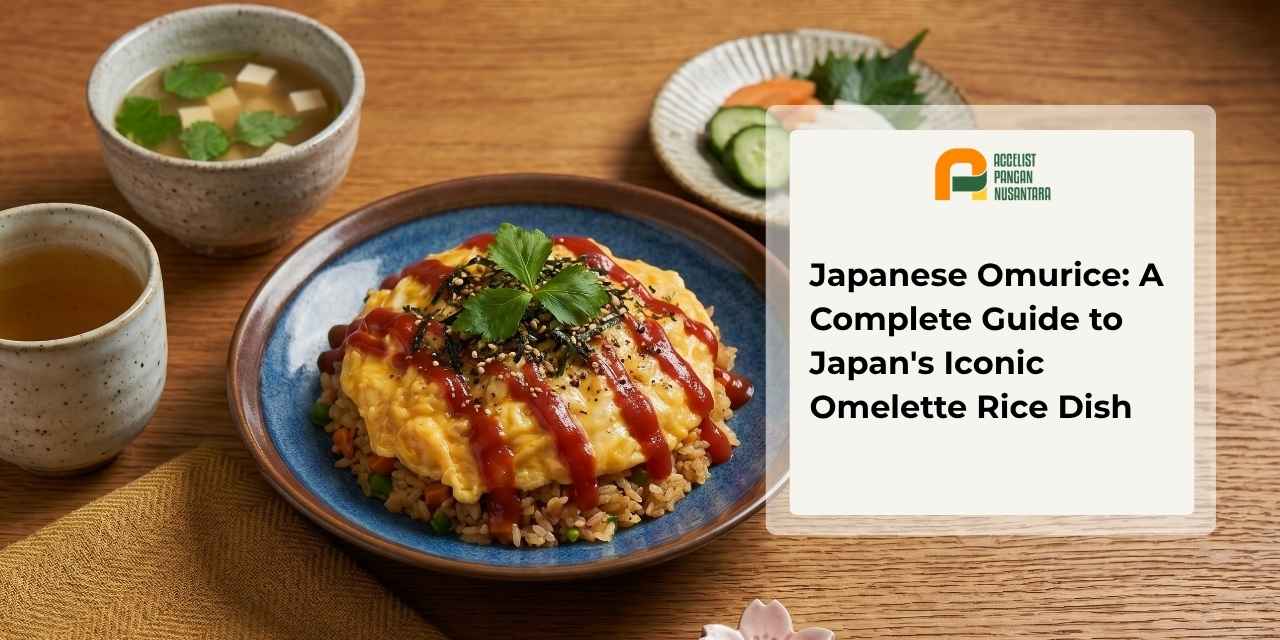
Picture yourself stepping into a small, old-fashioned restaurant tucked in the Ginza district of Tokyo. Among the familiar-sounding menu items, one dish immediately catches your eye: a mound of fried rice neatly wrapped in a golden-yellow omelette and finished with a drizzle of ketchup on top. That is omurice.
In Japan, the dish is anything but rare. From school canteens to family restaurants packed on weekends, omurice stands as one of the most enduring benchmarks of yoshoku (Japanese Western-style cuisine) passed down from one generation to the next.
What Is Omurice?
Omurice is a Japanese dish made of ketchup-seasoned fried rice, wrapped in a thin, soft omelette. It looks and tastes straightforward, but there is a specific technique behind it that sets it apart from simply laying an egg on top of fried rice.
The name “omurice” combines two borrowed words: omu (from the French omelette) and raisu (the Japanese pronunciation of the English word rice). In Japanese, the dish is written as オムライス and pronounced o-mu-ra-i-su across five syllables.
Today, omurice has spread to nearly every corner of Asia. Its rise beyond Japan was driven largely by Japanese pop culture, particularly anime and drama series, which gained a wide following across the continent from the mid-2000s onward and brought omurice onto casual restaurant menus in South Korea, Indonesia, Taiwan, and beyond.
The Difference Between Omurice and Regular Fried Rice
At a glance, omurice and regular fried rice look alike since both use rice and eggs. However, there are a few key differences that give omurice its own distinct identity as a dish.
| Aspect | Omurice | Regular Fried Rice |
| Rice seasoning | Ketchup (sweet and tangy) | Soy sauce, garlic, or spice blends |
| How the egg is served | A separate omelette that wraps the rice | Beaten egg mixed directly into the rice |
| Egg texture | Soft, creamy on the inside | Fully cooked and dry alongside the rice |
| Accompanying sauce | Ketchup or demi-glace on top | Not mandatory |
| Culinary origin | Japan | Varied, across Asia |
What sets omurice apart is not just the ingredients but the way it is assembled. The omelette that encloses the rice is the core of the dish’s identity, not an afterthought.
The History of Omurice: From Ginza to Dining Tables Across Asia
Omurice did not emerge from a home kitchen on a whim. It has a long history behind it, one that begins in one of Tokyo’s most prestigious districts over a century ago.
Born from Yoshoku Culture
According to records from Tokyo Weekender, omurice was first served around 1900 at Renga-tei restaurant in Ginza, Tokyo. The restaurant, which opened in 1895, is credited as the pioneer of many yoshoku dishes in Japan, including tonkatsu and hayashi rice.
Interestingly, the Renga-tei version contained no ketchup at all since the condiment did not reach Japan until around 1908. According to The Chef Dojo, the dish began as a meal for kitchen staff until a curious regular customer asked for it, and from that point omurice was officially added to the menu.
Popular Variations of Omurice
Omurice did not stay locked to a single recipe after its introduction. As tastes evolved and chefs got more creative, the dish branched into several distinct styles, each with its own character.
1. Classic Omurice (Wrapped Style)
This is the most traditional version: ketchup fried rice neatly wrapped in a thin, oval-shaped omelette and finished with a drizzle of ketchup on top. Making it requires quick and precise hand movements to fold the omelette around the rice without tearing it.
For reference, an experienced chef at a Japanese family restaurant can plate a single serving of classic omurice in under three minutes. This variation is most commonly found at family restaurants and is usually the starting point for anyone new to making omurice at home.
2. Fuwa-Fuwa Omurice (Fluffy Style)
Fuwa-fuwa is Japanese for “soft and airy”. The eggs are whisked until frothy, briefly cooked over low heat until half-set, then placed over the rice and sliced down the centre so the filling opens up dramatically.
This style was brought to global attention by chef Motokichi Yukimura of Kichi Kichi restaurant in Kyoto, whose cooking videos went viral on social media and have since been watched tens of millions of times. Its light texture and theatrical presentation have made it a favourite among Japanese food enthusiasts worldwide.
3. Demi-Glace Omurice
This variation replaces ketchup with a rich, dark demi-glace sauce, sometimes finished with mushrooms or minced beef on top of the omelette. The flavour is heavier and more layered compared to the classic version.
Demi-glace omurice is typically served at mid-to-upscale yoshoku restaurants in Japan and has been adapted by a number of fine dining cafés across major cities in Southeast Asia.
Tips for an Omelette That Stays Intact and Soft
The omelette is the part that most often goes wrong when making omurice. The fried rice can always be adjusted, but an omelette that has already torn or dried out cannot be recovered.
1. Use the Right Pan
A non-stick pan with a smooth, unblemished surface is essential so the omelette slides freely and does not stick when folded. Make sure there are no scratches on the cooking surface, because even a minor scratch will cause the egg to cling at exactly that spot.
For example, a non-stick pan that has developed scuffs across the centre is one of the most common reasons an omelette tears during folding. Replace any pan that is no longer fit for use.
2. Control the Heat
High heat causes the egg to set too quickly and tighten before it can be folded. Cooking the omurice omelette over low to medium heat is the right approach, closer in method to cooking techniques like slow scrambled eggs (cooking eggs gradually over low heat until the texture is soft and creamy) than to a standard omelette.
The sign it is ready to fold is when the edges have set while the centre remains wet and glossy. At that point, the rice can be placed inside and the omelette is ready to be wrapped.
3. Whisk the Eggs Until Fully Combined
Insufficiently whisked eggs produce an omelette with an uneven texture, some parts too dense and others too thin. Whisk until the yolk and white are fully incorporated, around 30 to 60 seconds.
For the fuwa-fuwa style, whisk longer until a fine foam forms on the surface, because those air bubbles are what create the light, pillowy texture the style is known for.
Read also: Cooking Techniques Explore: Five-Star Kitchen Secrets and Ingredients Management
Egg Powder as a Whole Egg Substitute in Omurice
Making omurice omelettes in large quantities comes with its own set of challenges, particularly around consistency. Fresh eggs vary in size and moisture content from one batch to the next, and those differences directly affect the texture of the finished omelette.
Egg powder is a processed egg product that has been dehydrated into powder form. To use it, egg powder is simply dissolved in water according to the recommended ratio, and the result can be used exactly like beaten whole eggs, including for making omurice omelettes.
Key advantages of egg powder over fresh eggs for production use:
- Longer shelf life with no refrigeration required before opening.
- Consistent measurement for a more uniform omelette texture from one serving to the next.
- Logistically efficient as there is no risk of stock expiring before it is fully used.
- Practical for high-order kitchens where output can be scaled without relying on the daily availability of fresh eggs.
Read also: 7 Ways to Choose Fresh Eggs Without Making Mistakes
Conclusion
Omurice is proof that a dish does not need a grand origin to last. From staff food at a Ginza restaurant in 1900 to a viral sensation through the fuwa-fuwa style, it has endured because it delivers something straightforward, a familiar flavour that anyone can learn to make.
Across Asia, omurice has long since moved beyond the walls of Japanese restaurants. Food businesses ranging from cloud kitchens to catering operations have made it a reliable menu item because the ingredients are accessible and preparation is fast.
For commercial kitchens that depend on consistent ingredients, Whole Egg Powder from Accelist Pangan Nusantara is a practical alternative to whole eggs for omelette production. Easier to store, more stable in quality, and capable of delivering the soft omelette texture the dish calls for. Contact Us for product details and stock availability.
FAQ
Not necessarily, but rice left overnight has a drier texture that keeps the fried rice from clumping during cooking.
Yes, teriyaki sauce or demi-glace both work well. That said, ketchup delivers the most authentic flavour due to its characteristic sweet-tangy balance.
No. The modern style intentionally leaves the inside slightly creamy and half-set, as long as the eggs used are fresh and good quality.
Omurice is best eaten right away since the omelette firms up in the fridge. The fried rice can be stored separately for one to two days.
The Korean version sometimes uses a gochujang or cream-based sauce, while the Japanese version consistently uses ketchup as the primary seasoning for the rice.