
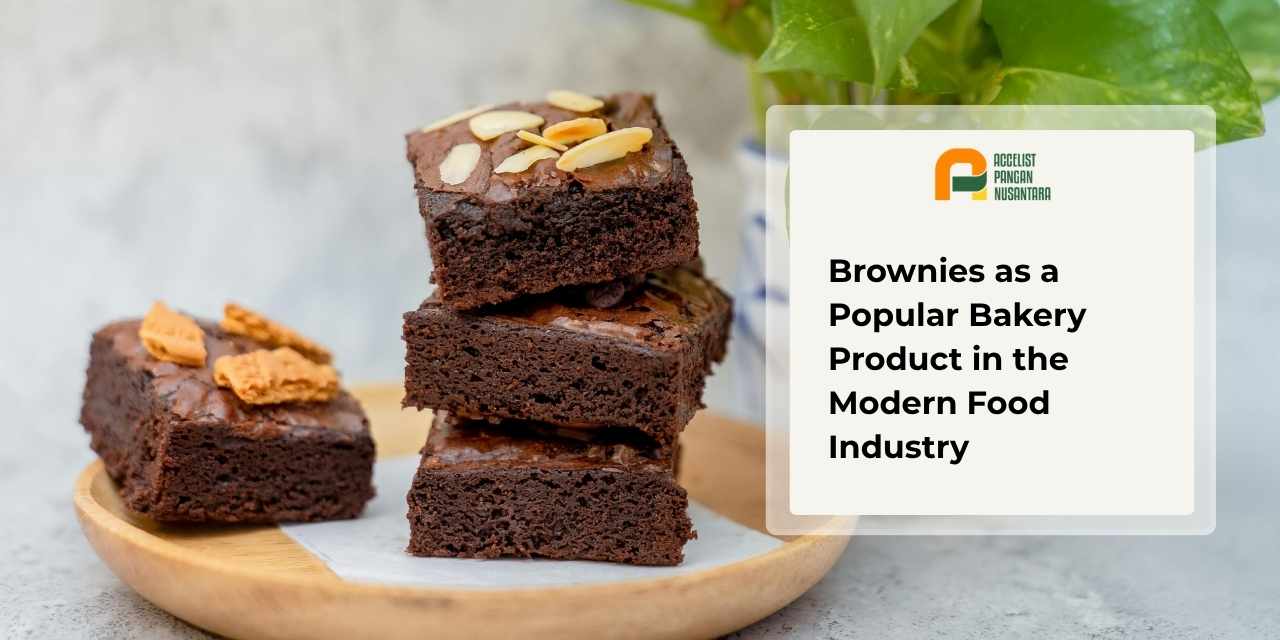
Brownies as a Popular Bakery Product in the Among the many types of cakes and pastries available today, brownies are among the most frequently mentioned, yet rarely fully understood. Many people know them simply as a “chocolate cake,” when in reality brownies have a distinct character, history, and production method that sets them apart from most other chocolate-based confections.
In the bakery world, brownies stand out as one of the most consistently in-demand products across time. The two most recognized versions in Indonesia, steamed brownies and baked brownies, each carry their own strengths and characteristics that are well worth understanding.
What Are Brownies?
Brownies are dense chocolate cakes with a dark, almost blackish-brown color, typically cut into square portions and served in small sizes. Unlike sponge cakes or layer cakes, brownies are intentionally designed not to rise, and it is precisely that dense, compact texture that defines them as a category of their own.
This cake is generally made from a combination of chocolate or cocoa powder, fat, eggs, sugar, and a minimal amount of flour. In Indonesia, brownies are recognized in two main forms based on their cooking technique, either baked in an oven or steamed using a conventional steaming pot, and each produces a noticeably different eating experience.
Read also: Bread Improver: Don’t Choose the Wrong One to Make Your Bread Rise Perfectly
The History of Brownies
According to a report published by RRI Bengkalis, the history of brownies traces back to 1893 at the Columbian Exposition in Chicago, United States. Bertha Palmer, wife of the Palmer House Hotel owner and chair of the women’s board at the fair, asked the hotel’s chefs to create a small, portable dessert that guests could carry in boxed lunches.
The result was a dense chocolate square topped with walnuts and an apricot glaze, known as the Palmer House Brownie. The hotel still serves this dessert using the original recipe today, more than 130 years after it was first created.
A separate and widely circulated version suggests that brownies were created by accident when a chef or home baker forgot to add a leavening agent to chocolate cake batter. This story has not been verified by historical documentation and is considered by many culinary historians to be folk legend rather than confirmed fact.
The origin of the name “brownies” remains unclear and continues to be debated. One theory links the name to the dark brown color of the treat, while another connects it to “The Brownies,” a popular illustrated character created by Canadian artist Palmer Cox that appeared in American children’s magazines in the late 1800s.
The first formally recorded brownie recipe appeared in Fannie Merritt Farmer’s The Boston Cooking-School Cook Book published in 1896, though that version used molasses rather than chocolate. The chocolate brownie recipe as it is widely recognized today did not become commonly published until after 1905.
Brownies in Indonesia: From Western Treat to Local Staple
Brownies first arrived in Indonesia as an imported treat known only to a limited circle. Over time, however, the cake worked its way into the local market and can now be found at virtually every bakery, from traditional markets to modern retail outlets.
- 1990s
Brownies gained widespread recognition in Indonesia as Western food culture became increasingly influential through media and the tourism industry. Demand grew quickly enough that brownies became a permanent fixture on most bakery menus and a regular presence at celebrations ranging from birthday parties to religious holidays. - 2000s
The steamed brownie emerged as a practical solution for households without an oven, quickly developing its own following for its softer, more moist texture. Local brownie brands multiplied rapidly, and the steamed version became a recognized local culinary identity that persists to this day.
The Difference Between Steamed Brownies and Baked Brownies
The base ingredients are nearly the same, yet the final results are worlds apart because of how each version is cooked. The table below summarizes the key differences between steamed and baked brownies for a quick and clear comparison.
| Aspect | Steamed Brownies | Baked Brownies |
| Texture | Soft and moist | Denser, surface slightly dry |
| Moisture Level | High | Lower |
| Chocolate Aroma | Lighter | Richer and more intense |
| Shelf Life (Room Temp) | ±2 days | ±3 days |
| Long–Term Storage | Refrigerator (2-3 days) | Freezer (several months) |
| Cooking Equipment | Steaming pot | Oven |
| Surface Appearance | Uniformly soft | Shiny crust on top |
From the table above, the choice between steamed and baked is not just a matter of taste preference, but also depends on equipment availability and storage needs. Steamed brownies are best suited for immediate consumption, while baked brownies offer more flexibility for production runs that require a longer shelf life.
Popular Brownie Varieties in Indonesia
Brownies in Indonesia have come a long way from a plain chocolate slab in a square pan. The creativity of local pastry makers has produced dozens of variations that combine the character of classic brownies with distinctly Indonesian flavors, resulting in combinations rarely found elsewhere.
Here are some of the most popular brownie varieties in Indonesia:
- Pandan Brownies
Blends the signature fragrance of Southeast Asian pandan leaves with rich chocolate, creating a contrast of colors and flavors that complement each other well. The distinctive herbal aroma makes it especially appealing to fans of traditional local sweets. - Black Glutinous Rice Brownies
Made with black glutinous rice flour, producing a heavier texture and a more earthy flavor profile than standard brownies. A natural choice for those looking for something that tastes distinctly Indonesian. - Tiramisu Brownies
A layer of mascarpone cream and coffee powder over dense chocolate brownies, turning them into a premium version commonly found in cafés and artisan bakeries. The balance of bitter coffee and sweet chocolate creates a nuanced, grown-up flavor. - Cheese Brownies
Sliced cheddar on top of or mixed into the batter creates a sweet-savory contrast that appeals to a broad audience, from children to adults. This is consistently one of the top-selling brownie varieties in local bakeries across Indonesia. - Frozen Brownies
Baked brownies that are frozen before serving, resulting in an ultra-dense and creamy texture that differs noticeably from brownies at room temperature. The cold, fudgy bite has become its own experience, especially popular as an afternoon snack.
Read also: Black Forest Cake: Essential Ingredients and Innovative Solutions
Key Ingredients That Determine Brownie Quality
Understanding what each ingredient does in a brownie recipe goes beyond theory. Knowing these roles can be the difference between a batch that turns out exactly right and one that falls flat. Here are the five ingredients that most directly determine the final result.
- Chocolate or Cocoa Powder
The quality of the chocolate directly shapes how deep and complex the brownie’s flavor will be. Dark chocolate with at least 70% cocoa content typically produces a richer, more layered result than regular milk chocolate. - Butter and Vegetable Oil
Butter contributes a richer flavor and more aromatic result, while vegetable oil keeps the texture more moist and extends the brownie’s shelf life. Many of the best recipes combine both to achieve the right balance between flavor and texture. - Eggs
The quantity of eggs used directly determines the final texture of brownies, where a higher amount leads to a cakier result and a lower amount produces a denser, fudgier outcome. Getting the egg ratio right is especially important for larger production runs, where consistency across every batch matters. - Flour
Too much flour strips brownies of their dense, fudgy character and pushes them toward the texture of regular sponge cake. Keeping the flour amount minimal is what preserves the dense and moist identity that makes brownies what they are. - Sugar
Sugar does more than sweeten because it also directly affects moisture levels and the overall texture of the finished brownie. Brown sugar tends to yield a more moist result with a deeper, slightly caramel-like aroma compared to standard white granulated sugar.
Egg Powder Mix as a Whole Egg Substitute in Brownies
Eggs are one of the most critical ingredients in a brownie recipe because they directly affect the texture, moisture, and binding of the batter. The good news is that whole eggs can now be replaced with Egg Powder Mix without sacrificing the quality of the final product.
Here are some of the key advantages of using Egg Powder Mix over fresh eggs:
- Longer shelf life: Egg powder lasts far longer than fresh eggs, making ingredient availability much easier to manage, especially for regular production schedules.
- Easier portion control: The powdered form allows for precise and consistent measuring from one batch to the next.
- More stable quality: There is no variation in quality the way fresh eggs can vary, resulting in more predictable brownie results every time.
- Practical for production scale: Easier to store and distribute than fresh eggs, making it an efficient choice for both home-based baking businesses and larger-scale operations.
- Reduced contamination risk: The drying process involved in making egg powder reduces the risk of bacterial contamination that can come from raw eggs.
With these advantages in mind, Egg Powder Mix is increasingly being adopted by home bakers who want convenience and by food businesses that prioritize product consistency. The right choice of ingredients is often a small decision that makes a significant difference in the final result.
Read also: FATTOM: Six Factors That Determine Food Safety
Conclusion
Brownies are proof that the best culinary results do not always come from perfect planning. What started as a kitchen mistake in a Chicago hotel eventually became one of the most beloved bakery products in the world, with Indonesia contributing its own steamed variation that has earned a place in the global pastry landscape.
Both steamed and baked brownies offer genuinely different experiences, but they share the same foundation, which is a depth of chocolate flavor that keeps people coming back regardless of which version they prefer. Understanding the history and character behind each variety only adds to the appreciation of a cake that is deceptively simple yet remarkably consistent in its appeal.
For producing brownies consistently from one batch to the next, ingredient quality and stability are among the most important factors to control. Egg Powder Mix from Accelist Pangan offers a reliable, practical alternative to whole eggs, supporting stable and consistent brownie production whether for home baking or commercial use.
Want to learn more about Egg Powder Mix and how it can support your baking production needs? Contact the Accelist Pangan Nusantara team for product details, specifications, and ordering information.
FAQ
Brownies use no leavening agent, giving them a dense, fudgy texture, while chocolate sponge cake uses baking powder to rise and become light and airy.
The shiny layer forms when sugar and eggs are beaten together and set during baking, and is generally a sign the batter was well-mixed.
Generally 160-175°C for 25-35 minutes; insert a toothpick into the center and if it comes out slightly moist but not wet, the brownies are done.
Most commonly caused by overbaking or using more flour than the recipe calls for.
Very much so, as ingredients are easy to source, production is straightforward, and the wide range of flavor variations keeps demand high with relatively low startup costs.