
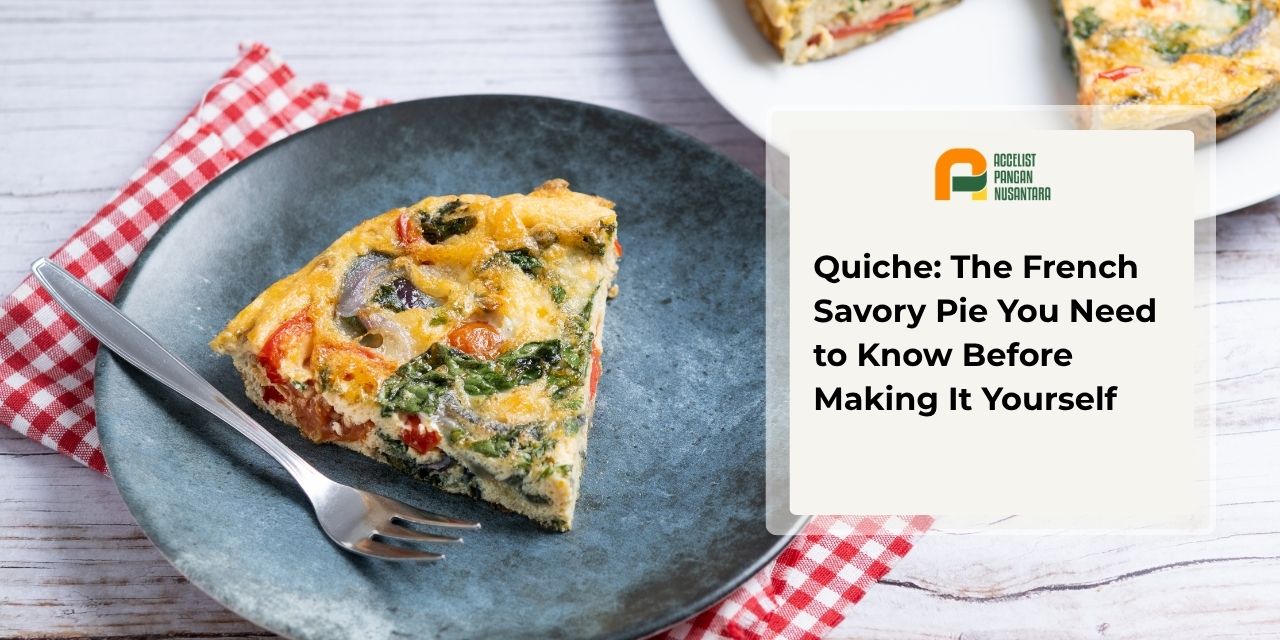
Quiche is one of the most recognized dishes from French cuisine, known for its signature combination of a crispy crust and a soft, tender filling in every slice. Many people want to make it at home, but the results often fall short: the texture comes out too firm, watery, or dense in the middle.
In most cases, the ingredients used are already correct. What tends to go wrong are a few technical details that are easy to overlook. This article covers the origins, the most popular varieties, and concrete steps to help you achieve that smooth, custard-like texture every time.
What Is Quiche?
Quiche is a French savory pie made from a mixture of eggs and cream, baked in a round tin typically measuring 20–23 cm in diameter for 35–45 minutes. The filling can vary widely, from smoked meat and vegetables to cheese, depending on the maker’s preference.
A well-made quiche should have the soft, set texture of custard, not firm or watery. For example, a quiche filled with spinach and feta (a white, crumbly Greek cheese with a salty, tangy flavor) will taste creamy and smooth if the egg-to-cream ratio is correct, but flat and dense if the proportions are off.
Read also: Egg Tart: Types, Characteristics, and the Secret Behind Its Irresistible Custard
History of Quiche
According to National Culinary Specialist Academy (NCSA) Indonesia, quiche originated in the Lorraine region of France, dating back to the 16th century. In its earliest form, quiche was made from a pastry shell filled with eggs and cream, with a simple filling of smoked meat and no cheese whatsoever.
The original dish, known as Quiche Lorraine, was indeed cheese-free. Over time, the recipe evolved to include cheese, vegetables, and various other ingredients.
Quiche’s popularity continued to grow well beyond France, and today it can be found in restaurants, cafés, and supermarkets around the world in countless variations. In some parts of Lorraine, the community’s affection for the dish runs so deep that there were once proposals to establish a “National Quiche Day” as a tribute to this culinary heritage.
Read also: Why Is Carbonara a Favorite Pasta Dish Around the World? Here’s Why
Popular Types of Quiche
Now that we’ve covered its origins, here are some of the most widely known quiche varieties that developed as the dish traveled beyond Lorraine. Each country and kitchen that adopted it tended to adapt the filling using locally available ingredients, from vegetables and meats to different types of cheese.
Here are a few of the most commonly encountered types, each with its own distinct flavor profile.
1. Quiche Lorraine
Quiche Lorraine is the most classic version and the closest to the original recipe from Lorraine. Its filling consists of smoked bacon, eggs, cream, and a small amount of nutmeg, with no cheese or vegetables, just as the centuries-old recipe intended.
The savory depth of the smoked bacon paired with the soft custard produces a slice that is firm yet creamy when cut, with a faint hint of nutmeg at the end of each bite. This texture is noticeably different from vegetable-based quiches, which tend to be slightly more moist due to the water content in the filling.
2. Quiche Florentine
Quiche Florentine uses spinach as its main ingredient, typically paired with cheeses such as gruyere (a pale yellow Swiss cheese with a mildly sweet, nutty flavor) or feta for added savoriness. The name “Florentine” refers to the culinary style of Florence, Italy, which has long been associated with the use of spinach in a wide range of dishes.
The combination of sautéed spinach and cheese delivers a savory taste with a subtle earthiness, making it a light yet filling option for breakfast, thanks to its protein content. The green color from the spinach also gives this version a more visually appealing look compared to the classic, which is why it is often served at brunch gatherings or casual entertaining.
3. Vegetarian Quiche
For those who do not eat meat, vegetarian quiche offers a flexible alternative with fillings such as mushrooms, bell peppers, broccoli, or zucchini. The variety of options is quite adaptable, allowing anyone to work with whatever vegetables are on hand without changing the basic custard preparation.
Mushroom and bell pepper quiche, for instance, is a popular choice for brunch because of its colorful presentation and savory flavor. Vegetables used in the filling should be sautéed beforehand to reduce their water content, preventing the custard from becoming runny after baking.
4. Seafood Quiche
Seafood quiche uses ingredients such as smoked salmon, prawns, or crab in place of meat or vegetables. This version is typically served at restaurants or cafés looking to offer a more premium option compared to standard quiche varieties.
Smoked salmon quiche, as one example, is widely popular in European cafés for its distinctively rich, salty flavor, which pairs well with a cup of coffee or tea. The tender texture of the fish also complements the custard well, as long as the filling is not too generous, which could otherwise affect the density of the overall bake.
Key Components of Quiche
A well-made quiche is built on three core components: the crust, the custard mixture, and the filling, each with its own function and proportions that need to be managed separately. Understanding the role of each will make it easier to adjust your technique and measurements as needed.
- Crust
The crispy base layer, typically made from 250 g of all-purpose flour, 125 g of cold butter, and 4–6 tablespoons of ice water. For example, blind baking the crust at 190°C for 10–12 minutes before adding the filling prevents the base from turning soggy once baked. - Custard mixture
A blend of eggs and cream or milk that binds the entire filling together. A ratio of one egg to every 120 ml of cream generally produces a smooth, well-set custard without being too dense, though this can be adjusted for a firmer texture if preferred. - Filling
Additions such as meat, vegetables, or cheese (typically around 150–200 g per 22 cm tin) that determine the flavor and type of quiche. Vegetables, for instance, should be cooked first to draw out excess moisture, which would otherwise make the custard watery.
Tips for a Smooth, Silky Quiche Texture
A quiche that comes out too firm, watery, or dense in the center is typically the result of four things: oven temperature, how the eggs are mixed, egg quality, and whether the custard is strained. Here are four practical steps to help you get consistent results every time.
- Keep your oven temperature stable
Bake quiche at 175–180°C for 35–45 minutes so the custard sets evenly without the edges overbrowning first. If your oven tends to run unevenly, lower the temperature by 10 degrees and add 5–10 minutes to the baking time. - Mix eggs for around 15–20 seconds with a whisk or fork, and no more
Over-mixing incorporates too much air into the mixture, which causes the custard to develop an uneven, porous texture after baking. - Pay attention to egg quality and freshness
Fresh eggs tend to produce a more stable custard and a more appealing yolk color, though the difference is more noticeable at production scale than in a single home-baked quiche. - Strain the custard through a fine-mesh sieve as you pour it in
This removes any unmixed egg white strands that could affect the final texture, though this step can be skipped if you’ve mixed the custard in a blender from the start.
Conclusion
Quiche is far more than a simple savory pie. It is a dish with a long history rooted in Lorraine, now available in four widely recognized varieties: Lorraine, Florentine, vegetarian, and seafood. Each type has its own distinct flavor character, but the success of all of them depends on the same fundamental principle: balance between the crust and the custard.
The core technique is straightforward: a crispy crust paired with a smooth, well-set custard. Once you have a clear understanding of the right egg-to-cream ratio and the correct baking method, making quiche consistently at home or at production scale becomes far more repeatable.
For bakeries, cafés, or catering businesses producing quiche on a regular basis, maintaining consistent custard color and flavor day after day is more challenging than single-batch home cooking. High-quality fresh eggs can still produce excellent results, but they require careful quality control at each production run.
As an alternative, Egg Mix Powder and Egg Yolk Powder from Accelist Pangan Nusantara are formulated to help maintain consistency in color, flavor, and shelf stability at production scale. If you would like to learn more about product specifications and how they apply to commercial quiche production, feel free to Contact Us for a consultation.
FAQ
Quiche keeps well for 3–4 days in an airtight container in a refrigerator set below 4°C.
Quiche contains a custard filling made from eggs and cream, while a standard pie typically contains fruit or meat without any custard.
Yes, this version is known as crustless quiche and works well for anyone looking to reduce their carbohydrate intake.
The most common cause is using vegetables that have not been pre-cooked, leaving them with a high water content that seeps into the custard during baking.