
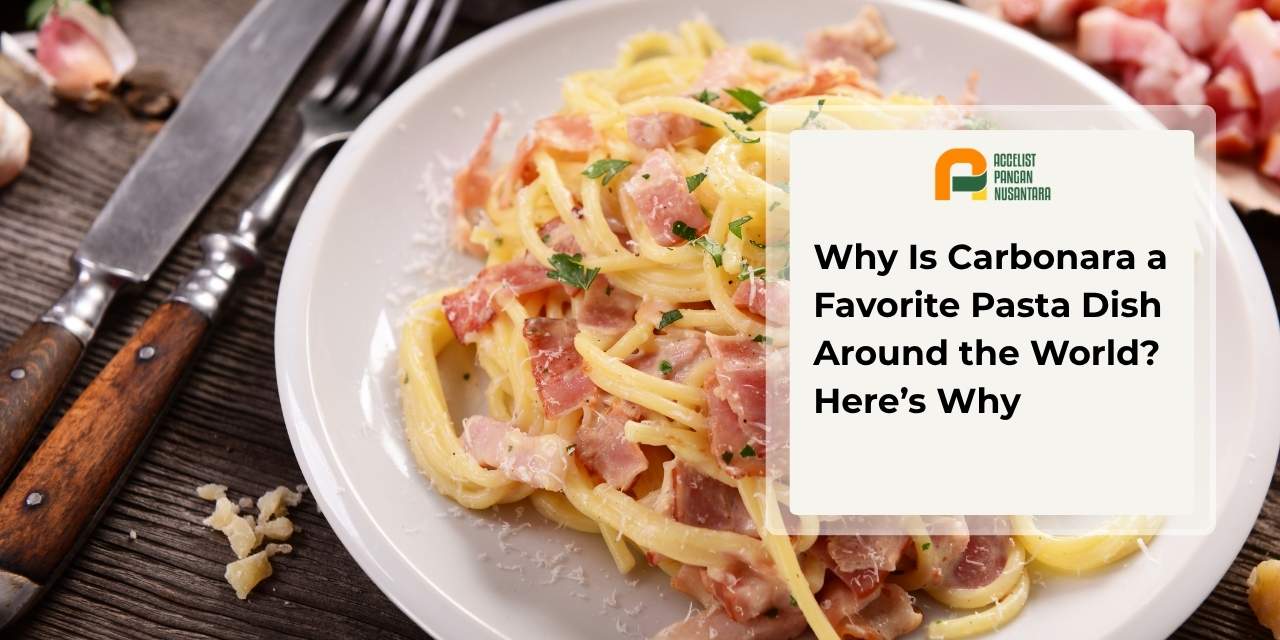
Carbonara almost never misses a spot on the menu books of five-star luxury restaurants and middle-class cafes across various countries. The main appeal of this signature Italian dish lies deeply in its simple ingredients, fast serving time, and rich, intensely savory flavor that melts beautifully in the mouth.
Unfortunately, many misconceptions continuously circulate regarding how to make this classic sauce outside its home country.
What is Pasta Carbonara?
Carbonara stands as a classic signature pasta dish from Rome, Italy. Many of us wrongly assume its thick texture comes from milk. In reality, the authentic recipe for this menu uses absolutely no liquid cream. Traditional Roman chefs strictly avoid cream because it violently destroys the original flavor balance of the sauce.
The melt-in-your-mouth sauce texture comes purely from the emulsion technique. Instead of using cream, chefs masterfully unite four basic ingredients:
- Starch-rich leftover pasta boiling water
- Hot melted animal fat
- Grated hard cheese
- Raw eggs
The rapid stirring process of these four ingredients binds the water and fat completely naturally. The starch from the boiling water serves a dual purpose. It actively thickens the texture and securely maintains the temperature so the eggs do not scramble when they hit the hot pan. The final result yields an intensely thick sauce that perfectly coats every single pasta strand without needing any dairy product additions.
Read also: What is Dessert? Here’s Why Many People Always Wait for It
Carbonara’s History That the Public Rarely Knows
Many people think the name of this dish comes directly from the word “carbone” or coal. They frequently associate this assumption with the profession of charcoal burners in Italy during the past. In fact, culinary historians have not yet reached a definitive agreement regarding the recipe’s true origins.
One of the most popular theories states that Carbonara only emerged at the end of World War II. This recipe came to life when food ingredients from United States military rations unexpectedly met traditional Italian pasta cooking methods.
This specific theory relates very closely to a chef from Bologna named Renato Gualandi. According to Financial Times records, Gualandi crafted a dish using pasta, eggs, cheese, and bacon for an Allied forces banquet in Riccione city in 1944. The extreme field conditions at that time forced him to get highly creative using available United States military logistics ingredients.
This accidental blending between foreign military logistics and local cooking traditions ultimately exploded into a global culinary masterpiece we know today.
The Differences Between Pasta Gricia, Amatriciana, and Carbonara
The Roman culinary tradition possesses three classic pasta dishes that share the exact same basic foundation ingredients. Locals frequently call them the Roman pasta trinity. The flavor character and dish name change completely just by tossing one specific element into the cooking pan.
Here is a detailed breakdown of the structural differences to make understanding them much easier.
| Dish Name | Basic Ingredient Foundation | Specific Added Ingredient | Sauce Profile Characteristics |
|---|---|---|---|
| Pasta alla Gricia | Guanciale (processed pork cheek meat), Pecorino Romano cheese, and black pepper. | None. Purely uses the basic foundation mixture. | Sharp savory cheese flavor, slightly oily texture from melted meat fat, and a pale appearance (white sauce). |
| Pasta all’Amatriciana | Guanciale, Pecorino Romano cheese, and black pepper. | Fresh tomato sauce (pelati) and a little chili. | A fresh sour blend from tomatoes with a light spicy touch, producing a bright red color (red sauce). |
| Pasta alla Carbonara | Guanciale, Pecorino Romano cheese, and black pepper. | Beaten raw eggs (egg yolks only or whole eggs). | Intensely thick texture that melts in the mouth, richly savory egg flavor, and produces a golden yellow color. |
From the comparison above, you can clearly see that Pasta alla Gricia acts directly as the mother recipe for the other two dishes.
Understanding this basic ingredient hierarchy makes it incredibly easy for anyone to craft authentic classic pasta. Furthermore, it explicitly proves why traditional Italian chefs strictly forbid adding foreign ingredients like liquid cream or onions. They strongly believe such additions will violently destroy the original structure.
Nutritional Content in a Portion of Pasta Carbonara
Carbonara acts as a highly calorie-dense dish designed specifically to provide high energy rapidly. Therefore, this serving completely fails to suit a light daily diet menu.
Based on analytical data from FatSecret, one standard 300-gram portion contributes about 422 to 573 kilocalories. This calorie amount difference occurs completely naturally because every single restaurant uses different measurements for pasta, cheese, eggs, and meat.
The nutritional composition in that 300-gram portion splits neatly into three main sources:
- Carbohydrates: About 77 grams originating dominantly from the wheat pasta.
- Protein: About 24 grams resulting from the blend of eggs, meat, and cheese.
- Fat: About 16 grams from the melted animal ingredients.
Considering its extremely high calorie nutrition, this dish truly fits perfectly for recovering energy after heavy physical activities. However, as a strict health note, people with a history of obesity or high cholesterol must severely limit their consumption portions.
Read also: The Importance of DHA: The Key to Brain Development and Commercial Kitchen Solutions
4 Main Ingredients for Making Authentic Carbonara
The original recipe from Italy relies heavily on absolute ingredient simplicity. Consequently, the quality of each component directly affects the final cooking result. Traditional chefs strictly demand the use of these four specific ingredients to successfully create the savory flavor foundation and melt-in-your-mouth sauce texture.
Although the original rules remain extremely strict, restaurants outside Italy can safely substitute ingredients. This perfectly ensures the dish meets local market tastes and strict Halal standards.
Here are the four absolute mandatory ingredients:
Guanciale
These cured pork cheek pieces provide an incredibly crispy texture when cooked. The melted fat from this meat actively produces the aroma and savory flavor that securely forms the core strength of the Carbonara sauce.
Specifically for Halal restaurant operations, the kitchen must absolutely replace this ingredient. The kitchen staff can brilliantly use thick-cut smoked beef or high-quality beef bacon as the ultimate alternative. This smart substitution still provides that crucial smokey effect and highly crispy texture.
Pecorino Romano Cheese
This hard cheese from Italy uses pure sheep’s milk as its base. Its flavor profile tastes much saltier, sharper, and far more distinctive compared to the Parmesan cheese commonly found in markets.
This grated cheese naturally contributes the intensely savory taste to the sauce. The saltiness level of Pecorino Romano remains more than enough to fully season the dish. Therefore, the chef completely avoids adding any table salt into the pan.
Eggs
This ingredient acts powerfully as the main binder for all cooking components. The beaten egg effectively unites the pasta boiling water, melted meat fat, and grated cheese into a thick sauce that blankets every single pasta strand completely.
According to La Cuciana Italiana, the traditional carbonara recipe in Rome frequently uses a much larger amount of egg yolks compared to egg whites. In fact, many chefs only use the egg yolks exclusively. This specific technique actively aims to produce a golden yellow sauce featuring a much softer, richer, and highly savory texture without ever needing to add any cream.
Coarse Black Pepper
A sprinkle of this spice provides a warm spicy sensation that instantly balances the extremely heavy flavor profile created by the fat and cheese pile. Its function remains highly crucial so the sauce does not taste boring halfway through the portion.
The presence of coarse pepper actively ensures the serving stays highly delicious from the very first bite until it vanishes completely, preventing the stomach from feeling nauseous. Chefs strongly recommend using fresh pepper grinds because they deliver a sharp aroma that you absolutely cannot get from instant pepper powder.
As an additional factual complement, traditional Italian rules strictly forbid adding aromatic ingredients like garlic or onions into this recipe. Local chefs strongly believe that the slightest interference from additional ingredients will instantly destroy the absolute flavor purity of the animal fat and cheese blend.
Read also: Choose 15 International Foods You Can Easily Make at Home
Why is Carbonara So Popular in Various Restaurant Concepts?
For culinary business managers handling hotels, restaurants, and cafes, this dish almost always acts as a major mainstay. The reason proves highly practical. Carbonara offers an ideal combination between highly efficient production costs and highly promising selling value.
Here are the three main reasons why restaurants love this menu so deeply:
- Optimal Profit Margins
First, restaurants can gain maximum profit because this dish only requires a few basic ingredients with highly affordable capital costs. Even with small capital, its selling value stays extremely high because people deeply associate it with classic European culinary charm. - Extremely Fast Serving Time
Second, chefs can easily cook orders à la minute (made directly from scratch when an order arrives). The entire process from the kitchen pan to the plate served on the guest’s table usually takes less than 15 minutes completely. - Flavor Profile that Suits Various Tastes
Finally, many people’s palates easily accept this savory and highly filling serving. This menu automatically becomes a safely favorite choice for everyone, ranging smoothly from children to adults.
The raw material efficiency in this menu also actively helps restaurants suppress food waste risks completely. Its main ingredients, like dry pasta, hard cheese, and cured meat, boast incredibly long shelf lives. Consequently, the kitchen staff can drastically minimize wasted ingredients.
Read also: The Secret of Comfort Food in Increasing Restaurant Profitability
Operational Challenges of Making Carbonara
Executing an authentic Carbonara recipe completely without liquid cream acts as a quite heavy technical test. Restaurant chefs must absolutely possess highly precise temperature control instincts. This remains vital because the melted sauce texture depends purely on raw egg yolks.
Here are the three main challenges in a restaurant kitchen when serving this specific menu:
- The Risk of Excessively High Temperatures
First, a pan temperature that stays too hot will instantly make the raw eggs clump together into scrambled eggs. The chef has no choice but to throw the dish away and restart completely from scratch because the sauce texture has suffered permanent destruction. - The Threat of Excessively Low Temperatures
Second, insufficient pan heat will actually make the sauce fail to thicken. Instead, it becomes completely runny like a watery broth. This condition remains highly dangerous because it carries severe Salmonella bacterial contamination risks from eggs that fail to cook perfectly. - The Hassle of Separating Egg Yolks
Finally, this technical challenge deeply burdens the staff when the restaurant enters extremely busy order hours. The kitchen staff must tragically sacrifice enormous amounts of valuable time just separating the egg yolks from the whites manually one by one.
Conclusion
Carbonara indeed brings high profitability. However, the strict demands of its original recipe frequently create severe operational risks in commercial kitchens. Chefs must brutally waste time manually separating egg yolks, face bacterial threats head-on, and strictly maintain the pan temperature with extreme care to guarantee the sauce does not clump into scrambled eggs.
To brilliantly answer these challenges, Egg Yolk Powder from Accelist Pangan Nusantara arrives as a highly efficient solution. Engineers designed this product specifically to effortlessly simplify emulsion-based sauce creation instantly. Most importantly, it achieves this without ever sacrificing the dish’s original authentic flavor.
Using this premium powder guarantees sauce results that always stay thick, naturally savory, and beautifully golden-colored. It completely eliminates the risk of texture failure caused by wild temperature fluctuations. Furthermore, this powder guarantees total freedom from Salmonella bacterial threats and remains incredibly practical to measure. Ultimately, this raw material innovation firmly ensures your restaurant can consistently, rapidly, and safely serve authentic pasta in the middle of chaotic rush hours.
FAQ
Yes. In the Roman tradition, using milk or cream destroys the original recipe completely; modern restaurants only use cream purely as a shortcut so the sauce does not break or clump easily when cooked.
Spaghetti acts as the most common classic standard. However, people highly favor Rigatoni because its hollow tube shape traps meat chunks and egg sauce completely perfectly.
This happens purely because you pour the raw egg mixture while the pan still sits actively on a burning fire; you must always remove the pan from the stove completely before tossing the eggs in.
Experts highly discourage it. High-temperature reheating will instantly destroy the sauce’s emulsion structure. This violently creates separated oil puddles and forces the cooked eggs to clump coarsely.
It stays highly safe if the cook accurately controls the residual heat from the pasta boiling water and the pan. This actively kills pathogens through light pasteurization. However, doctors generally advise pregnant women to remain extra careful.