
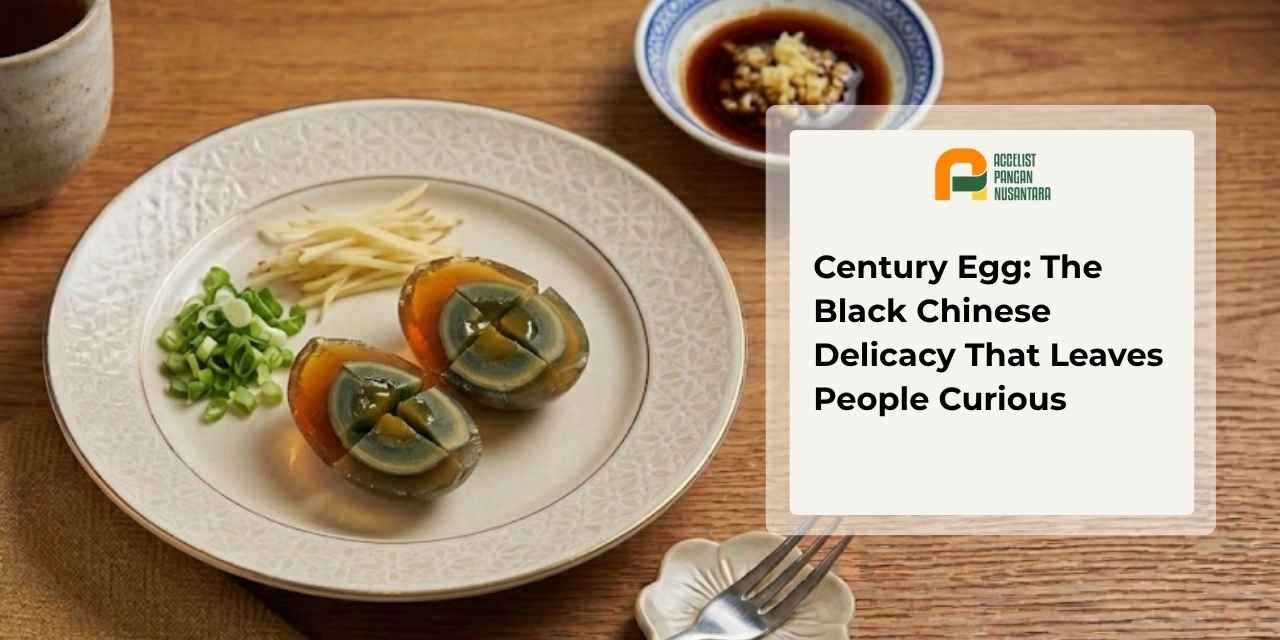
Picture a traveler at a Chinese restaurant ordering congee, only to find dark, jelly-like egg slices with a greenish yolk sitting on top. Many hesitate to try it because the appearance alone can be startling for first-timers. Yet this egg has been part of Chinese cuisine for centuries and remains a beloved dish across Asian eateries today.
This egg is known as century egg, and its name alone tends to spark curiosity before anyone even takes a bite. Here is a complete look at its origins, preparation process, and the best ways to enjoy century egg.
What Is a Century Egg?
A century egg is an egg preserved using a mixture of alkaline materials (substances with a high pH, such as lime and wood ash) that dramatically transform its color and texture. The egg white turns dark and gelatinous, while the yolk becomes greenish gray with a soft, creamy consistency.
The aroma produced during this process is distinctive and often becomes a talking point. First-timers frequently describe it as pungent and unusual, sometimes comparing it to ammonia, even though the flavor itself is savory with a subtle richness reminiscent of aged cheese.
The name “century egg” tends to mislead people. The curing period only lasts a few weeks to a few months, but that already feels long to many, creating an exaggerated impression that the egg is truly preserved for a hundred years.
In different regions, this egg goes by other names as well. In Taiwan, for instance, it is commonly called “pidan” or “tung hwa,” while in some parts of Southeast Asia it is simply referred to as black egg or preserved egg.
A History Shrouded in Mystery
Before exploring how it is made, it helps to understand how this unusual egg first came into being. Precise records of its origin are scarce, but several theories persist among enthusiasts of Chinese cuisine.
According to National Geographic Indonesia, detailed records about century egg were never properly documented, though scientists estimate the egg has existed for more than 500 years, dating back to the Ming Dynasty. A widely circulated folk version claims the egg was discovered by accident, when someone left duck eggs sitting in a pond filled with clay and ash for an extended period.
Once opened, the eggs had changed in shape and color, yet they turned out to be both safe and delicious to eat. From that point on, the preservation technique was refined and passed down as a culinary tradition across rural China.
How Is a Century Egg Made?
Curiosity about its history usually leads to another question, namely how an ordinary egg transforms into a century egg. The process is fairly straightforward, though it does take time. Below are the general steps followed in both traditional and modern production.
- Egg Selection
Duck eggs are the most commonly used, though chicken and quail eggs can also work. The eggs must be fresh with intact shells to ensure the curing process succeeds. - Preparing the Alkaline Mixture
The main ingredients are wood ash, lime, salt, and sometimes strong black tea. This combination creates the alkaline environment needed to alter the protein structure inside the egg. For example, some traditional producers boil black tea first, let it cool, then mix it with lime and salt before using it to coat the eggs. - Coating and Storage
The eggs are coated with this mixture, then wrapped in rice husks to help the alkaline layer adhere properly. The wrapped eggs are stored in a dark, airtight space for several weeks to several months, depending on the method used. - The Final Result
Once the curing period ends, the coating is removed and the egg is ready to eat. The egg white turns dark brown and gelatinous, while the yolk becomes greenish gray with a notably sharp aroma.
Read also: 7 Ways to Store Eggs Properly to Keep Them Fresh and Safe to Eat
Ways to Enjoy Century Egg in Different Dishes
Beyond eating it on its own, century egg appears in many dishes across Chinese and Southeast Asian kitchens. The following preparations show just how versatile this ingredient can be, including common pairings used to balance its strong aroma.
- Century egg porridge: The egg is diced and mixed into warm rice porridge along with shredded chicken or minced meat.
- Tofu and century egg salad: Cold silken tofu is paired with sliced century egg, then drizzled with soy sauce and sesame oil.
- Stir-fried vegetables with century egg: The egg is cubed and stir-fried together with leafy greens such as spinach or water spinach.
As a simple example, century egg congee is often served as a breakfast staple in many dim sum restaurants thanks to its light yet satisfying taste.
Is It Safe to Eat Century Egg?
This question naturally comes up given that the production process involves chemical substances like lime and wood ash. In general, century egg is safe to consume as long as it is made with the correct composition and curing time.
Problems usually arise when producers use heavy metals such as lead to speed up the color-ripening process. According to a study published on ScienceDirect, this practice has indeed raised concern in the past, since heavy metal residue can be absorbed into both the egg white and yolk during curing.
As a result, modern food regulations now encourage producers to switch to safer alternatives such as zinc oxide. Choosing century egg from a trusted producer that follows food safety standards has therefore become essential.
For those still cautious, there is a simple way to check the quality of a century egg before eating it. A good one typically has a sharp but not overly chemical-like smell, along with a firm texture when sliced rather than a slimy or foul one.
Other Popular Duck Egg Delicacies
Since century egg is fundamentally made from duck eggs, it is worth knowing about other popular duck egg creations enjoyed across Asian cuisine. The following products offer a good starting point if you want to explore the flavor of duck eggs further.
- Salted egg sauce: Salted duck egg yolks are mashed and turned into a creamy sauce, commonly used to coat fried chicken or fries.
- Mooncake: A traditional Chinese pastry filled with red bean or lotus seed paste, often featuring a salted duck egg yolk at its center to symbolize the full moon.
- Boiled salted egg: Duck eggs are soaked in a salt brine for several weeks, then boiled and served whole as a side dish with rice.
As an example, the combination of salted egg sauce with fried chicken has become a popular menu item at many modern fast food chains.
Read also: Duck Egg Protein: Complete Nutritional Content, Benefits, and Comparison with Chicken Eggs
Conclusion
Century egg remains one of China’s enduring culinary heritages, even though its appearance often makes people hesitant to try it. Its alkaline curing process shows how an egg preservation method can produce a flavor and texture entirely different from an ordinary egg.
From fresh duck eggs that undergo specialized processing comes a range of food products with unique characteristics and market value, from century egg to the salted egg preparations more familiar to everyday palates. This shows just how much potential duck eggs hold for becoming high value food products, including Salted Egg.
One duck egg based product widely sought after for this purpose is Salted Egg, known for its rich, savory flavor along with consistent quality. If you need a reliable supply of egg Powder, especially high-quality Salted Egg Powder for your production needs, Contact Us for further information.
FAQ
No. The curing process only takes a few weeks to a few months, not a hundred years as the name suggests.
Duck eggs are the most common choice, although chicken and quail eggs can be processed using the same method.
Yes, since the alkaline curing process already alters the egg’s protein structure entirely, no further cooking is needed.
The smell comes from chemical reactions during curing that involve lime and wood ash.
Century egg is commonly available at Chinese restaurants, Asian supermarkets, or specialty oriental grocery stores in major cities.