
Many people know Bandung as one of the most popular culinary destinations in Indonesia. Furthermore, this city offers a variety of iconic dishes. These range from street food to restaurant menus that span across generations.
Consequently, the blend of traditional flavors and culinary innovation keeps Bandung’s specialty foods in high demand. Both tourists and culinary business players constantly seek these dishes.
Tourism Appeal and Culinary Business Potential in Bandung
Besides acting as a center for tourism and shopping, Bandung also possesses a highly dynamic culinary ecosystem. In fact, chefs create and develop various food trends in this city. This ultimately makes it a national culinary industry barometer.
The culinary subsector’s economic contribution clearly reflects this potential. Specifically, Ministry of Tourism and Creative Economy (Kemenparekraf) data shows culinary businesses contribute about 41% to Indonesia’s creative economy GDP. At the regional level, the restaurant sector significantly boosts Bandung City’s Locally-Generated Revenue (PAD). This sector grew the PAD by more than 15% and strengthened local economic activities.
Therefore, the high tourist interest in Bandung specialty foods creates both opportunities and challenges for business players. Large-scale production forces kitchens to work faster. They must do this without compromising their final product quality.
This condition drives many culinary businesses to adopt more practical and standardized raw materials. For instance, many chefs now use egg powder. This ingredient helps maintain dough consistency and speeds up preparation. It also makes ingredient measurement much easier during large-scale production.
Ultimately, with the right raw materials, the kitchen can operate much more efficiently. Business owners can easily maintain the product quality that customers expect.
Read also: 12 Most Iconic Medan Souvenir Recommendations and the Secrets of Their Production Quality
What Are Bandung’s Specialty Foods?
The list of legendary culinary treats and typical Bandung snacks remains highly diverse. Tourists can easily find various food types in almost every city corner. These range from simple snacks to widely popular main dishes.
Behind this massive popularity, raw material quality and flavor consistency play a major role. These crucial factors determine a culinary product’s success in the market.
In professional kitchen operations, eggs often play a vital role. Besides adding nutritional value, chefs use eggs as a dough binder and food structure builder. They also utilize them to thicken various sauces and broths.
1. Batagor (Fried Meatball and Tofu)
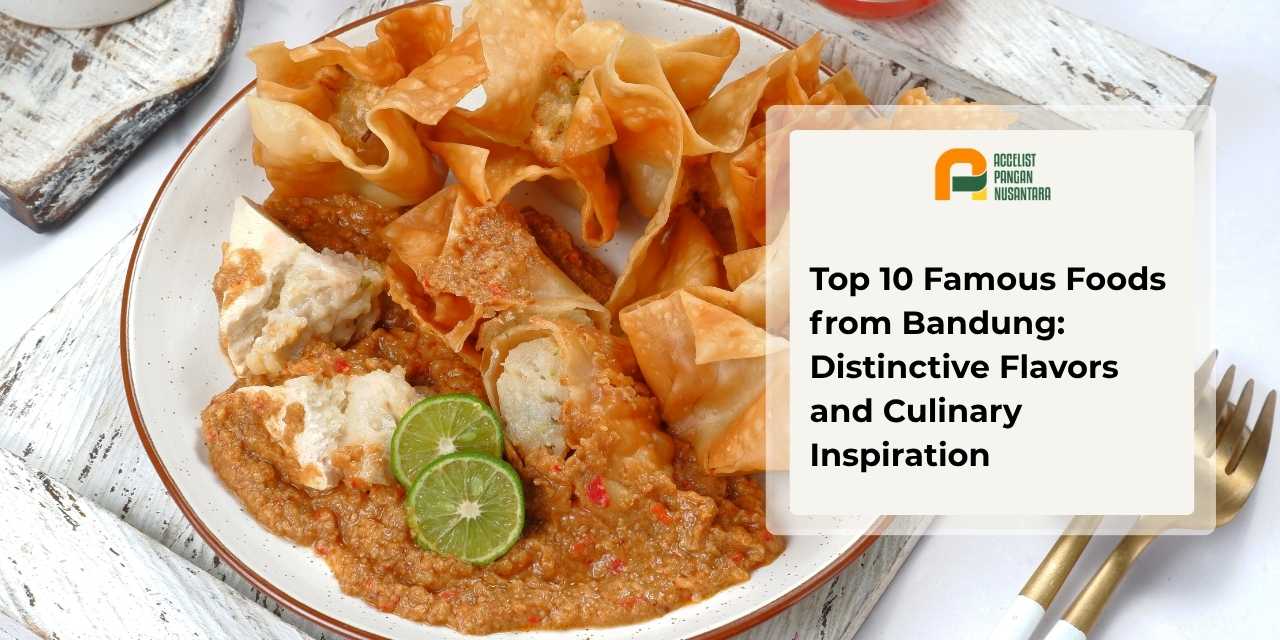
Batagor stands as a true Bandung culinary icon. Cooks make it from a mixture of Spanish mackerel and tapioca flour. First, they stuff the dough into tofu or dumpling wrappers. Then, they fry it until crispy and serve it with peanut sauce and key lime.
However, maintaining texture consistency in large-scale production poses a real challenge. Therefore, cooks often add egg white to the dough as a natural binding agent. This helps maintain chewiness and prevents the dough from crumbling during frying.
2. Seblak
Food lovers know Seblak for its distinct spicy flavor. Sellers combine this heat with a strong aromatic ginger (kencur) scent. They offer highly diverse fillings, including crackers, macaroni, and chicken feet. Cooks boil all these ingredients in a savory and spicy broth.
Moreover, cooks almost always use eggs in seblak. They usually drop the egg directly into the hot broth and stir it well. This technique creates a thicker broth texture and adds a savory flavor.
3. Mie Kocok Bandung
Mie Kocok Bandung features a soupy mix of yellow noodles, beef tendon (kikil), and fresh bean sprouts. Its signature flavor comes from a slow-cooked beef broth. This long cooking process produces a savory and rich-tasting soup.
Vendors usually serve this dish with a sprinkle of celery leaves and fried shallots to strengthen the aroma. Additionally, a squeeze of lime provides a fresh taste. It perfectly balances the richness of the beef broth.
4. Siomay
Siomay represents another Bandung specialty. People often consider it a close relative to batagor because sellers serve both with peanut sauce. The difference lies entirely in the cooking process. Cooks steam siomay to create a softer and less crispy texture.
In one portion, sellers usually include siomay, potatoes, bitter gourd, cabbage, tofu, and boiled eggs. Consequently, this combination creates a diverse texture blend. It also makes the dish much more filling.
5. Surabi (Serabi)
Surabi acts as a traditional Sundanese pancake. Cooks make it from a mixture of rice flour and coconut milk. They cook the dough using a clay mold over embers. This traditional method produces a distinctive aroma that attracts many buyers.
Besides sweet variants, savory surabi like surabi oncom remain very popular. In some variations, cooks add an egg as a topping over the hot dough. This provides a savory taste and enriches the final texture.
6. Peuyeum
Peuyeum acts as a signature fermented cassava snack from West Java. Makers produce it using yeast. The fermentation process converts cassava starch into unique compounds. Ultimately, this creates a sweet taste, a distinct aroma, and a softer texture.
The final result yields tender cassava with sweet and slightly sour flavors. Besides enjoying it directly, locals often process peuyeum into other dishes. For example, they use it to make colenak, a classic Bandung treat.
7. Cuangki
Cuangki takes its name from the abbreviation “Cari Uang Jalan Kaki” (Looking for Money by Walking). This simple dish generally includes meatballs, tofu, and dried siomay in a bowl.
Vendors drench all these fillings in a savory, clear beef broth. Compared to other soupy dishes, cuangki broth tastes much lighter. Consequently, it provides a fresh flavor that anyone can easily enjoy.
8. Cilok (Aci Dicolok)
Cilok features chewy tapioca flour balls. Cooks achieve its distinct texture through the gelatinization process. During this step, the starch absorbs hot water and forms an elastic dough.
Some makers add chicken or processed beef fillings to cilok to boost the flavor. Furthermore, sellers generally serve it with peanut sauce or chili sauce. These complementary seasonings make it taste even more delicious.
9. Nasi Tutug Oncom
Nasi Tutug Oncom highlights a classic West Java flavor. Cooks make it by mixing hot rice and seasoned oncom together. This process produces a distinct aroma and a savory flavor.
Restaurants usually serve Nasi Tutug Oncom with various side dishes. Customers can enjoy fried chicken, tempeh, tofu, fresh vegetables, and an omelet. This combination creates a complete, filling, and flavorful meal.
10. Bandros
Bandros acts as a traditional Bandung cake. Bakers make it from rice flour, grated coconut, and coconut milk. They bake the dough using a special mold. This creates a slightly crispy outside with a soft inner texture.
In some variations, bakers add an egg to produce a softer texture and an even color. Ultimately, this ingredient combination gives bandros a distinct savory flavor. Locals still highly favor it to this day.
Raw Material Management Challenges in Bandung’s Culinary Production
Behind the high demand for seblak, surabi, and batagor lies a strict raw material management process. Business owners must run this process consistently every day.
One ingredient that constantly demands attention is the egg. Chefs use it as a dough binder and a thickener for broths. Additionally, it provides essential nutrition like protein and choline. These nutrients actively support the body’s metabolic functions.
However, using large quantities of fresh eggs presents several operational challenges for culinary business owners. They must manage the following issues carefully:
- Requires Larger Storage Space
Fresh eggs require massive storage space during large-scale production. Additionally, their fragile shells easily break during storage and distribution. - Relatively Limited Shelf Life
Egg quality quickly declines without proper storage conditions. Therefore, staff must handle stock management carefully. This action directly reduces wasted raw materials. - Bacterial Contamination Risk
Raw eggshells often carry dangerous bacteria like Salmonella. Consequently, kitchens must implement strict sanitation procedures. This prevents cross-contamination during food processing.
Read also: 7 Ways to Choose Good and Fresh Eggs, Don’t Pick the Wrong One
Conclusion
Bandung’s specialty foods like batagor and seblak maintain high market demand. They continuously drive the city’s culinary economic turnover. However, large-scale production demands extreme efficiency regarding storage, ingredient durability, and food safety. Restaurants can no longer completely rely on fresh ingredients like conventional eggs.
Fortunately, adopting modern and standardized raw materials offers a smart solution. For instance, Accelist Pangan Nusantara presents highly practical egg powder innovations. Chefs can skip the shell-cracking process and enjoy a longer, more stable shelf life.
Specifically, Egg White Powder perfectly forms dough structures in foods like batagor. Meanwhile, chefs can utilize Whole Egg Powder Mix as a direct substitute for conventional eggs. By using these materials, the kitchen works faster, more hygienically, and more consistently every single day.
In conclusion, you can significantly improve kitchen operational efficiency with Accelist Pangan Nusantara Egg Powder. You will maintain flavor consistency and reduce financial losses caused by unstable raw materials.
FAQ
People can easily obtain tapioca flour in West Java. Furthermore, it provides a chewy texture that locals truly love.
Eggs bind the fish protein and flour together. Consequently, the dough stays intact when cooks deep-fry it.
Whole eggs take up massive storage space and break easily. Moreover, unwashed shells often carry deadly bacteria.
Yes. When you mix egg powder with water in the correct ratio, it binds and leavens just like fresh eggs.
You must store it inside an airtight container at a dry room temperature. Also, always keep it away from direct sunlight.