
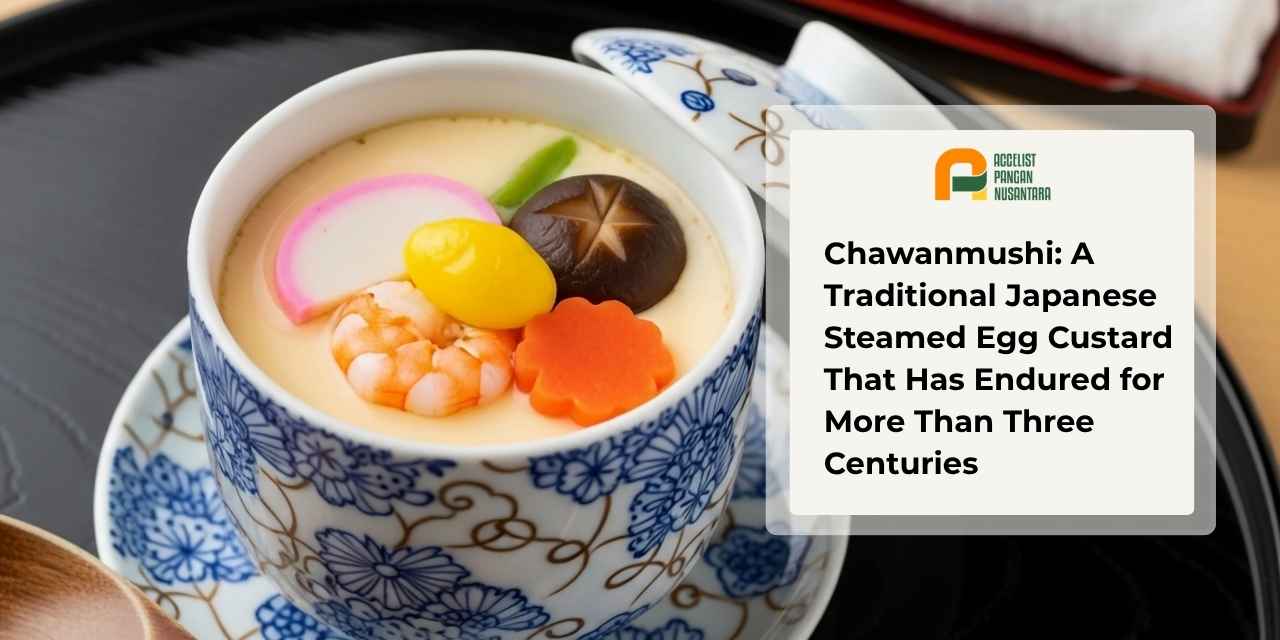
There’s a Japanese dish served in a small lidded cup, plain in color, pale yellow, and it feels like silken tofu when a spoon touches it. Most people assume it’s a sweet pudding. The first bite proves them wrong.
What Is Chawanmushi?
Chawanmushi is a savory Japanese egg custard made from eggs and dashi broth, steamed slowly until it turns silky and delicate. Unlike most custards, which lean sweet, this one carries zero sugar. None.
The name comes from two Japanese words: chawan, meaning cup or bowl, and mushi, meaning steamed. Simple enough, and it tells you exactly what you’re getting and how it’s served.
Chawanmushi usually opens a kaiseki meal (Japan’s traditional multi-course dinner), arriving in a small lidded ceramic cup with its own tiny spoon. Inside, you’ll find chicken, shrimp, shiitake mushrooms, and kamaboko (a Japanese fish paste, often cut into pink-and-white swirls), all suspended in a custard loaded with umami, the deep, savory taste that comes from natural glutamates in dashi and seafood.
What sets chawanmushi apart from other egg dishes is a texture ordinary cooking methods can’t reach. Getting there takes tight temperature control through the whole steaming process. Too hot, and the custard turns rubbery and full of holes; too cool, and it never sets. That’s why Japanese culinary schools often use chawanmushi as a basic skills test. A slightly off ratio of egg to dashi, or a few degrees of temperature drift, shows up immediately on the surface.
Read also: Oyakodon: The Iconic Japanese Rice Bowl, Its History, and What Makes It Unique
A History That Goes Back to Edo-Era Nagasaki
Chawanmushi isn’t a product of any modern test kitchen. Its history stretches back more than 300 years, long before Japanese food became a global menu staple.
According to the James Beard Foundation, chawanmushi gained popularity during Japan’s Edo period as part of shippoku cuisine, a Nagasaki dining style that blended Japanese, Chinese, and European influences into one shared table. Chawanmushi grew out of that mix.
From Nagasaki, it spread across Japan and became a fixture of formal kaiseki dinners. It still opens those meals today, and it’s probably the most recognized way the dish gets served.
That long history proves that chawanmushi is not just a passing culinary trend. The fact that it has endured for more than three centuries with little change is proof that the right technique and flavor truly require little modification.
Main Ingredients for Making Chawanmushi
The basic recipe for chawanmushi is actually quite simple: eggs and dashi broth, gently steamed together. What sets it apart in terms of flavor and texture is the filling and the ratio of eggs to broth, which is typically kept at about one part egg to three to four parts dashi to ensure the custard remains smooth and not too dense.
Common ingredients used in traditional chawanmushi:
- The Main Ingredies, the base of the custard
- Dashi made from kombu and katsuobushi (dried, shaved bonito flakes), the main source of umami
- Chicken, usually boneless breast or thigh, cut into small pieces
- Shrimp, peeled and cleaned before going in
- Shiitake mushrooms, fresh or rehydrated from dried
- Kamaboko, the pink-and-white fish paste
- Mitsuba, or a sprig of trefoil, as garnish
- A touch of soy sauce and mirin to season the dashi without sweetening it
None of this is fixed. Kamaboko and mitsuba often get skipped outside Japan since they’re hard to find, while chicken and shiitake almost always stay because they’re easy to source anywhere.
Chawanmushi Variations You’ll Find Today
The base recipe branches into plenty of versions once chawanmushi leaves the kaiseki kitchen. The most common splits show up in seafood fillings, vegetarian and local adaptations, modern fine-dining twists, and a cold version served in summer.
1. Seafood Chawanmushi
This version swaps out chicken for shrimp, crab, scallops, or white fish, sometimes adding all of them. Some kaiseki restaurants in Japan finish the custard with ikura (salmon roe) right before serving. The briny pop of the roe plays well against the custard’s softness.
2. Vegetarian and Local Adaptations
For a meat-free and seafood-free version, mushrooms (shiitake, enoki, or oyster mushrooms) and tofu take over as the main filling. The broth itself can shift to a plant-based dashi made from kombu alone, skipping the katsuobushi entirely.
In Indonesia, a similar shift happens for practical reasons more than dietary ones. Several local Japanese restaurants swap kamaboko for oyster mushrooms or tofu simply because they’re easier to source, and the dashi sometimes gets replaced with a regular chicken stock to keep the cooking process simpler. The flavor drifts a bit from the original, but the custard’s signature texture and savoriness hold up.
3. Modern and Fine-Dining Versions
Fine-dining kitchens use chawanmushi to experiment. Foie gras, uni (sea urchin), truffle, even parmesan have all shown up as filling or topping, layering in new flavors without touching the basic steaming technique. Some chefs also pour a thickened sauce called ankake over the custard, usually dashi thickened with starch, for extra moisture in every spoonful.
4. Cold Chawanmushi (Hiyashi Chawanmushi)
This summer version gets served cold instead of warm. The texture is built slightly firmer than the original so it holds up after chilling. Some recipes top it with a thin dashi jelly layer, replacing the warm steam aroma that usually comes with the regular version.
Egg Powder as a Substitute for Whole Eggs
Fresh eggs have long been the standard for chawanmushi. But at larger production scales, there’s an alternative gaining ground for being more practical, easier to store, and more consistent.
Egg powder is processed egg that’s dried into powder form and reconstituted with water at the right ratio. In practice, it can replace fresh eggs in nearly any egg-based recipe, chawanmushi included.
Consistency is the real selling point. Fresh eggs vary naturally in moisture and protein content, which can shift the final custard’s texture. Egg powder gives a more standardized composition every time it’s used.
For more flexible production needs, Whole Egg Powder from Accelist Pangan Nusantara is a relevant option since it combines egg white and yolk in one product. The formulation skips manual ratio adjustments, which works for home kitchens and industrial-scale production alike.
A few advantages worth knowing about Whole Egg Powder:
- Balanced egg white and yolk in a single package, no separate prep needed
- Consistent results batch to batch under a standardized formulation
- Easier storage, no dependency on fresh egg conditions
- Versatile across applications, from bakery to processed food products
- Made under hygienic standards and halal certified
Conclusion
A dish made with the right technique can outlast trends and eras. Three hundred years on, this savory custard still opens meals across Japan without losing what makes it itself.
Understanding the ingredients and the process is the first real step toward making it. After that, trying it at home stops feeling complicated.
Want an easier way to make chawanmushi without handling fresh eggs from scratch? Whole Egg Powder from Accelist Pangan Nusantara offers a formulation built for a smooth, consistent custard texture, whether you’re cooking at home or running a production line. Contact us for product information and ordering.
FAQ
Chawanmushi is savory with zero sugar; regular egg pudding is typically sweet. Both start from eggs, but they serve completely different roles at the table.
Yes, chicken or vegetable stock both work. The flavor shifts a bit from the traditional version, but it’s still enjoyable.
Best eaten right after it’s cooked. If you need to store it, keep it covered in the fridge and finish it within 24 hours.
Yes. The soft texture and mild flavor make it fairly kid-friendly. Stick to simple fillings like chicken and carrot for easier acceptance.