
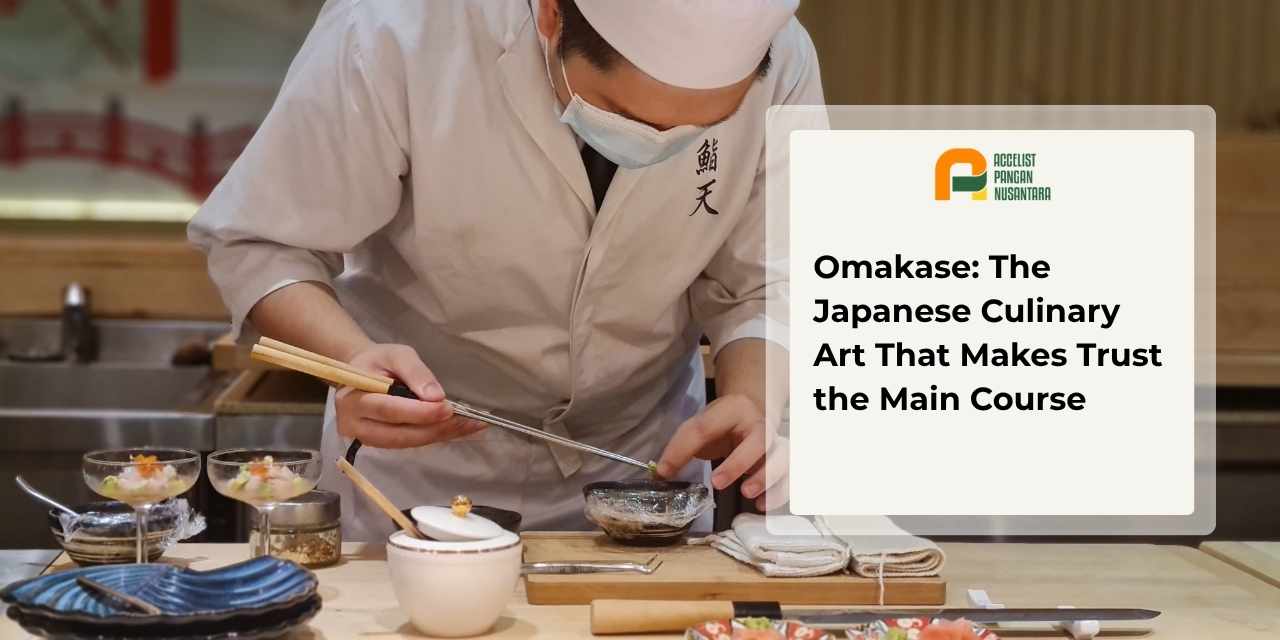
In Japan, the relationship between a chef and a guest has never been merely a food transaction. It is built on trust, where regular customers do not need to place an order because the chef already understands their preferences, dietary restrictions, and which ingredients are at their peak quality that day.
This tradition gave birth to omakase, a Japanese dining philosophy that has gained growing popularity worldwide. More than just a way of dining, omakase is an experience where trust becomes the most important item on the menu, even though it is never written down.
What Is Omakase?
The word omakase (お任せ) comes from Japanese and literally means “I leave it up to you” or “I trust your judgment.” In the culinary world, omakase refers to a dining format where guests do not select dishes from a menu. Instead, they entrust the chef to create the entire dining experience.
The chef designs a sequence of courses using the finest ingredients available that day. As a result, no two omakase experiences are exactly alike, since menus evolve based on seasonality, ingredient availability, and the chef’s creativity.
Read also: Commis Chef: The Backbone of a Restaurant and Its Raw Material Management Solution
The History of Omakase
To fully understand omakase, it is important to explore its origins. Its story stretches much further back than many people realize, and each chapter has helped shape the dining experience we know today.
Older Origins Than Most People Expect
According to information published by Fuji Omakase, the roots of omakase do not begin in the 17th century as commonly believed. Its origins can be traced even further back to Southeast Asia, where fish preservation techniques based on fermentation eventually spread to Japan.
During the Edo period (1603–1867), traditional fermentation methods gradually shifted toward the use of vinegar in sushi preparation. This transformation significantly changed how sushi was produced and served.
Before this transition, sushi was consumed primarily for its fermented fish, while the rice was discarded. Once vinegar became the primary preservation method, rice became an essential part of the dish, making sushi faster to prepare and easier to serve.
The Birth of Nigiri and the Spirit of Omakase
Historical records cited by Fuji Omakase note that the modern form of nigiri sushi was refined by Hanaya Yohei around 1824 in Edo, now known as Tokyo. What began as a practical street food gradually evolved into a dialogue between chef and guest, where seasonal ingredients and culinary expertise came together in a harmonious dining experience.
This spirit eventually led to the formalization of omakase in traditional Japanese sushi bars. Regular customers began trusting chefs to select the freshest fish and finest ingredients arriving at the market each day.
Imagine a guest visiting the same sushi bar every week. Rather than ordering, they simply take a seat, knowing the chef will serve the very best ingredients available. That trust became the foundation of the omakase experience.
Defining Characteristics of the Omakase Experience
Omakase is much more than an alternative dining format. Several characteristics distinguish it from conventional restaurant experiences.
1. Menus Change with Seasons and Ingredient Availability
In omakase dining, there is rarely a fixed menu. Chefs build each course around the freshest and highest-quality ingredients available at the time, making every dining experience unique.
For example, during winter in Japan, a chef may serve shirako (cod milt), which is only available for a limited season. During summer, fresh Hokkaido uni or premium fatty tuna may take center stage.
2. Direct Interaction Between Guests and Chefs
Omakase seating is typically arranged around a counter, allowing guests to sit directly in front of the chef. This setup is not merely for observation. Interaction itself is a central part of the experience.
Chefs often explain ingredient origins, preparation technique, and the stories behind each course. For instance, a chef may describe how a tuna was sourced from a morning market auction and prepared using specific cutting techniques to preserve its texture and flavor.
3. Courses Are Served in a Carefully Planned Sequence
Every dish in an omakase meal is served individually and in a deliberate order. The progression is designed to build flavors gradually, moving from lighter tastes to richer, more intense profiles without overwhelming the palate.
A meal may begin with delicate white fish sashimi, continue with richer nigiri selections, and conclude with warm miso soup or a light dessert. Each transition feels like a new chapter in a complete culinary story.
Read also: Don’t Get It Wrong, an Appetizer Is Not Just an Ordinary Starter
Common Dishes Served in Omakase
Although every omakase menu is different, several types of dishes commonly appear in many experiences.
- Sashimi
Sashimi consists of carefully sliced raw seafood served without rice. It often appears early in the dining sequence, allowing guests to appreciate the pure flavor and freshness of premium ingredients. - Nigiri
Nigiri features hand-formed sushi rice topped with slices of fish or seafood.
It is often considered the centerpiece of an omakase experience, where chefs carefully balance rice temperature, seasoning, texture, and fish quality to achieve harmony in every bite. - Chawanmushi
Chawanmushi is a savory Japanese steamed egg custard known for its silky texture. It is frequently served between courses as a palate transition, helping guests prepare for the next sequence of flavors. - Miso Soup
Miso soup in omakase settings differs significantly from versions commonly found in casual restaurants. Its dashi stock is often made from premium kombu and katsuobushi, creating a clean yet deeply umami-rich flavor profile. - Dessert
Omakase experiences typically conclude with wagashi (traditional Japanese sweets) or light matcha-based desserts. These final courses are intentionally delicate, providing a balanced ending to the culinary journey.
Read also: Tamagoyaki: The Japanese Rolled Egg That’s More Complex Than It Looks
The Difference Between Omakase and Conventional Restaurants
Many people wonder what truly separates omakase from traditional dining experiences.
| Aspect | Omakase | Conventional Restaurant |
| Menu Selection | Determined entirely by the chef | Chosen by guests |
| Seating Capacity | Limited (typically 6–12 seats) | Larger and more flexible |
| Interaction with Chef | Direct and personal | Minimal |
| Menu Variety | Changes frequently | Relatively fixed |
| Dining Experience | Personalized and story-driven | General and independent |
| Price Range | Premium | Varies widely |
Why Is Omakase Associated with Premium Pricing?
The premium cost of omakase often raises questions. Several factors contribute directly to its pricing structure.
- Uncompromising Ingredient Quality
Ingredients are sourced daily based on freshness and quality. Chefs maintain strict standards regardless of fluctuations in ingredient costs. - Years of Culinary Training
Many omakase chefs spend years, sometimes a decade or more for mastering both technical skills and the ability to understand guest preferences through direct interaction. - Extremely Limited Seating
Most omakase restaurants serve only 6 to 12 guests per session, allowing chefs to provide personalized attention. This exclusivity naturally affects pricing.
Conclusion
Omakase is more than an exclusive dining format. It is a culinary philosophy built on trust, exceptional ingredients, and the expertise of skilled chefs.
From its historical roots in the Edo period to its growing popularity around the world today, omakase demonstrates that outstanding dining experiences are created through attention to every detail. From ingredient selection to presentation, each element contributes to a cohesive culinary story.
The omakase philosophy of never compromising on ingredient quality also resonates with professional kitchens worldwide. Accelist Pangan Nusantara provides premium egg powder solutions, including whole egg powder products, to help food businesses maintain consistency, quality, and efficiency across their culinary creations. Contact our team to learn more about our products and consultation services.
FAQ
Yes. In fact, most omakase restaurants encourage guests to communicate allergies and dietary restrictions beforehand so the chef can adjust the menu accordingly.
Most sessions last between 1.5 and 3 hours, depending on the number of courses being served.
No. While sushi-based omakase is the most widely recognized, there are also kaiseki-style and modern fusion omakase experiences that do not focus on sushi.
Generally, dishes should be enjoyed shortly after they are served, as chefs prepare them to be consumed at their optimal temperature, texture, and flavor.