
When dining at a restaurant, you often receive a small portion of food before the main menu arrives. However, this serving does not merely act as a complement or a hunger pacifier.
In the culinary world, initial dishes serve a highly specific function. They prepare your entire dining experience, starting from stimulating the appetite to actively helping the transition toward more complex main dishes.
What is Meant by an Appetizer?
People call this initial menu an appetizer. Servers always present this dish right before you eat the main course. Physiologically (relating to natural body functions), an appetizer works perfectly to stimulate saliva production and trigger stomach acid release. Ultimately, this process prepares your digestive organs to process high-calorie foods (high-energy heavy meals) optimally.
From a business perspective, the financial impact remains highly profitable. The Datassential MenuTrends Report notes a crucial fact. Appetizers provide a clear check-boosting opportunity (a chance to increase the total order value) for restaurant operators. Customers feel encouraged to order more food. Simultaneously, restaurants can utilize this phase to introduce completely new menu creations. As a result, starters act as a tangible instrument to boost revenue.
The history of the word “appetizer” appeared in English starting in the early 19th century to describe appetite-stimulating foods. This term became increasingly popular in the United States because it successfully replaced the word “hors d’oeuvre” (the traditional French term for a starter). The general public found the word “appetizer” much easier to spell. Consequently, it finally dominated menu books and everyday conversations.
Read also: What is a Main Course? From Unique French History to Modern Kitchen Innovations
Main Characteristics of an Appetizer
Not all snacks or small-scale foods automatically fall into the starter category. In the professional culinary world, industry experts only recognize a new dish as an appetizer if it strictly adheres to standard industry rules.
Experts specifically designed these criteria so the food successfully performs its main role. It must provoke guests’ hunger without filling their stomachs completely.
- Served First
This dish always serves as the first impression for guests at a restaurant. Waiters will immediately serve it moments after guests sit comfortably at the table. - Bite-Size Portion
Chefs intentionally make the size extremely tiny. You can usually finish it in one or two bites. Therefore, guests do not get full before the main course arrives. - Stimulates the Appetite
Appetizers possess sharp flavor profiles like slightly sour, mildly spicy, or savory. This specific flavor combination works very effectively to provoke appetite instantly. - Captivating Visual Appearance
The tiny portion heavily requires the chef to arrange the dish as beautifully as possible. This bright and neat appearance aims specifically to pamper the guests’ eyes at first sight. - Has Many Variants
Chefs enjoy the total freedom to create various unique starter menu creations. Furthermore, they often process premium leftover ingredients from the kitchen into brand new dishes that retain high selling value.
These five elements work perfectly together to create the right dining flow. The taste and appearance actively tempt the tasting senses, while the small portion protects stomach capacity limits. Ultimately, this serving strategy guarantees restaurant guests actually feel hungrier and highly enthusiastic to welcome the main course after emptying their first plate.
Read also: Commis Chef: The Backbone of the Restaurant and Its Raw Material Management Solution
The Fundamental Differences Between Appetizer and Dessert
Appetizers and desserts actually play completely opposing roles. Both stand at entirely different ends of the serving timeline and possess functions that nobody can ever swap.
The following table thoroughly breaks down the fundamental differences between these two dishes to make them easier to understand.
| Comparison Parameter | Appetizer | Dessert |
|---|---|---|
| Serving Time | Servers present it at the very beginning before guests eat the main menu. | Servers present it at the very end as the closing of the entire banquet sequence. |
| Main Function | Stimulates appetite and triggers stomach digestive enzymes so it stays ready to receive heavy food. | Neutralizes the tongue palette from lingering savory or fishy tastes after eating the main menu. |
| Dominant Flavor Profile | Tends to be savory, refreshingly sour, lightly spicy, or salty to stimulate saliva instantly. | Dominated by thick sweetness, freshness from natural fruits, or a soft textural touch from dairy products. |
| Dish Examples | Fresh vegetable salads, crispy bruschetta (Italian toast), canapés, and mini quiches (savory pies). | Caramel pudding, soft gelato (Italian ice cream), tart cakes, and sorbet (shaved fruit ice). |
Clearly, food presentation in restaurants does not happen randomly. Staff intentionally design every plate sequentially to create a highly comfortable dining experience from the opening bite to the closing spoonful.
Classifications and Types of Appetizers
The professional culinary world certainly does not serve starters carelessly. International standards, which heavily refer to classic French culinary guidelines, have structured these dishes into several highly specific categories.
Experts designed this division to effectively help chefs manage temperature balance, ingredients, and serving methods before guests switch to the main menu. A clear grouping completely ensures every small plate at the beginning of the banquet works maximally to provoke hunger.
Based on Serving Temperature
Food temperature severely affects how our tongue responds to a specific flavor. Based on that exact foundation, chefs divide initial dishes into two completely different temperature groups.
- Cold Appetizer
Servers present this dish in a cold state or following room temperature strictly in the range of 10 to 15 degrees Celsius. Its flavor character refreshes the throat perfectly and feels extremely light on the stomach.
Example: Shrimp cocktail (boiled shrimp with cold sauce). - Hot Appetizer
This type of dish must first undergo a high-temperature cooking process, such as baking, frying, or steaming. Waiters must ensure this food arrives at the guest’s table while it remains completely hot or warm.
Example: Zuppa soup (thick cream soup covered with baked pastry crust).
Based on Ingredients and Serving Methods (Classic)
The serving method and raw materials also heavily determine the class of a starter in the dining room. Three main categories exist that international-class restaurants commonly apply.
- Sur Assiette Complete
This serving contains a beautiful combination of various different-textured food ingredients placed side by side. Chefs arrange all elements completely and neatly on one special individual plate.
Example: Antipasto platter (a serving plate containing a mix of cold meats, cheeses, and olives). - Hors D’Oeuvre Royale
This category covers luxury-class servings that purely use highly valuable premium ingredients. The kitchen crafts them from exclusive ingredients like caviar fish eggs, foie gras (goose liver), or wild truffle mushrooms.
Example: Caviar on blinis (caviar on top of mini pancakes). - Hors D’Oeuvre Varies
This serving offers a wide variety of simple ingredient snacks that still deeply pamper the tongue. Waiters generally carry this food on large trays for guests to enjoy together.
Example: Assorted canapés (various bite-sized toasts with different toppings).
Read also: Important Nutrition Facts: How to Maximize Your Body’s Daily Intake
Examples of Popular Appetizer Menus in the Culinary World
Every country possesses signature starters that perfectly represent their culinary identity. This popular menu list intentionally splits based on serving temperature so you can easily arrange a balanced daily dish rotation at restaurants or home.
Cold Appetizer Menus
These low-temperature menus heavily rely on the purity and ultimate freshness of their main raw materials.
- Bruschetta
Chefs sprinkle this crispy Italian toast with fresh tomato chunks, minced garlic, and basil leaves. This dish becomes even more perfect through a splash of pure olive oil to strengthen its aroma. - Ceviche
This serving contains slices of fresh raw seawater fish meat that cook chemically using the acidity of lime juice. This natural acid process completely changes the fish meat texture as if cooks had already boiled it without needing to touch a stove fire. - Canapé
These tiny pieces of white bread feature a spread of solid cream cheese or savory butter on their surface. Chefs then stack them with sharp-smelling ingredients like sliced smoked meat right on top. - Fresh Vegetable Salad
This dish perfectly combines various cut organic vegetables like crispy green lettuce, cherry tomatoes, and cucumbers. Chefs usually add a splash of refreshing vinaigrette dressing (a mixture of oil and vinegar or lemon) to provoke instant saliva production.
Hot Appetizer Menus
High-temperature menus strictly require accurate cooking techniques so their structures do not collapse when servers present them on the table.
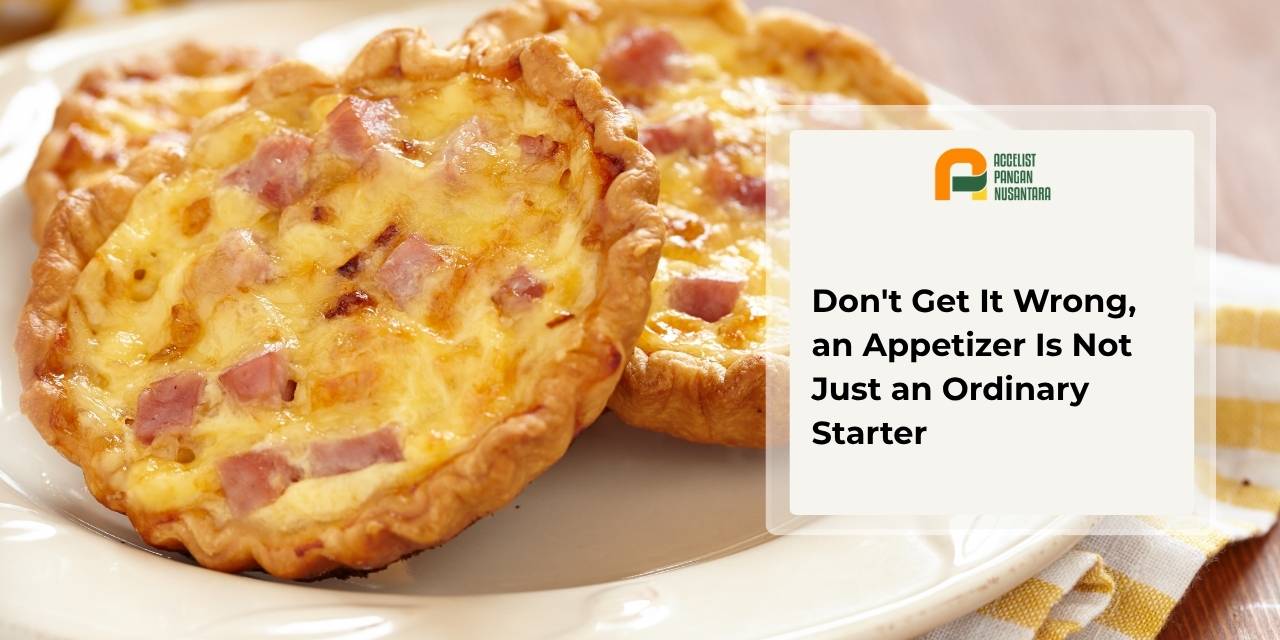
- Mini Quiche Lorraine
This tiny-sized savory pie acts as a classic French culinary heritage. A mix of beaten whole eggs, liquid cream, and sharp-smelling smoked beef chunks strongly dominates its main filling. - Chawanmushi
This Japanese steamed egg custard features a final result with a perfectly silk-like texture. Cooks prepare this dish very slowly using dashi broth (a signature Japanese seafood broth) and serve it directly in hot ceramic cups. - Bitterballen
These ragout balls (thick dough filled with minced meat and milk) act as an authentic legacy recipe from the Dutch era. Cooks must coat the outer dough completely with liquid egg white so coarse breadcrumbs can stick perfectly before deep-frying them crisp. - Takoyaki
These flour ball snacks containing chewy octopus meat chunks originated directly from Japan. This basic dough heavily depends on a chicken egg mixture so the inside can expand roundly and taste truly savory. - Calamari Fritti
This serving features fried squid meat rings wrapped in crispy Mediterranean coastal culinary-style flour. Chefs coat the squid pieces thoroughly with spiced coating dough, then perfectly fry them until golden yellow.
Read also: Why Are Restos Becoming More Popular? Getting to Know the Modern Restaurant Concept
Are Appetizers Suitable for Diet Programs?
Many people fear eating starters when they try to restrict their eating. In fact, this initial serving can actually become a powerful ally to maintain a calorie deficit (a condition where the body burns more energy than it consumes). The main key purely lies in your accuracy when choosing specific types of food ingredients.
Consequently, you should strictly choose high-fiber cold appetizers like vegetable salads or a bowl of warm clear broth soup. These fibrous foods will expand slowly and securely stretch your stomach walls. This physical effect actively stimulates the brain to send fullness signals much faster when you start eating the high-carbohydrate main menu.
Conversely, you must absolutely avoid hot appetizers cooked using the deep-fried technique. Crispy servings wrapped in breadcrumbs like croquettes, risoles, or tempura absorb massive amounts of saturated fat. Consuming highly oily snacks at the beginning of a banquet will instantly destroy your daily calorie intake safety limits.
Read also: Is Animal Fat Really Dangerous? Know the Scientific Facts Before Avoiding It
Hot Appetizer Raw Material Preparation Challenges in Commercial Kitchens
Behind their delicious taste, creating starter menus actually drains the physical stamina and energy of restaurant staff severely. Even though the portions look tiny, the initial raw material preparation process or mise en place (arranging and preparing ingredients before cooking) consumes a long duration.
Specifically for hot appetizers like various breadcrumb-coated fried foods, chawanmushi, or mini quiches, the role of eggs remains incredibly crucial. Chefs rely heavily on the function of egg protein as a binder (wet dough adhesive) as well as a natural air cavity expander.
Providing hundreds of fresh egg-based order portions every working hour certainly burdens the kitchen staff’s efficiency. Here are the specific operational obstacle details that frequently occur due to fresh egg usage, along with their absolute solution through the application of egg powder (real eggs dried into powder form).
- Wasted Preparation Time
Kitchen staff frequently spend a lot of valuable time just cracking shells completely one by one. The use of egg powder drastically cuts this process because chefs simply measure the powder and dissolve it perfectly with water. - Cross-Contamination Risk
Sharp shell waste and raw egg mucus spills potentially spread dangerous bacteria in the vegetable cutting area. You can solve this cleanliness problem easily through the use of egg powder, which features dry packaging and leaves absolutely no shell garbage behind. - Recipe Measurement Inconsistency
Liquid volume and the physical size of fresh market eggs always change every day, frequently destroying dough formulas. Egg powder guarantees accurate weight measurements to powerfully maintain starter flavor and texture consistency.
Smart Solutions for Commercial Kitchens
Appetizers must arrive quickly and hygienically as the very first impression for guests. Unfortunately, cracking hundreds of fresh eggs every single day clearly consumes kitchen staff time and sharply increases cross-contamination risks from dirty shells.
Accelist Pangan Nusantara successfully breaks this operational complexity through high-quality egg powder products. Your chefs can instantly measure ingredient needs precisely without ever needing to deal with troublesome wet shell waste again.
For porous dough needs, Egg White Powder guarantees maximum pastry expansion volume. If you truly need a complete flavor balance, Whole Egg Powder Mix stands absolutely ready to replace fresh egg roles with a significantly longer shelf life.
Ultimately, with Accelist Pangan Nusantara’s support, your commercial kitchen operations will run much faster, stay perfectly consistent, and remain completely free from deadly bacteria risks every single day.
FAQ
An appetizer represents a starter that you intentionally order from the menu, whereas an amuse-bouche serves as a free one-bite surprise directly from the chef.
This strong flavor profile functions biologically to stimulate saliva production and successfully provoke hunger before you eat a large portion.
Chefs intentionally design the ideal portion to be extremely small so you can finish it in just one to three bites, ensuring your stomach does not feel full before the main dish arrives.
You are absolutely not obligated to order it, but experts highly recommend this dish to warm up your digestive system and beautifully complete your dining experience flow.
Servers must always present the starter and clean it from the table first so your tongue palette stays completely ready to receive heavier textures and flavors from the main dish.