
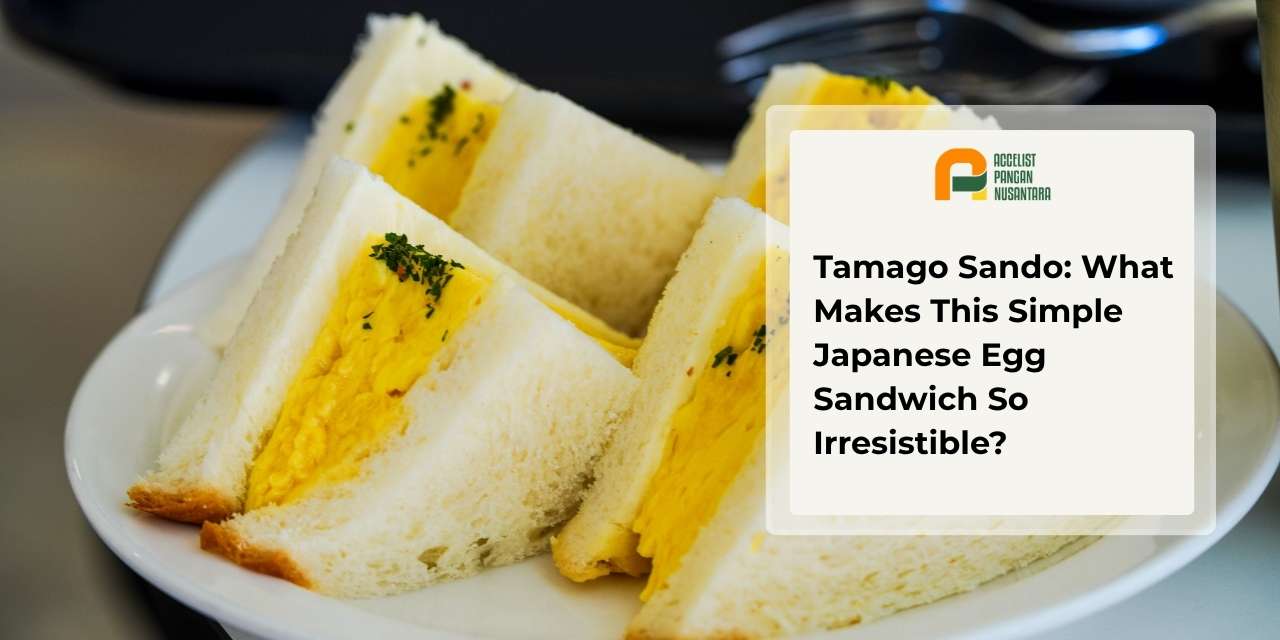
For many travelers exploring Japan for the first time, stepping into a konbini (Japanese convenience store) and picking up a neatly wrapped box of tamago sando from the chilled food shelf is an experience that almost always makes the must-try list. This simple-looking egg sandwich turns out to carry a quiet appeal that is not easily forgotten.
Nearly every konbini across Japan carries tamago sando as a staple product, reliably stocked on the chilled shelf each day. Behind its minimalist appearance lies a careful combination of technique and ingredients that gives this sandwich a soft, creamy texture unlike any other egg sandwich out there.
What Is Tamago Sando?
Tamago sando is a Japanese egg sandwich made with soft milk bread (shokupan) and a creamy egg salad filling. It is widely sold at konbini, bakeries, and cafés throughout Japan because it makes for a quick, satisfying meal, whether as a grab-and-go breakfast or a packed lunch.
According to an article by Tasting Table, tamago sando grew in popularity as bread culture took root in modern Japan. The sandwich is part of the yoshoku culinary tradition, which refers to Western-style dishes that were adapted to suit Japanese tastes and preferences.
Over time, tamago sando became one of the most iconic foods found at nearly every konbini in Japan. Even the late Anthony Bourdain, the American culinary journalist and travel show host, once called tamago sando “pillows of love” for its remarkably soft texture.
Read also: Japanese Omurice: A Complete Guide to Japan’s Iconic Omelette Rice Dish
The Difference Between Tamago Sando and a Regular Egg Sandwich
Though both rely on eggs as the main ingredient, tamago sando differs quite significantly from a Western-style egg salad sandwich. The key differences are outlined in the table below.
| Aspect | Tamago Sando | Regular Egg Salad Sandwich |
| Bread | Very soft shokupan (milk bread) | Standard sandwich bread |
| Filling | Yolk sieved, white roughly chopped | Eggs mashed together |
| Mayonnaise | Typically Kewpie | Regular mayonnaise |
| Flavor | Creamy, light, umami | Sharper and more savory |
| Texture | Smooth and tender | Coarser |
| Presentation | Minimalist | Often topped with vegetables |
These differences result in a tamago sando that feels noticeably lighter and softer with every bite. Despite its simple appearance, each component is chosen to deliver a well-balanced flavor without relying on many additional ingredients.
The Key Ingredients That Make Tamago Sando Special
Tamago sando consists of just three main components, but each one is chosen with a specific purpose in mind. Understanding what each ingredient contributes is the key to understanding why the result can differ so greatly from an ordinary egg sandwich.
1. Shokupan: Japanese Milk Bread in a League of Its Own
Shokupan is a Japanese milk bread that is noticeably softer and slightly thicker than the standard sandwich bread found at most grocery stores. Its surface is smooth, the crumb is fine and even, and it feels like dense, airy cotton when bitten into.
A simple way to see the difference: regular sandwich bread tends to collapse when pressed, while shokupan bounces back due to its tighter gluten structure. This is precisely what allows it to hold a moist filling without falling apart.
2. A More Deliberate Approach to Preparing the Eggs
The boiled eggs in tamago sando are not simply mashed together in a bowl. The yolks are separated first, then pressed through a wire sieve to create fine, uniform pieces that blend smoothly into the mayonnaise.
The egg whites are deliberately chopped coarsely to retain a slight bite when eaten. It is this combination of two distinct textures that gives tamago sando its character, making it feel more nuanced than its plain appearance suggests.
3. Kewpie Mayonnaise: Not Just Any Mayo
Kewpie is a Japanese mayonnaise brand made exclusively from egg yolks, not whole eggs, using rice vinegar that is significantly milder than standard white vinegar. The result is a thicker, slightly sweet mayonnaise with a distinct umami quality.
Compare that to regular mayonnaise, which tends to taste sharp and slightly tangy. Kewpie feels rounder and gentler on the palate, a difference that may sound minor but becomes immediately noticeable at the very first bite.
Tips for Getting Tamago Sando Just Right
A few straightforward habits can make a meaningful difference in achieving a tamago sando with a softer texture and more consistent flavor.
- Use Fresh Eggs
Fresh eggs produce yolks that are firmer, more vibrantly colored, and richer in flavor, which results in a creamier and more satisfying filling overall. - Ice Bath the Eggs Immediately After Boiling
Transferring boiled eggs to an ice bath stops the cooking process abruptly, keeping the yolks soft and making them much easier to sieve into a fine, even texture. - Wrap Tightly Before Refrigerating
If the sandwich is not being served right away, wrap it firmly in plastic wrap before placing it in the refrigerator to prevent the bread from absorbing moisture from the filling.
Tamago Sando Nutrition Facts
Tamago sando is often thought of as just a quick snack, but its nutritional profile is fairly well-balanced for a single-serving meal. According to NutriScan data, one serving of tamago sando (approximately 150 grams) contains the following:
| Nutrient | Amount per Serving |
| Calories | 280 kcal |
| Protein | 10 g |
| Carbohydrates | 28 g |
| Fat | 14 g |
| Saturated Fat | 3.5 g |
| Cholesterol | 210 mg |
| Sodium | 420 mg |
| Choline | 147 mg |
Source: NutriScan
With 10 grams of protein per serving, tamago sando is filling enough to serve as breakfast or a between-meal snack. The choline content from the eggs also supports brain health, with one serving providing approximately 27 percent of the recommended daily intake.
Although the sandwich contains 210 mg of cholesterol, research indicates that dietary cholesterol has a smaller impact on blood cholesterol levels than overall saturated fat intake. The protein and fat from eggs also help slow the absorption of sugars from the bread, giving tamago sando a lower glycemic response than eating bread alone.
Tamago Sando Variations Worth Knowing
Tamago sando is not limited to a single form. According to Okonomi Kitchen, there are at least five widely recognized variations, ranging from the classic konbini-style version to more creative café interpretations.
- Classic Tamago Sando
This is the most commonly found version at Japanese konbini, featuring a smooth, creamy egg salad made from fully hard-boiled eggs. Its clean, mayo-forward flavor has made it the most widely recognized standard. - Soft Boiled Tamago Sando
This version places a jammy soft-boiled egg at the center of the sandwich, surrounded by classic egg salad. When cut open, the still-runny yolk creates a visually striking cross-section and delivers a noticeably richer flavor. - Soft-Boiled Scrambled Egg Sando
A café-style variation that uses eggs scrambled low and slow over gentle heat until silky and ultra-tender. The result is something close to a savory custard that melts in the mouth, quite unlike the texture of a standard egg salad filling. - Dashimaki Tamago Sando
This variation replaces the egg salad with dashimaki tamago, a Kyoto-style rolled Japanese omelette infused with dashi broth. The texture is firmer and juicier, with a deeper savory character compared to the classic version. - Tamagoyaki Tamago Sando
Similar to the dashimaki variation, but using a sweeter tamagoyaki with a softer, lightly caramelized texture. Some versions pair it with a thin spread of mustard or mayonnaise to balance out the sweetness.
Conclusion
Tamago sando is proof that a simple dish can become truly memorable when made with the right technique and quality ingredients. From its classic konbini form to its many variations, this sandwich stays relevant because of how easy it is to prepare and how well-balanced its nutritional profile is.
Its growing presence, from convenience stores in Japan to cafés and bakeries across the globe, has made tamago sando an increasingly sought-after menu item for food entrepreneurs and culinary businesses. It continues to draw interest precisely because it delivers a satisfying experience through the simplest of means.
For food businesses looking to produce tamago sando at scale, the consistency of egg-based ingredients is the deciding factor in the final result. Accelist Pangan Nusantara supplies Whole Egg Powder and other high-quality egg-based products that can serve as a practical solution for large-scale production needs. Contact us to learn more about the products available.
FAQ
Tamago sando uses shokupan (Japanese milk bread), Kewpie mayonnaise, and a specific egg preparation technique that produces a noticeably softer and creamier texture.
Yes. Regular mayonnaise can be used as a substitute, though the flavor will not be identical to the original Japanese version.
It is best consumed on the same day, or within 24 hours if stored in the refrigerator wrapped tightly in plastic wrap.
Not strictly. Thick-cut white bread or brioche can work as alternatives, though shokupan gives the closest result to the original konbini version.
It gives the sandwich a cleaner, more uniform appearance and makes the filling more visible when the sandwich is sliced.